

The short essay was written during the Battle of Britain, when Virginia and Leonard Woolf were forced to live in their country home in southern England due to the heavy bombing of London, which had completely destroyed their house in the city. In her diaries she describes the daily bombings they endured, along with fears of a ground invasion.
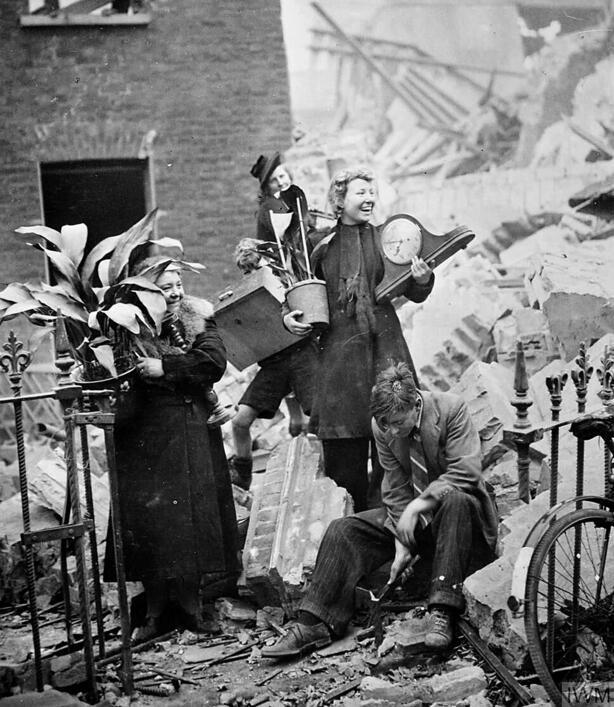
In days marked by anxiety and grief, she produced one of the most beautiful essays she wrote, bringing to a culmination the question she had asked in her 1938 essay “Three Guineas,” as the clouds of fascism gathered over Europe. The question that occupied her then — how women might prevent war — became twice as urgent when the entire nation was mobilized for battle.
Woolf’s answer is a desperate one, written at a time when the Blitz attacks were so intense that she did not know in the evening whether she would live to see the morning. In situations of complete helplessness, she argues, all that remains to a person is the ability to think. Woolf sharply insists that during wartime, thinking about peace is itself a subversive act.
It is doubly subversive because the thinking is done by a woman who, at that stage in history, had been granted the right to vote but still lacked representation. “There is no woman in the Cabinet; nor in any responsible post,” she wrote. “All the idea-makers who are in a position to make ideas effective are men. That is a thought that damps thinking and encourages irresponsibility.” War relies on the power of women who send their sons and husbands to battle and sustain the workforce and the home front, yet their opinions and perspectives are not sought.
Against violence and killing, against unrestrained force, Woolf proposes thought — the creation of ideas as a moral stance. It is the ability to defend the human spirit not only in the sense of fighting and resisting, but in preserving the image of God in humanity through independence of mind. As the English poet William Blake wrote, “I will not cease from Mental Fight.” And as Woolf herself wrote in her diary, “The army is the body, I am the brain. Thinking is my fighting.”
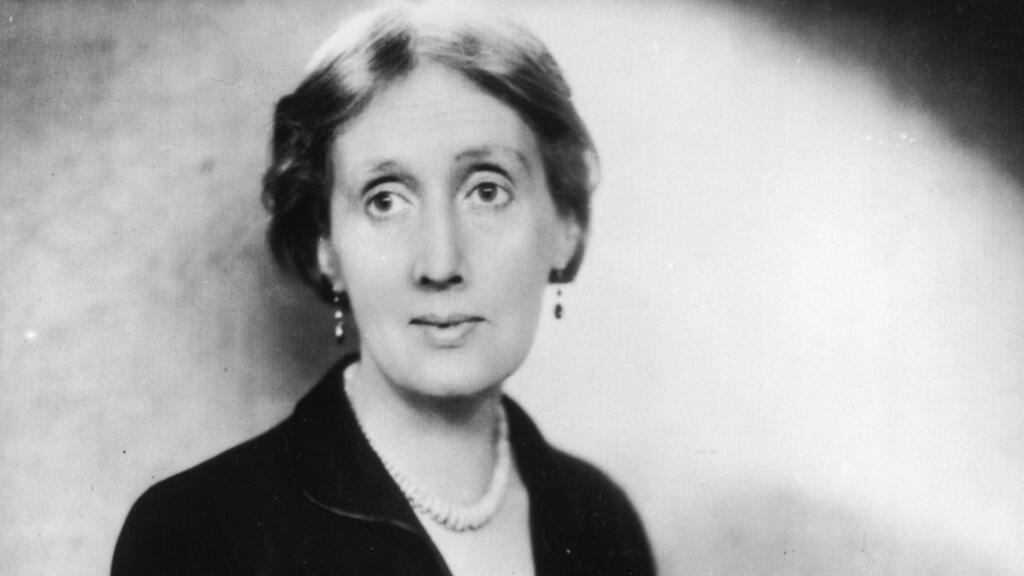
Virginia Woolf
(Photo: Central Press/Getty Images)
Woolf knew that Hitler was responsible for the war, yet she also linked the lust for war to masculinity itself and expressed compassion for both the aggressor and the victim. “It is not true that we are free. We are both prisoners tonight — he boxed up in his machine with a gun handy; we are lying in the dark with a gas-mask handy.”
She asks whether the two sexes are capable of restraining their fundamental nature in order to prevent war — women by giving birth less, men by ceasing to fight — but above all she places the human spirit in opposition to the desire to kill.
When she wrote about peace during World War II, Woolf understood that this was not the same world war that had taken place 25 years earlier. Several entries in her diary describe the terror she felt, not only because of invasion and bombing but also out of concern for her Jewish husband.
“The pressure of this war is wiping London out pretty quickly,” she wrote. “As an example of my present state of mind, I reflect: a surrender agreement means giving up all the Jews. Concentration camps. To our garage.”
The garage meant suicide by gasoline fumes — a plan the Woolfs had prepared using fuel set aside from their ration for the car, in case the Germans succeeded in their plans to invade Britain. They understood how great the danger would be for a Jewish socialist and his wife.
This was the additional monstrous dimension of the war’s brutality that prevented Woolf from embracing pacifism: the personal knowledge that Britain’s steadfast resistance at that moment represented the stand of the free world against absolute evil, whose victory would mean the destruction of civilization and human culture.
On March 28, 1941, in the midst of a severe mental crisis, Virginia Woolf took her own life. It was the result of a personal breakdown, yet beyond it loomed the terror of the collapse of the known world.
Woolf, like other great writers of her time, was filled with anxiety over the decline of the European culture she loved. Britain’s lonely stand against Nazi Germany appeared to her as the dying spasms of the free world in the face of barbarism. Her writings in general — and this essay in particular — can be read as the testament of a sensitive spirit with deep moral conviction in times of destruction and killing, and they continue to serve as a moral compass today.
“Thoughts on Peace in an Air Raid” was published in Hebrew about two decades ago in the collection The Death of the Moth, in the excellent translation by Carmit Guy. The Pardes publishing house has done well to publish the essay again, translated into clear Hebrew by Olga Sonkin and accompanied by insightful essays by Shiri Aharoni and Amal Ziv.
Writing, translation and publishing are political acts; all the more so thinking during wartime — and women thinking about war. In days of terror, darkness, pain, rage and unimaginable loss, the questions Woolf raises remain suspended in the dense space of public discourse in Israel today, along with the urgent question she poses: How can one continue to think during war, and who will hear the voices of women amid the thunder of bombardment?