


Italian journalist Giovan Battista Brunori has become the target of threats and a fierce campaign by pro-Palestinian activists after describing two Israelis killed in a West Bank attack as “hikers” rather than violent settlers.
Brunori, the Jerusalem correspondent for Italy’s public broadcaster RAI, was reporting on an attack near the Palestinian village of Tell in which Israeli security coordinator Benayahu Melt and IDF officer Yuval Ezra were killed after a Palestinian seized Melt’s weapon and opened fire.

It was Brunori’s choice of a single word, “hikers,” that triggered the backlash.
Pro-Palestinian activists and figures on the Italian left accused him of whitewashing settler violence and presenting the Israelis as innocent civilians. Brunori said the campaign quickly escalated into threats directed at him and his family.
The controversy also included the circulation of an antisemitic caricature depicting a stereotypical Jewish settler as a rabid rat with sidelocks and a kippah, accompanied by a play on the word “hikers.”
RAI CEO Giampaolo Rossi publicly defended Brunori and condemned both the threats against the journalist and the use of antisemitic imagery.
Brunori said the campaign against him was led in part by Mohammad Hannoun, whom Italian authorities have linked to suspected Hamas-support activity and fundraising networks.
According to Brunori, an organization associated with Hannoun also sent RAI a legal warning demanding that the broadcaster describe the Israelis involved in the incident as violent settlers.
Brunori rejected that characterization.
He said the group consisted of settlers from Havat Gilad, including families, women and children, who were hiking in the area and were not armed.
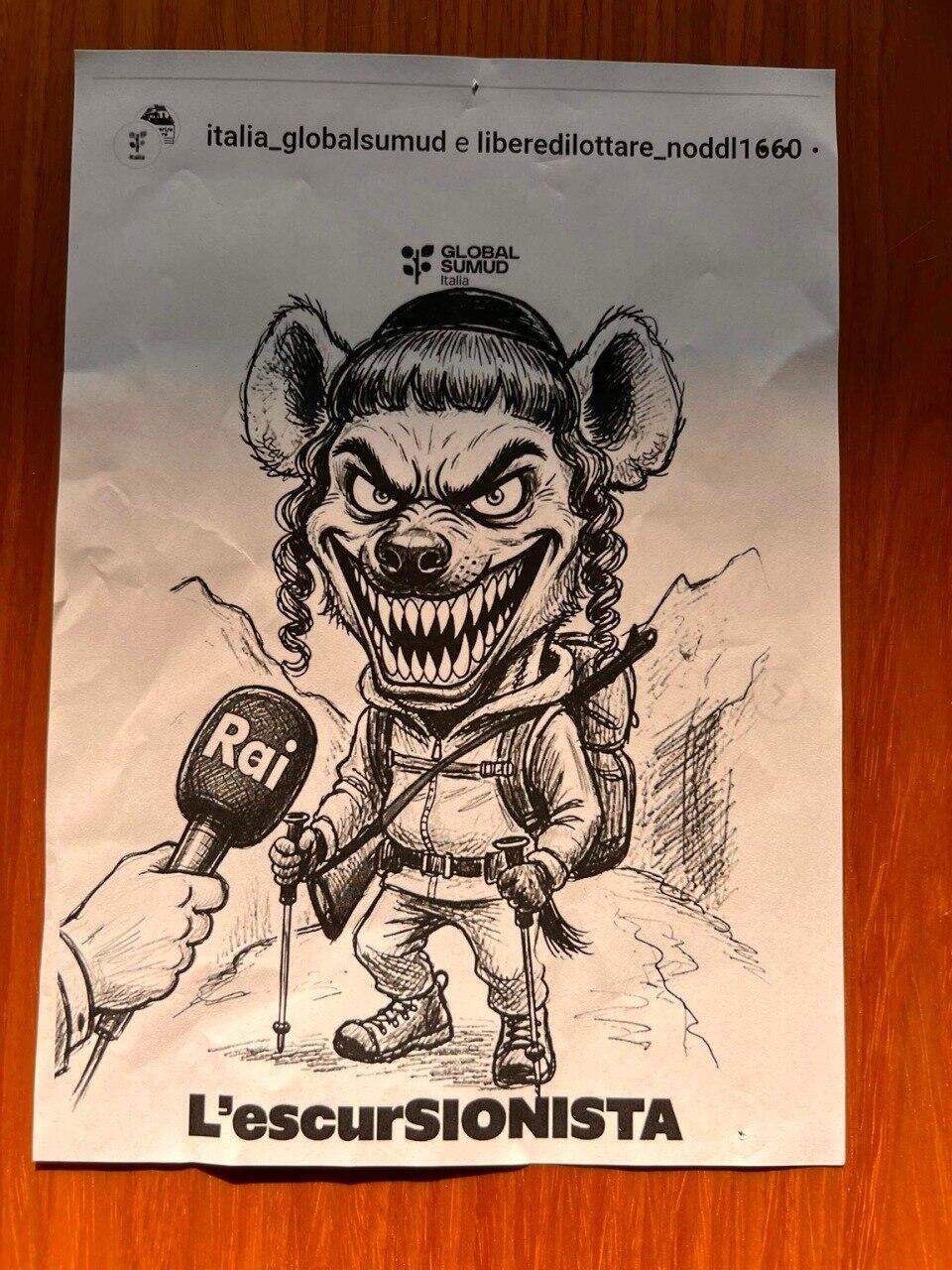
The cartoon circulated by pro-Palestinian activists
He acknowledged that Palestinians may have viewed their presence as provocative, but said that did not justify presenting the entire group as violent settlers.
Brunori also stressed that his reporting has covered violence committed by settlers against Palestinians as well as attacks targeting Israelis.
He said criticism of journalists is legitimate, but described the campaign surrounding the report as part of what he called a “poisoned culture of wokeism” aimed at silencing views that diverge from an accepted political narrative.
The case comes amid a broader dispute inside RAI over coverage of Israel and the war.
Other journalists and senior figures at the broadcaster have also faced criticism over their positions on Israel, including communications executive Incoronata Boccia after remarks expressing solidarity with Italy’s Jewish community, and television host Antonino Monteleone after challenging claims involving starvation and genocide in Gaza.
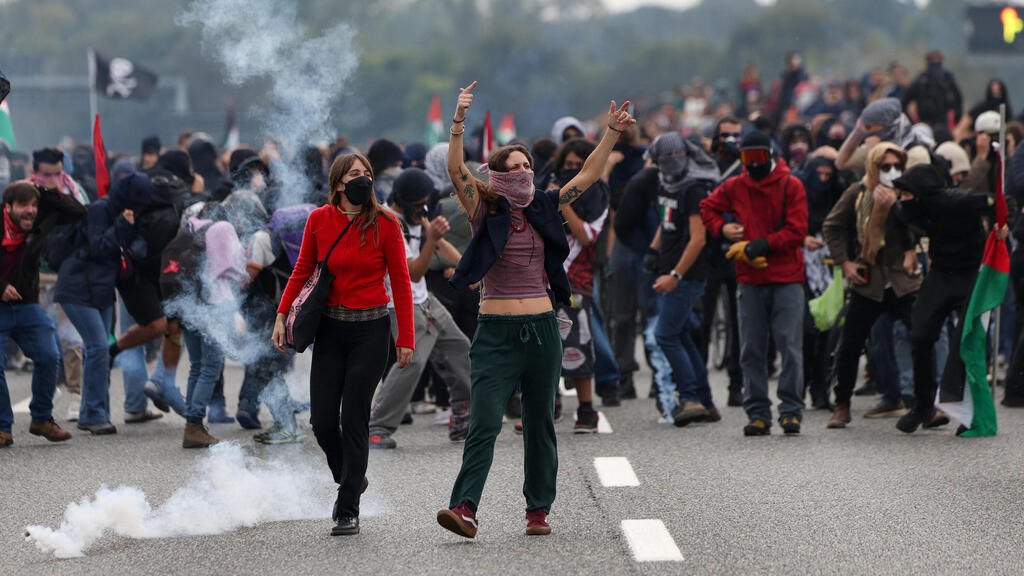
Pro-Palestinians protestors in Italy
(Photo: REUTERS/Claudia Greco)
One RAI union accused Brunori of becoming “a tool of occupation propaganda,” while another defended his professionalism and denounced the campaign against him.
The controversy has also drawn condemnation from politicians on the Italian right and from leaders of the country’s Jewish community.
Walter Meghnagi, president of Milan’s Jewish community, condemned the attacks on Brunori, while lawmaker Francesco Filini accused left-wing political figures and organizations of helping create a hostile atmosphere toward journalists who do not adopt their preferred framing of Israel.