

In a quiet corner of Jaffa, a veteran fashion designer decided that runway shows were no longer enough. After nearly 40 years at the top of Israeli fashion, dressing celebrities and creating some of the country’s most iconic garments, Yaron Minkowski opened the door to a different kind of dream: a museum packed with tin robots, Pez dispensers, Soviet puppets and dolls that have passed from hand to hand for more than a century.
“I always say: there is no future without a past,” Minkowski explains. His Toy & Nostalgia Museum in Jaffa is less a collection and more a life story told in plastic, tin and fabric. Every shelf, every vitrine is a chapter. Many of those chapters were revealed in an in-depth interview on the People & Collectors podcast.
For decades, Minkowski’s passport was stamped by the global fashion circuit. He traveled to shows and fabric fairs, then came home with “compensation gifts” for himself: toys. A bobblehead from one trip. A mechanical robot from another. A strange turtle from North America that walked when you whistled at it.
As a child in 1960s Israel, that turtle was the height of sci-fi. His father, a mechanic, was so fascinated by the technology that he opened the toy to see how it worked. The turtle never walked again, and Minkowski spent years hunting for the same model in flea markets and auctions until he finally found one for the museum.
“It closes a circle,” he says. “You do not just buy an object. You reconnect with a moment, with a feeling.”
Gallery
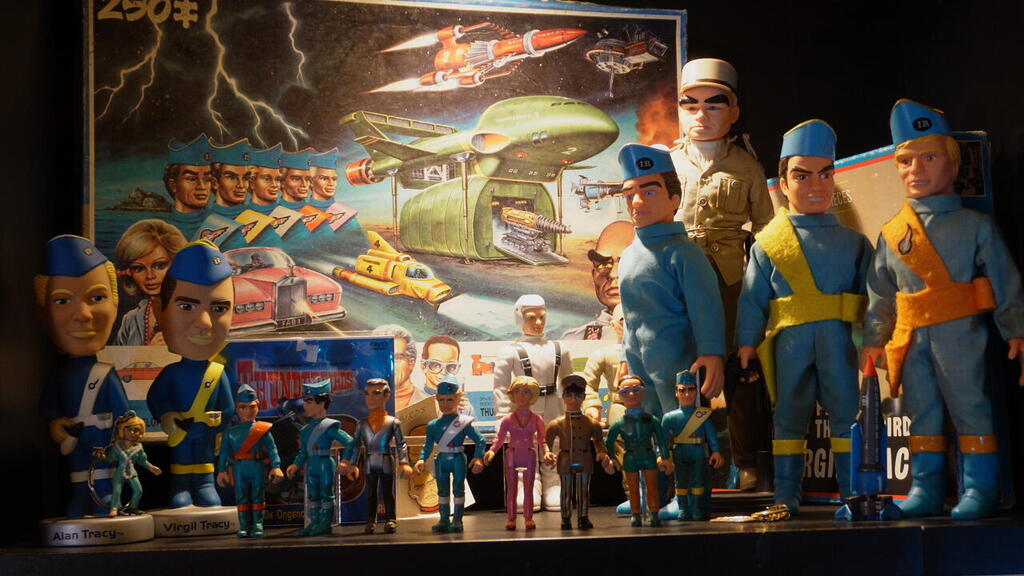
Thunderbirds action figures and memorabilia are shown on a shelf at fashion designer Yaron Minkowski’s Toy & Nostalgia Museum in Jaffa
(Photo: Bar Gindy)
The museum now holds thousands of items. Minkowski admits he has never successfully counted them all. There are shelves of Pez dispensers, from tiny Japanese minis to towering “Giant Pez” heads, and a full cabinet of bobbleheads: Einstein, Marilyn Monroe, Trump, Liberace and even a bobblehead self-portrait, crafted by his wife, Pazit. “She made it so I would nod in agreement to everything she asks,” he jokes.
Pazit is not just an in-house sculptor. She is also the driving force who pushed him from “dreaming and fantasizing” to signing a lease and building a real museum. Where many partners of collectors quietly suffer the boxes in the hallway, she is a full partner in the hunt, a “bulldozer,” as he calls her, who helps find pieces, negotiate at flea markets and stand behind the vision.
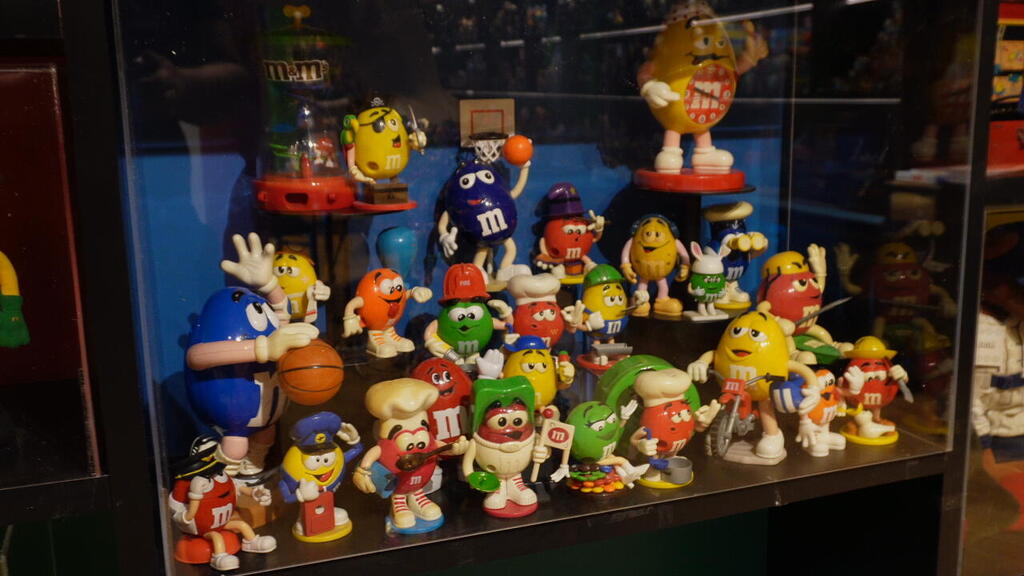
M&M character figurines fill a display case at Yaron Minkowski’s Toy & Nostalgia Museum in Jaffa, July 9, 2025
(Photo: Bar Gindy)
If the toys explain Minkowski’s heart, the garments explain his eye. His fashion studio sits directly above the museum. Visitors who climb the stairs discover gowns and couture pieces that mirror the toys below: dense detail, bold color, humor and a sense that nothing here was made to be generic. “My clothes stand on the line between art and fashion,” he says. “The toys and the dresses speak the same language.”
Nostalgia here is not soft focus. Some objects in the museum are quietly political and deeply emotional. Among the tin cars and cartoon figures stands an original toy belonging to fallen IDF soldier Lior Ziv, and new Israeli action figures created around the current war, with characters like “Tomer, guardian of justice” and “Meital, guardian of the border.” To Minkowski, these stand next to Soviet-era toys like Cheburashka and Kinder Surprise figurines as part of the same story: how children, in every regime and every era, meet the world through play.
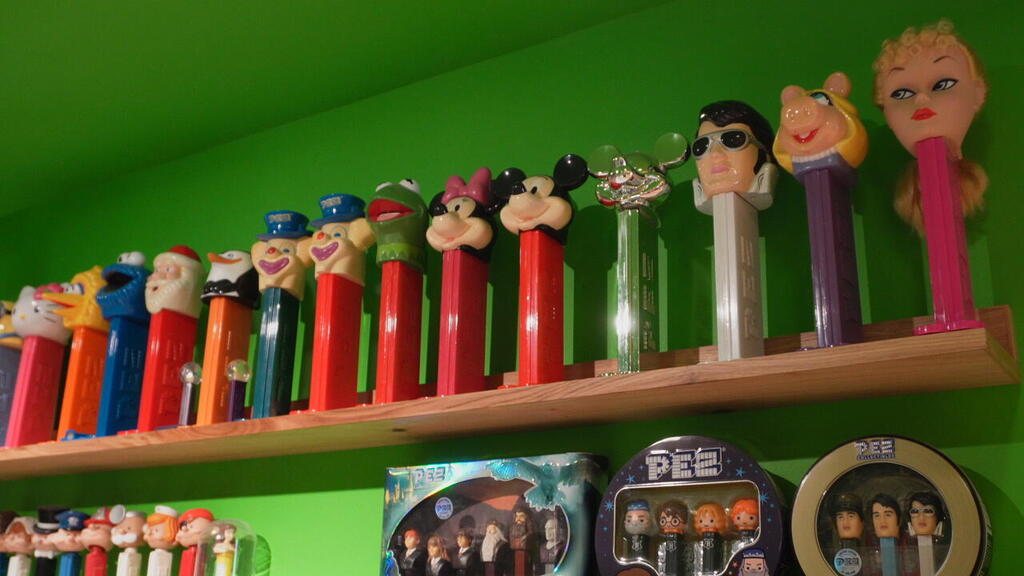
Rows of vintage PEZ dispensers, part of Yaron Minkowski’s extensive collection, are displayed at his Toy & Nostalgia Museum in Jaffa
(Photo: Bar Gindy)
Pressed on money, space and the line between passion and obsession, Minkowski laughs off the idea that he has “gone too far.” For him, the calculation is simple: “If something makes you truly happy, why not?” What worries him more is disposable culture, toys and clothes made to be thrown away. The museum is his protest: objects made to last, that pass from grandparents to parents to grandchildren, carrying memory and meaning.
Asked what makes a collector different from “regular people,” he does not hesitate. “Collectors see the small details,” he says. “We do not need a lot. A tiny object that makes the heart warm, that is enough.”
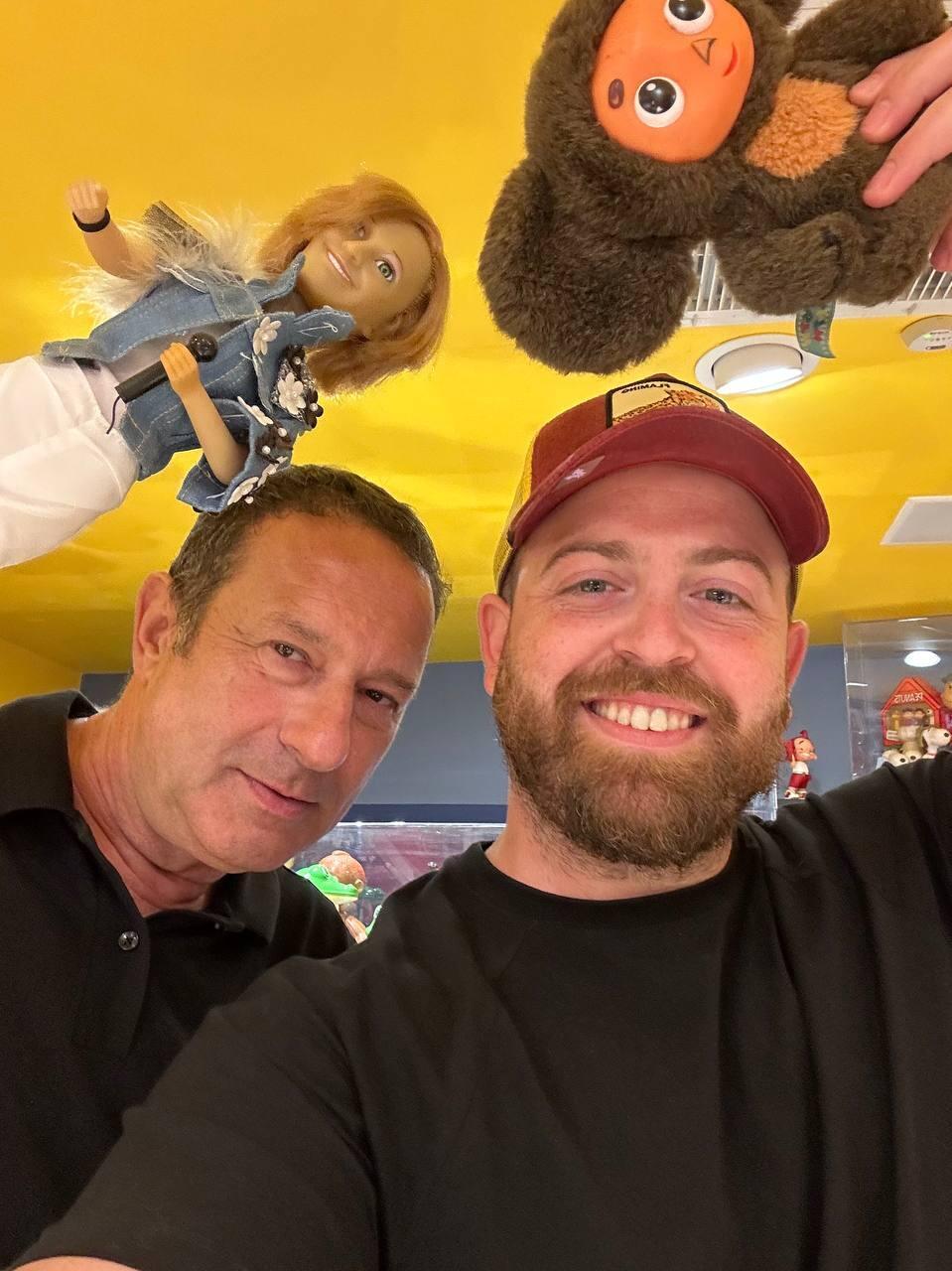
Fashion designer and collector Yaron Minkowski, left, and People & Collectors host Bar Gindy pose inside Minkowski’s Toy & Nostalgia Museum in Jaffa
(Photo: Bar Gindy)
Minkowski's museum has become a pilgrimage site for collectors and enthusiasts who want to see the archive behind the stories. Minkowski’s next dream is a larger building, with whole floors devoted to different worlds: robots, Israeli childhood, scary toys, Kinder, Pez.
He smiles at the idea, then shrugs, as if it is obvious. “I talked about the museum for years, and in the end, it happened,” he says. “Dreams are also projects. One day, this will happen too.”
- For more stories from Yaron and other collectors, check out the People and Collectors podcast. The full interview is available with subtitles in English and 50 other languages.