

Even after gaining international recognition, Moran Atias kept waiting for the perfect partner to build a home with. Today, she knows her decision to become a single parent was the right one for her, despite her father’s resentment.
While visiting Israel to deliver a TED Talk before heading off to continue filming a Prime series, she talks about the other dream she's finally fulfilling: playing a Jewish woman.
For more than 20 years, Moran Atias has lived abroad. Yet every time she finishes a visit to Israel and boards a plane, she feels a tug at her heart.
This time, though, she’s genuinely excited. On her way home to LA, she’ll stop in New Mexico to wrap up filming for 'Joseph of Egypt', a Prime series in which she plays, for the first time abroad, a Jewish woman.
“I play Bilhah, Jacob’s wife, and my sister Shani plays Rachel,” Atias says. Before the shoot, she asked her sister to look it up on Wikipedia, "I’m your servant", she told her.
"This has been a heartfelt prayer of mine for a long time. I’ve always wanted to feature a Jewish woman in an American series. Until now, I’ve played Arab characters, a gypsy, an American, a Latina, but never a Jew. Now it’s finally happening, and at such a challenging time.
“To be given this role now, when people feel their identity is being erased or trampled on, is a dream come true. I don’t like the word ‘explain,’ but for me, this is a way to continue our Jewish story through art. And, I’m fulfilling my dream of working with my sister.”
Long before Gal Gadot and Tomer Capone roamed freely through Hollywood, Atias was Israel’s most prominent representative abroad. She got her big break at age 19 in Italy, where she modeled and hosted several TV and game shows.
In 2008, she appeared in the American series Crash, and since then she has worked nonstop in both international and Israeli productions, including the Israeli version of 'Perfect Strangers' and NBC’s 'The Village'.
“Adi Barkan (a fashion photographer and model agent) once told me that the furthest I’d ever get was waiting tables at Kapulsky café,” she recalls. “There are always those people who act as if they could be your mentors, but instead, they project their own fears on you.
"I’m done with those people who pull you down and say you’ll never make it. Who are you to tell me what’s impossible?"

Do you still face that attitude today?
“Yes, sometimes it even comes from people I work with, despite everything I’ve achieved,” Atias says.
“The real challenge is tuning out the outside noise, especially that voice in your head telling you you’re not good enough, or don’t know enough. Once you overcome that, you become a master of your own life, the author of your own story, and that’s what I wish for everyone."
About a week ago, Atias gave a talk at TEDxJaffaWomen 2025 at Hangar 11 in Tel Aviv. She spoke about her personal journey from Los Angeles back to Israel, her path to motherhood, and how fear and pain became a driving force for action and leadership.
“I was waiting for someone to call and save me”
Three years ago, Atias, now 44, became a mother to Liya-Yael through a sperm bank. The decision to become a single parent wasn’t easy.
“Even during the process, I kept telling myself, ‘This isn’t really going to happen.’ I was in complete denial. I was waiting for someone to call and save me. Today, I know it was the most incredible decision I ever made."
How did your family react?
“My father is a very dominant figure, and in our traditional Moroccan family, we always go by the biblical commandment ‘Honor your father and mother.’ I revere my parents for the way they honored their own parents, in life and in death.
"Still, my father is a traditional Jew, adheres to Jewish laws, and when I grappled with the decision to become a single mother, I asked him one Shabbat, ‘What do you think, should I continue the process in the U.S. or start all over here in Israel?’
“In the U.S., I already had a frozen embryo from a previous IVF cycle. If I chose Israel, I’d need to go through hormone treatments again and find a sperm donor, so I hesitated. My father was silent, and after a long pause he said, ‘You know, our matriarch Sarah conceived at 90.’
“My mother, and my sister who was pregnant at the time, were ready to pounce on him, but I said, ‘Wait. We’re not turning this into drama or ruining Shabbat with an argument. I want to understand what dad is trying to say. The Torah is his compass.’”
“Then he said, ‘I need to consult a rabbi.’ I thought, 'What rabbi? Why a rabbi? What is a rabbi going to decide here? So, I replied, ‘But dad, you always told us we don’t need intermediaries between us and God.’ He took another sip of his drink and said, ‘Maybe this isn’t what God wants for you. Maybe God doesn’t want you to be a mother.’”
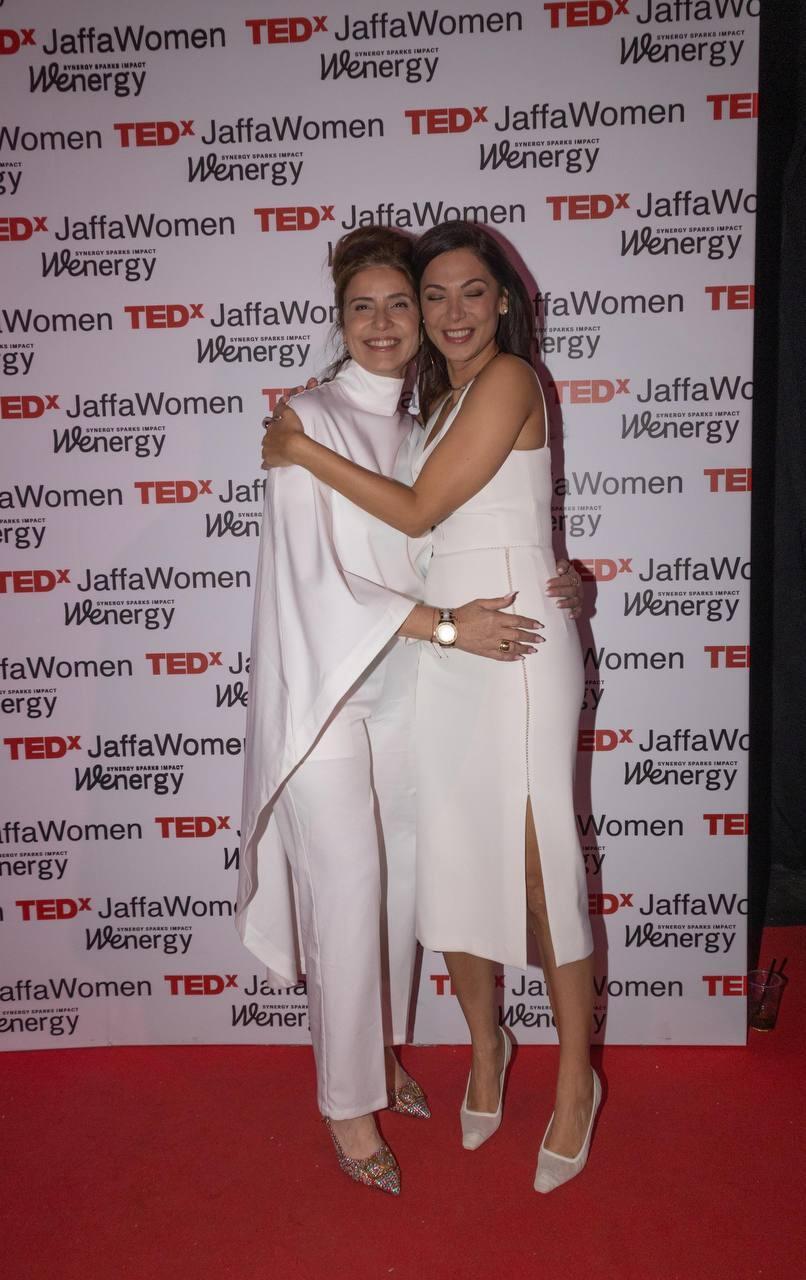
At TEDxJaffaWomen 2025 about her personal journey
(Photo: Assaf Guery)
“It was like an arrow to the heart, already bleeding, already ashamed. I already felt I’d failed the traditional narrative I was raised on, where everyone gets married and has children the ‘normal’ way. I felt like I was being told that all my success didn’t matter, because in this, I was a failure.
“Then something divine rose in me, and I said, ‘But dad, you know, God blessed me with fertility. He gave me the success that allows me to be financially independent, enough to afford a very expensive process and raise a child. Maybe, if He gave me all these gifts, this is exactly what He wants. And if I don’t do this, it would be like refusing to thank Him for everything He’s given me.’
“That same day, I decided to resume the process in the U.S. and booked a flight for that night.”
Without his blessing?
“All the way to the airport I kept praying for someone to come and save me, as it made no sense to me. I've seen it at home, and in every movie, Cinderella, Pocahontas, all the women are saved by a man in the end. And my story is the complete opposite. I did everything to be independent. No man is going to ‘buy’ me.
“I’m so proud that I can inspire young women, letting them understand that they don’t need to date someone just to be taken care of or supported. They can do it on their own.
“I asked myself, ‘So who are you, Moran? Are you independent? Traditional? Modern?’ I realized there’s one tradition I don’t want to continue, and I’m creating one of my own, my new narrative, a different kind of family.
“On the way to the airport, with all these thoughts running through my head, I got a call from my father. It was deeply emotional. He said, ‘Whatever you choose, I will support you.’
"Only then did I understand what he’d meant earlier, that I didn’t have to become a mother, and even if I didn’t, it wouldn’t make me any less valuable. He just didn’t say it the right way.
“Recently, I found out my father used to get beaten with a belt by his own father. My father was never hugged by his father, whom he worshiped. So how can I expect my dad to know how to show warm affection?
“In the end, we had an amazing moment of closure because my daughter looks exactly like him. Still, I named her after my mother, Liya Yael, because I couldn’t have done any of this without her, and besides, she is my eternal babysitter."

"I'm creating my own tradition"
(Photo: Private)
What made you decide to become a single mother?
“I was at a dinner in LA, intended solely for women; they were incredible, each successful in her field. A beautiful woman sat next to me, and I joked, ‘This is boring, aren’t there any men around?’ And she said, ‘I wouldn’t mind either. But I already did mine on my own.’ I didn’t understand what she meant at first, and then she explained that she had children with a sperm donor.
“I was 37 at the time, and suddenly it hit me, this was also an option for me. There’s a phrase I love in Italian: 'Better alone than in bad company'. If you have an amazing, supportive partner and you create something together, whether it’s a business or a child, that’s wonderful. But if your partner isn’t supportive, and you’re together just to have a baby, then it’s better to do it alone."
Was there ever a point when you were close to compromising, having a child with someone you didn’t really want to be with?
“Of course. I dated the worst of the worst. I reached a point of thinking, ‘It's enough my child has a father.’ Thank God that didn’t happen."
What made them ‘the worst of the worst’?
“They weren’t father figures. They weren’t stable, supportive, or encouraging. They diminished me. They’ve been taught that men must be strong and not show emotion, whereas women are expected to marry, have children, get a ‘nice home,’ and never boast about their success. If you have money, stay quiet. Don’t make anyone jealous.”
What do you think of people who flaunt their Birkin bags?
“If someone wants to buy one for me, that's fine, but I won’t spend money on it. I can do so many more meaningful things with that money.
"Right now, there are many struggling families, especially those affected by October 7. I’d rather adopt one of those families. Not everyone cares, and that’s OK. Each one has different priorities. But for me, giving is the greatest satisfaction in life."
Do you ever think about previous relationships, wondering why they didn’t work out?
“I already have a 17-episode series written about it. Liya Yael is the greatest gift of my life. She’s my biggest success. At first I was very much ashamed, but now I’m mostly proud. That’s incredible. It’s exactly the journey I needed to go through, and no man could have given me that perfect outcome.
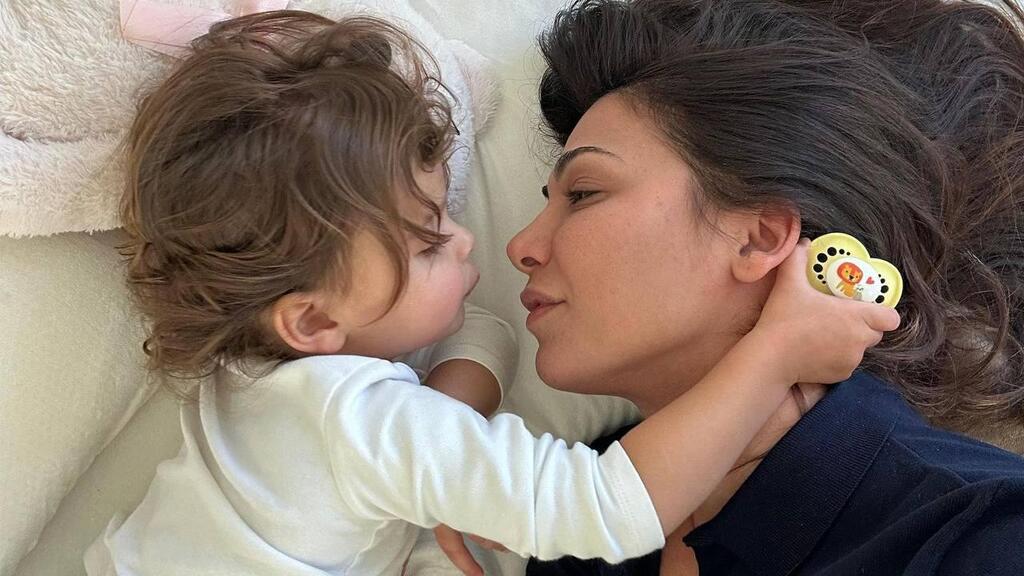
"I say 'Thank you' every day and night"
(Photo: Private)
“Let’s be honest, so many men and women get married just to ‘check a box’, and I can't help but ask, 'Why are you doing it? For social reasons? For your parents? So that people won’t talk?' You didn’t choose what’s right for you; you chose what’s expected. It’s a real challenge to say, ‘You know what? I don’t want it."
Do you think you’ll ever get into a new relationship?
“Who says I’m not already?”
Are you in a relationship?
“Maybe. I think I’m sharing here something deeply personal and meaningful, far more important than whether I’m in a relationship or not. But I know it’s legitimate to ask, and also legitimate not to answer.
“I’m here to show all the women that they can do whatever they want, in terms of ‘Wow, I can succeed too', 'I can study acting or pursue a dream', 'I can move to a new country', 'I can learn a new language', 'I can have a child on my own'.
"That’s more important than sharing if I’m in a relationship. That’s not the kind of story I want to push.
“There were so many times I was told, ‘You won’t get a magazine cover unless you reveal who you’re dating.’ Well, sorry, that’s not the reason I want to be on a cover. I don't engage in gossip. I don’t want that, and I never will."
Do you plan to have more children?
“Yes. But I'm in no rush. I'm aware of the biological clock that's ticking, but I also listen to my own clock, which to me is the most important."
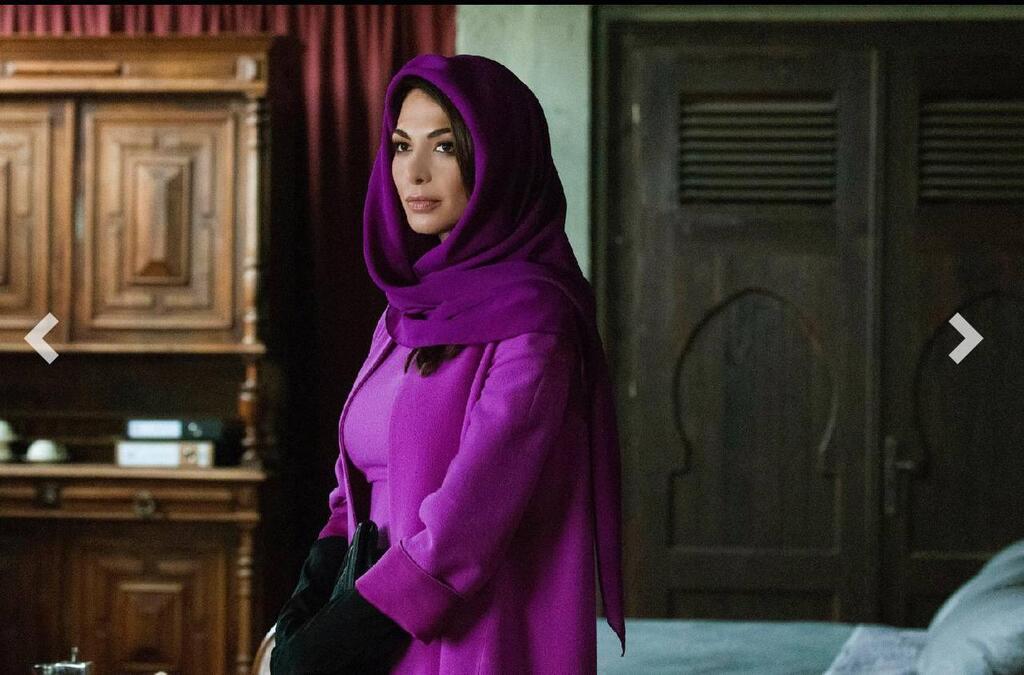
Moran Atias at "Tyrant"
(Photo: out of Tyrant)
Is Liya like you?
"She's an upgraded version of me and much more. Everyone loves her; I’m just an accessory. I’m like an 'Uber driver' - I pick her up, I drop her off. She’s a light. I say 'thank you' every day and night, for I’ve been blessed."
Where is she now while you’re working?
“That’s the real challenge and it has to be pre-planned. I must thank my aunt Devorah, who’s with her right now, my parents, and Uncle Steven. When I’m filming, they’re there for me.
"Unfortunately, it’s been a while since I’ve set the terms of my work, because for the past two years I promised myself that when I walk onto a set, everyone will say, ‘That Israeli Jewish woman is amazing.’ I won’t ask for anything. That will be my best form of advocacy. I’m a representative of the State of Israel right now."
“I fell even more in love with our people”
The almost unconscious decision to act as a kind of ambassador began in the early days of the war. On October 7, Atias happened to be in Israel for the holidays. She was supposed to return to LA, but instead, she stayed for another two and a half months.
“The only thing I did during that time was watch footage, shoot videos about the hostages, edit them, and spread the word. Sometimes it took 18 hours to create a meaningful, one-minute video that could reach someone in Wisconsin who had no idea what was happening.
"I don’t have a home here, so during that time I stayed with amazing people who opened their homes to me, in Moshavim (settlements) I didn’t even know existed. It made me fall even more in love with our people. We need so much inner strength, constantly.”
So you had a quieter two years, work-wise?
“Relatively, yes. But they were the hardest two years of my life."
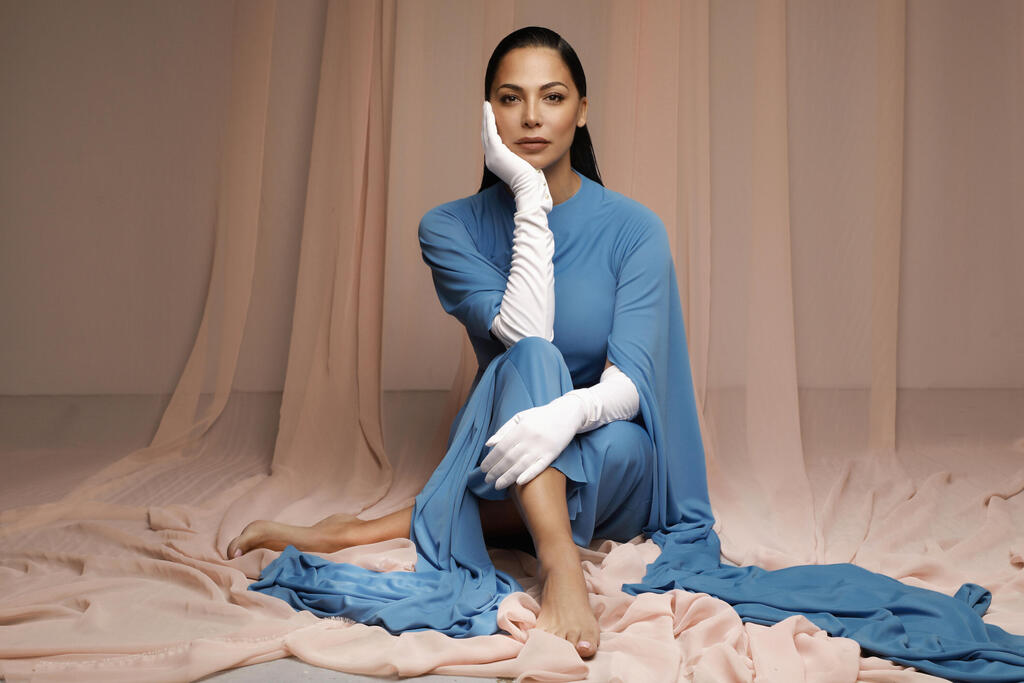
"We need inner strength"
(Photo: Tal Abudi)
In Israel, alongside the global wave of criticism, Israeli artists signed a circular petition calling to end the war. Not everyone appreciated it.
“A friend sent it to me to sign,” Atias says. "I answered very clearly, ‘Are you serious?’, adding three exclamation marks, and three question marks. I was very much against it.
"She got startled and told me, ‘We just want the war to end.’ I replied, ‘Who doesn’t want the war to end? Do you think there’s a single mother in this country who doesn’t want it to end? Do you think there’s a soldier who enjoys being in Gaza while you’re recording an album or filming a TV show?’
“Everyone wants it to end. I have no problem feeling compassionate for children and people who want to live peacefully beside us, but what about those who don’t? Why should I feel compassionate for someone who is planning to kill me and rape my daughter?"
Were you angry at the Israeli artists who signed it?
“Of course. But only at that moment, and I was not angry at them personally. They’re serving Hamas’s narrative. That’s exactly what Hamas wants us to see.
"Wake up - they don’t want peace. They started this war. They murdered the very people who wanted to make peace with them.
“And then you have all these artists worldwide who want to join the global pile-on against us. I love Javier Bardem. I want to be friends with him too. I want to make a movie with him. But apparently, he’s always been antisemitic. For 30 years, he’s signed petitions against Israel. What he’s really saying is, ‘I don’t want a Jewish state.’ Do you agree with that?"
“I don’t think there are Israeli artists who act against the country. I don’t want that kind of incitement to take place, not from either side. Even those who signed that petition are artists who love Israel as much as I do. They just believe that this is the solution.

At the 2024 Venice International Film Festival
(Photo: Victor Boyko/Getty Images)
"And by the way, the friend who sent me that petition is still my friend. I left her a voice message two days ago because I love her. Our enemies want us to fight each other, but we’re not going to give them that victory."