


Spider-Man: No Way Home (2021), the third installment in the Tom Holland-led series, marked both the high point and the conclusion of a successful trilogy. Its use of the multiverse concept delivered fan service on an epic scale. The story centered on a three-way meeting between the current Spider-Man (Holland), Tobey Maguire's Spider-Man from Sam Raimi's trilogy (2002-2007) and Andrew Garfield's Spider-Man from Marc Webb's two films (2012-2014). The trio joined forces against a lineup of supervillains pulled from the previous Spider-Man franchises.
With every nostalgic callback in No Way Home, it became increasingly clear that the film functioned as a generator of dopamine hits for audiences. Financially, it was an enormous success, grossing $1.9 billion worldwide and becoming Marvel Studios' third-highest-grossing film behind Avengers: Infinity War and Avengers: Endgame.
Spider-Man: Brand New Day trailer
(Courtesy of Forum Film)


After such overwhelming success, the obvious question was: where do you go from there? Holland hinted that this could be his final chapter as Spider-Man, but it was hard to imagine anyone at Marvel Studios or Sony seriously considering rebooting such a lucrative franchise. Just as important was the question of how Marvel's most popular superhero could help restore confidence in a studio brand that has increasingly struggled in recent years. Spider-Man: Brand New Day provides a satisfying answer to both questions.
Brand New Day is the strongest of Tom Holland's Spider-Man films. Rather than relying on multiverse fan service, it emphasizes the relationships between the series' central recurring characters and does so with an emotional depth that is uncommon in Marvel productions. At the same time, its story incorporates a key element of Marvel Studios' five-year plan, one I will avoid discussing here to prevent spoilers. Even if it does not reach the extraordinary heights of No Way Home, it is likely to become Marvel Studios' highest-grossing film since the previous Spider-Man installment.
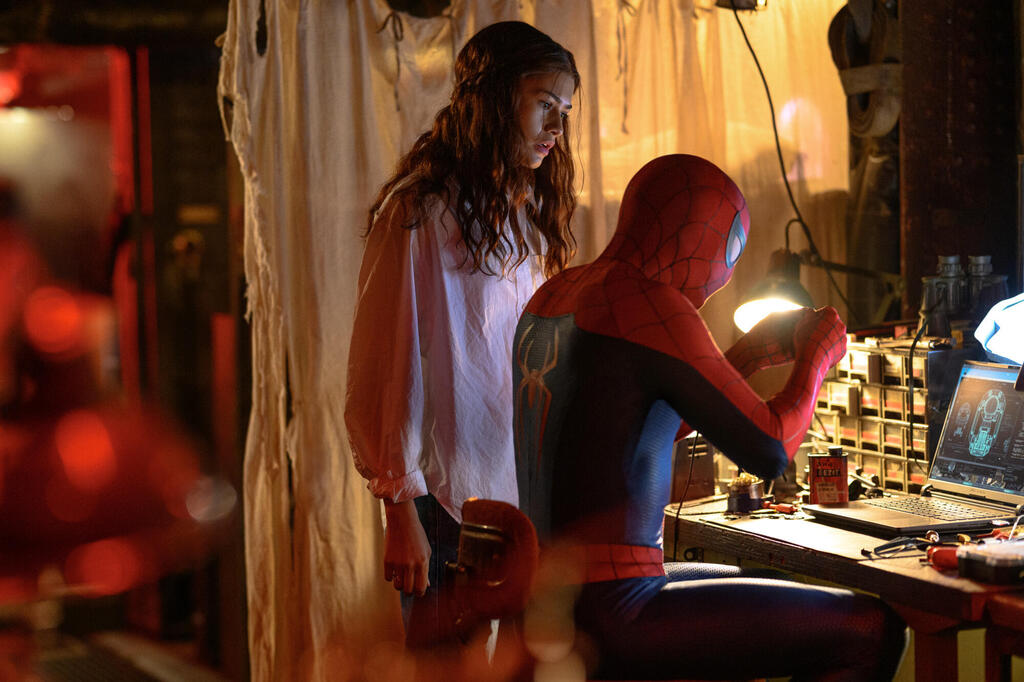
The spell cost Peter both his girlfriend MJ (Zendaya) and his best friend Ned (Jacob Batalon)
(Photo: Courtesy of Forum Film)
As viewers will remember, No Way Home ended with Doctor Strange erasing Peter Parker from everyone's memory. Peter requested the spell to protect those closest to him after the previous film demonstrated the danger with the death of Aunt May. The spell cost Peter both his girlfriend MJ (Zendaya) and his best friend Ned (Jacob Batalon). The film concluded with a heartbreaking encounter between Peter and MJ at the donut shop where she works. Peter gazes longingly at the love of his life, who has no memory of him.
The opening of Brand New Day picks up nearly three years later. MJ and Ned are thriving at MIT while Peter Parker has fully dedicated himself to protecting New York as Spider-Man. A brisk opening sequence shows him defeating villains including a group of red-clad ninjas from the Hand and Scorpion (Michael Mando), who first appeared in Spider-Man: Homecoming (2017). But as Peter Parker, he lives in emotional and social isolation. Introverted, lost in thought and shut away in his apartment until the next heroic mission, he has kept the coffee cup from that final meeting with MJ for years. He continues working on a letter explaining who they once were to each other before her memory was erased and why he made that choice, though it is unclear whether he will ever let her read it.
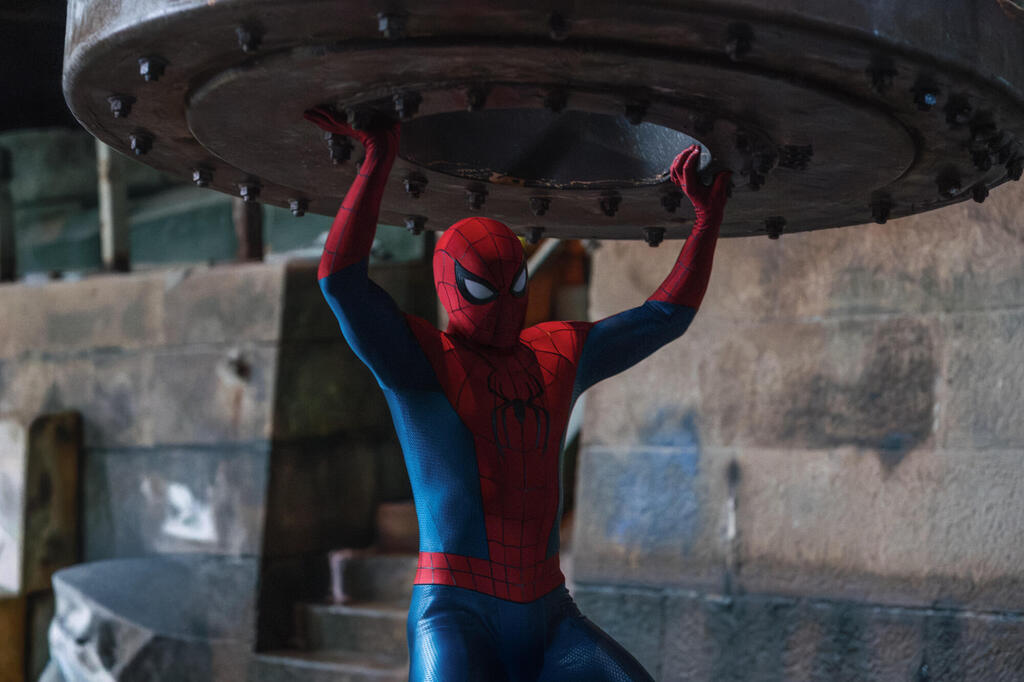
Peter Parker has fully dedicated himself to protecting New York as Spider-Man
(Photo: Courtesy of Forum Film)
The screenplay by Chris McKenna and Erik Sommers, who also wrote the previous films, weaves together three storylines, not always seamlessly.
The first introduces a new threat: a telepathic entity capable of remotely controlling people's minds and bodies. The entity attempts to infiltrate the offices of the Department of Damage Control, a mysterious government agency headed by Bill Metzger (Tramell Tillman, best known as Seth Milchick in Severance), whose mission is to combat supervillains.
Helping Peter confront this threat is Frank Castle, the Punisher (Jon Bernthal). For viewers unfamiliar with the comics or the television series The Punisher (2017-2019) and Daredevil: Born Again (2025), Castle is a former soldier who wiped out the mobsters responsible for murdering his wife and children before devoting his formidable combat skills to life as a vigilante. Those television series were brutally violent in ways that would not fit a family-friendly Spider-Man film. The Punisher in Brand New Day remains a solitary, deeply suspicious figure bordering on paranoid, but his violence is noticeably restrained. He serves as both the opposite of Peter Parker, who rejects killing and believes in doing good, and as a reflection of the darker path Peter himself could take if his crusade against crime became obsessive. Their contrasting dynamic is highly entertaining.
The second storyline focuses on a transformation beginning to take place within Peter's body. The cause is never fully explained, but it leads to episodes in which he loses control as he becomes increasingly spider-like. This "monster within" storyline brings Peter to Bruce Banner, the Hulk (Mark Ruffalo), in hopes of developing technology that can contain the beast inside him. It also introduces changes to superpowers, not only Spider-Man's, that will clearly play a role in future Marvel films.
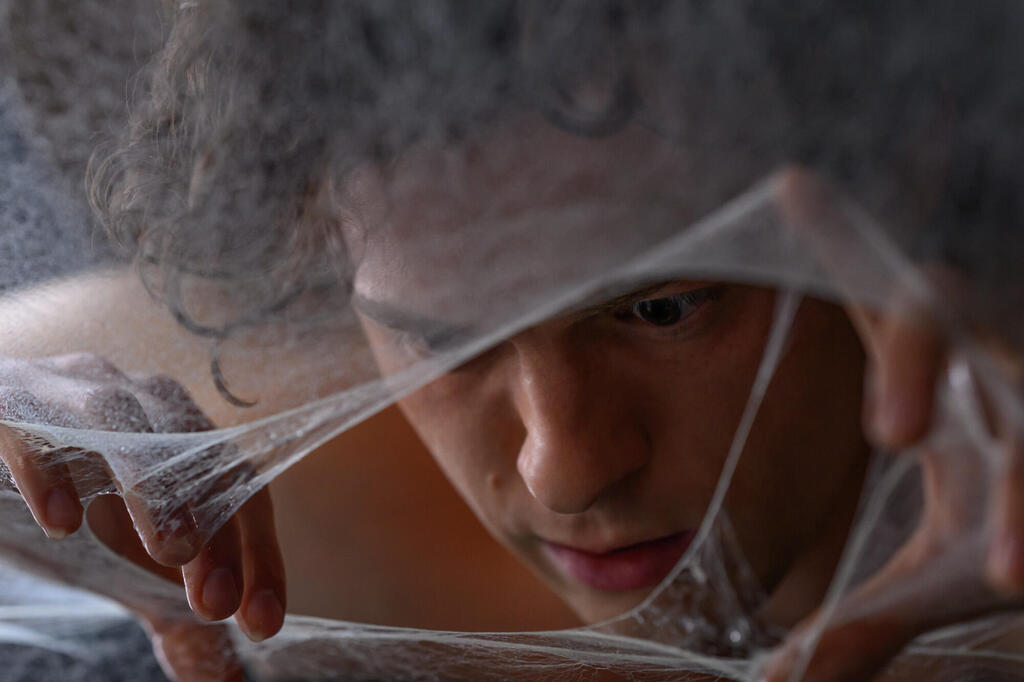
The second storyline focuses on a transformation beginning to take place within Peter's body
(Photo: Courtesy of Forum Film)
The third storyline centers on Peter's inability to stay away from Ned and MJ. From the outset, it is obvious that reuniting with them will become one of the film's emotional anchors. Brand New Day builds on relationships established over the previous three films, relationships audiences already know well. For longtime fans of the series, and especially for admirers of newly married couple Tom Holland and Zendaya, the film delivers several genuinely moving scenes. I do not believe Holland has a particularly significant career ahead of him outside the Spider-Man franchise, but when he is playing Peter Parker opposite his real-life partner, he is unquestionably at his best.
As if that were not enough, there is also the mysterious telepathic entity. During the film's second half, its role expands considerably until it effectively becomes the movie's secondary protagonist. It shares important similarities and differences with Peter that reinforce the psychological themes at the heart of his journey. Anyone following Marvel Studios' long-term plans or the pre-release coverage of Brand New Day probably already knows the character's identity and why the role is so central. Marvel wisely kept the character's presence in the trailers deliberately vague. Ideally, audiences should go into the film without knowing who it is.
Director Destin Daniel Cretton returns to Marvel for his second feature after Shang-Chi and the Legend of the Ten Rings (2021), a respectable film built around a less compelling character. In the meantime, he created Marvel's mildly enjoyable television series Wonder Man (2025) and directed two episodes. He had originally been attached to direct Avengers: The Kang Dynasty, the massive Marvel project that collapsed following the allegations against actor Jonathan Majors. The Russo brothers ultimately took over Marvel's effort to steady the franchise with two ensemble films bringing together most of its superheroes, beginning with Avengers: Doomsday, due out later this year. As compensation, Cretton was handed Spider-Man.
The action sequences in Brand New Day are expertly directed. Cretton brings several inventive ideas to the table and the technical execution is noticeably stronger than in the previous films. The red-clad ninjas also give him an opportunity to showcase martial arts choreography, an area in which he already demonstrated considerable skill in Shang-Chi. Ultimately, Brand New Day succeeds because of its balance of emotion, humor and action, making it one of the summer's most satisfying blockbuster films.