

At first glance, Vital’s space looks like an overfilled storage room. Boxes stacked high, shelves crowded, objects peeking out from every corner. But spend a few minutes inside and the illusion disappears. What Vital has built is not clutter. It is a living archive of Israeli memory - an unofficial museum of childhood, nationhood and everyday culture.
“I started collecting to go back to my childhood,” Vital explains. Like many collectors of his generation, his journey began after military service, long before Facebook, Instagram or online marketplaces. Back then, collecting meant waking up at unreasonable hours, grabbing a flashlight and heading to flea markets while most of the city slept. “You had to be there at two or three in the morning. That’s when the good things appeared.”
The method mattered as much as the objects. Vital lays out the unspoken rules of flea market negotiation: ask prices for items you do not want, hide excitement and only then point casually at the piece you came for. Showing enthusiasm meant watching the price instantly double. It was a game of instinct, patience and experience.
Over time, the collection grew far beyond toys. Today, Vital’s archive includes vintage Israeli advertising signs, early Coca-Cola, Elite and Crystal branding, Jewish National Fund donation boxes, cinema tickets from defunct theaters, political memorabilia, candy wrappers, children’s cameras, cassette tapes, Walkmans, Kinder toys, vintage masks and household items that once defined everyday life.
One striking example is a large Crystal grocery sign from an old neighborhood shop advertising the beloved soft drink. Made of wood and tin, it survived decades of sun, rain and history. “If I put this up for sale right now,” Vital says, “my phone wouldn’t stop ringing. It could cover the mortgage for a month or two.” Yet selling is rarely the point. For him, ownership is about stewardship.
Gallery
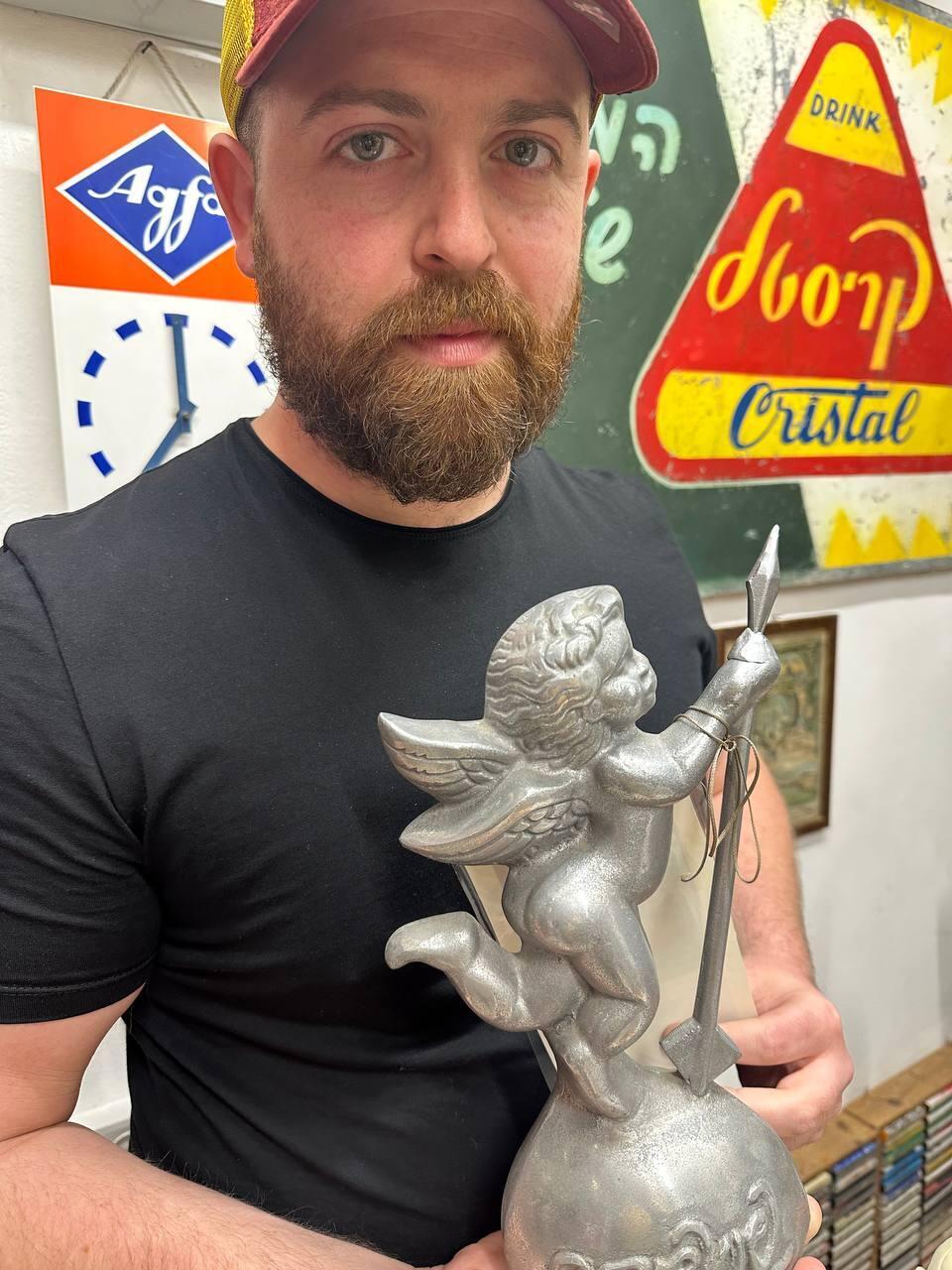
Bar Gindy, host of the People & Collectors podcast, holds a vintage Cupid statue during a visit to collector Vital’s memorabilia archive. Behind him, a mid-century Cristal soda sign—one of the collection’s standout pieces—recalls the early days of Israeli consumer branding
(Photo: Bar Gindy)
In recent years, Vital made a deliberate shift toward Israeli historical items—Israeliana. Independence-era newspapers, early Zionist fundraising objects, military-related memorabilia and election artifacts now form a core part of his focus. “Our history is fragile,” he says. “If we don’t keep it, it disappears.”
That sense of responsibility became even stronger during the war period. Vital describes moments of emotional exhaustion, choosing to come to the collection space instead of breaking down at home. Cleaning, organizing, restoring objects became a form of therapy. “I wanted to leave something behind for my children. Something real.”
The collection eventually outgrew his home. What began as shelves turned into rooms, then into tension. His children were embarrassed to bring friends over. Together with his wife, Vital made a decision: acquire a separate space solely for the collection. Today, much of it still lives in boxes, but the vision is clear. One day, he hopes to create a traveling exhibition or a public display, possibly in collaboration with other collectors.
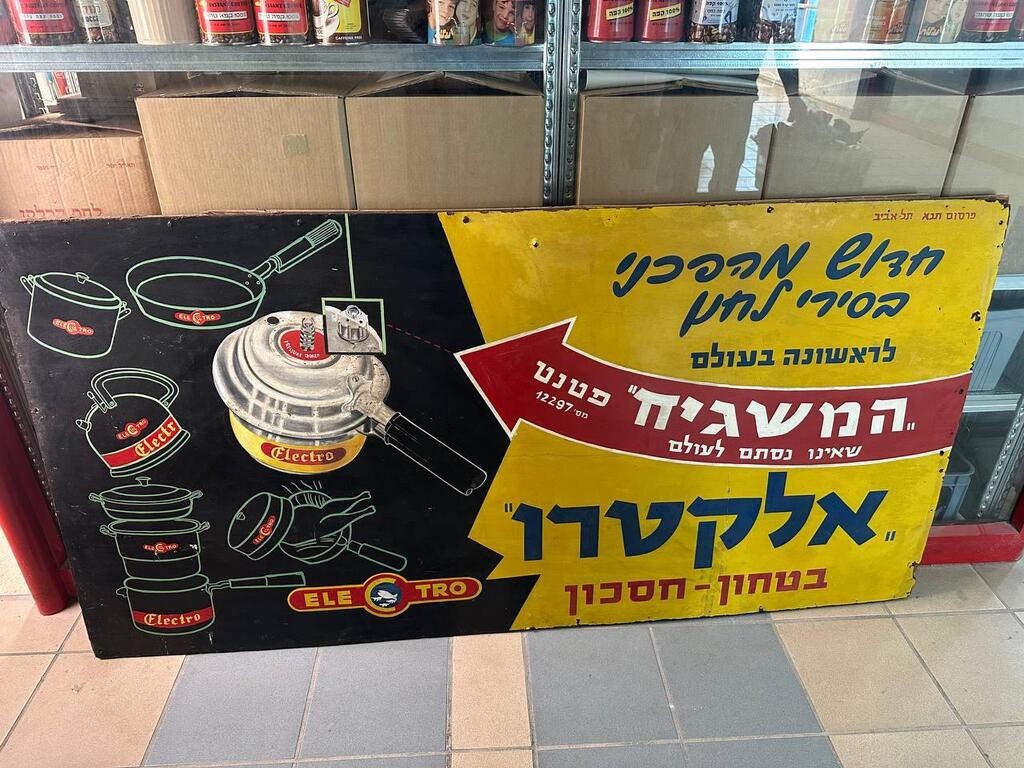
A vintage advertising sign for Electro cookware and pressure cookers, one of the many preserved items in Vital’s growing archive of everyday Israeli life. The sign, made of wood and tin, captures the era’s design and marketing language
(Photo: Bar Gindy)
Vital is careful to distinguish between collectors and traders. In his view, collecting is driven by emotion. Trading is driven by price. “If someone buys only because it will be worth more later, that’s not a collector. That’s a merchant.” This philosophy guides how he evaluates items, how he advises others, and how he chooses what to keep.
Pricing, when it does happen, starts with a simple question: does the object carry personal memory? Items tied directly to one’s own childhood are often priceless. Found objects, on the other hand, can be valued by rarity, demand and condition. But even then, Vital emphasizes context over numbers.
Community plays a central role. Through Facebook groups, Vital helped create a space where people share stories, not just listings. While commerce has crept in, he continues to push for conversation, nostalgia, and shared memory. He consults with fellow collectors, each specializing in different niches, from Israeli malls to early cinema culture.
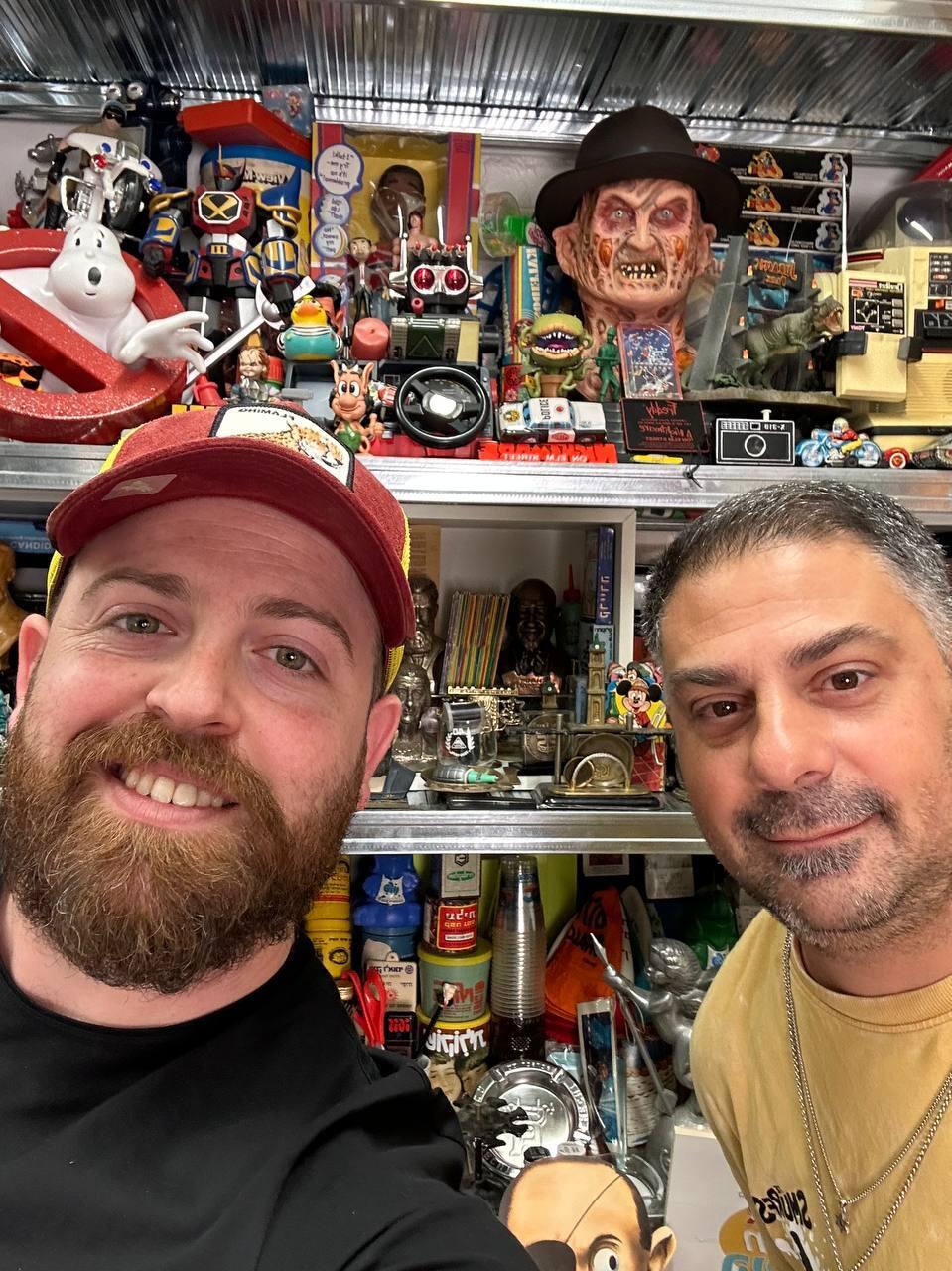
Gindy (left) and Vital (right) pose in front of shelves packed with vintage Israeli toys, advertising figures and memorabilia
(Photo: Bar Gindy)
Ultimately, Vital’s collection is not about perfection. It is about touch, smell, restoration and time spent with objects. “Every item here passed through my hands,” he says. “I cleaned it. I fixed it. I lived with it.”
The message he leaves is simple: collect slowly. Collect emotionally. Let objects tell stories before assigning them prices.
- For more stories from Vital and other collectors, check out the People and Collectors podcast. The full interview is available with subtitles in English and 50 other languages.