

In October 2008, Iranian authorities launched an investigation into Golshifteh Farahani after she became the first Iranian actress to appear in a Hollywood production, portraying Leonardo DiCaprio’s love interest in Ridley Scott’s Body of Lies, and did so without wearing a hijab.
Just over three years later, she was banned from returning to her homeland. The reason over a nude photo shoot for the French magazine Madame Figaro. “You are invited to offer your artistic services elsewhere,” Iran’s regime informed her.
Gallery
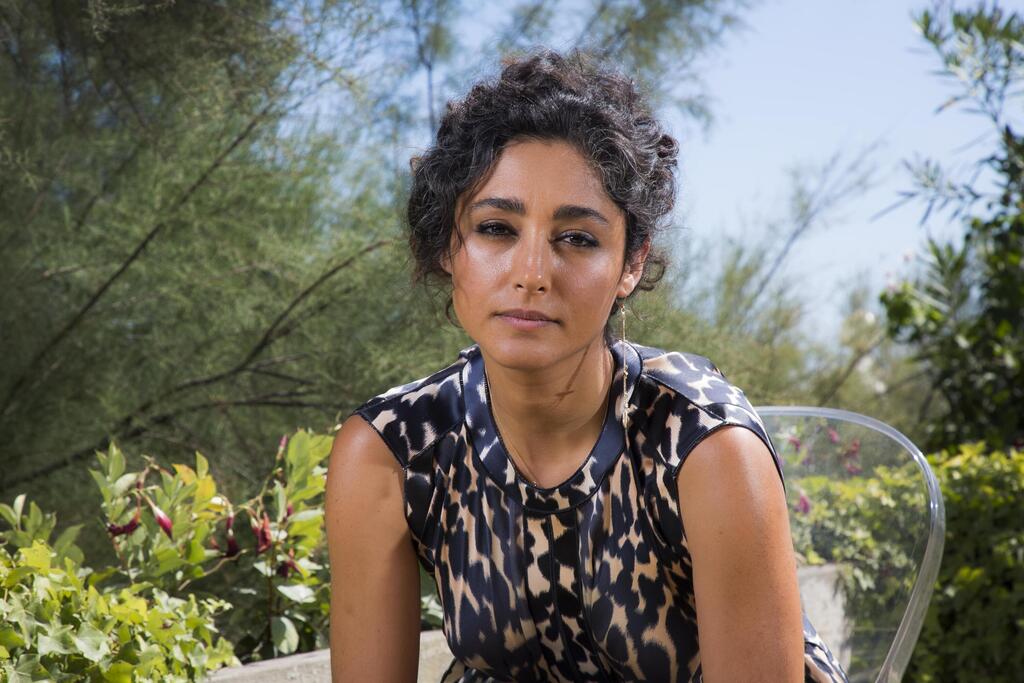
Golshifteh Farahani. 'Every immigrant leaves a large part of themselves behind'
(Photo: Joel C Ryan/Invision/AP)
Since that clash with Iran's authorities, Farahani has focused on building her career abroad. It gained momentum with roles in European and American films. Despite her success, she has never forgotten where she came from, nor can she go back.
“Every immigrant leaves a large part of themselves behind, whether it’s Iran or Somalia,” says the 43-year-old actress in an interview with Ynet during the Cannes Film Festival. “It’s a kind of mourning you live with your entire life. A disability you carry forever.”
This “disability,” as she calls the humiliation she experienced following her country’s rejection, has not stopped Farahani from forging an impressive and varied path. She has worked with directors such as Jim Jarmusch, Jon Stewart, the Russo brothers and Louis Garrel (with whom she also had a romantic relationship), and acted alongside Christian Bale, Adam Driver, Antonio Banderas, Marion Cotillard, Sienna Miller, Chris Hemsworth, and Johnny Depp in 'Pirates of the Caribbean'.
In recent years, she also starred in two Israeli productions by director Eran Riklis: the 2017 spy thriller 'Shelter', and the 2024 drama 'Reading Lolita in Tehran'.
Acting in Israeli films is like saying ‘F--- You’ to the Iranian regime
“It’s not ‘F--- you’ to the regime. I’m really not interested in them. It’s simply about being a person with self-respect and saying: we are artists, and we transcend borders. That’s what artists do; they are ahead of their time.
The world is becoming increasingly polarized, and politics is tearing it apart, but through art, we reconnect it. For me, an artist is beyond nationality, beyond gender, beyond religion. I don’t see people as male or female, Israeli or not; it doesn’t matter. Art is inclusive. Politics divides. And here we are, meeting in Cannes, while the world is tearing itself apart."
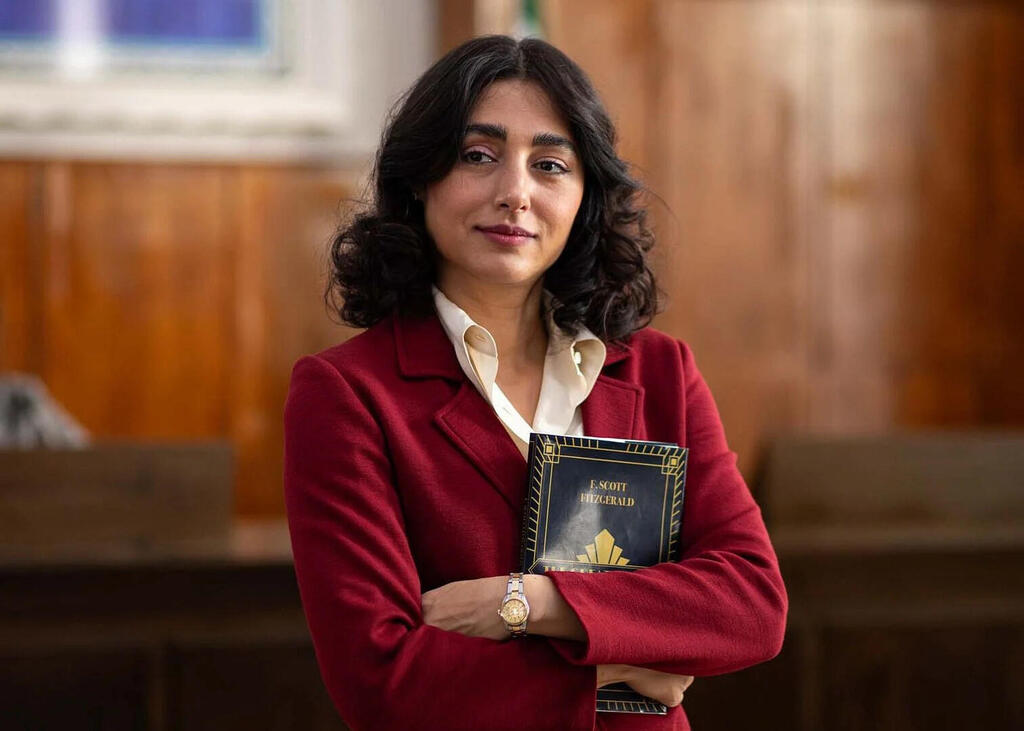
From 'Reading Lolita in Tehran'. "An artist is beyond nationality"
(Photo: PR)
The meeting in Cannes took place ahead of the premiere of Alpha, directed by controversial French filmmaker Julia Ducournau, best known for Titane, which won the Palme d’Or in 2021.
Like her earlier films - the violent thriller about a female serial killer or 'Raw', a coming-of-age drama about a girl with a hunger for human flesh - Alpha also centers on a young woman dealing with intergenerational trauma amid a mysterious pandemic that turns human tissue into stone.
Farahani plays Alpha’s single mother, a hospital doctor living in the shadow of loss after her drug-addicted brother (played by Tahar Rahim) contracts the virus from a counterfeit syringe, and she is unable to move on with her life.
When Alpha (portrayed by Mélissa Boros) comes home one day with a new tattoo, her mother’s anxiety erupts, along with painful memories. All the while, society is consumed by suspicion toward the infected, a theme that echoes the AIDS epidemic of the 1980s.
“My character is full of fear", Farahani says of the mother figure in the film, which was also screened at the recent Haifa Film Festival. "She is stuck in trauma and mourning she can’t let go. We see how she passes it on to her daughter. At some point, it’s the daughter who saves her. She doesn’t want to live like that and demands that her mother release the memory.
"The most extraordinary thing about this film is that despite all the ugly, difficult things that happen, it’s full of light, of human moments, of love, of empathy without judgment. No one is judged on who or what they are. There’s so much tenderness and emotion."
Alpha - Trailer
(Courtesy of NEON)


Balancing that tenderness with the film’s disturbing images, which include syringes and fossilized human bodies, was surely not easy.
“The irony is that I was much more connected to the drama. The body horror was secondary for me. A body turning to stone, that was easy. When I watched the film, I realized that emotion is what truly matters. Even in scenes that seem graphic, it’s not about the physical, but about the feeling that exists between a brother and sister. It’s not about the fantasy world Julia Ducournau created."
Farahani admits she had never seen any of Julia Ducournau’s films before being cast in Alpha, a surprising disclosure, given Ducournau’s notoriety for extreme graphic body horror, like the cannibal family featured in 'Raw' or the young woman who becomes pregnant after sex with a car and embarks on a killing spree in 'Titane'. It was her agents, Farahani says, who insisted she read the script.
“I’m always scattered, I receive a lot of scripts and don’t get around to reading them,” she recalls. “But when they told me the production was ready to move on without me, I finally read it, and it touched me to the core. I was genuinely moved, and I wrote to Julia saying how proud and excited I was that she chose me for this role.” Working with Ducournau, known for her dominant and intense directorial style, proved challenging but rewarding, she adds.
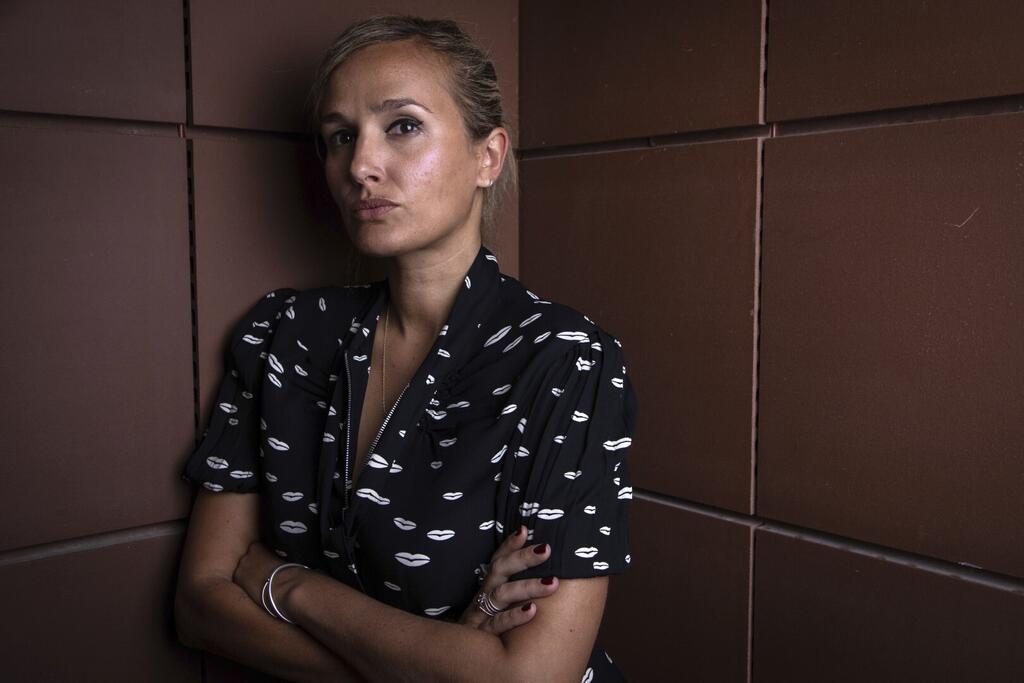
Julia Ducournau
(Photo: AP)
“With Julia, there isn’t a lot of room for questions. What she says, that’s the final word,” says Farahani. “Sometimes she doesn’t have the patience or time to explain. She’s so deep inside her world as a director that she just tells you: that's what it is, and we’re going to get there.
"Actors are used to asking questions, but pretty quickly you understand that what she wants is what's right. So you stop asking questions. Even if you don’t understand, you give her exactly what she’s asking for, and that’s the right thing to do."
“For me, the biggest lesson was to learn how to give in. I just had to show up, no questions asked. When you watch the film, you understand exactly why. I wish I had known that earlier; it would have saved me some adjustment time. But when you have a director who’s thinking ahead, it gives you confidence. She plans several steps forward. You don’t need to worry about anything. She knows everything, like the Bible, from A to Z."
At the same time, Farahani found herself mentoring her co-star Mélissa Boros, a 19-year-old newcomer who plays 13-year-old Alpha. Boros brought raw authenticity to the role but needed guidance during the shoot.
“I always say, the moments when you need to be the most careful and attentive are when you’re working with inexperienced actors, because they’re the best,” says Farahani. “They’re like children, like non-actors. They bring us into the real world. For me, she’s a star, and the world will soon discover her. She’s so determined and hard-working that sometimes we had to slow her down. Working with her was one of the most amazing experiences we had. It was a privilege."
Boros, for her part, says she believes she was cast because of her personality, which aligned with Alpha’s character. “I think Julia chose me because she wanted someone with Alpha’s spirit,” she says. “They chose me because I’m very determined. The downside is that it can be annoying, and I can definitely be annoying. The challenge wasn’t about personality, but about age. I had to learn to walk, speak, and behave like a 13-year-old. But in terms of character, it’s very much me. I’m stubborn and determined.”
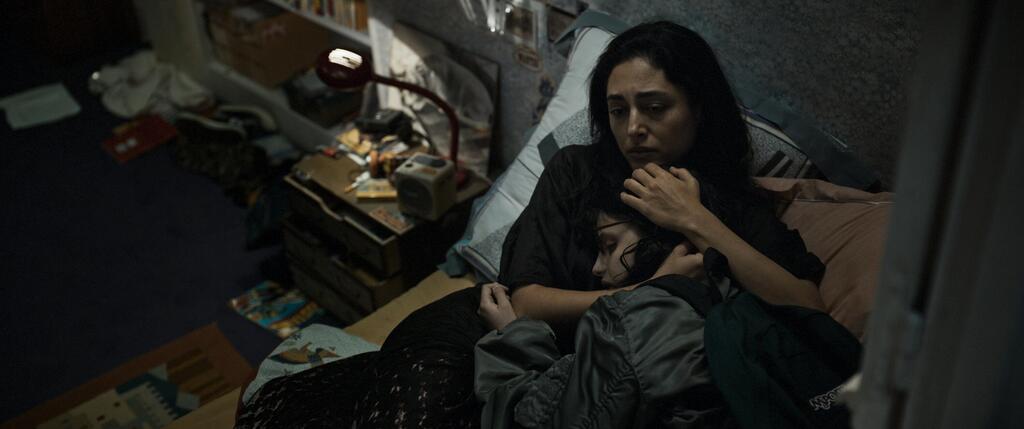
Farahani with Mélissa Boros in 'Alpha'. "She’s a star"
(Photo: PR)
The film draws heavily on the AIDS epidemic in the 1980s, well before you were born. How did she connect to that?
“We’re a generation of hypochondriacs,” she says. “In the film, things aren’t entirely clear. There’s a lot of uncertainty about what’s happening, what this disease is. It could be AIDS, or COVID; it's not clear. That uncertainty is what makes it truly scary.
"For Alpha, that fear also comes from being exposed to things that are not age-appropriate. She grows up too fast, becomes an adult before her time, because the world around her is already in crisis. I saw a political message in the film, a harsh criticism of a society that isolates, abandons, and crushes the sick. That’s what Alpha fights against, because she’s broken too. That’s what I tried to convey."
Farahani identifies with the film’s critical message, especially as it relates to her personal life in France and her severed ties with her native Iran, where another kind of intergenerational trauma has existed since the Iranian (Khomeini) Revolution.
“All of us are disabled in some way by the traumas we carry, especially those we pass on to our children,” she says. “But what we do with those traumas is what matters. It’s always the next generation that helps us out of these traumas; they’re the ones who choose, for us, to climb out of the pain and the mud we’re stuck in.”
She believes Alpha will resonate with young people in Iran. “Oh God, people in Iran are going to go wild over this. The art scene there is so advanced, intellectual and amazing. I think people are already waiting for this film to come out.”

Golshifteh Farahani
(Photo: Arthur Mola/Invision/AP)
One of the film’s central messages is that emotional attachment comes with a price, sometimes too high. To love someone means being able to let them go, and also to release yourself from the painful memories they evoke. For you, this isn’t just a cinematic theme; it may be personal, given your attachment to your homeland.
“I think the bravest act is letting something go. Not doing something but releasing it. Saying 'no'. For someone like me, who’s rarely afraid to jump and act, I live in survival mode, and I don’t always realize how wounded I am. All my life, I’ve been running from geographical and political monsters. We cling to things.
"But sometimes, you have to let go of love when it’s not good for you. If you stay stuck, you’re not only trapping yourself but also making your daughter pay the price, too. In a way, we’re all victims of what our parents couldn’t let go of. The most courageous act of love is releasing someone. Respecting their choice, even if you don’t agree. And that goes for all the ghosts that haunt you, just let them go. Let them leave."