

The West Wing
Television shows do not influence reality. If they're good, they manage to reflect it, and if they're really good, they manage to predict the future. But "The West Wing" actually did influence reality, for better and for worse. Everything about "The West Wing" was wonderful. Aaron Sorkin was a wizard with words, the casting was perfect, the issues were real, and the staff of beloved President Jed Bartlet were intelligent and quick-witted as they strode briskly through the corridors. "The West Wing" raised an entire generation of young liberals who entered politics because they had seen on television that American politics was the best workplace in the world. Even the opposition consisted of noble public servants, and the leading Republican was a liberal who believed in climate change.
Two years after "The West Wing" ended with the election of the first Hispanic president, the United States elected its first Black president. But throughout that time, tectonic shifts were taking place beneath the surface. Even veteran political experts failed to see them coming, so it is difficult to expect a fictional television series to have done so. Yet as the years go by, the main legacy of "The West Wing" increasingly appears to be a fantasy completely detached from the reality of American politics. Tzippy Shmilovitz
House of Cards
As the first binge-watching series in history, "House of Cards" has earned its place in television's hall of fame. But it is also the only American political series of the 21st century to have approached the great myth with complete cynicism and almost no hope. "House of Cards" presented a corrupt and criminal version of a White House that only appeared to be a place where people sought power to serve the public, when in reality they pursued power, by any means necessary, simply to acquire even more of it. The series premiered in 2013, when Donald Trump was still a reality TV punchline, and used a Democratic president to break the fourth wall and hold up a deeply unflattering mirror to America.
'House of Cards' Season 4


"House of Cards" lost considerable momentum in its later seasons, and its ending was a disaster because of the Kevin Spacey fiasco. But just as "The West Wing" has aged poorly, "House of Cards" has aged remarkably well. Frank Underwood remains one of the most frightening characters ever created for television, and the only thing more terrifying was his twisted marriage to his wife, Claire, who was even more powerful than he was. The things they did, separately and together, were so wicked that they seemed like an exaggerated caricature at the time. Now they look almost like a documentary. Tzippy Shmilovitz
House of Cards (UK)
It is rather sad that the American version of "House of Cards" is considered a milestone in television history, because of binge-watching rather than its quality, yet has still done little to raise awareness of the original. The gap between the original and its imitation is roughly the distance between David Levy and Hanoch Milwidsky. It is fairly obvious which of the two Machiavelli would have chosen. His mastery of demagoguery and manipulation is the guiding spirit behind protagonist Francis Urquhart's corrupt ascent from an obscure figure on Parliament's back benches to an almost permanent leader.
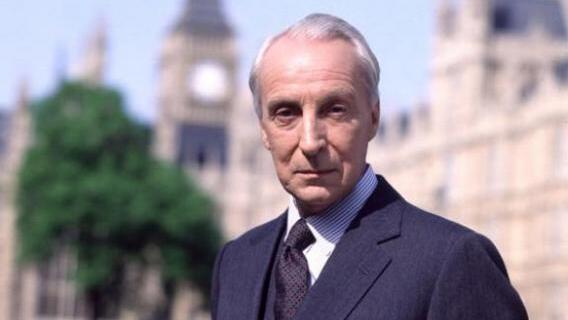
What was truly magnificent about the three installments of "House of Cards" ("House of Cards," "To Play the King" and "The Final Cut") was their ability to illustrate the gulf between the polite, sophisticated public facade of politics and politicians and the brutality and decay unfolding behind the scenes. Years before British populism brought dramatic developments such as Brexit and extreme figures such as Boris Johnson and Nigel Farage to center stage, "House of Cards" sought to expose the hypocrisy of the elite that governed the nation at the expense of the public. In Britain, as only Britain can manage, revenge was served cold, with jam and butter on the side. Einav Schiff
Veep
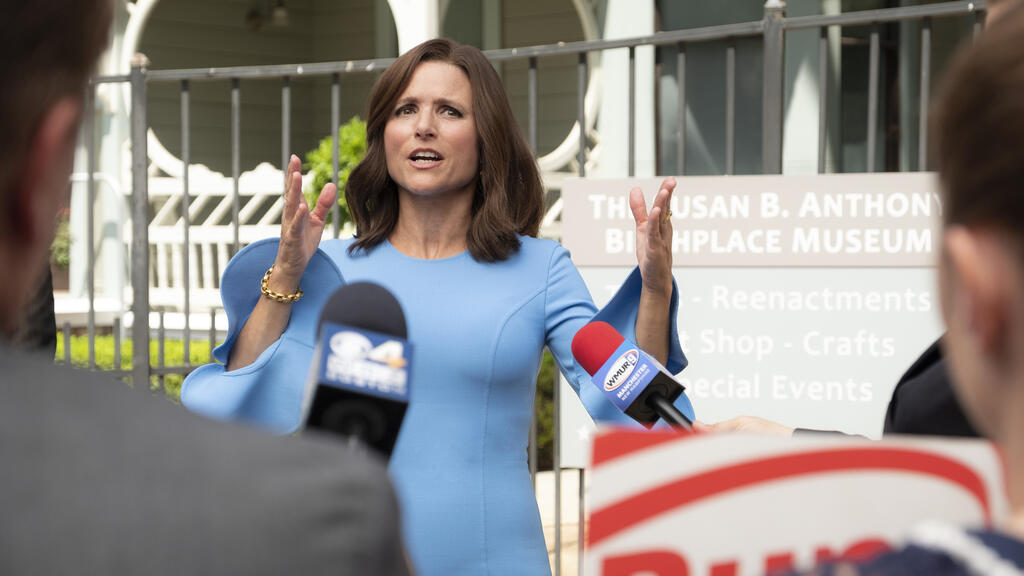
The biggest problem with "Veep," seven years after it ended, is the same problem that afflicts every political series of recent years, and political fiction in general: Our reality has become more preposterous, absurd and ultimately devastating than anything political television has ever produced. But that's it. That's the only problem, in hindsight, with British creator Armando Iannucci's brilliant, caustic and razor-sharp series, which was and remains a masterclass in comedy writing and exceptional performances. It really doesn't get any better than this.
From 'Veep'
(Courtesy of yes)
Selina Meyer, the vice president (at least initially), played in a monumental performance by Julia Louis-Dreyfus (and make no mistake, this is the role of her career, with all due respect to Elaine Benes), is a ruthless sociopath with narcissism on a monstrous scale. Her personal aide, Gary (Tony Hale), is a doormat who lives to serve her. Dan Egan (Reid Scott) is an unscrupulous opportunist who would trample his own grandmother for personal gain. Amy Brookheimer (Anna Chlumsky) has sold what remains of her soul to be part of this collection of villains. And Jonah (Timothy Simons), well, he's Jonah. Those who know, know. Together, they are just part of the sprawling cast of scoundrels Iannucci has assembled, all designed to show viewers exactly whose hands they have placed their fate in: a motley collection of despicable functionaries who care only, and exclusively, about themselves and their carefully cultivated public image. Aaron Sorkin and his sentimental idealism are wish fulfillment for the weak. "Veep," as we learn with every miserable passing day, is the real story. Yoni Beinart
Borgen
Between the excessive idealism of "The West Wing" and the irredeemable darkness of "House of Cards," there was room for a political drama that neither smelled of perfume nor reeked of a slaughterhouse. The answer came, naturally, from Denmark, where the story of a talented politician, Birgitte Nyborg, took an unexpected turn when she became prime minister. Of course, neither Nyborg nor her family was prepared for the dramatic change, and trouble was quick to follow, even in a country where the woman responsible for national security rides her bicycle to work. The political forces surrounding her, along with the media tasked with covering her, also grapple with new and old crises arising from an ever-changing, unforgiving reality.
'Borgen' Season 4 trailer
(Netflix)
Beyond its strong writing and sympathetic characters, the global success of "Borgen" lies in its position as an island of political sanity at a time when political systems across the West, particularly in the United States, were beginning to lose their minds. The series held on to the rules of the game while they still applied, but also offered a glimpse of the price of losing them, amid growing polarization and the shift from a politics of compromise to a winner-take-all approach in which everyone ultimately loses. Today, all we can do is look back with longing. Einav Schiff
Polishuk
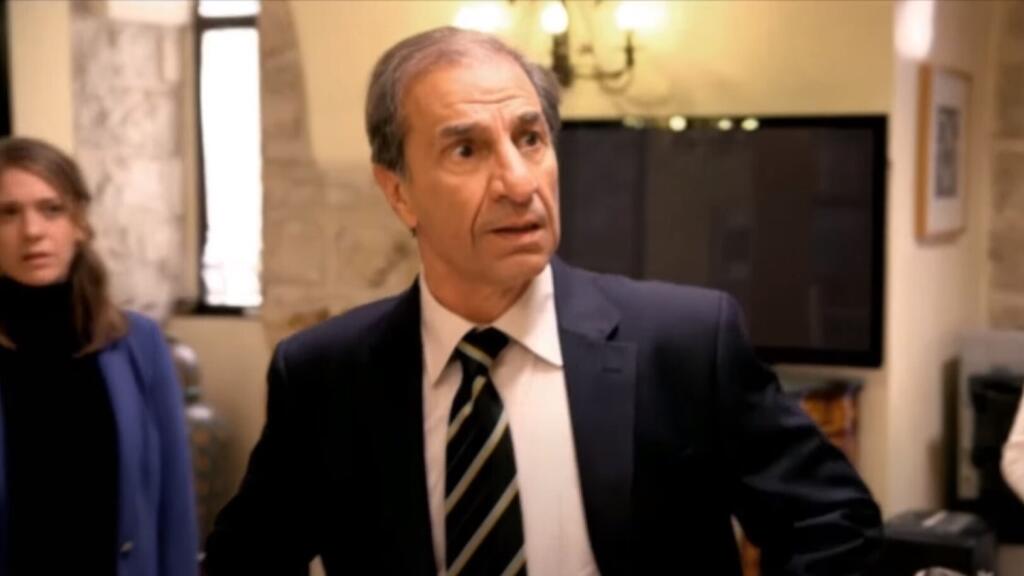
"Polishuk" was perhaps the best genre-blending series Israeli television has ever produced. It began, of course, as a brilliant political satire. Its creator, Shmuel Hasfari, conducted extensive research and spent months in the Knesset cafeteria to capture the essence of Israeli politics, turning "Polishuk" into an educational series that taught us a great deal about how the system really works. But at a certain point, the tables turned. Reality began borrowing material from the series and taking it to even greater extremes, transforming itself into a horror show. It now seems that even the most ridiculous and absurd storylines featuring Minister Polishuk, along with the cruelest schemes orchestrated by the political plotters surrounding him, have gone from cautionary tales to little more than suggestions that Israeli politicians draw inspiration from before raising the stakes even further.
From 'Polishuk'
(Screenshot)
It is not easy to laugh at a satirical series when you know that, in real life, reality is the one laughing at us. But sometimes that is all there is left to do until that event called an election comes along and gives us a chance to make a real difference. Until then, we can take comfort in Rubi Polishuk, the minister for social advancement, and his friends Kuzo, Bobes, Suli and Vicky, and hope that even after the election, we won't wake up to discover that the joke is still on us. Smadar Shiloni
Motek Bool BaEmtza
When Shmuel Hasfari created "Polishuk," he already knew perfectly well that Israeli politics was absurd. More than a decade later, when he returned to the corridors of the Knesset with "Motek Bool BaEmtza," he took that absurdity several steps further, into a far more grotesque and outrageous world whose distance from reality is no longer always clear.
At the center of the series is Motek Mordechai (Gily Itskovitch), a young former reality TV contestant from a broken home who arrives at the Knesset convinced that the country desperately needs change, only to quickly discover a world of intrigue, backroom deals and power games. This world is populated by a gallery of characters whose grotesque personalities and exaggerated stereotypes are almost reminiscent of Hanoch Levin's work, portrayed by Naomi Levov, Anat Waxman, Avi Kushnir and Yaniv Biton.
Through Motek's encounter with the political establishment, Hasfari manages to capture both pop culture, where fame has long since become a form of political currency, and the sheer incompetence that characterizes the Knesset in Jerusalem. The result is a funny, painful and, above all, frustrating reflection of reality. Even when it occasionally slips into optimistic sentimentality, the series reminds us that sometimes one woman with nothing to lose can still shake up the system. Aya Chajut
The Diplomat
If "Polishuk" was the sweet pie thrown in the Israeli voter's face, "The Diplomat" is the opposite extreme. A series about intelligent, witty and idealistic politicians, or rather diplomats, each with slightly different ideals, played by Keri Russell and the astonishingly sexy Rufus Sewell. Debora Cahn's writing and their excellent performances manage to turn conversations about geopolitics and arms deals into something thrilling and sexy. The series began as a kind of guilty pleasure, focusing primarily on the turbulent marriage of two American diplomats and political figures. But season after season, it refined its political storyline until it became a genuinely outstanding drama, the kind that makes you envy people who have yet to watch it.
'The Diplomat' Season 4 trailer
(Courtesy of Netflix)
And "The Diplomat" just keeps delivering. In its second season, Allison Janney and Bradley Whitford joined the cast, making every fan of "The West Wing" sigh with delight, this time playing the president of the United States and the first gentleman at her side. Cahn, who was also among the writers of "The West Wing," brings everything that made that series great into "The Diplomat," turning us into devoted fans of international politics. So put your red phone on silent, make sure nobody tugs at your lapel and dive right in. Smadar Shiloni
Madam Secretary
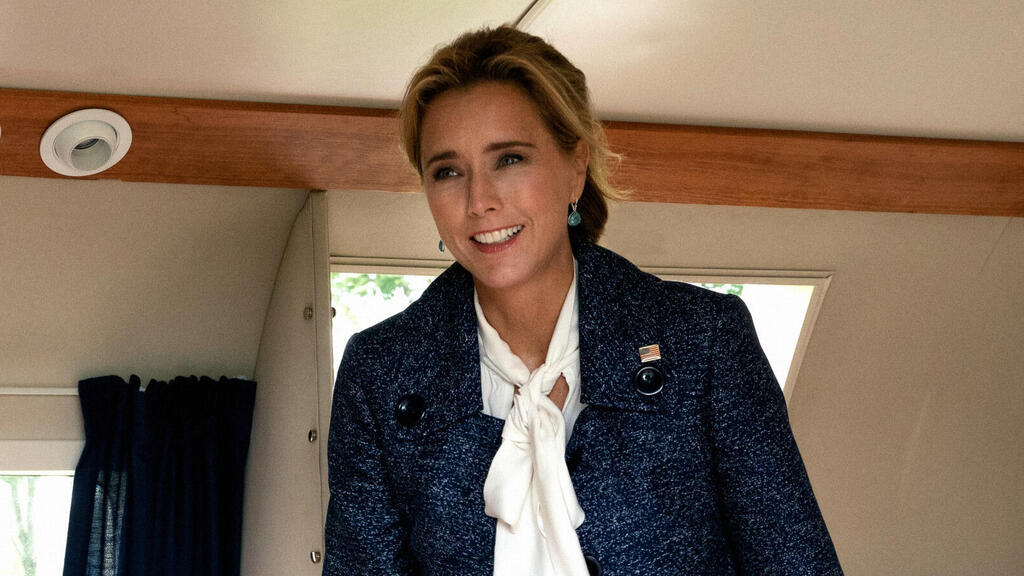
Perhaps the most popular political series nobody talks about is "Madam Secretary." Six seasons, 120 episodes, and somehow it still fell through the cracks. It arrived too early for the prestige streaming era, was too conventional for critics and aired on CBS, a network synonymous with police procedurals and viewers in their 60s. And that's a shame, because Téa Leoni, as Elizabeth McCord, a former CIA analyst who becomes secretary of state and later president of the United States, is wonderful in almost every episode. She is sharp, funny, compassionate and warm when necessary, but also tough and businesslike. Above all, she is another woman in power who does not have to choose between being competent and being likable.
From 'Madam Secretary'
(Courtesy of yes)
True, "Madam Secretary" did not portray the cynical or deranged world of "Veep" or "House of Cards." It was optimistic, believed in the power of diplomacy and integrity to resolve complex crises, and even McCord's marriage to her husband, Henry (Tim Daly, who later became Leoni's partner in real life, stepping into the shoes of her former husband, David Duchovny), was supportive, healthy and equal, heaven forbid. But that did not make the series shallow or dull. "Madam Secretary" made geopolitical issues accessible while weaving in personal storylines, and did so wonderfully. The fact that it aired during Trump's first term turned it into the wildest fantasy of that era: a decent politician who gets up in the morning and simply does her job. Amen. Smadar Shiloni