

Dr. Liora Hendelman-Baavur: Researcher of women in modern Iran
A senior researcher at the Alliance Center for Iranian Studies at Tel Aviv University and a member of the Dvorah Forum, she is a historian of modern Iran and editor of the essay collection “Iran Then and Now".
Gallery
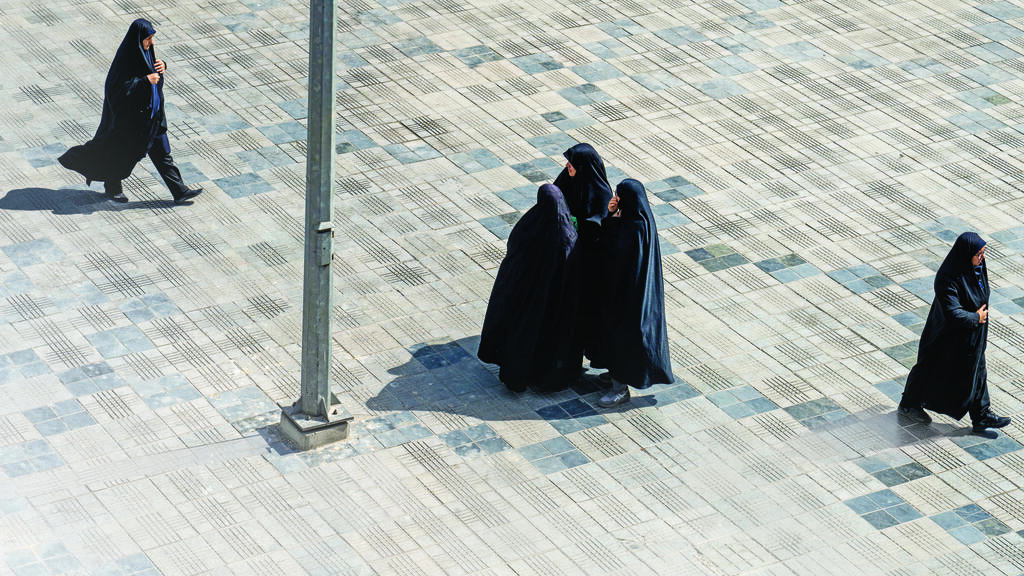
'Contrary to what many believe, Iranian women were never cut off from the world'
(Photo: GettyImages IL/Majid Saeedi)
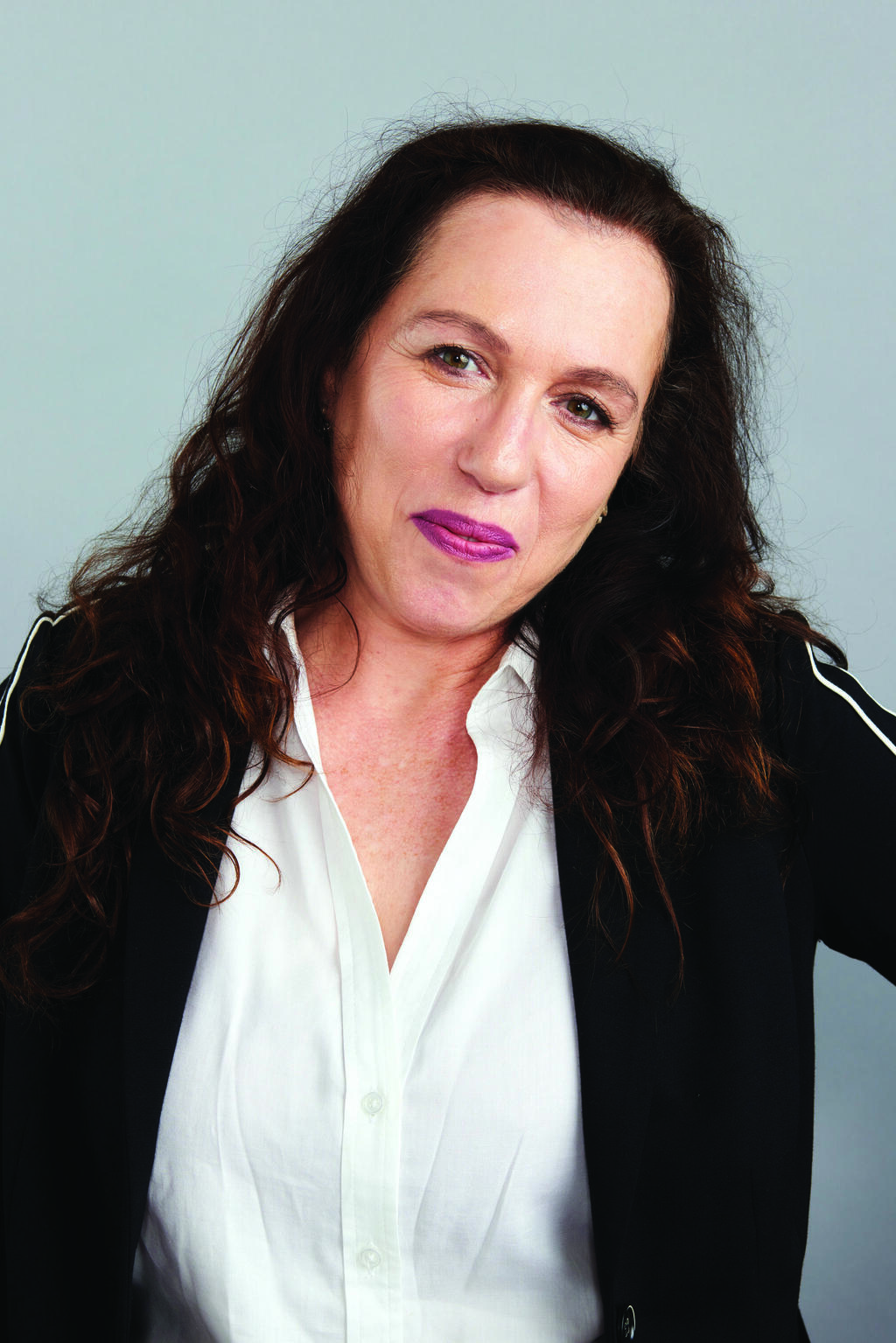
'Iranian women have always built ties with feminist movements abroad, even in the hardest times'
(Photo: Oron Kaplan)
The media often shows Iranian women taking to the streets. Are they really leading the protests there?
“Iranian women have, over the years, become a symbol of the struggle inside Iran and also the showcase through which the world looks at the country. You have to understand that the veil is the ultimate object of this regime. If you see a man walking down the street in ordinary clothing, you will not necessarily recognize the oppression, but a mass of women in black chadors stands out.
“Ayatollah Ruhollah Khomeini, the architect of the Iranian Revolution, understood this already in 1979 and called the veil ‘the flag of the revolution.’ For him, women in veils symbolized resistance to the shah and religious devotion, which is why he required all women in Iran to wear it. Today, when women remove it or wave it on a stick, it becomes a powerful statement without words. It is a real risk to their lives, and it is inspiring.”
Photos from Iran in the 1970s, before the revolution, show women wearing miniskirts with their hair uncovered. The contrast is striking.
“Those images mostly represent urban women from middle- and upper-class backgrounds who could afford a secular lifestyle. Alongside them were women from religious families who feared Western influence and did not allow their daughters to pursue education.
“The revolution created a huge rupture, but what is remarkable is that, contrary to popular belief, Iranian women were never cut off from the world in the way people in North Korea are. They always maintained ties with feminist movements abroad, even during the hardest times.”
There is a sense that they live ‘double lives.’ Is that accurate?
“Absolutely. There is public life, where they are required to behave modestly, wear veils and avoid socializing with men they are not married to, and then there is what happens under the radar.
“I was very surprised to discover, for example, that ‘Fifty Shades of Grey’ was sold under the counter in Iran. Inside their homes, they live as they choose. When they gather in private homes or at social events, you can see them dressed in completely modern clothing.”
They have become the face of the protests.
“Women also protested during the Arab Spring in Egypt, and in the UAE some women fight through the legal system. Each group uses the tools at its disposal, and in Iran they take to the streets.
“When I interviewed women who were active in the 1960s, they said that partly thanks to their persistent struggle to raise public awareness, the shah granted women political rights in 1963.”
Do authorities respond differently to women who protest?
“There is no uniform policy. At certain times authorities harass women more, arrest them and beat them. After the protests of 2022, and now as well, we heard about many women who were shot; some were shot in the eye so authorities could identify them as protesters.
“We know of arrests of schoolgirls. There were rumors that they were transferred to institutions where they underwent ‘reeducation’ to teach them the virtues of modest dress. There are also testimonies from the latest wave of violence about families struggling to retrieve the bodies of victims, especially women, and about ransoms demanded by authorities.
“Amnesty International reports describe disappearances, abuse, prolonged solitary confinement, confessions extracted under torture and sexual violence.”
So they are targeted as a deterrent?
“Yes, absolutely. “It stifles any chance for a women’s rights movement to grow in an organized and organic way. Everything happens out of sight.”
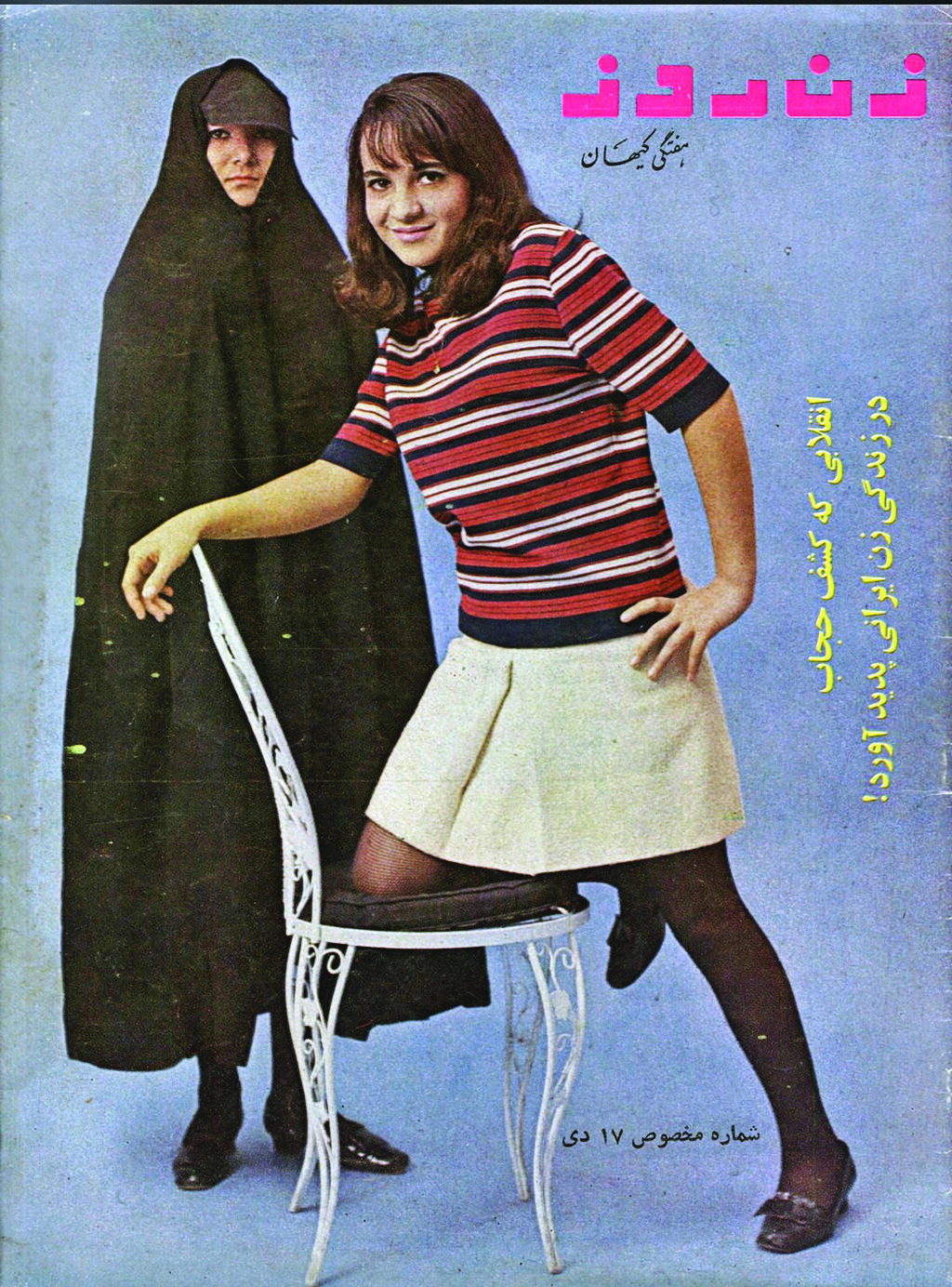
Cover of the weekly 'Zan-e Emrooz' ('Woman of Today') from 1968
(Photo: 'Woman of Today')
Now that Khamenei is dead, can you understand what Iranian women are experiencing?
“Most of the information reaching me comes from social media and is incomplete and inconsistent. Right now they are processing what happened and the shock that the figure perceived as the greatest threat to their lives is no longer there.
“The reactions include disbelief, crying and shouting, a mixture of fear and hope for a better future. It will take time for them to understand how to move forward. In that sense, they have a lot in common with us Israelis, who also experience intense events and uncertainty about the future.”
How did you become interested in this field?
"In the 1990s, when Iran interested almost no one and Israel’s main enemy was Iraq, I saw a student reading a book about women and the revolution in Iran. I read it and felt mesmerized by it. I discovered a cultural richness that drew me in. Today Iran interests everyone, but for me it has always been captivating.”
Your doctoral research, which was later published as a book, focused on women’s magazines. What did you examine?
“The research closely examines popular Iranian women’s weeklies between 1963 and 1979 and analyzes how texts and images taught women what modernity should look like in terms of family, work, beauty, consumerism, morality and nationalism.
“In the two decades before the revolution, women’s weeklies helped construct the figure of the ‘modern woman’ as part of the monarchy’s modernization project. But precisely because of that, the figure also became a target of criticism.
“Opposition circles argued that she was ‘Westernized,’ consumerist and inauthentic, and therefore could not serve as a national model. Among Iranian thinkers of that period, Fatima, the daughter of the Prophet Muhammad, was presented as a model of an active and revolutionary Muslim woman, in contrast to the Western model and unlike the passive religious image. It was a kind of Islamic feminism.
“Iranian thinkers who opposed the shah used the tools and critiques of second-wave feminism against women’s magazines to attack the modern woman model those magazines promoted and instead to advance Islamization.”
What surprised you most in your research?
“The first women’s newspaper in Iran, ‘Danesh’ (‘Knowledge’), was published as early as 1910 and was linked to one of the first struggles of Iranian women: gaining access to knowledge.
“The publisher did not even write her full name, only the title ‘Ms. Doctor Kahal.’ She was probably Iran’s first female ophthalmologist. She followed a surprising approach: ‘Write for women, sell to men.’ It was an early and persistent struggle for the right to read and write.”
What project are you working on now?
“I am analyzing billboards in Tehran during the confrontation with Israel, which is a kind of visual public diplomacy. At the same time, I always want to return to those women’s magazines, to where everything began.”
What do you think will happen in Iran now?
“The day after in Iran will be determined less by slogans and more by the question of who fills the power vacuum and at what cost.”
Where in Iran do you dream of visiting?
“In the past I would have said Shiraz or Isfahan. Today, if I had to choose one place, I would want to visit Darband.”
Dr. Sivan Balslev: Researching the history of childhood in Iran
A senior lecturer in Islamic and Middle Eastern studies at the Hebrew University of Jerusalem and a visiting researcher at the University of Stavanger in Norway. Her work examines children in Iran between 1870 and 1970, a period of dramatic change that shaped what is called “modern childhood.”
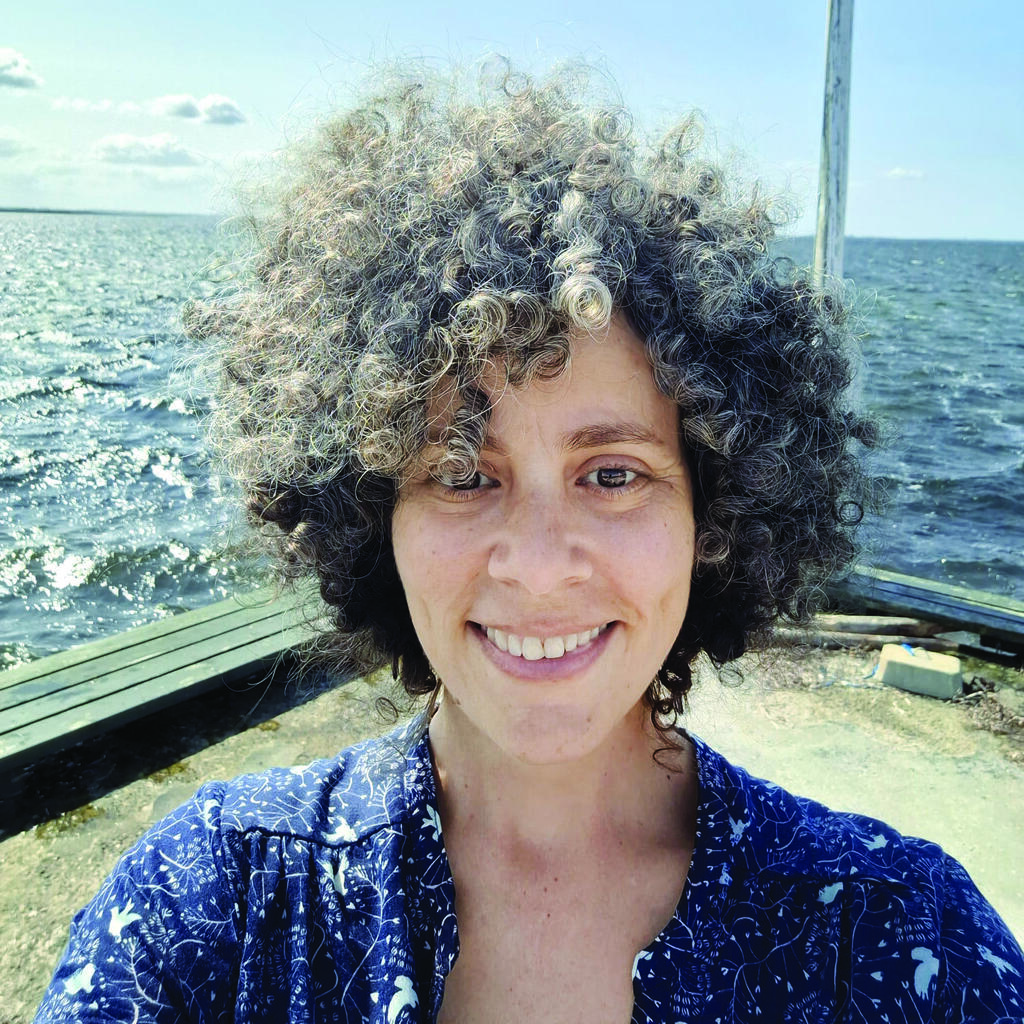
'In the 1940s, when the shah came to power, fewer than 4% of children attended school. That changed only in the 1960s'
(Photo: Private album)
You research the history of children. Isn’t that a topic for education specialists?
“Not at all. One-third of the world’s population are children, and they need to be studied. The major change I examine is the transition from a childhood centered on work, where the child is an integral part of the adult world, to a modern childhood centered on schooling and separation from the adult world.
“In Iran, as around the world, this process occurred alongside declining infant mortality and smaller family sizes. That created a new perception of what a child is, what childhood means and what it should look like.”
How was the Iranian child perceived in the late 19th century?
“In the last quarter of the 19th century, new ideas about childhood began to emerge. An intellectual movement called for changing education from traditional religious instruction to the modern school model.
“This also brought a new approach to how children should be treated and how teaching methods and materials should be adapted to them. Children were seen as malleable beings, described as a ‘tender sapling’ that must be supported so it can grow into a strong tree.
“People began advocating an end to corporal punishment and intimidation, promoting encouragement and clear boundaries instead. The goal was to raise a generation that could restore Iran’s standing among the great powers.”
“In the 1940s, when the shah came to power, fewer than 4% of children attended school. That changed only in the 1960s, when more than 50% of children were in school, alongside a sharp decline in infant mortality and smaller family sizes.”
What about Jewish children in Iran? Were they part of this process?
“For the authorities, Jews were a marginal minority. What is interesting is that modern Jewish education in Iran largely began through Jewish organizations such as Alliance. Once the state education system was established, Jewish schools were incorporated into it.”
We have seen brave young protesters in Tehran’s streets. Is this political involvement new?
“Not at all. Already during the Constitutional Revolution of 1905–1911, photographs, newspapers and memoirs show that children were part of the political arena and the adult world. They participated in demonstrations, gave speeches and collected donations. There were children aged ten and eight, even toddlers of three whose revolutionary fathers brought them along. At that time there was no concept that children should be separated from the adult world. Today’s adults grew up within a very long tradition of struggle.”
Does this explain something about recent decades?
“Definitely. In the recent ‘Woman, Life, Freedom’ protests, we saw schoolgirls at the forefront. Iran has a tradition of social and political involvement and resistance to government oppression that does not exist elsewhere.
“Iran is not Assad’s Syria, Saddam Hussein’s Iraq or Mubarak’s Egypt. It is a society that has produced two major revolutions within a century: The Constitutional Revolution, a defining event in modern Iran, in which the people demanded limits on the shah’s power, the establishment of a parliament and the creation of a constitution, and the revolution that gave rise to the Islamic Republic. Even if the regime tries to silence it, the unrest always exists beneath the surface."
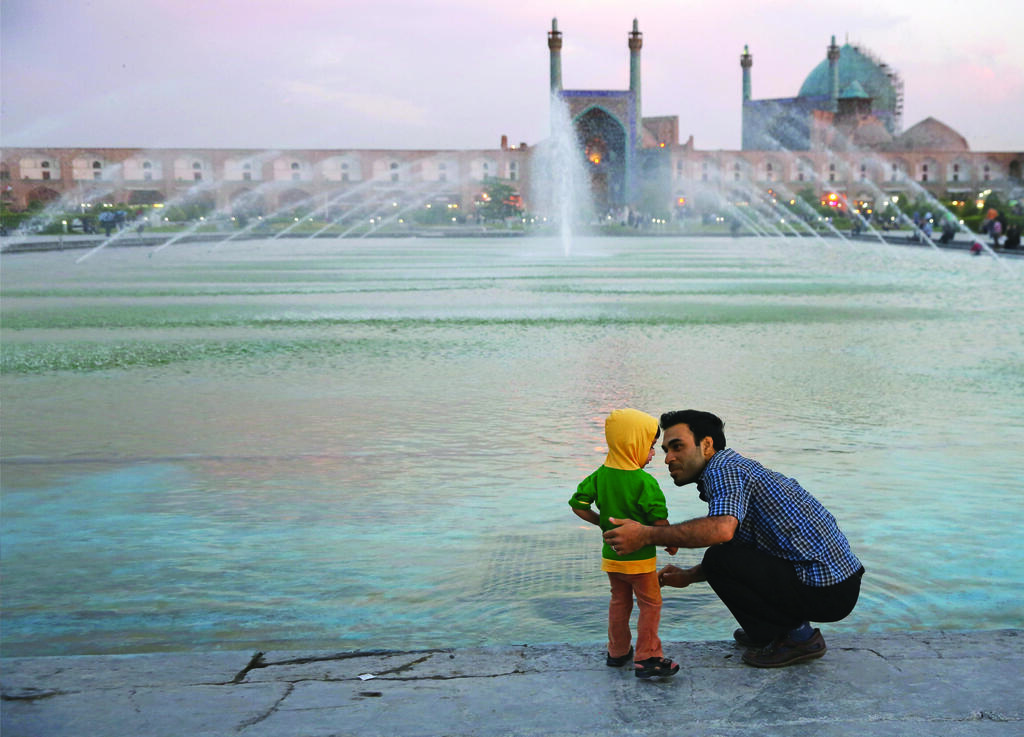
'Children were described as a ‘tender sapling’ that must be supported'
(Photo: GettyImages IL/John Moore)
When talking about children in Iran, one often recalls stories from the Iran-Iraq war about children sent to clear mines with keys around their necks so they could enter heaven.
“I'm very cautious about the ‘keys to heaven’ story. It is very widespread, something everyone claims to know about and even Iranians themselves mention it. But when I tried to find solid evidence, I could not. It is most likely an urban legend. No photograph of such a key or a child wearing one has survived. What we do know is that volunteers at the front received a prayer booklet called ‘Keys to Heaven.’”
What are you working on now?
“I am writing a book that will survey the history of childhood in Iran. Currently I am focusing on the connection between childhood and nationalism. Many nationalist movements use family metaphors: the leader is the father and the homeland is the mother. I examine how adults imagined the ‘children of the homeland.’”
What does that mean?
“There is a perception that children are the future of the homeland, and therefore the state has obligations toward them, and they have obligations toward the homeland. If necessary, they must enlist and sacrifice their lives for it.
“The idea views children as tools that must grow into useful citizens and, to some extent, which is not unique to Iran, it does not necessarily see them as having value in the present. Beyond that, the duty of fathers to educate their children is used to help create an imagined community. All of us are fathers to all the children of the homeland, and therefore we share a responsibility for their upbringing.”
What do you think will happen in Iran after the war?
“I have no idea. The situation is fluid. Historians predict the past, not the future. Iran is not a country where everything collapses once the leader falls. It is not that type of dictatorship. This is not Saddam Hussein’s Iraq, as mentioned. Many people benefit from the regime, many are loyal to the ideology of the Islamic Republic, and the opposition is neither armed nor united.
“I hope, for their sake and for ours, that they will manage to get rid of the current regime and create a system that guarantees more freedom and rights.”
Where in Iran do you dream of visiting?
“I would like to visit the provinces near the Caspian Sea, perhaps travel on the Trans-Iranian Railway and see the ruins of Persepolis.”