

The miniskirt is entering its senior years. The garment, first introduced in 1966, is celebrating its 60th anniversary this year after becoming a staple of women's wardrobes.
No longer a seasonal trend, the miniskirt appears regularly in designers' collections and fashion chains almost every season in a different form — varying in material, color, cut and length — while continuing to showcase legs from the hips down. Or, as fashion designer Mary Quant, often called "the mother of the miniskirt," famously said: "A woman is as young as her knees."

Eleven years after opening her Bazaar boutique in London's Chelsea district, Quant unveiled a short, cheeky skirt. It quickly came to symbolize an era marked by sexual liberation, rock 'n' roll, mind-altering substances and the invention of the birth control pill. It was embraced by young women of the baby boom generation born after World War II.
These were the days of the "Swinging Sixties" in London, when the world belonged to the young, who viewed their clothing as a rejection of their conservative parents' generation.
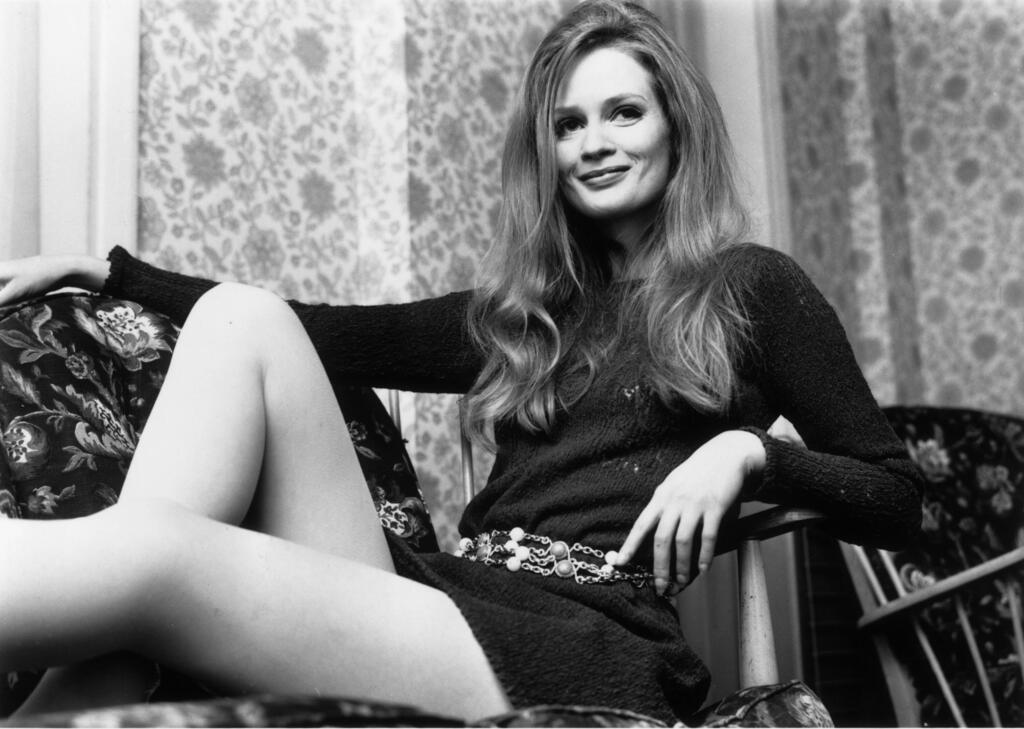
Model Celia Hammond, 1968
(Photo: Reg Burkett/Express/Getty Images)
For many, Quant is credited with creating the miniskirt in 1966, but ownership of the invention remains disputed. French designer André Courrèges claimed the crown first, after presenting ultra-short haute couture dresses inspired by the Space Age in Paris in 1964. "I was the man who invented the mini," he once said. "Mary Quant only commercialized the idea."
Quant disagreed. "That’s how the French are," she said. "It wasn’t me or Courrèges who invented the miniskirt anyway—it was the girls in the streets who did it."
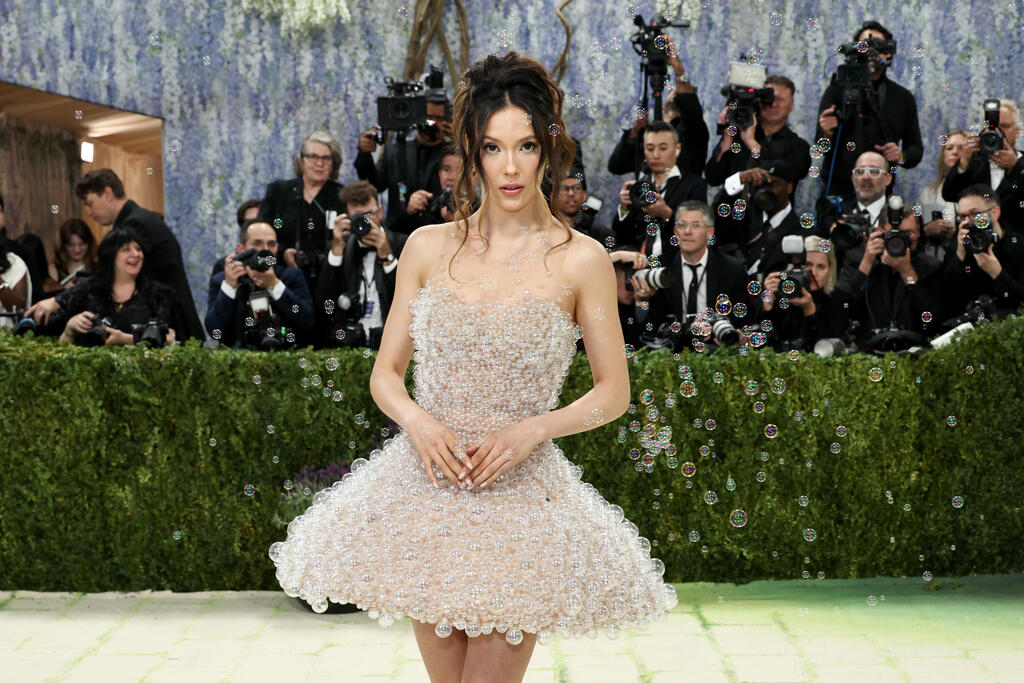
Eileen Gu at the Met Gala, 2026
(Photo: Jamie McCarthy/Getty Images)
She was referring to Chelsea girls who shortened their skirts themselves. Quant happened to be in the right place at the right time and translated what she saw on the streets into groundbreaking fashion.
"We didn't necessarily realize that what we were creating was pioneering," Quant said during a 2009 appearance at London's Victoria and Albert Museum. "We were simply too busy relishing all the opportunities and embracing the results before rushing on to the next challenge!"

Emily Ratajkowski at Versace's spring-summer 2023 show
(Photo: Vittorio Zunino Celotto/Getty Images)
"The amazing thing is that people responded to change," she added in a conversation with late fashion journalist Hilary Alexander. "It really was a revolution because change was visible everywhere. Everyone wore the miniskirt, and young people changed their entire way of thinking. I loved being part of it because the social change was enormous. The 1960s were one big party that lasted an entire decade."
Symbol of rebellion or simply a fashion trend?
When it first appeared, the miniskirt was not merely a fashion trend but the focus of moral panic. Churches and conservative religious institutions viewed it as a gateway to promiscuity, and they were not alone.
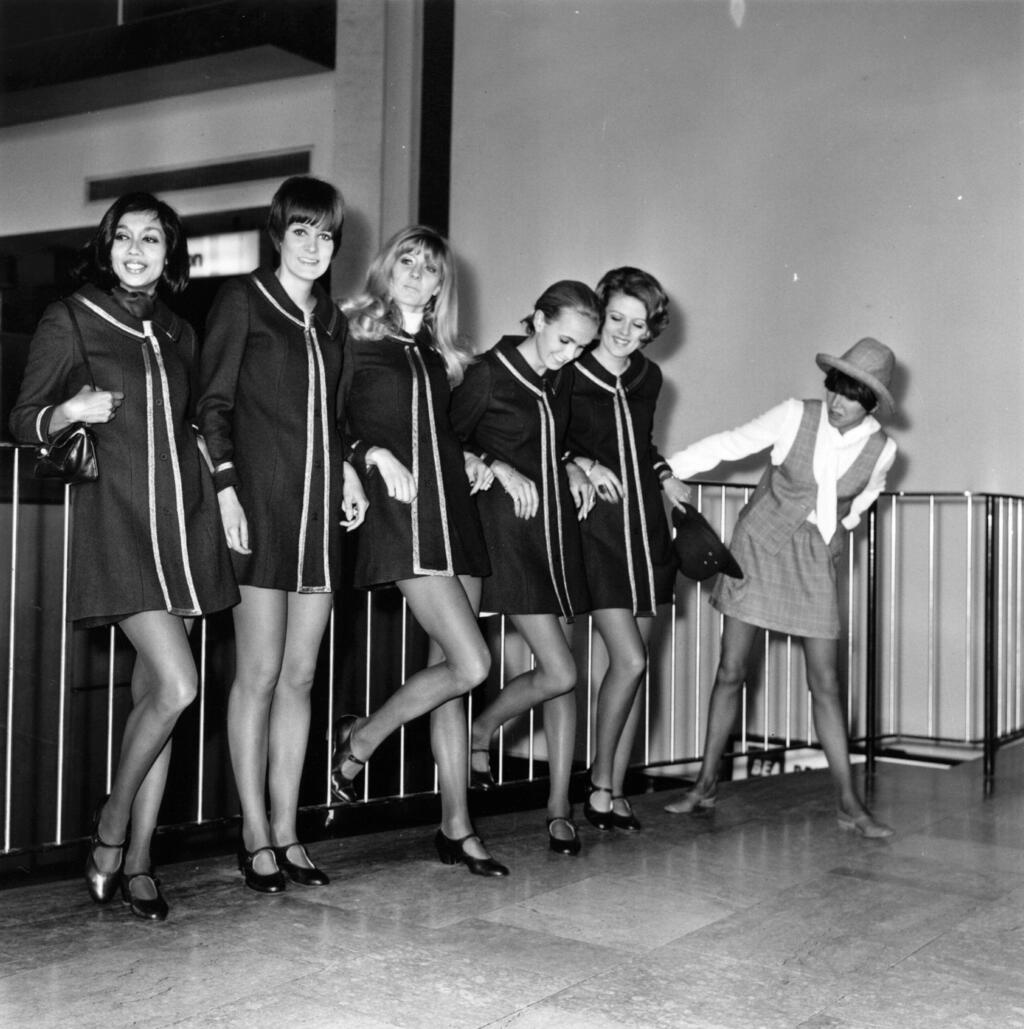
Mary Quant with models wearing her designs, 1968
(Photo: Express/Getty Images)
Newspapers in Europe and the United States obsessively covered the skirt's short length, while reports highlighted principals, teachers and mayors trying to curb the trend. In Israel, a 1968 newsreel filmed young women on Tel Aviv's Dizengoff Street wearing miniskirts in a sexist manner, with the camera literally peering underneath their skirts.
As with many debates over modesty and nationalism, some even linked the garment to natural disasters and the erosion of family values. In April 1970, people in South Africa blamed the miniskirt for a drought affecting the country. In conservative and religious Israel, criticism was limited, apart from a 1970 gossip item about a couple who divorced because the wife insisted on wearing miniskirts.
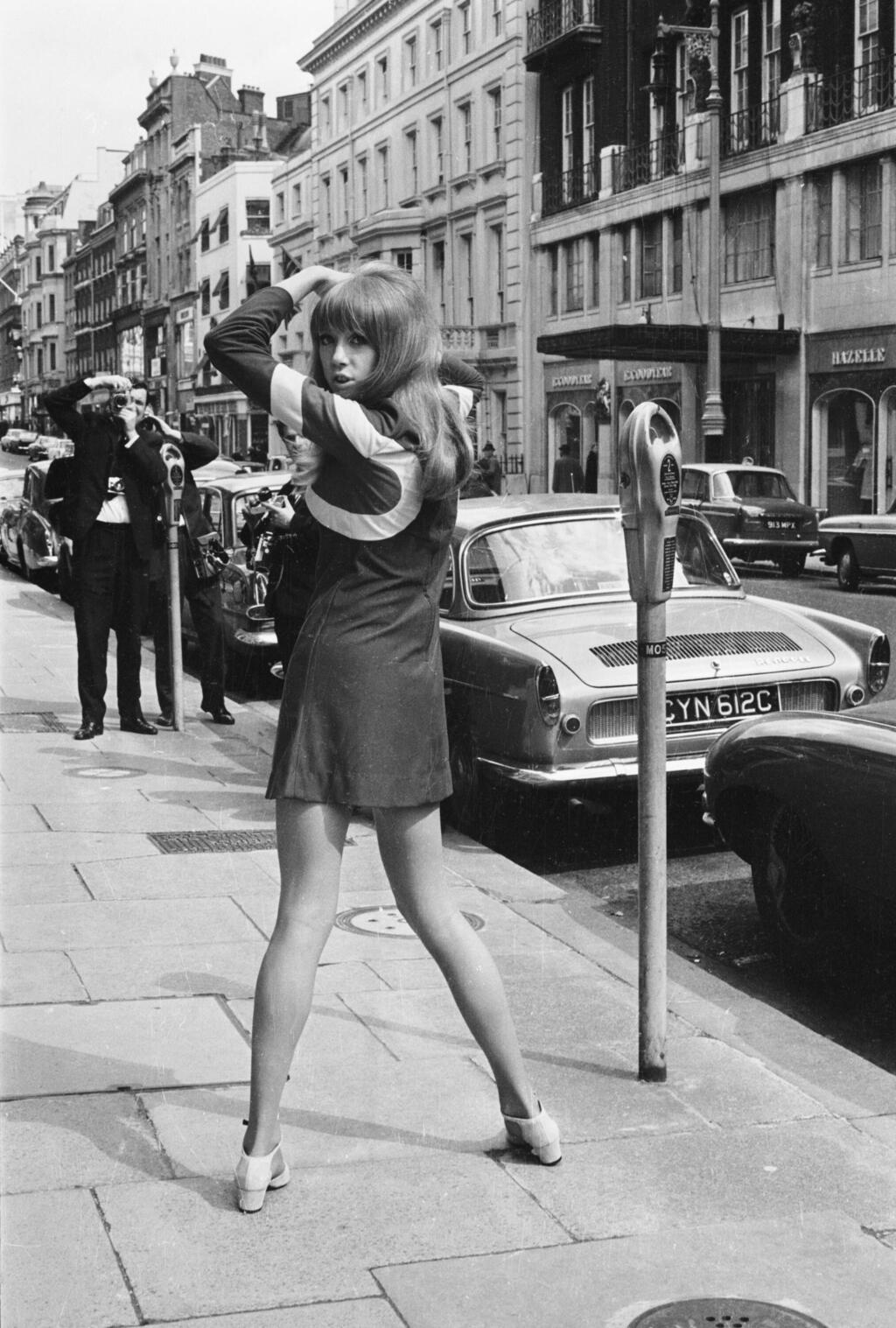
Model Pattie Boyd, 1966
(Photo: M. McKeown/Express/Getty Images)
Still, a 1969 article in the newspaper Lamerhav, affiliated with the Ahdut HaAvoda party, analyzed the reasons behind the garment's popularity. A survey conducted by the Tel Aviv-Jaffa Municipality's social work department among about 40 girls ages 14 to 17 who were seen wearing miniskirts sought to understand the motivations behind the trend.
Although the survey's editors emphasized that it was unscientific and reflected only spontaneous responses, the findings revealed an interesting gap between girls wearing miniskirts and boys with long hair, who were also considered symbols of youth rebellion.
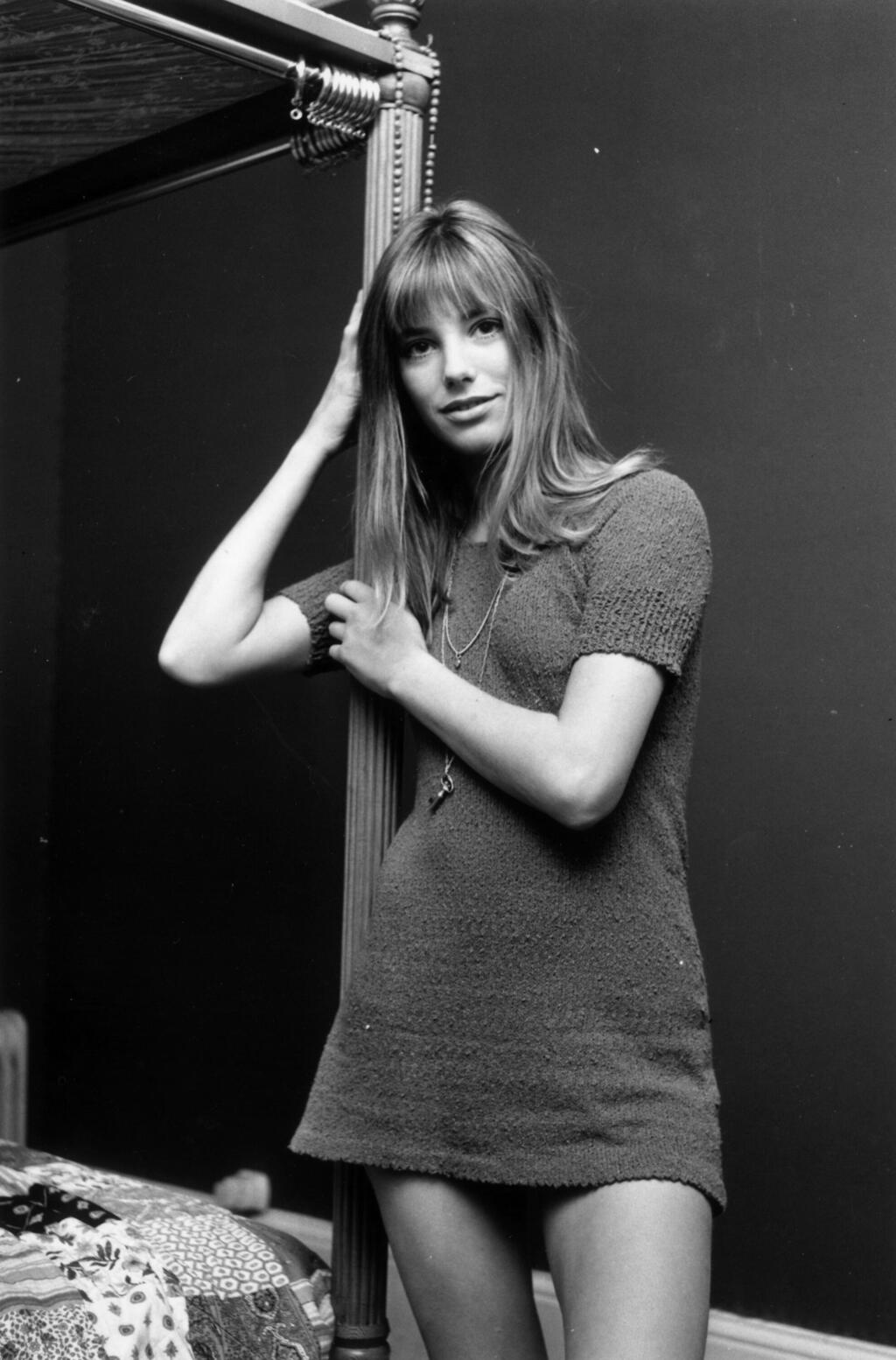
Jane Birkin, 1968
(Photo: S E Orchard/Getty Images)
Contrary to the public image of the miniskirt as a rebellious statement, many girls viewed it primarily as a fashion and social choice rather than an ideological one. Ten percent said the miniskirt made them feel special, while only 5% saw it as an expression of opposition to adult society. Eighty percent said they wore it because it suited them personally or matched their social circle. Only 25% reported family conflicts over their choice.
Choosing a miniskirt is not merely a fashion decision — it can also represent a struggle for personal freedom and the right of women to decide what they want to wear without explanation.
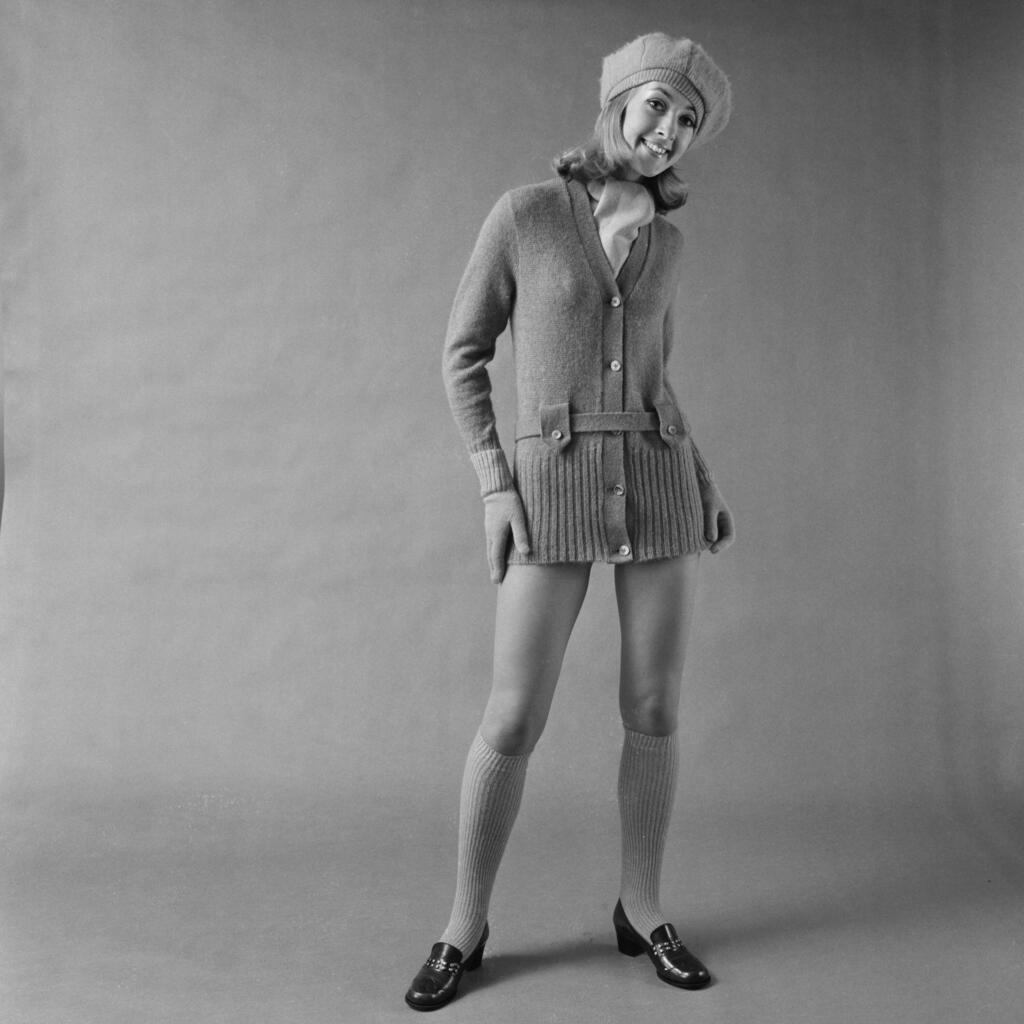
A model during a fashion shoot, 1968
(Photo: Evening Standard/Hulton Archive/Getty Images)
In this context, one can recall Eve Ensler's words in "The Vagina Monologues": "My short skirt is happiness, I feel myself on the ground. I am here, I am hot. My short skirt is a liberation, flag in the women’s army. I declare these streets, any streets, my vagina’s country."
The micro-mini leaves no one indifferent
By the early 1970s, the miniskirt's popularity had faded in favor of maxi skirts and bohemian styles, against the backdrop of the 1973 oil crisis, economic uncertainty and a shift toward more romantic and natural aesthetics.
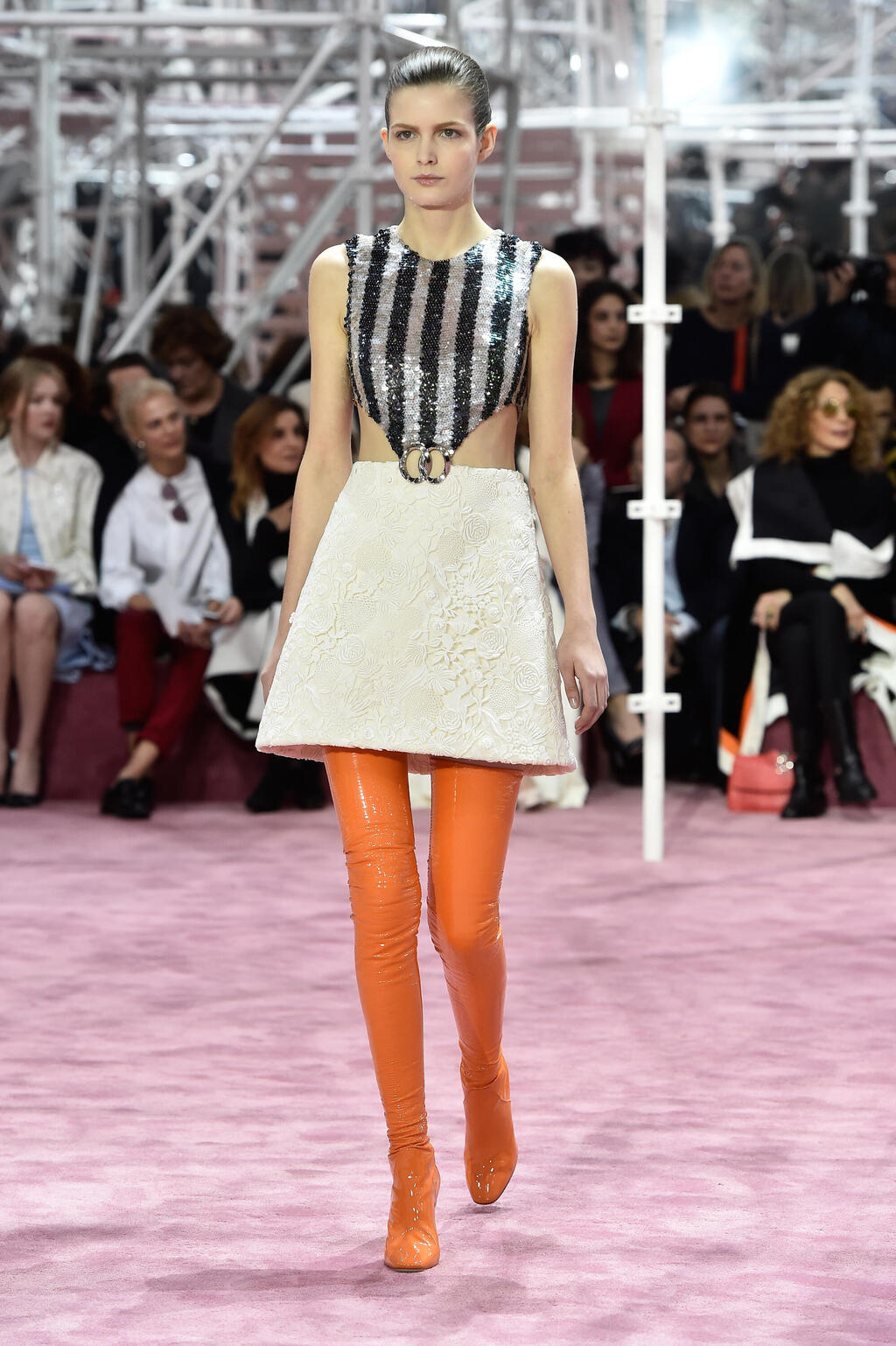
Dior's spring-summer 2015 haute couture show
(Photo: Pascal Le Segretain/Getty Images)
The trend's decline also aligns with the "hemline theory" proposed in 1926 by economist George Taylor of the University of Pennsylvania. Taylor argued that skirt lengths reflect economic conditions: during periods of growth and prosperity, hemlines rise, while economic downturns bring longer skirts and a greater desire for stability and conservatism.
The miniskirt returned in the 1980s in a bolder, sexier form, amid consumerism, economic prosperity and the rise of the yuppie culture. Paired with shoulder pads and shiny fabrics, it reflected the decade's culture of success and excess.
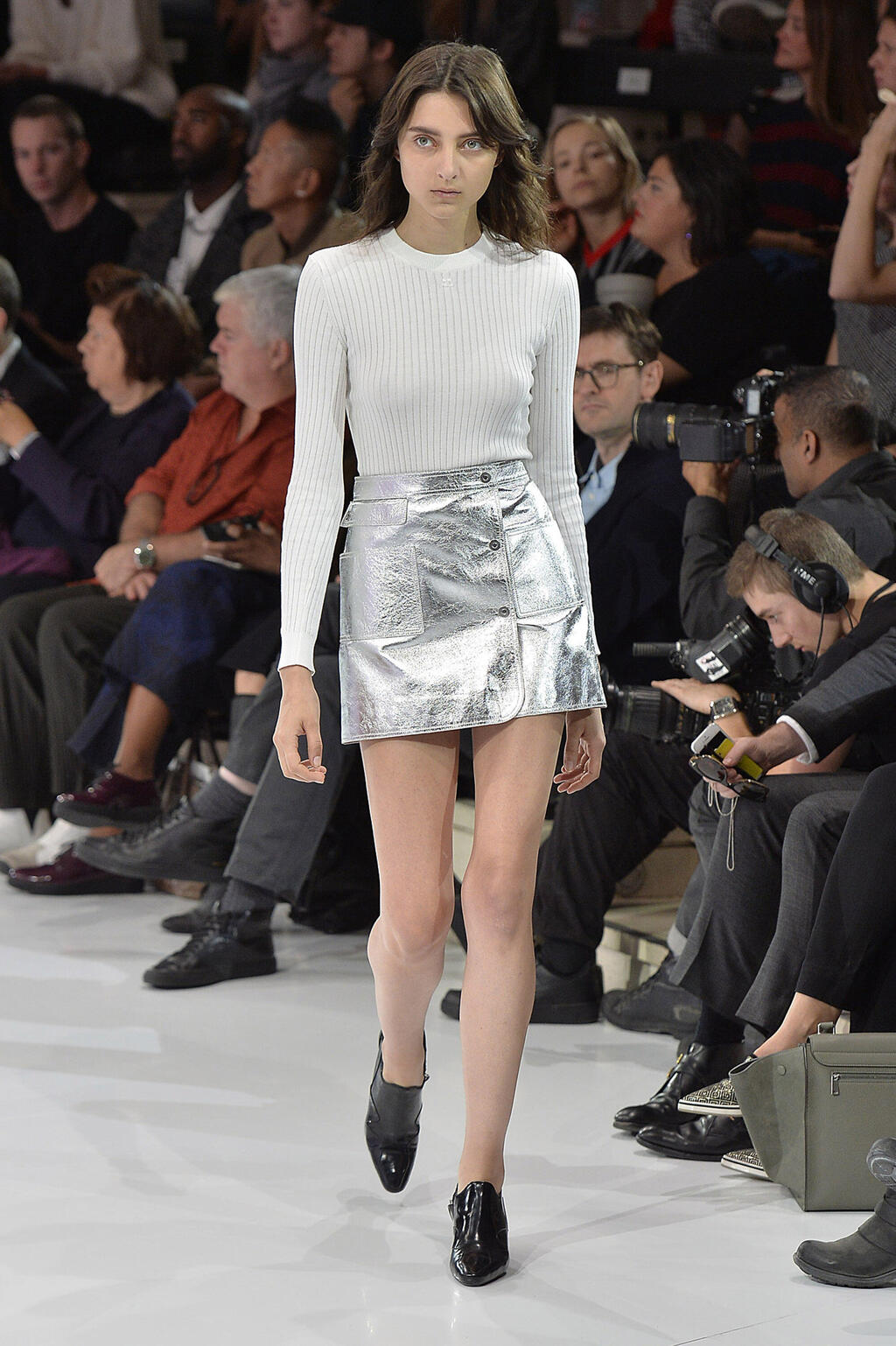
Courrèges' spring-summer 2016 show
(Photo: Catwalking/Getty Images)
In the 1990s, fashion split between minimalism and hip-hop glamour. The miniskirt continued appearing on models such as Naomi Campbell in Versace runway shows and at fast-fashion chains like Zara and H&M, bringing the trend to the masses.
That paved the way for an even more aggressive return in the 21st century. The Y2K aesthetic embraced ultra-low-rise miniskirts in the early 2000s, worn by stars including Britney Spears, Christina Aguilera and Paris Hilton.

Paris and Nicky Hilton on the red carpet, 2003
(Photo: Frederick M. Brown/Getty Images)
Over the past 15 years, the miniskirt has reemerged within a new feminist framework centered on bodily autonomy and personal choice rather than the male gaze.
One of the most talked-about runway shows in recent years came in October 2021, when Italian fashion house Miu Miu presented its spring-summer 2022 collection featuring micro-miniskirts that sparked global debate.
Designer Miuccia Prada sent models down the runway in ultra-short skirts paired with cropped tops and knitwear ending just below the bust. At a time when the COVID-19 pandemic still shaped daily life, the message felt clear: It was time to trade sweatpants for bare legs again.
Celebrities including Hailey Bieber, Nicole Kidman and Lara Stone quickly adopted the trend straight from the runway.
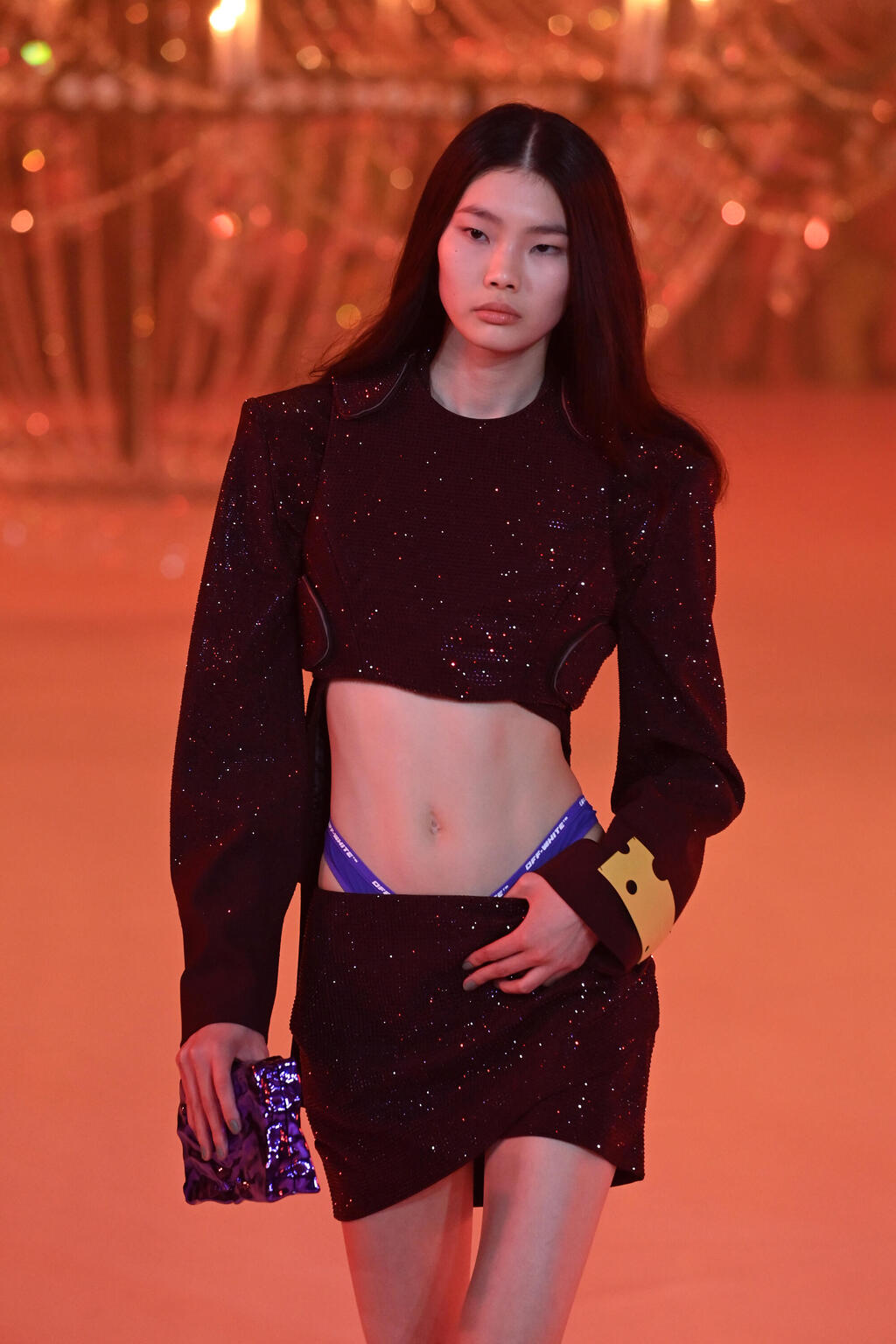
Off-White's fall-winter 2022-23 show
(Photo: Pascal Le Segretain/Getty Images)
Over the decades, the miniskirt has served as a cultural seismograph, reflecting changes in fashion, economics, gender and society. Since its emergence in 1960s London, it has returned in cycles, each time with a different meaning but almost always revolving around the same tensions: freedom versus conservatism, exposure versus restraint and personal choice versus social expectations.
Perhaps that is why, six decades later, it remains youthful and rebellious.