

Who would have thought a backgammon board could become a coveted design piece? In the past, saying “backgammon” conjured a standard image: dark wood boards with contrasting triangles, basic dice, and two sets of checkers. The excitement stemmed from the game itself, not its aesthetics—which remained fairly plain and predictable for centuries.
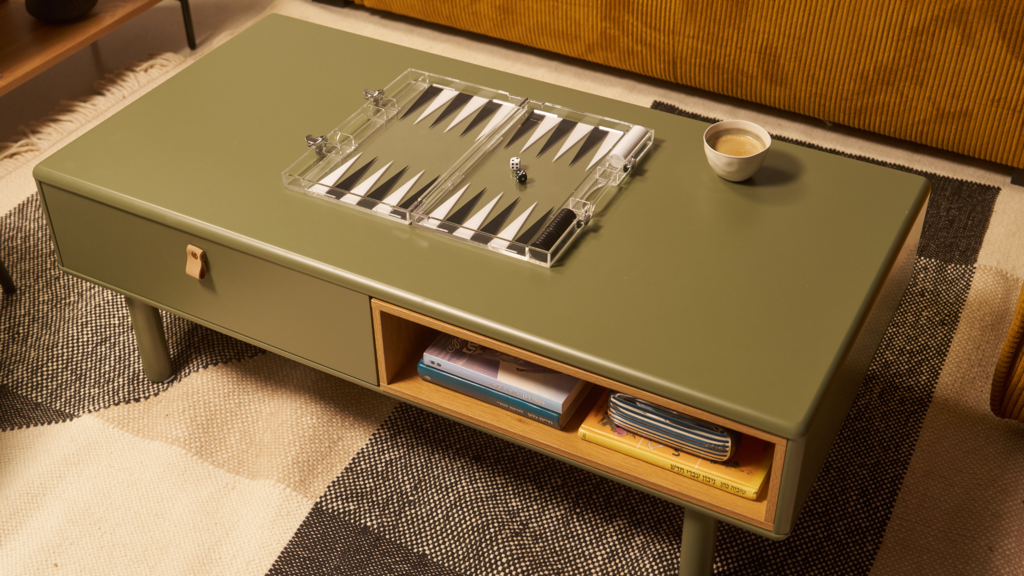
It was a common, beloved board game, especially among older men in cafes, on beaches, and among reservists with strong black coffee. Like other nostalgic objects, backgammon boards have in recent years become creative canvases and personal design statements. Today’s makers take the tradition and infuse it with flair, culture, and storytelling. The trend has expanded, turning backgammon boards into luxury collectibles or personalized pieces that reflect their owner’s identity.
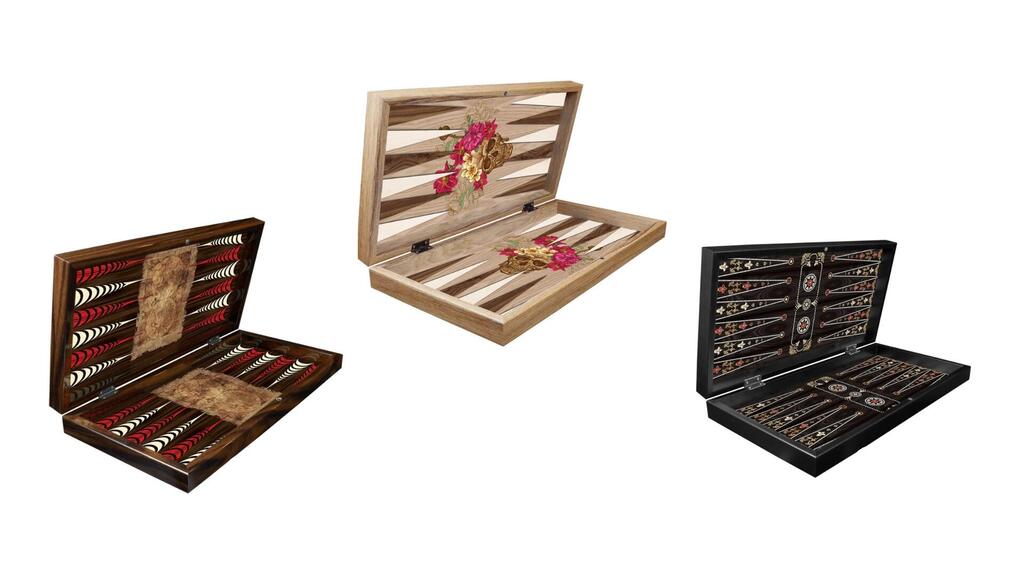
(Photo: Gentleman Gifts For Men)
“In a digital era where everything is fast and intangible, backgammon manages to bring back the tactile experience—the gathering, the touch. Game boards are back in style,” said Tal Raz, co-owner of the Gentleman chain. “Only now, they’re luxurious: handmade walnut wood, custom engravings, artistic flourishes, hidden compartments for the pieces, and sometimes inlays of gemstones or rare metals.” One standout example is British designer Alexandra Llewellyn, who creates custom game tables. Each table is a full-fledged work of art, combining games like backgammon, chess, and checkers, alongside family crests and personal illustrations, all crafted by multidisciplinary artists. Prices start at £42,000 (about $54,000), with a production time of four to six months.
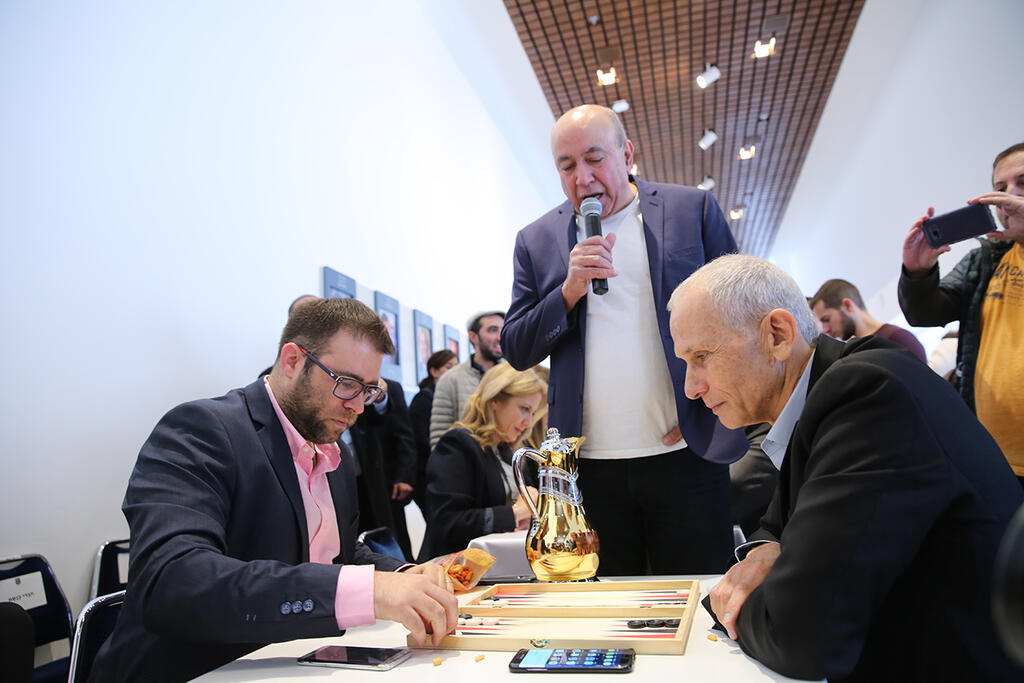
They even played at the Knesset
(Photo: Alex Kolomoisky)
Raz added that there’s been a sharp increase in demand for backgammon boards as high-end gifts. “It’s no longer just a game—it’s a personal, stylish statement piece for the home. Couples buy engraved boards for anniversaries, parents gift them to sons heading to the army, and some just want to share games with grandparents at family gatherings. Consumers are looking for items with lasting value—something that won’t be forgotten in a drawer but displayed in the living room, inviting interaction and evoking a sense of continuity. There’s growing interest in unique, designed, branded boards—solid wood, inspired by cultures, places, or emotions.” Gentleman sells ornate boards made of walnut, olive wood, marble, mother-of-pearl, and leather for between $80 and $115.
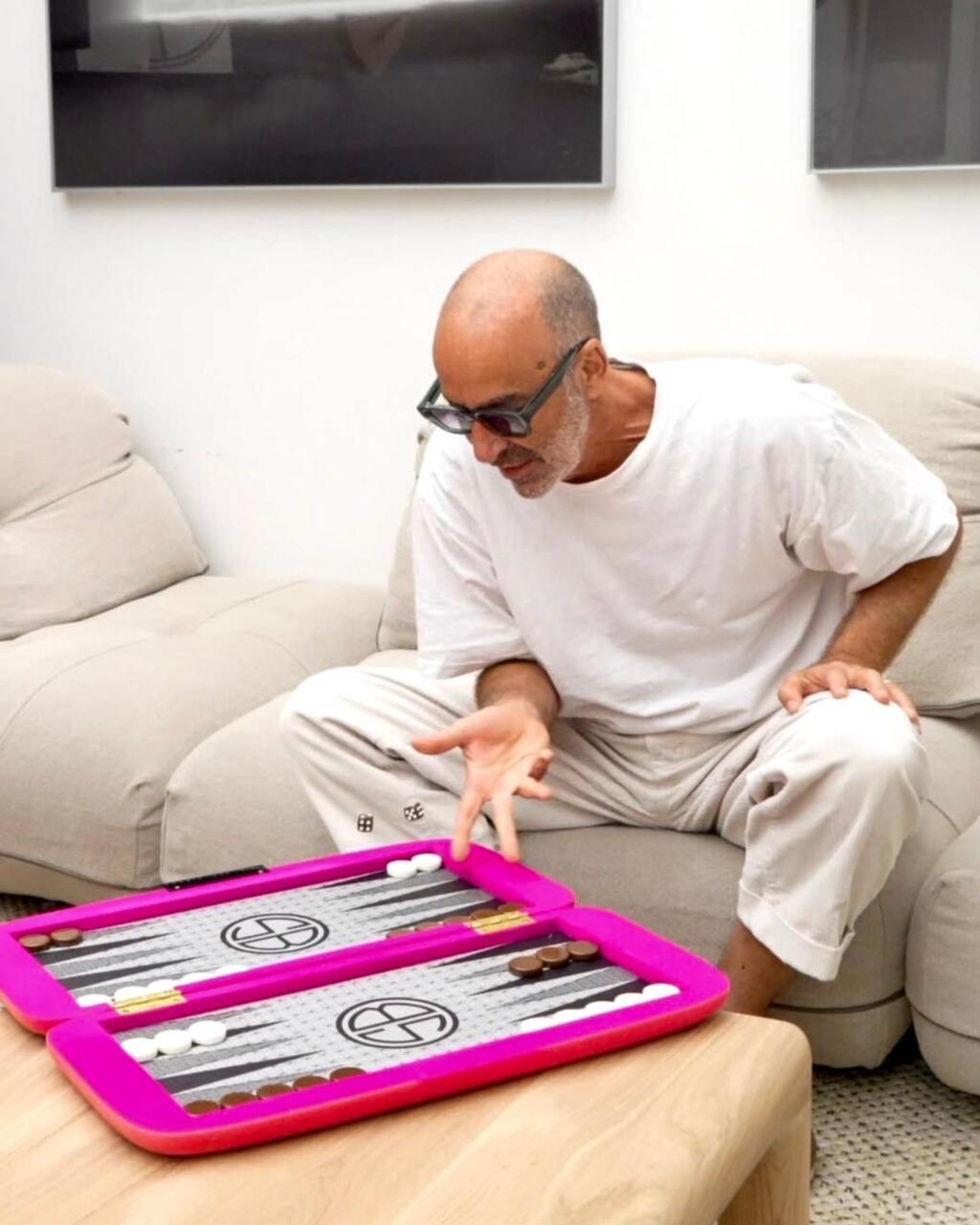
(Photo: Ligia Kit)
“Backgammon is more than a game—it’s culture, history, and art,” said Yuval Schwager, head of the Israeli Backgammon Academy. “In Israel, it’s still seen as a people’s game, but globally—especially in Europe and the U.S.—it’s considered elite, attracting a diverse crowd, major tournaments, and media attention. While the gameplay remains unchanged, the experience has evolved. It’s a bridge between generations, cultures, and eras.”
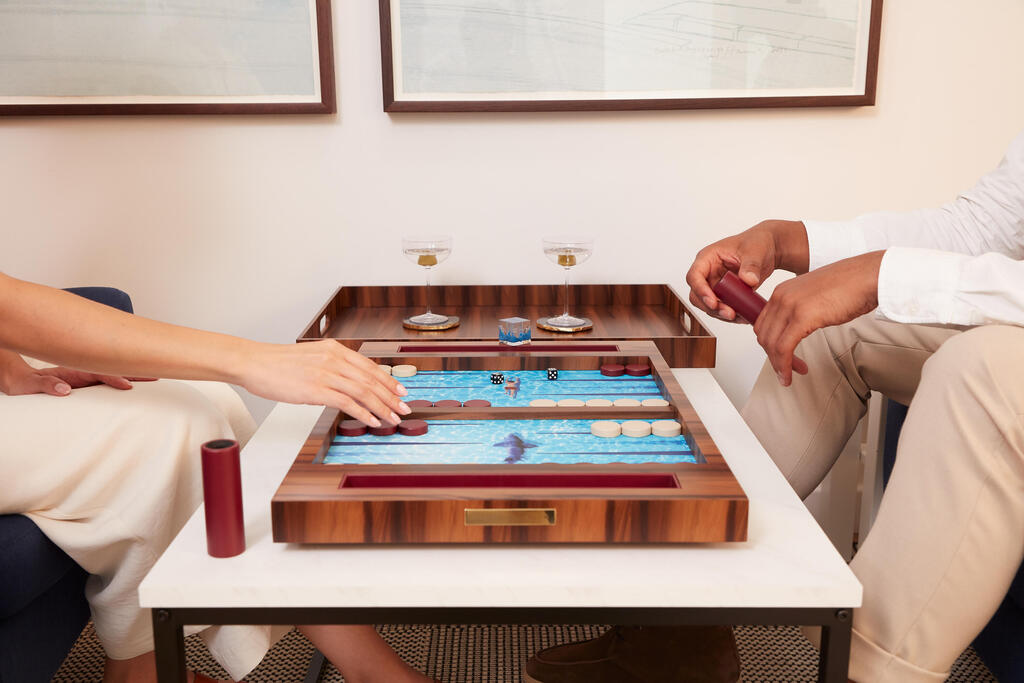
The Chase Summer Tabletop backgammon set
(Photo: Alexandra Llewellyn)
The trend of integrating backgammon boards (called "backgammon" in English) into home design is growing. Furniture designer Arik Ben Shimon recently started crafting his own boards. “I love the game and wanted it always accessible, not stashed away in a closet. I designed mine so it sits like a jewelry box on the living room table,” he explained. His boards are made from CNC-cut processed wood combined with leather, and sell for $900.
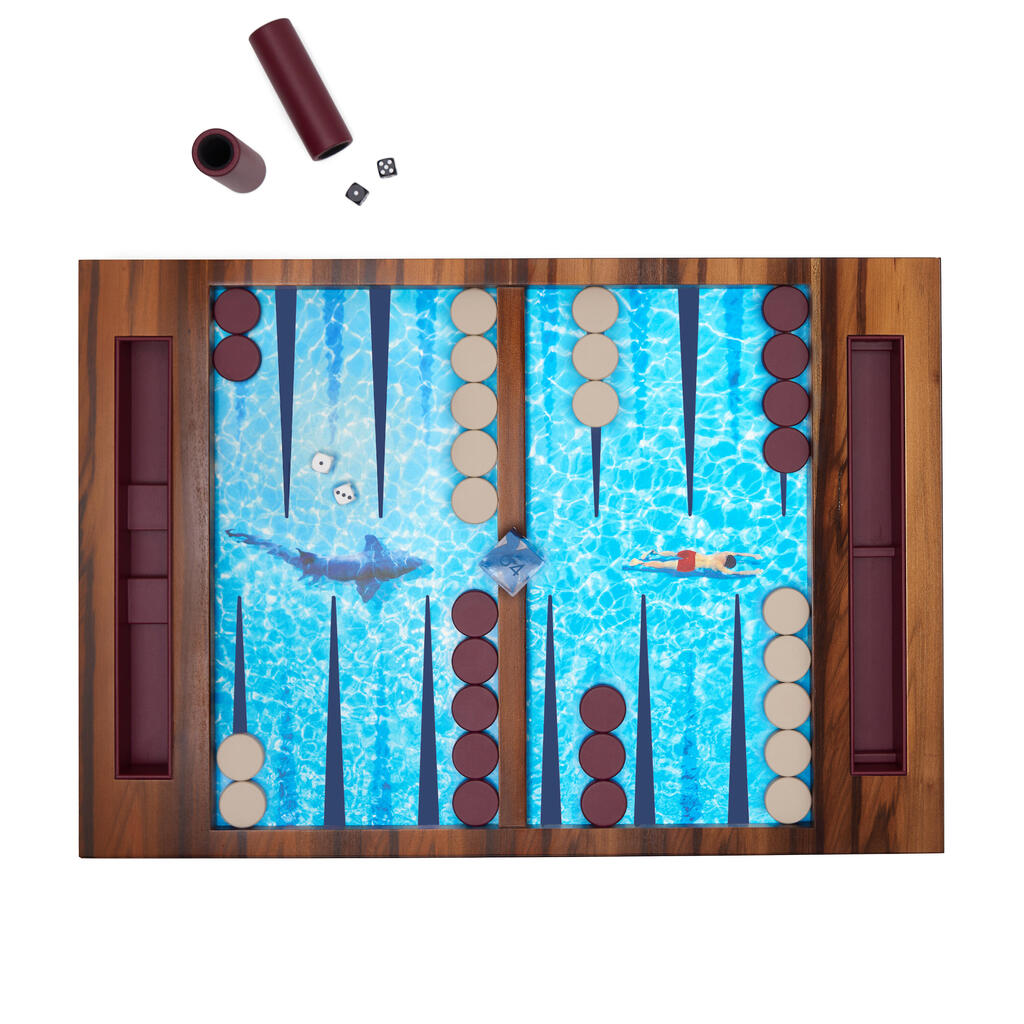
The Chase Summer Tabletop backgammon set
(Photo: Alexandra Llewellyn)
Design students Naama Afrimi and Neta Ben Naim, both 27, took a different approach. They craft custom-made backgammon boards and also run workshops for personal board design. “Our boards are solid wood, hand-painted with brushes and colors,” Afrimi said. “We work with a local carpenter who builds everything from frame to finish. It began with artistically painted paddleball rackets, and during COVID, we realized backgammon could be creatively designed too.”
(Photo: SHIELD)
Their work took a poignant turn during wartime. “We never imagined making memorial backgammon boards, but it happened. Families heard about it and were moved to commemorate loved ones this way. Backgammon has long been linked to soldiers, so for many families, it felt natural and meaningful to preserve a memory on the board itself,” Afrimi shared. “One soldier had one of our boards, and when it was lost, his family asked us to recreate it. We paint realistic portraits and imagery—it becomes a tangible, comforting keepsake, one that brings a bit of life and joy amidst grief.”
Each of their orders is personalized, based on detailed client input. “It starts on the website. Customers browse styles and write what they want. But it doesn’t end there—we’re patient and attentive, staying in touch via WhatsApp, always available for calls,” they said. They work with solid wood and acrylic paints, adding a protective lacquer for durability, even at the beach. “Our boards are larger, thicker, and more robust than standard ones. They’re luxury pieces using top-tier materials.”
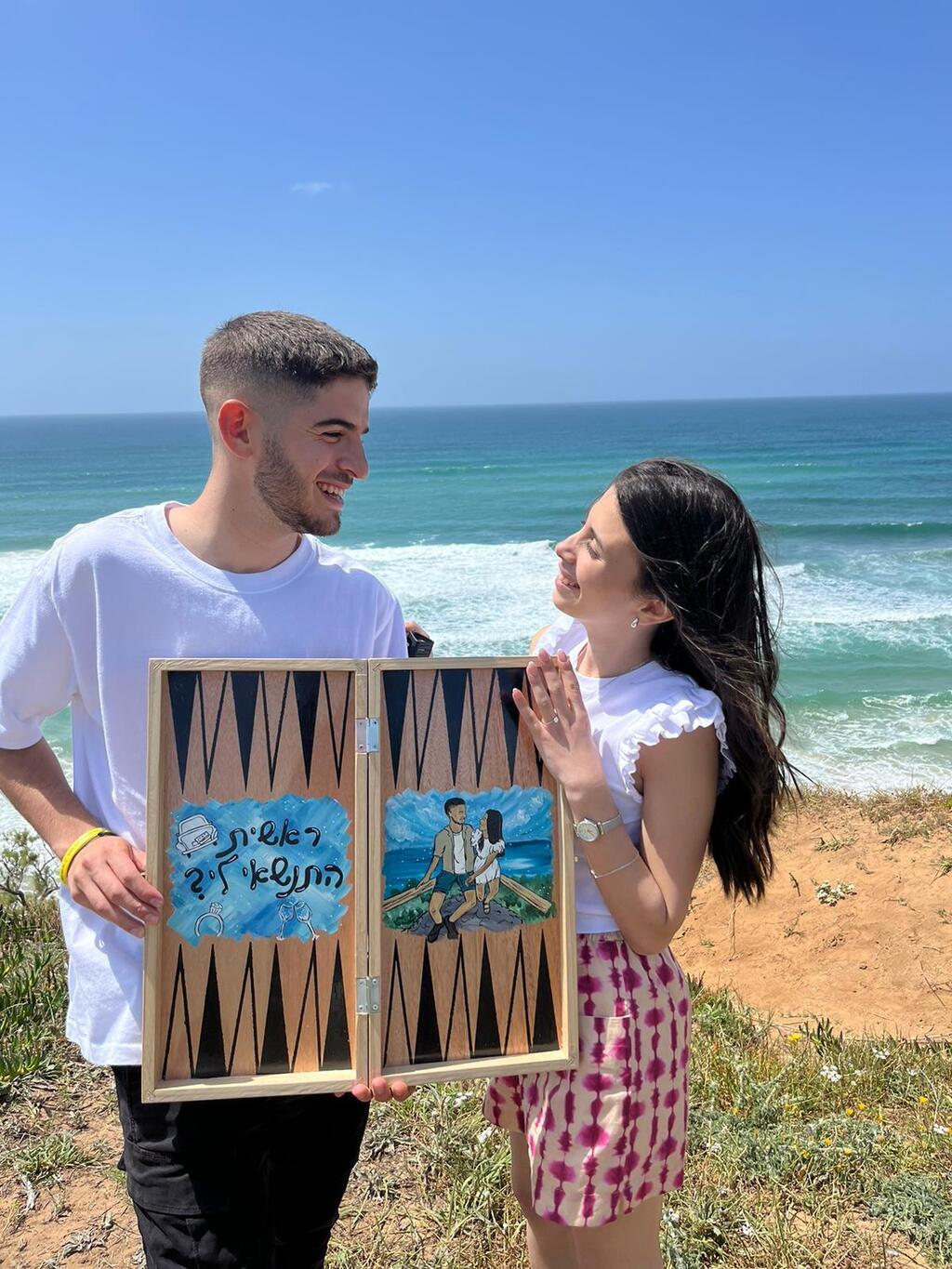
A backgammon proposal
(Photo: Eyal Zano)
Get the Ynetnews app on your smartphone: Google Play: https://bit.ly/4eJ37pE | Apple App Store: https://bit.ly/3ZL7iNv
One especially touching piece was commissioned for the family of the late Idan Herman, who was murdered at the Nova music festival. His board features surfboards, a portrait of Idan, and the inscription “Nothing will ever separate us.” Another, by contrast, was for a man named Eyal who used it for a seaside marriage proposal. He had them replicate a photo of him and his partner on the beach, only this time in more formal attire.
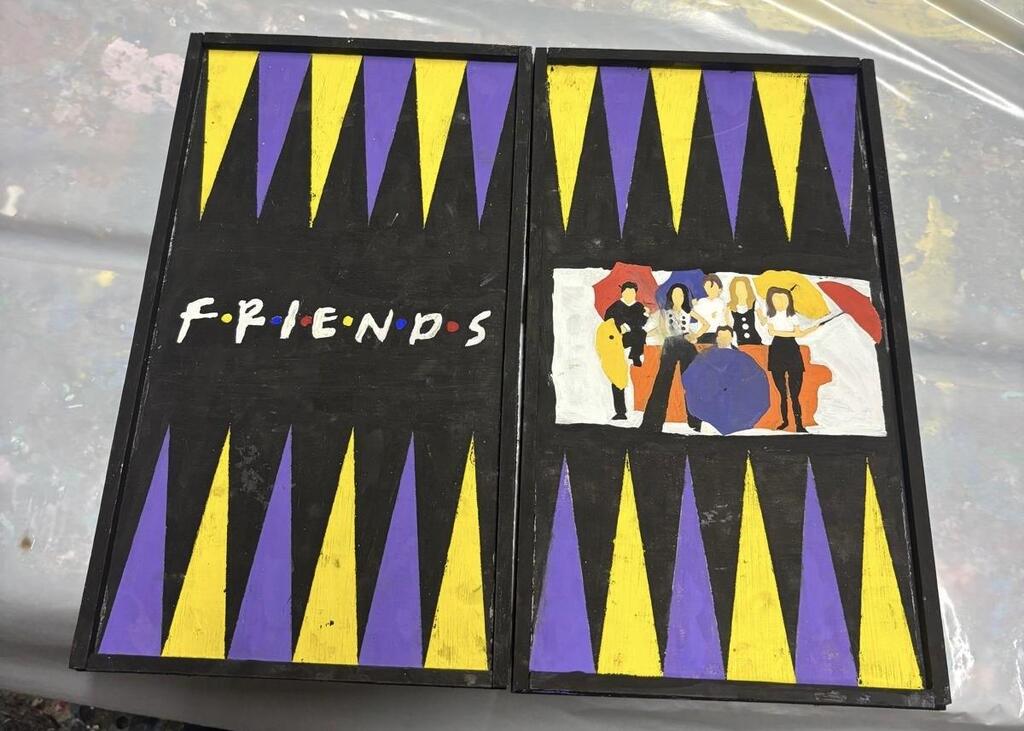
(Photo: Barak Halevy)
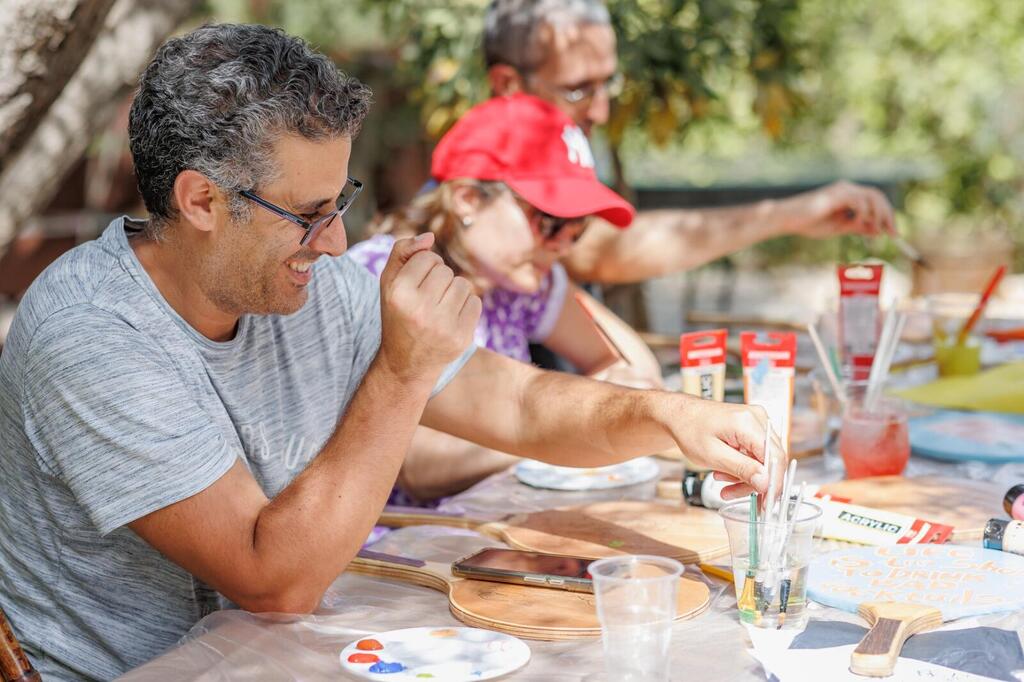
Afrimi and Ben Naim recently began offering team-building and creative workshops, where participants design their own backgammon boards. “It’s amazing to see how everyone, even without an artistic background, can create something beautiful. We have special tools to make it happen, and the results are stunning.”
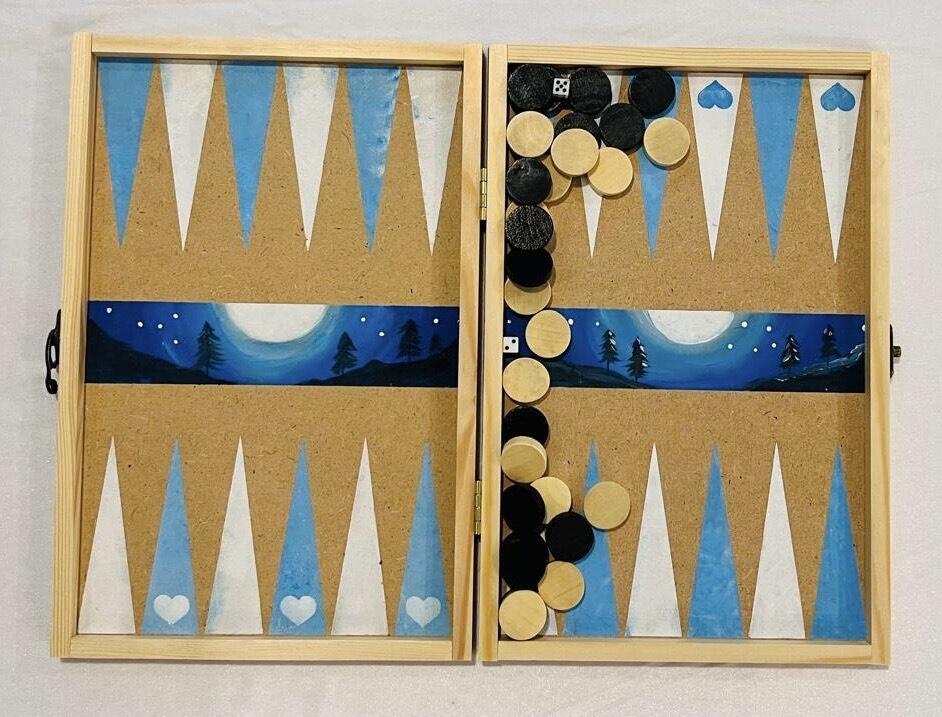
DIY project
(Photo: Adi Frenkel)
Further north, Adi Frenkel, founder of the brand “Adido,” has been running art workshops for years. During COVID, she pivoted to DIY backgammon kits. “Like many businesses, I froze for a moment. Then I pulled myself together and created DIY kits from my guided workshops.” Each kit includes materials, tools, and a tutorial video. “You don’t have to be precise—there are stickers, and you just dive in. Naturally, the kit includes dice and game pieces.”
Frenkel was inspired by a U.S. summer camp where she’s worked for 20 years. “Backgammon may not be originally Israeli, but it feels like it is. Post-army young people love it. At camp, kids spend the summer designing their own boards in the woodworking shop. I loved the idea that they were the artists, crafting for themselves. It’s really joyful to play a game you made with your own hands.” Some kids designed Sesame Street–themed boards, others drew on sunsets or nature.