

When Ed Warren was 5 years old, he said he saw his first ghost. As he later recalled, he was sitting on his bedroom floor when the closet door creaked open. A small ball of light appeared, grew larger, and took the shape of a shadowy figure — before turning into the face of an elderly woman.
Ed recognized her as the home’s former owner, who had died a year earlier. She looked transparent, wrapped in burial shrouds, and deeply unhappy. The room turned icy cold. Ed said he could hear her footsteps and breath before she vanished.
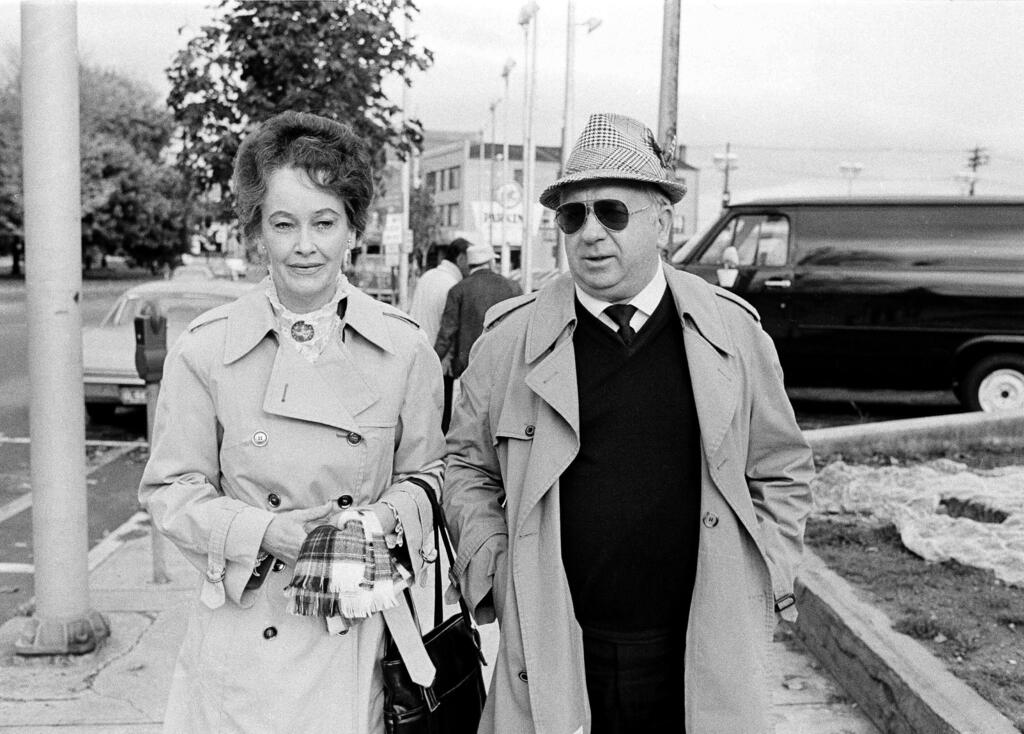
Growing up in a devout Catholic family in Connecticut in the 1920s, Ed told his father, a police officer, about the encounter. His father advised him never to speak of it again and to put it out of his mind.
A few years later, Ed began having recurring dreams about a nun who spoke to him. When he described her, his father identified her as his late sister, who had died before Ed was born. The nun, Ed recalled, told him that he would one day help priests but would not become one himself.
For young Ed, the visions were not inspiring — they were terrifying. At times, he was so frightened that he sat outside the house, even in storms or snow, waiting for his parents to come home. These experiences ended when the family moved to a new home when Ed was 12.
Lorraine Moran, later Lorraine Warren, was also born in Connecticut to a well-off Irish family. She attended a prestigious Catholic girls’ school. At age 12, during a tree-planting day, she looked at a sapling and saw it as a fully grown tree. A nun noticed her gaze and asked why she was staring at the sky. Lorraine explained she was looking at the tree.
She was sent to a convent for a weekend of prayer and silence. On another occasion, she remarked that one nun’s aura shone brighter than that of the mother superior, a comment that earned her sharp reprimands. Lorraine, despite her apparent clairvoyant gifts, dismissed ghosts as imagination or a cry for attention — until she met Ed Warren.
The two were 16 when they met during World War II. Ed was an usher at a local movie theater when Lorraine, with her mother, came to see a film. What began as a friendship turned into a romance, and when Ed returned on leave from serving in the Navy a year later, they married. After his service, Ed studied art, hoping to make a living as a painter. He sold landscapes to tourists in New England, but increasingly he was drawn to sketch houses rumored to be haunted.
The couple’s first encounter with what became their lifelong work in demonology came at a property in New Hampshire known as “Ocean-Born Mary House.” While talking with the owner, who described strange occurrences, Lorraine slipped into a trance. She later said she experienced an out-of-body episode, floating above the men and listening to their conversation. For Ed, that was confirmation enough. He believed the universe was calling them to investigate haunted homes. Together, they formally launched their careers as paranormal investigators.
In the beginning, breaking into the field wasn’t easy. To gain entry, they used Ed’s sketches as a way to approach homeowners. He would draw a portrait of the house, and Lorraine would knock on the door to show it to the residents.
Once a conversation began, they would ask about unusual occurrences and sometimes suggested séances or other rituals. Eventually, Ed committed himself fully to demonology, becoming one of only seven recognized demonologists in the United States — and the only one who was not a clergyman.
They sold the sketches at fairs, each accompanied by the story of the house. Lorraine was initially more skeptical, but as testimonies of haunted homes accumulated, she came to believe.
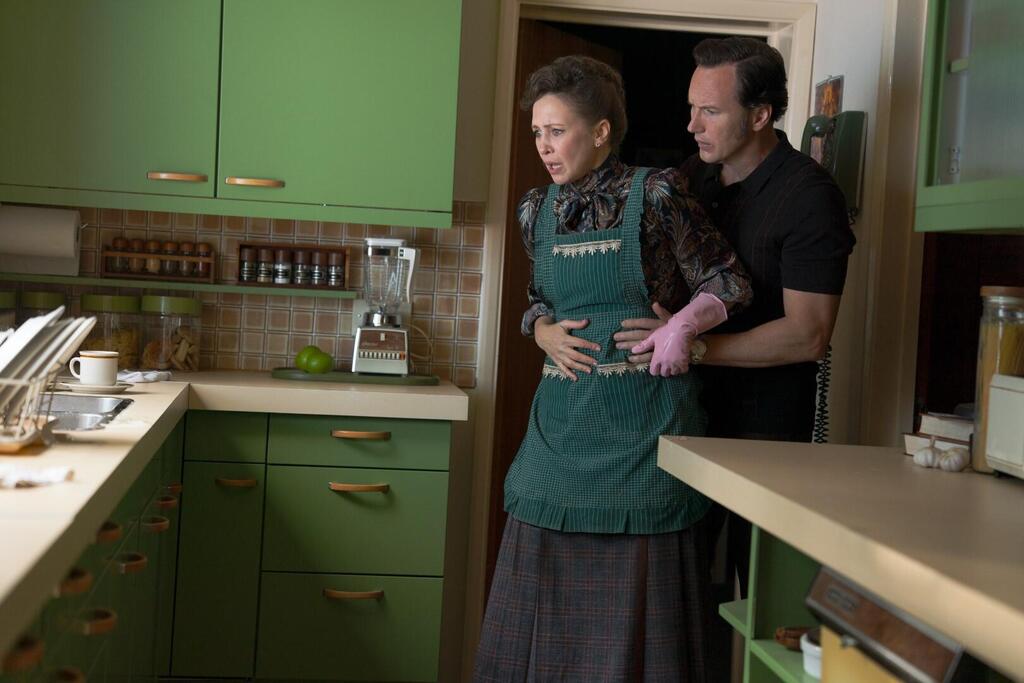
The film version. From 'The Conjuring: Last Rites'
(Photo: Courtesy of Tulip Entertainment)
By the mid-20th century, American newspapers often ran stories about haunted houses and supernatural encounters, topics that fascinated readers. Soon, the Warrens went from seeking out cases to being invited into homes by owners desperate for help. Their reputation grew in New England’s sizable community of believers.
Amid Cold War fears and anxieties about communism, the paranormal offered an escapist fascination for many Americans. UFO sightings, ghost stories, and conspiracy theories flourished. In 1952, Ed and Lorraine founded the New England Society for Psychic Research (NESPR), billed as the region’s oldest ghost-hunting group, lending an academic sheen to their work. Their stated mission was to help people tormented by paranormal events. By their own count, they investigated more than 10,000 cases, often enlisting doctors, nurses, police officers and clergy.
Two years later, even the U.S. government began showing interest in the paranormal, launching research into supernatural abilities in dogs.
The ultimate heroes — a loving couple, strong but vulnerable, locked in a fight against pure evil
Ed and Lorraine Warren’s case files delivered exactly what mid-20th century America craved: chilling horror stories, laced with the supernatural and marketed as true events. One of the earliest cases that cemented their reputation was the tale of “Annabelle.”
In 1970, a nurse named Donna received a Raggedy Ann doll as a gift. Soon, the doll began moving from room to room and leaving handwritten notes with messages like “Help me” and “Help Lou,” referring to the boyfriend of her roommate Angie. One night, Lou claimed the doll crawled onto him in bed and tried to strangle him.

It began moving from room to room and leaving behind notes with messages. Raggedy Ann doll
(Photo: Shutterstock)
The Warrens concluded that the doll was "manipulated by an inhuman presence" seeking a host. They recommended blessing the home and took the doll themselves. On their drive back, they said the car’s brakes failed multiple times, only to return to normal after holy water was sprinkled on Annabelle. Even in their own home, the doll continued to shift positions until the Warrens sealed it inside their “Occult Museum,” locking it behind glass to prevent further harm.
Another case — later dramatized in The Conjuring — took place in Harrisville, Rhode Island, at the Perron family farmhouse. Carolyn and Roger Perron and their five daughters moved into the property in 1971 and soon reported strange phenomena. Andrea, the eldest, said she saw a strange man appear and vanish inside the house. Dirt piles formed on their own in the kitchen, while the stench of rotting flesh spread through the air. Before long, the disturbances escalated: objects flew across rooms, beds shook each morning at precisely 5:15 a.m., and Carolyn discovered that many past residents had died violently — by drowning, hanging or murder.
The Warrens identified the presence as Bathsheba, a woman rumored to have practiced witchcraft on the property in the 19th century and accused of killing a child. Bathsheba, Andrea recalled, “saw herself as mistress of the house and resented the competition with my mother.” The Warrens returned repeatedly to the farmhouse, but unlike in the film, they never performed a full exorcism. Instead, during a séance, Carolyn allegedly spoke in an unknown language before being thrown across the room. The family endured another decade in the house before saving enough money to leave — after which, the hauntings reportedly ceased.
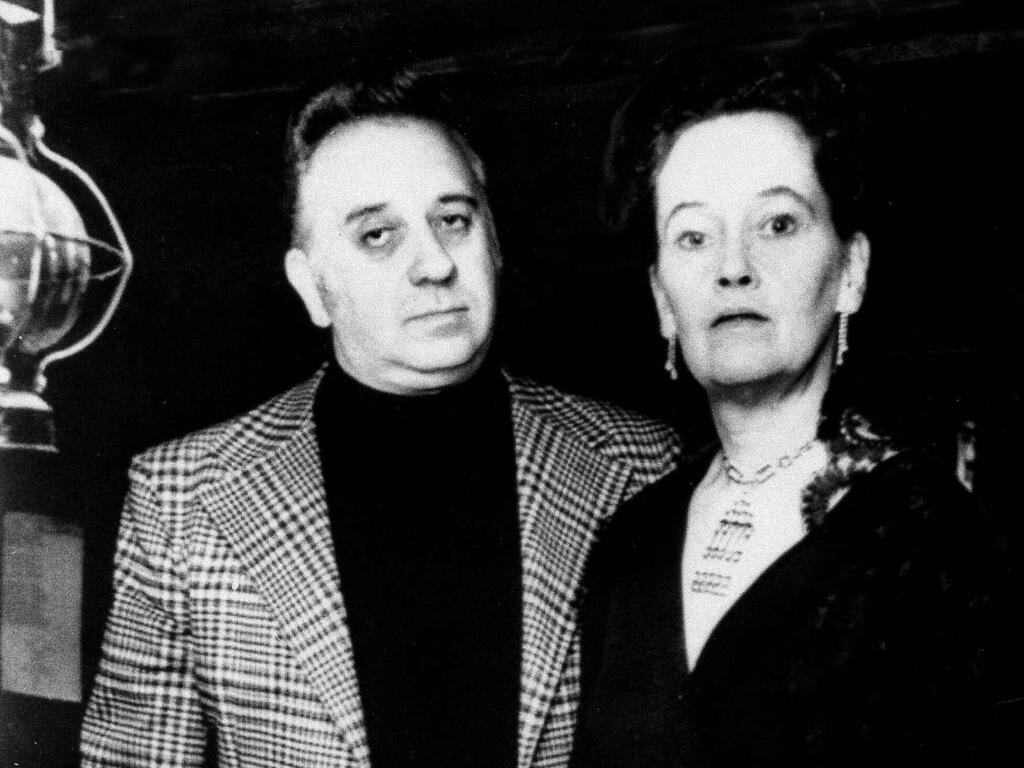
Ed and Lorraine Warren
(Photo: AP)
No screenwriter could have delivered better material for The Conjuring franchise than the Warrens’ own case files. Marketed as true stories and filmed as close to the accounts as possible, they fueled debate between skeptics and believers and drew crowds to theaters. Their cases provided the perfect raw material for horror films — demons, possessions and malevolent spirits. The Warrens themselves were cast as ideal protagonists: a devoted couple, strong yet human, battling evil while helping relatable families tormented by forces beyond their control.
Ed and Lorraine knew, even in their lifetimes, how to turn their stories into fame and fortune. They licensed their work for books and Hollywood films, made regular television appearances and showcased haunted artifacts in their Occult Museum.
Their most famous case was the “Amityville Horror.” In November 1974, 23-year-old Ronald DeFeo Jr. claimed voices in his head commanded him to kill his parents and four siblings as they slept. Two years later, George and Kathy Lutz bought the home at a bargain price of $80,000 and moved in with their three children. Within weeks, they fled, saying the house was haunted. George described seeing Kathy transform into an elderly woman who levitated above the bed, while slime oozed from the walls and a pig-like creature terrorized them. A priest called to bless the home said he was attacked after a voice ordered him to leave.
The Warrens visited the property 20 days after the Lutz family’s departure. Lorraine reported visions of the murdered DeFeo family laid out in the living room and called the experience “the closest to hell” she had ever endured. The couple claimed they felt a force pushing them out of the house and later released a widely circulated photograph of a ghostly boy peering from the staircase.
The case became a cultural sensation, spawning films, books and endless conspiracy theories — including the 1979 hit The Amityville Horror, which added significantly to the Warrens’ fortune. While the couple did not charge the homeowners for their investigation, the media rights proved lucrative. As Apple CEO Tim Cook once quipped, “If you’re not paying for the product, you are the product.”
Billions of dollars and skeletons in the closet
The Warrens’ lives provided an endless stream of haunted houses and demonic possessions — cases that would inspire The Conjuring films. They investigated the Hodgson family’s home in Enfield, England, where a crucifix ripped from a wall and a teenage daughter spoke in a guttural voice, recounting details of a long-dead resident. In Pennsylvania, the Smurl family said they were sexually assaulted by a demon. In another infamous case, 19-year-old Arne Johnson stabbed his landlord to death and claimed “the devil made me do it.”
Such stories fit neatly into the Warrens’ worldview: evil existed, embodied by demons and malevolent spirits intent on possessing or harming people. Their response was rooted in Catholic ritual and belief.
But skeptics pushed back. In cases like Amityville, participants later admitted — or at least suggested — that the accounts were fabricated for money or media attention. Still, the controversy only fueled public interest, keeping the Warrens in the spotlight.
As they aged, their work slowed. Ed Warren died in 2006 at age 79. Lorraine retired from investigations after his death and died in 2019 at age 92. Their Occult Museum, once housed in their basement and packed with “cursed” relics and occult art, closed to the public. Recently, it was purchased by comedian Matt Rife and YouTuber Elton Castee, who plan to reopen it — with overnight stays included.
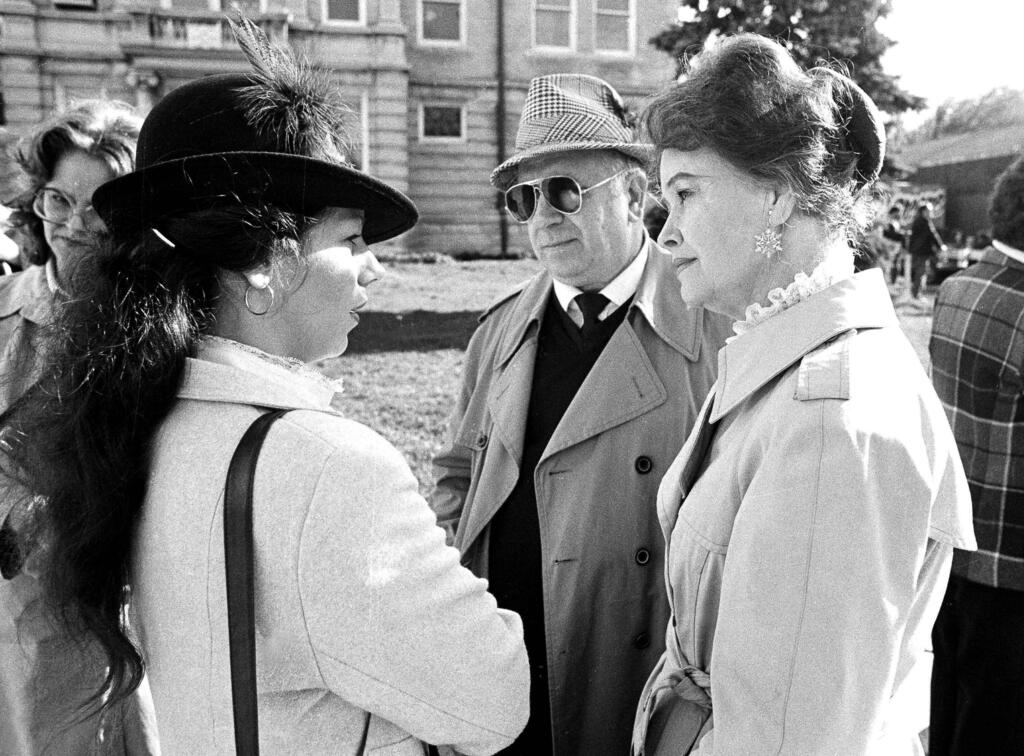
They faced strong opposition from a wide range of skeptics. Ed and Lorraine Warren
(Photo: AP Photo/Bob Child)
But their legacy has been clouded. In 2014, a woman named Judith Penney alleged she had a sexual relationship with Ed starting at age 15, when he was in his 30s. She claimed Lorraine knew about the affair and even pressured her to have an abortion in the 1970s to protect the couple’s reputation. Penney also said she helped Ed stage photos of “ghosts” by dressing in white sheets.
Whether true or not, the allegations do not appear in the films inspired by the Warrens. A contract Lorraine signed with Warner Bros. required that the couple be portrayed only in a positive light, with no mention of infidelity or underage relationships — an unusually restrictive clause, entertainment lawyers noted.
Despite the controversy, The Conjuring cinematic universe has become the most profitable horror franchise in history, grossing more than $2.3 billion worldwide. Actors Vera Farmiga and Patrick Wilson portrayed the Warrens, with Lorraine herself serving as a consultant on the first two films.
The universe now includes nine films, some without the Warrens as characters. The latest installment, The Conjuring: Last Rites, directed by Michael Chaves, draws from the Smurl family’s case. Farmiga and Wilson return for their final appearance as the Warrens, with producers promising it will be the “darkest film in the series yet.”