

After concerns that his concert might be canceled because of Monday's one-day war with Iran, Omer Adam was able to breathe a sigh of relief when he opened his run of shows at Ramat Gan Stadium as scheduled on Tuesday night.
The singer entered the venue standing in the back of a white pickup truck, which carried him along a path lined with lush green vegetation leading to the stage. Sound familiar?
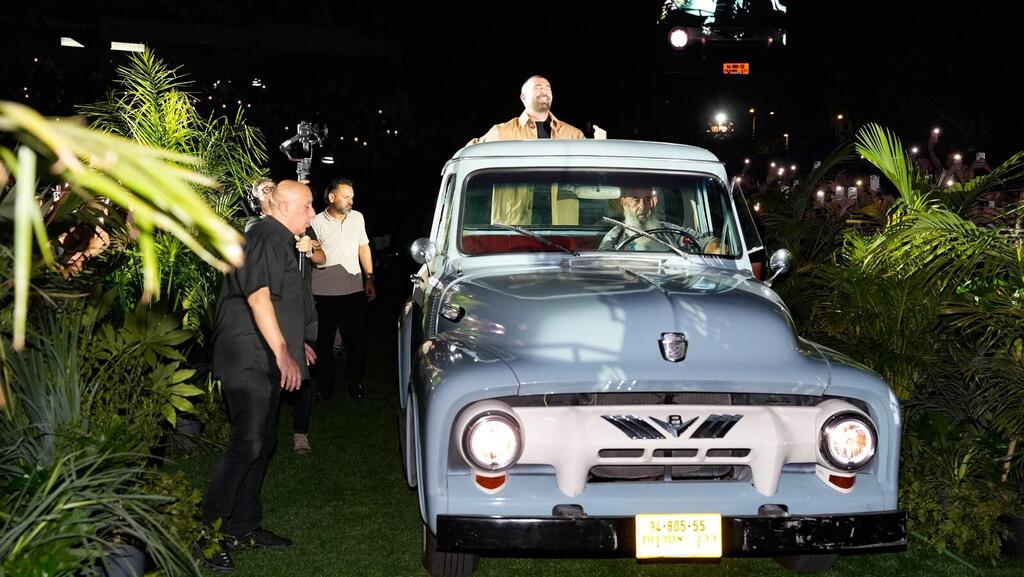
The reference Adam employed was not, as some social media users suggested, intended to evoke the white pickup trucks used by Hamas terrorists during the October 7 attack — despite online reactions that noted the traumatic imagery. Instead, it appeared to draw inspiration from Bad Bunny's Super Bowl performance, which featured a similar stage design.
During that performance, broadcast to hundreds of millions of viewers, the Puerto Rican superstar walked along a path surrounded by dense vegetation and sugar cane — a tribute to his homeland — and later performed atop a white pickup truck.
It is not the first time Adam has borrowed from Bad Bunny's stage aesthetic. During his previous appearance at Ramat Gan Stadium in August 2025, a house-like structure stood at the center of the stage, with Adam performing from its roof. The design closely resembled Bad Bunny's famous casita, which represents his childhood home in Puerto Rico and serves as a centerpiece of his stage production.
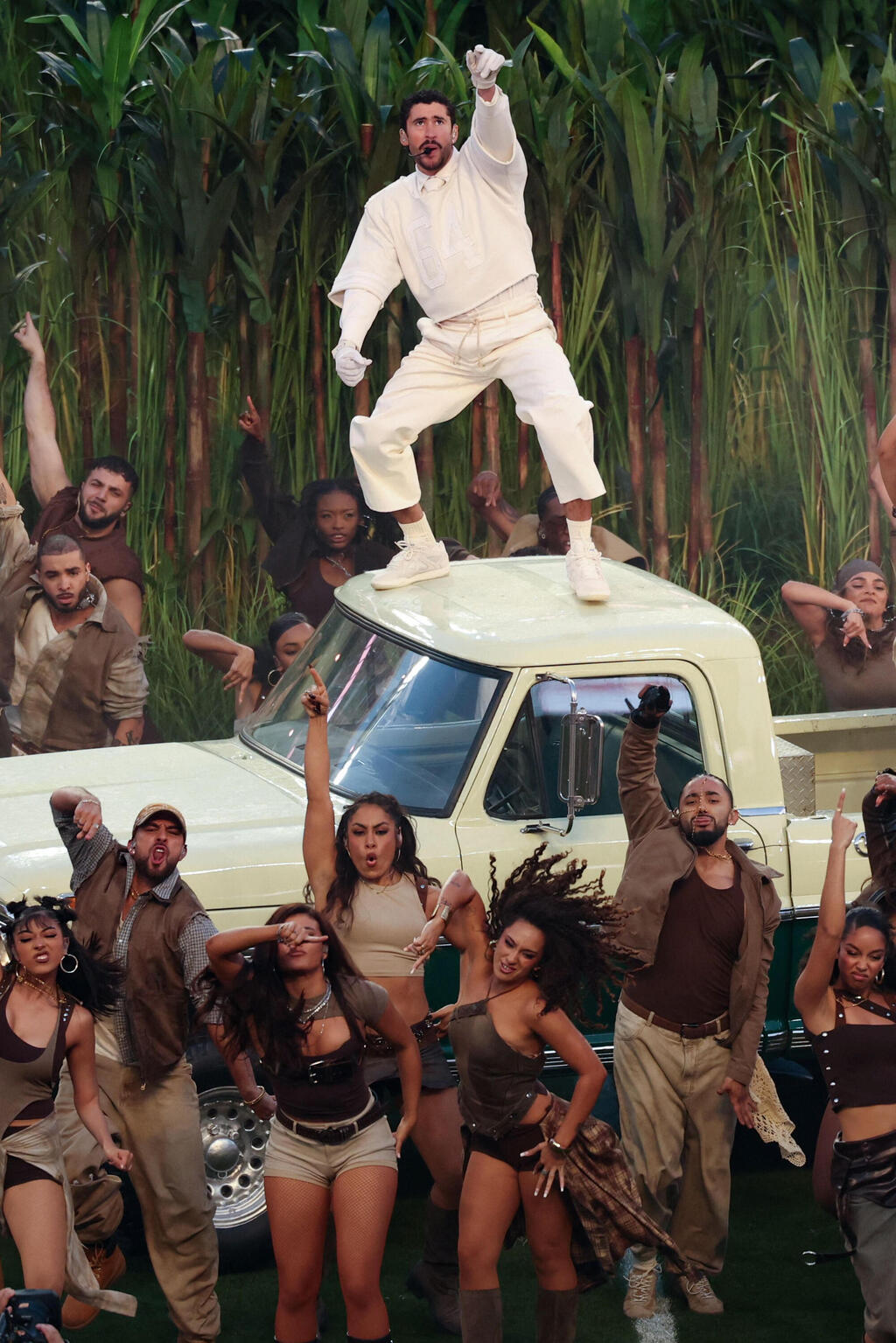
Bad Bunny on stage at the Superbowl halftime show
(Photo: AFP)
On the surface, it is easy — and perhaps justified — to view this as yet another example of Israeli artists imitating major international stars. Just last week, Noa Kirel performed at the Rishon Lezion Amphitheater wearing outfits and performing choreography that were openly reminiscent of Beyoncé and Chappell Roan.
Israeli artists have also developed a reputation for borrowing heavily in album artwork, from Efrat Gosh's similarities to Jennifer Lopez to Odaya's visual references to Bad Bunny. With the release of her latest EP, the borrowing appeared to extend beyond aesthetics, incorporating musical references to Britney Spears and Tate McRae.
These imitations can be interpreted as creative laziness, or as an attempt to generate discussion and buzz through rage bait — content designed to provoke outrage and drive online engagement. In that sense, criticism from fans on social media may not be a drawback but an advantage in an era increasingly defined by the notion that there is no such thing as bad publicity.
Another interpretation is that Israeli artists are attempting to create a sense of connection to the wider world at a time when the chances of seeing Bad Bunny perform in Israel are virtually nonexistent — as are the chances of seeing many other international acts.
When Omer Adam adopts Bad Bunny's stage design, he is signaling that the two belong to the same musical universe, the same cultural conversation and, ultimately, the same world
Between the lines, however, there may be something deeper: a longing for connection between Israel and the global cultural sphere.
One common response to the international cultural boycott of Israel — during which some artists have removed their music from streaming platforms or used performances to express support for Palestinians — has been: "Who needs them?"
The argument goes that Israel now has a culture of its own, one that does not require outside influences or validation from the global mainstream. Religious pop music, for example, is a distinctly Israeli phenomenon that does not aspire to international appeal in the way other genres do.
Yet the fact that Israeli artists so openly borrow from overseas performers may itself reflect a desire to remain part of that global culture.
When Omer Adam adopts Bad Bunny's stage design, he is signaling that the two belong to the same musical universe, the same cultural conversation and, ultimately, the same world.
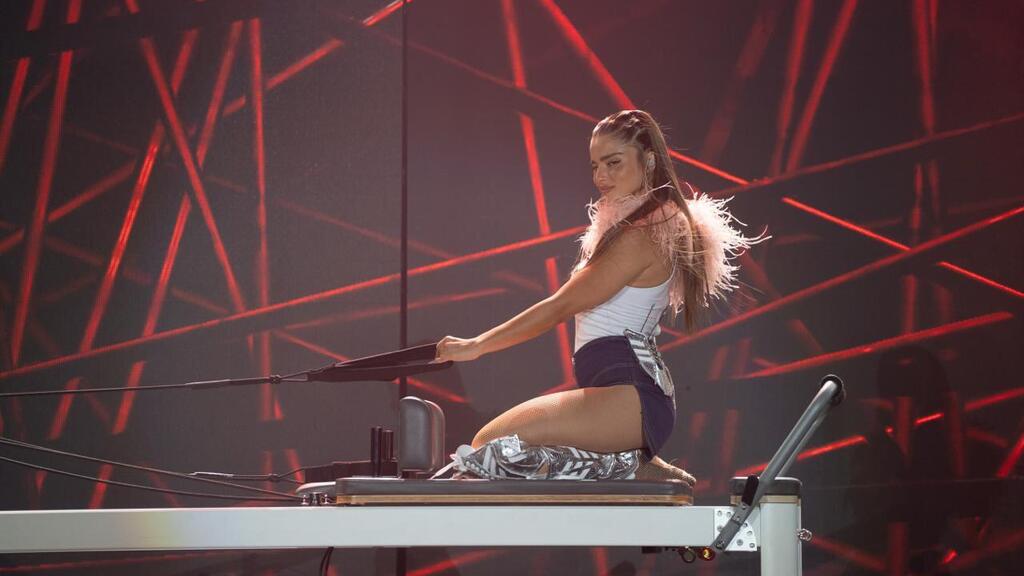
Noa Kirel performed at the Rishon Lezion Amphitheater wearing outfits that were openly reminiscent of Beyoncé and Chappell Roan
(Photo: Omri Silver)
That message stands in stark contrast to the dismissive "who needs them?" response. It is a declaration that the connection still matters.
Adam needs them. His fans need them too. Even if many of them do not speak Spanish or closely follow Bad Bunny, the reference conveys, perhaps subconsciously, that Adam has a global counterpart.
It suggests that, despite claims to the contrary, Israel is not a self-contained cultural bubble existing apart from the rest of the world. It remains connected to it.
Faced with this one-way relationship, one can hope for something more reciprocal: that one day Bad Bunny and Omer Adam will collaborate on a song and appear on each other's stages.
Adam has worked with international artists before. Perhaps there is still reason to hope that Israel will seek to remain part of the global cultural mainstream rather than continue retreating into cultural isolation.