

Summer. Sweltering heat. Vipers, jackals, chameleons and lizards crawl beneath the rocks at the height of their active season. So do cold-blooded humans, emerging from their holes to rile up their hot-tempered companions with heated, sweaty political discourse ahead of the elections that are supposedly coming for our benefit. Somehow, all kinds of reptiles have suddenly slithered into Israel’s public agenda at full force.
Suddenly, the news is talking about the absurd crocodile-canal project dreamed up by the deranged leaders of our generation, Itamar Ben-Gvir and Idit Silman. Meanwhile, amateur zoologists Gadi Taub and Benjamin Netanyahu are engaging in deadly serious discussions about a venomous cat’s paw, which may actually be an octopus, but is more likely a snake — one that is indeed venomous and whose head needs to be chopped off, but which has no paw with which to strike.
In a surprising and presumably entirely coincidental bit of timing, a new documentary series called “Monsters of God” has premiered on HBO Max, exploring the twisted relationship between reptiles and humans in the United States.
“Monsters of God” is the next stage in the evolutionary development of filmmaker Eric Goode, following the 2020 Netflix television hit “Tiger King,” which was followed by “Chimp Crazy” on HBO Max. In those series, Goode explored the strange intimate relationships between people and animals, as well as the instinctive battles surrounding them. In the process, he established himself as the David Attenborough of domesticated wild animals, the unrestrained humans who adopted them and everything in between.
While these projects cannot exactly be considered nature documentaries, they certainly aspire to reveal something about human nature — only in an unnatural way, with a deliberate tendency toward exaggeration. It is a contrived spectacle of excess designed to amplify the insanity for entertainment value. The same is true of the new series, which represents a Darwinian retreat from the world of mammals to that of reptiles but, unfortunately, does not constitute much of an advance in content compared with its predecessors.
The enormous success of “Tiger King” stemmed from the combination of the seemingly plausible interaction between big cats and their human owners, the notoriously unhinged Joe Exotic and Carole Baskin, and their jealousy-fueled rivalry. As its name suggests, “Chimp Crazy” is built around the intense, arguably sane-or-insane emotions felt by its protagonist, Tonia Haddix, toward Tonka, a chimpanzee with whom she shares an intimate bond likened to that of a mother and son, while she engages in a no-holds-barred custody battle with authorities.
The biggest challenge for Goode and his partners in creating “Monsters of God,” Jeremy McBride and Tom Petersen, stems first and foremost from the nature of reptiles, which are not exactly open to relationships and commitment, certainly not with humans. So when it comes to the zoological side of things, the series starts at a disadvantage. There is no communication between species, no close relationships and certainly none driven by affection. It is a relationship doomed to fail from the outset. It is about as far removed as possible from dogs, cats, chimpanzees and even parrots or pigeons.
And yet lizards, chameleons and snakes are fascinating animals, frightening to many and seductive to others. I should know. About 20 years ago, I adopted Stippy, a beautiful ball python. It was the only experience of fatherhood I have ever had. Not a particularly impressive achievement, considering that all I had to do for his well-being was keep clean the spacious terrarium my father built for him (Stippy’s grandfather, so to speak), provide a heating element during the winter months and ensure a regular weekly supply of mice.
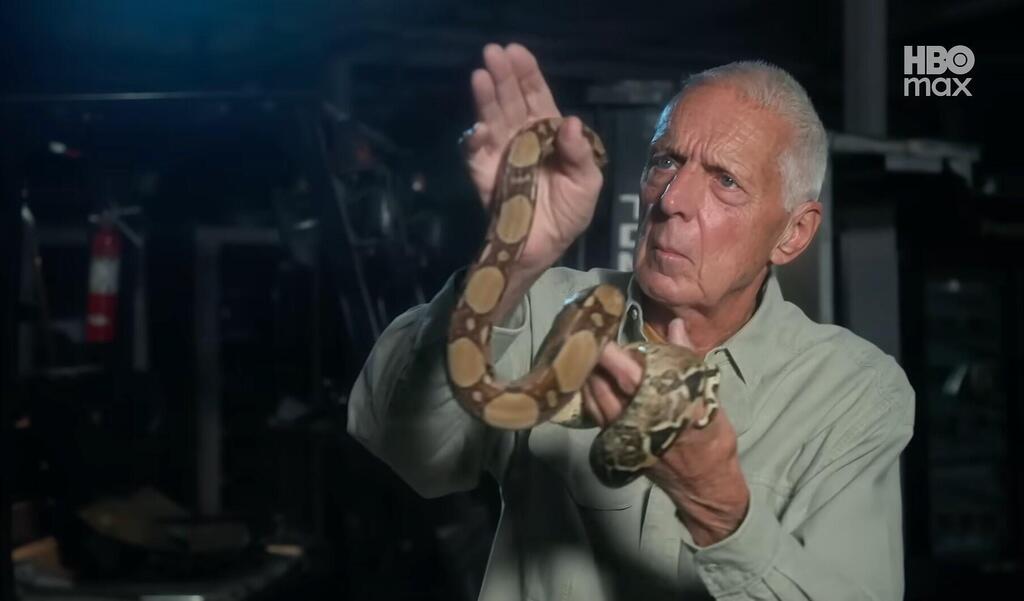
There are more recommended pets. From 'Monsters of God'
(Photo: Courtesy HBO Max)
Still, over three years of living together, which ended far too soon, we shared quite a few beautiful moments and moving memories that remain burned into my consciousness. Mine alone. I will never forget waking from a deep sleep to find him wrapped around my neck, how he tried to escape every time I held him in my hands, how I kissed him (without using my tongue) and how he bit my fingers, followed by nightmares in which he had developed venom glands that appeared in my dreams. I used to sing to him, “N Nah Nah, trained snake,” but he never responded. He didn’t even laugh.
I also won’t forget how I came into possession of him from a teenage reptile dealer in Hod Hasharon, after the dealer sold me a defective product in the form of a ball python that died a week after I bought it. I remember the whole thing feeling suspicious, even dark, as my dealer and I conducted business in live animals. Not that Stippy or his predecessor, Zochalu Lebracha, cared, of course, and neither do the variety of creatures appearing in “Monsters of God,” which are completely devoid of personality.
There are no real characters here. The series is filled with close-ups of exotic reptiles in a wide range of species, shapes and colors — monitor lizards, chameleons, rare turtles, iguanas, alligators, venomous cobras, anacondas, giant reticulated pythons and plenty of ball pythons, like my Stippy. Reptiles, with their various archetypes, certainly occupy a special place in the human imagination, from biblical stories through Greek and Norse mythology to Freudian psychoanalysis.
But among all these wonderful creatures displayed on the screen before us, there isn’t a single distinct character with personality traits, a persona and a life story. If any of these animals has suffered trauma, we can only imagine it ourselves through the stories told by the humans who appear in the series.
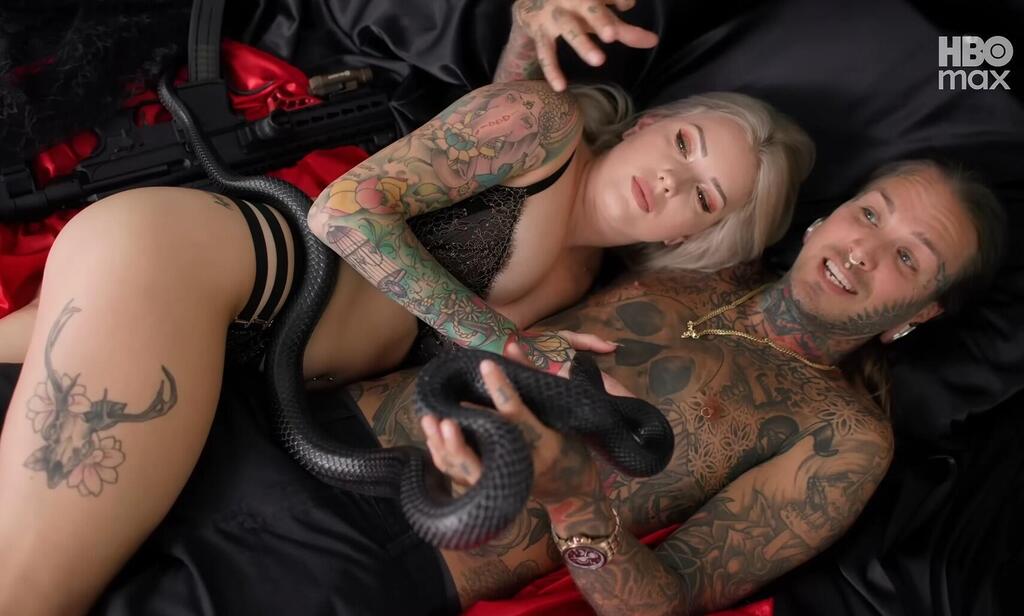
Where’s your personality, giant terrifying black snake? From 'Monsters of God'
(Photo: Courtesy HBO Max)
Facing these visually spectacular but personality-free creatures, Eric Goode places the series’ human protagonists: aging men who could be called dinosaurs, appearing before the camera to recall the golden age of the illegal trade in rare reptiles in the 1960s. Hank Molt, Tommy Crutchfield and Ray Van Nostrand are white-haired and rather drab in every other respect. They are no Joe Exotic or Tonia Haddix, not even your national security minister and environmental protection minister, although you can identify something of your prime minister in them — competitive and cunning, more experienced than a Galápagos tortoise, changing colors like a chameleon, deadlier than a viper and more slippery than a skink.
The entire story rests on them, drawing on the reporting of journalist Bryan Christy on the dark underworld of reptile smuggling in his 2008 book “The Lizard King.” It is steeped in fierce rivalries within the rapacious capitalist ecosystem of the United States, which also wallows in the sewer of institutional corruption and organized crime.
Unlike “Tiger King” and “Chimp Crazy,” we do not witness events unfolding before our eyes. Instead, we get nostalgic recollections of the distant past from a group of retirees. This may interest reptile enthusiasts (like me), but it is not outrageous enough, not even moderately so, for a broad audience.
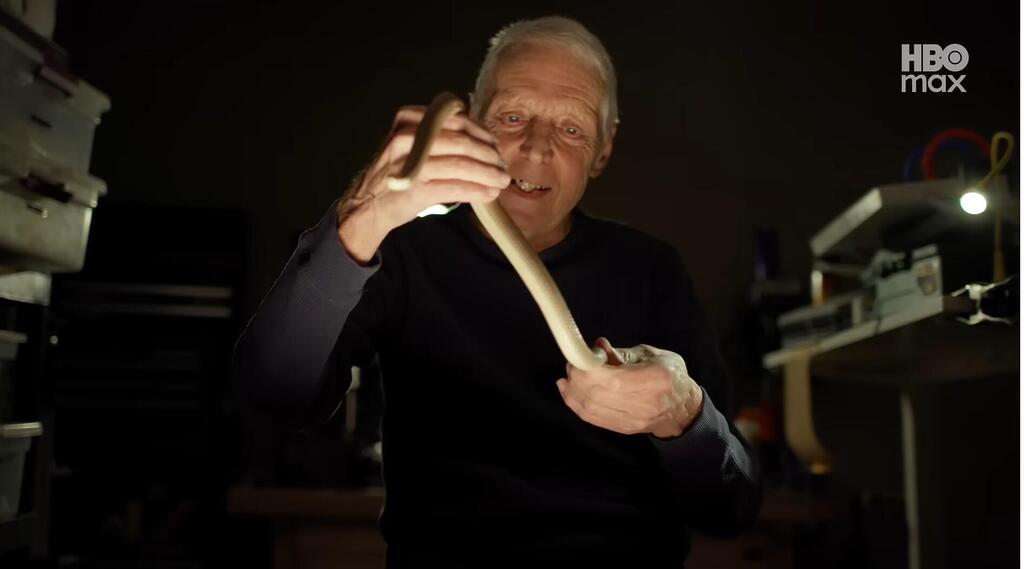
The lizard people here are ordinary human beings with fairly rational ways of thinking, even if criminal at times. Molt was undoubtedly a colorful and unrestrained character in his youth, but now, in his 80s, all he has to offer are amusing tall tales and the natural cheekiness of a cynical, cold-blooded man like the reptiles he smuggled from around the world as a pioneer in the field.
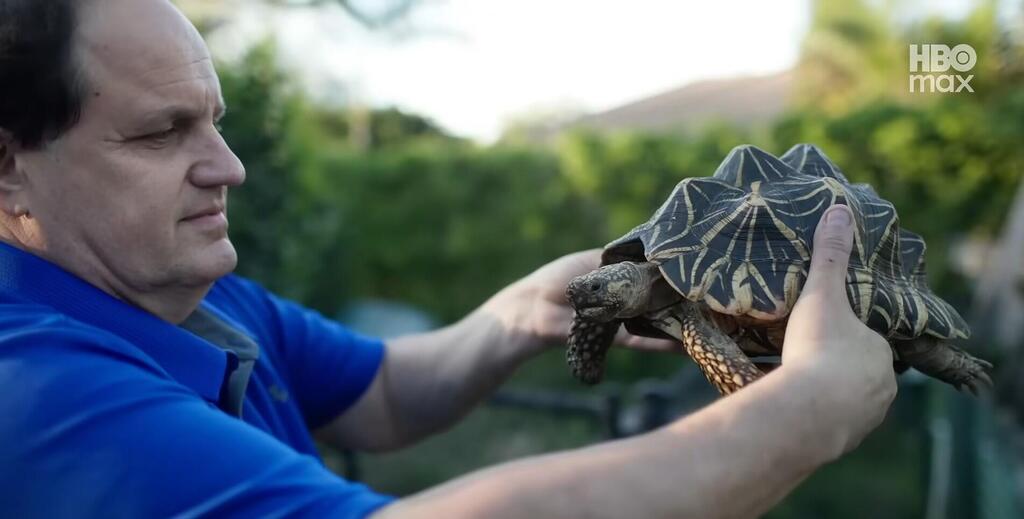
I’ll call you Methuselah Jones. From 'Monsters of God'
(Photo: Courtesy HBO Max)
Crutchfield is the creation that turned against its creator, but he comes across as a relatively likable guy. As for Van Nostrand, it is hard not to feel for the Alzheimer’s patient, who died during filming, as he struggles to retrieve memories from his dementia-stricken mind of the deal he struck with drug cartels to smuggle his live cargo.
While watching, there is a feeling that we are getting to know the snake’s shed skin, not the snake itself.
As a piece of entertainment, Eric Goode and his team’s new series is not as successful as their previous work. It lacks the dimensions of madness and campy insanity they have accustomed us to. Yet “Monsters of God” could have been taken down other, straighter paths, following the route laid out by Christy’s investigation into the exotic-snake smuggling industry and behind the scenes of the American zoo industry, which is driven more by commercial interests than by ecological goals of protecting wildlife and educating the public to appreciate it.
The series could also have delved deeper into the environmental dangers posed by invasive species, which greedy smugglers knowingly exacerbate while selfishly ignoring the consequences. This, of course, is not unique to reptiles. The threat also exists with mammals, birds, fish, insects, amphibians and even aliens.
But Goode is looking for the humans. The crazy ones. The people who drive it all. Because who wants to be serious these days? Look, even we in the media are talking about crocodile canals around prisons. Or about Stippy in the recesses of my heart.