

In February 2025, Israeli filmmaker and DJ Ariel Vromen, who works in Hollywood, was on his way to Las Vegas for a DJ gig. During the trip to the gambling capital, he was listening through his headphones to a joint White House news conference by Donald Trump and Benjamin Netanyahu about the future of the Gaza Strip.
"Trump was saying, 'I'm going to build casinos and hotels in Gaza, create jobs. It's going to be like Vegas! There will be plenty of jobs!' The conversation between them was bizarre and ridiculous," Vromen recalled in an interview during a recent visit to Israel. "When I arrived in Vegas, I suddenly looked out the window and saw the Strip. So I called Solo Avital, my partner at our company EyeMix, and said, 'Listen, I don't know whether I'm in Gaza, the future Gaza, of course, or Las Vegas.' We decided to make a satirical video about it using AI."
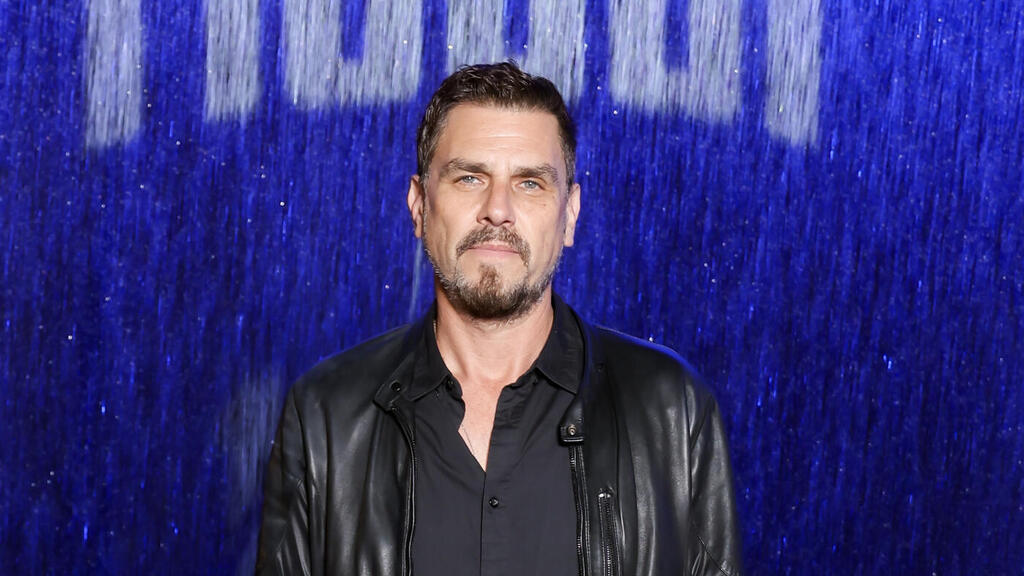
That night, after returning from the party where he had been DJing, Vromen began exchanging messages, ideas and videos with Avital, imagining Gaza as a combination of Las Vegas and Trump's vision for the territory. "Solo would send me a video, I'd change it a little and send it back, and we kept going until we were happy with it."
The finished video depicted a transformed Gaza Strip, complete with a luxury hotel bearing Trump's name, bearded belly dancers and money flying through the air. "In the morning, I sent the video to a few friends, including Lawrence Bender," he says, referring to the Jewish producer who worked with Quentin Tarantino and was involved in producing Red Alert, a series about the October 7 massacre.
"Lawrence wrote back, 'Ariel, this is terrible!' So I replied, 'Lawrence, it's a joke!' I sent it to a few other people. Some laughed, while others said, 'Come on, why are you getting involved in politics now?'"
Vromen initially posted the video to his Instagram Story, but quickly had second thoughts. "After 10 minutes, I said, 'Okay, I'm taking it down and shelving it.' That was February 4. On February 22, I was sitting at home in Los Angeles.
"A friend had just come over and put his phone on the table. During the visit, he instinctively tapped a push notification saying, 'Donald Trump posted a video.' Suddenly, I saw that it was our video. I asked him, 'How do you have that video?' And he said Trump had posted it. I thought he was messing with me."
"Then I went onto Trump's social media platform and thought, 'The president of the United States has posted an AI video for the first time in history, and it's our video. It doesn't get any bigger than that. This is a statement!' Trump didn't write 'Ha ha ha' at the end of the post, didn't add an emoji or say, 'These guys are crazy,' or 'What do you think?' Nothing! Just a straightforward post from the president of the United States, without a single word of commentary. In other words, zero context."
Vromen, 53, who has worked with some of Hollywood's biggest stars, from Kevin Costner and Gary Oldman to Gal Gadot and Ryan Reynolds, suddenly found himself at the center of a media storm. "At first, I didn't understand how big it was. Three hours after I first saw Trump's post, it already had 10 million views. After about two weeks, it had 800 million views. There wasn't a television channel in the world that wasn't talking about it."
Were you attacked for political reasons?
"Absolutely. It hurt me. Suddenly, I started experiencing cancel culture in Hollywood. People claimed I was working for Trump, and that's what caused the problem. I felt it most at Netflix. I used to be like family there, and suddenly they didn't want to meet with me. I was afraid the video would do enormous damage to us.
"One day, I was driving my daughter to music school. When I dropped her off, I saw the former principal, who had always been thrilled to see me. This time she said, 'Did you do that?' I asked, 'Do what?' And she said, 'Did you make Trump's video?' I said yes. She ran to her car and drove away. That's when I finally understood that I had a problem, that this wasn't just a joke anymore.
"We went to the press to explain ourselves. We were interviewed by The New York Times, The New Yorker, NBC and CNN. I didn't make any money from the whole thing. I didn't see a dollar. But I decided to use it to promote our company."
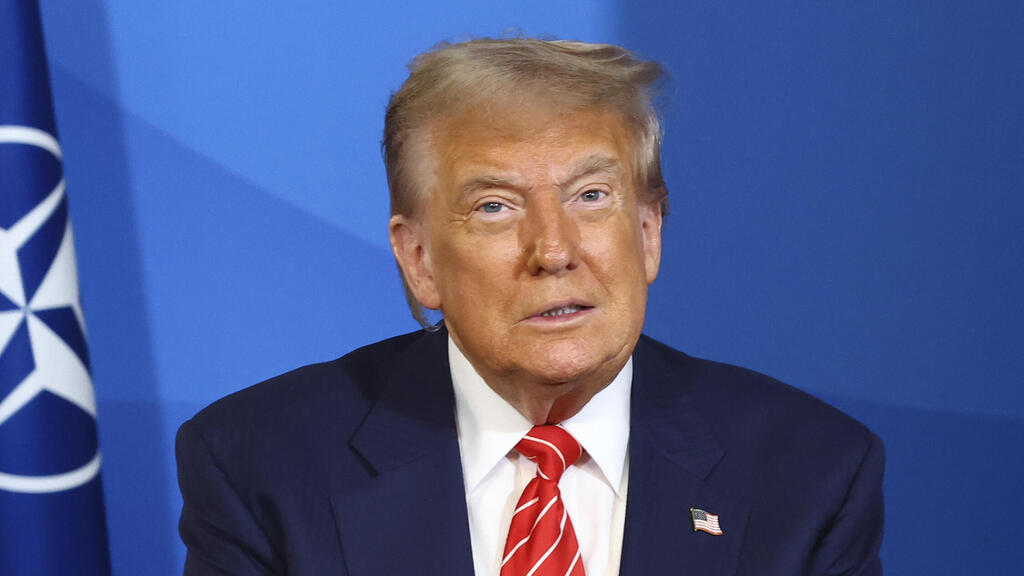
Donald Trump
(Photo: AP/Piroschka Van De Wouw)
What did you do about it?
"I realized there was enormous interest in AI content. Our video was the world's first viral AI video. There had been a few videos circulating before it, but ours triggered a massive trend of posts and people trying to imitate it. On a global level, a lot of people saw AI for the first time through our 'Trump Gaza' video.
"I realized I needed to take our company beyond making commercials for fashion brands like Dior and Chanel. We understood that we had to develop proprietary technology. The main idea is to create things that improve the economics of filmmaking, giving creators tools to tell stories by combining AI with directors, cinematographers and actors."
Samsung Israel was also impressed by Vromen and his team's work and commissioned them to create an AI-generated vertical web series for the Galaxy Z Fold8. The six-episode thriller, titled Run For Tina, became available Sunday to owners of the latest model. The story follows Tina, a cleaner working aboard a luxury yacht who discovers a watch worth half a million dollars, becomes entangled in trouble and finds herself in a race against time.
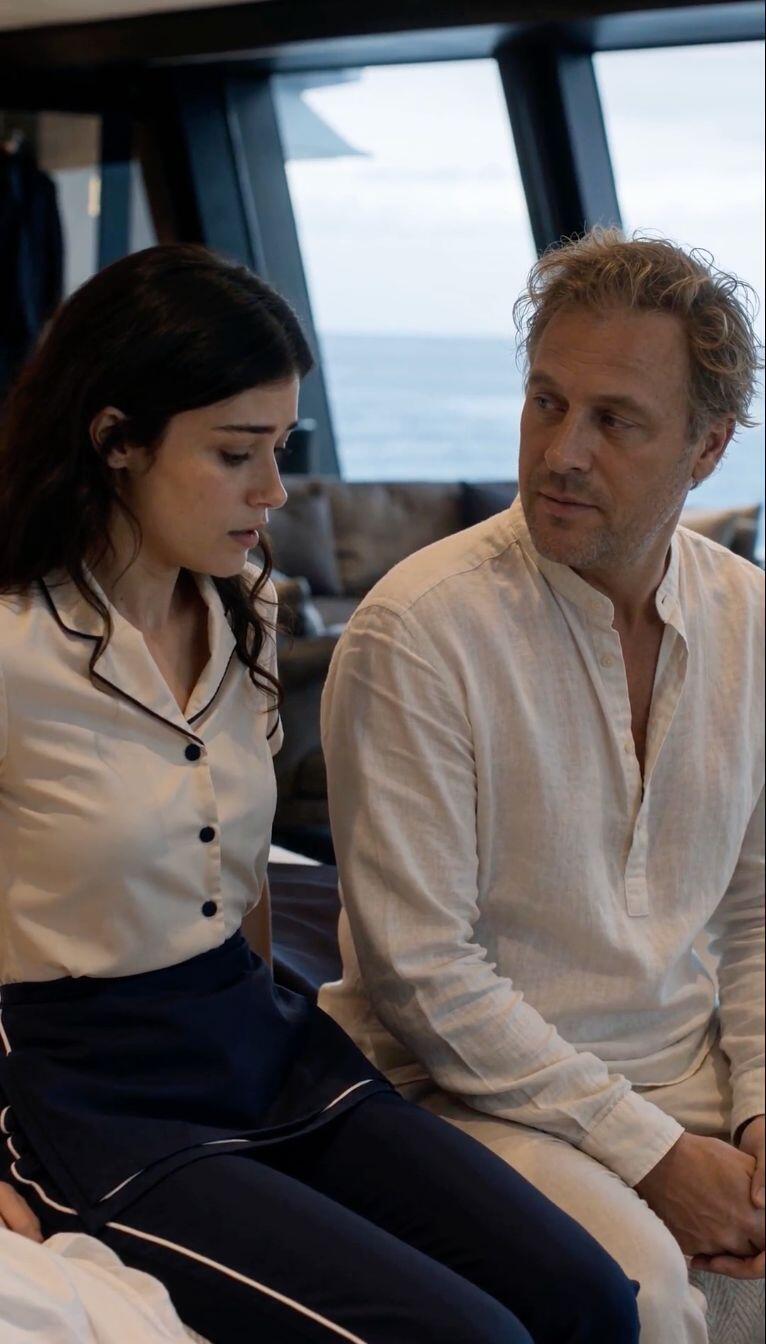
From Run for Tina
(Photo: Courtesy of Samsung Israel)
The Galaxy Z Fold8 is an advanced foldable smartphone, and Vromen has created a glossy, fast-paced thriller designed for its format. The story was inspired by Run Lola Run, the 1998 cult film by German director Tom Tykwer, in which Lola races through the streets of Berlin, desperate to raise money within 20 minutes to save her boyfriend, who has become involved in a smuggling operation.
"When we got the offer from Samsung Israel, we wanted to create something more pop-oriented. Then I remembered the only film I'd ever watched twice on the same day, Run Lola Run," Vromen says. "I decided to create a story inspired by it."
Vromen grew up in an apartment building in Ramat Aviv, a neighborhood in northern Tel Aviv, where Noa Tishby also lived. "She was in love with me when she was six, and I was in love with her when she was 16," he recalls. His late father owned a venture capital fund specializing in high-tech, while his mother worked in fundraising for Tel Aviv University.
"I was a very artistic kid. My brother was a filmmaking genius, and I used to carry his tripods and edit his films. He taught me to love all the great filmmakers, from Ingmar Bergman and Fellini to Tarkovsky."
As a young man, Vromen made bizarre, unconventional films, including horror movies. He was also a drummer and played jazz with his brother. His military service, however, took an unexpected direction when he enlisted in an Israeli Air Force rescue unit and participated in operations in Lebanon.
"There was social pressure at the time to join an elite unit," he explains. After completing his military service, he traveled to London to study. He applied to film school but was rejected on the grounds that his early films were "too crazy" and that he had no talent.
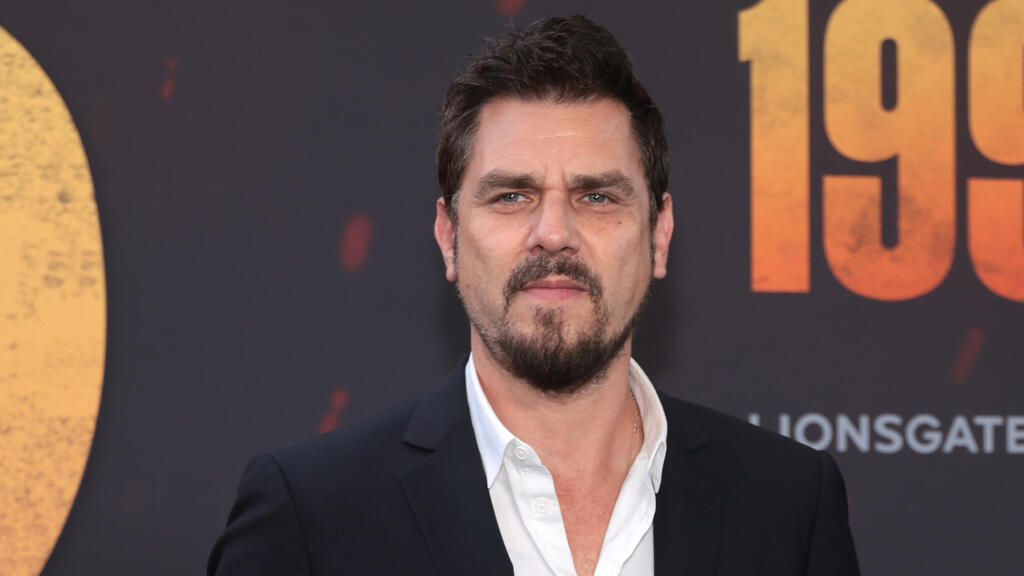
(Photo: Amy Sussman/Getty Images)
Vromen settled for studying law while establishing himself as a leading DJ in the Israeli and international trance scene. "I played with Astral Projection and Oforia (Ofer Dikovsky). I was a nerd as a teenager, and suddenly I found myself in a wild club in Brixton, London, where everyone was having a great time. It was a crazy period. Today, the trance scene is terribly commercialized, but back then it was very underground. I even started writing music. I left because of all the drugs surrounding you. It just became too much."
In 1998, Vromen returned to Israel to begin his legal internship, but never actually started it because he had been accepted to film school in New York. He later moved to Los Angeles, worked as an editor and became involved in the hip-hop scene. "One day, I saw a short film starring Gerard Butler, who wasn't very famous yet. I thought he'd be perfect for a short film I wanted to direct about an English captain serving in the Sahara who falls in love with a camel. I'm the only person in the world who has filmed him in a love scene with a camel," Vromen says with a laugh.
In 2004, Vromen directed his first feature film, Simple Lies, about three friends who smuggle drugs. The film starred Colin Hanks, son of Tom Hanks, and Eric Balfour, known for his role in Six Feet Under. Following the positive response to the film, Vromen was offered the opportunity to direct Danika, starring Marisa Tomei. "I caught Marisa at a time when she was feeling insecure and heartbroken. She was going through a crisis about turning 40, her grandmother had died and her boyfriend had left her. All those things contributed to her performance. We got incredible reviews."
With his striking looks, thick hair, charisma and seemingly endless energy, Vromen became a familiar figure in Hollywood, including its nightlife scene. He spent time with Butler and Leonardo DiCaprio and dated models and actresses, among them Shirly Boganim and Sarai Givaty. In fact, during one of my interviews with Butler, the actor told me about partying with Vromen in Tel Aviv and how the two had torn up the city's dance floors.
"I still see Gerard all the time," Vromen says. "He's reached a point where he gets paid so much money for movies that he's trying to do other things. He's reached a certain level of saturation with acting. His body is pretty beaten up, and I think now he wants to do something that feels more guerrilla-style."
Vromen's filmography also includes The Iceman (2012), which screened at the Venice Film Festival and was based on the true story of a contract killer working for the Mafia. Its cast included Ray Liotta, James Franco, Winona Ryder and Michael Shannon.
In 2016, he directed Criminal, which also featured an impressive cast: Kevin Costner, Tommy Lee Jones, Gary Oldman, Gal Gadot and Ryan Reynolds in a cameo appearance. "I absolutely love Gal, and Ryan is amazing. Kevin is a very charming and intelligent man, but he's a Capricorn and he's stubborn. A total control freak. What came out of Criminal was unbelievable. Gal finished filming and moved on to Wonder Woman, Kevin went on to do Yellowstone, which revived his career, and Gary Oldman won an Oscar for Darkest Hour."
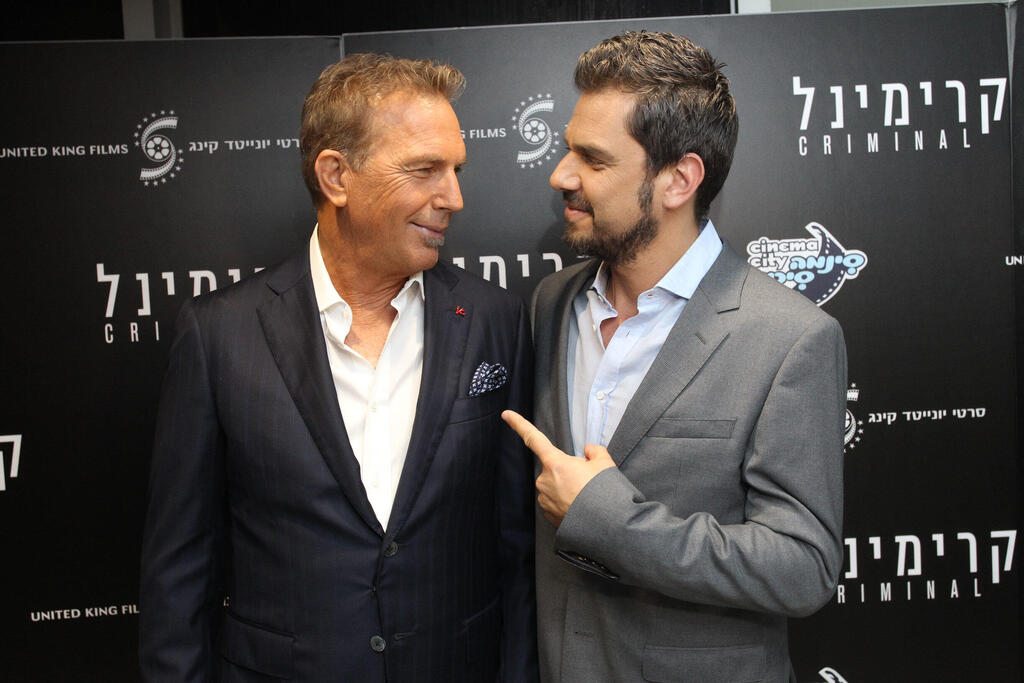
With Kevin Costner
(Photo: Rafi Deloia)
In 2016, it was reported that Vromen had been selected to direct the fifth installment in the Rambo franchise. "I was the one who came up with the idea of reviving the franchise and making a Rambo prequel. But in the end, Sylvester Stallone decided he didn't want my screenplay and preferred his own. It was a classic Hollywood situation: They paid me to go away. I wasn't involved in that film. Universal Studios bought my idea for a prequel, and it's supposed to come out within the next year."
Following Criminal, Vromen directed the 2018 Netflix film The Angel, which told the story of Ashraf Marwan, the Egyptian spy who warned Israel about the impending Yom Kippur War. The film featured Hollywood actors alongside Israeli performers, including Vromen's close friend Ori Pfeffer, Tzahi Halevi, Sasson Gabai, Mickey Leon, Guy Adler and Mali Levi.
How did you end up moving from such an impressive series of films to specializing in AI?
"In 2022, I made the film 1992, which was produced by Snoop Dogg, about the Los Angeles riots that broke out in 1992 following the acquittal of the police officers who beat Rodney King. It was Ray Liotta's last film, and I had a feeling that we were entering a period when interest in cinema was declining dramatically and the industry was shrinking. I realized that the economics of the film industry had a serious problem.
"People began introducing me to AI, and I got into that world. That's how I founded the company with Solo Avital, who comes from the visual effects industry. He's an incredibly talented artist with a great deal of experience in post-production. We also brought in Guy Melamed, a childhood friend with extensive experience in high-tech, running companies and serving as a CEO."
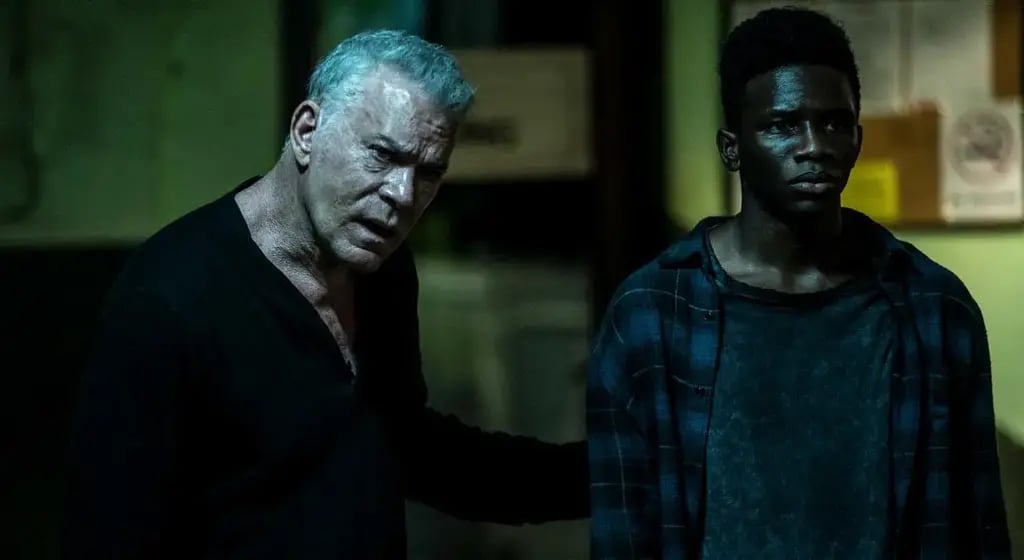
Ray Liotta in a scene from the film '1992'
(Photo: PR)
Weren't your Hollywood friends upset about your move into AI?
"Very close friends, like Zach Braff and Jason Statham, told me at the time, 'You're going to murder the industry. You're like a coronavirus laboratory. You're going to unleash a virus on us that will never go away.' And I genuinely tried to explain to them that all the technology we're building is designed to prevent exactly what they're describing from happening. And now a director like Gabriele Muccino, who made Seven Pounds and The Pursuit of Happyness with Will Smith, speaks about us with admiration and respect.
"I used to write screenplays for him, and after years of not being in touch, he suddenly called me following the Trump video and asked us to help him put together a television series about the Gucci family, starring Italian actors. The original budget was 32 million euros. Instead of building sets, we're using AI. We brought the budget down to 24 million euros. We saved them a lot of money."
Among the company's upcoming projects is a sequel to Mel Gibson's controversial film The Passion of the Christ. "Mel and I have known each other for quite a few years. He was very supportive of me in the past. Mel isn't antisemitic or anti-Israel. He has certain views about the current situation, but all his friends, the people who represent him, the people who work for him, his business partners, they're all Jewish. The head of Mel's security operation for the past 20 years is Israeli. So saying that he's antisemitic and hates Jews and Israelis might be very easy, but it isn't true."
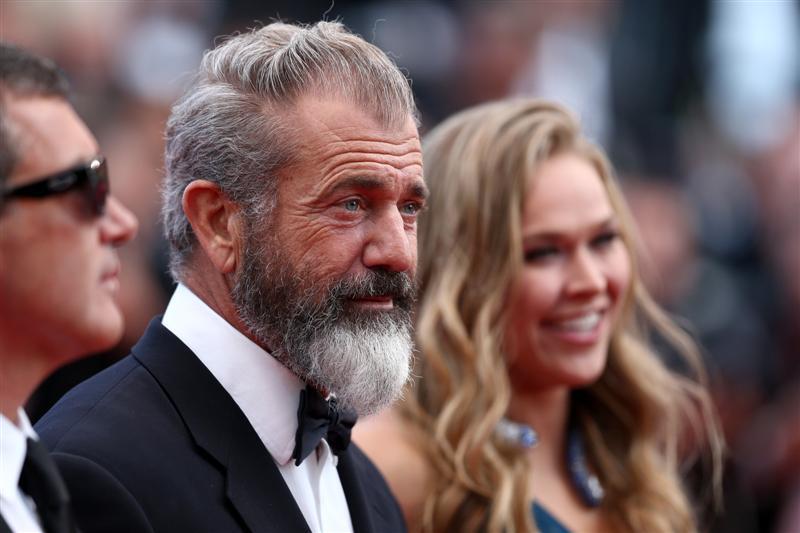
Mel Gibson
(Photo: GettyImages)
Vromen has not given up directing. "In January, I'm starting to shoot a film called Don't Bleed with Woody Harrelson, Halle Berry and Edgar Ramírez. It's a very apocalyptic project. I need to create an entire world of animals and destruction, and with traditional production methods, I would need 40 million dollars to make it. Today, I'm shooting it with three movie stars for 9.2 million dollars. How am I doing that? Thanks to AI."
Do the industry unions allow you to work that way without creating obstacles?
"Yes. As long as you're actually filming the actors, and you have a cinematographer and a screenwriter, it's allowed."
Vromen is also planning to leave Los Angeles for Miami in the near future. "I've had enough. That's it. This city gives you nothing. It's the most expensive city in the world. The taxes are insane, the government is terrible, and you get nothing in return. The nightlife has gone from 100 to zero. I used to leave the house knowing I was going to see someone or something that could change my career. I went out to work, to have fun, to find opportunities. Today, nobody leaves the house. Hollywood, in general, is a place that hates itself. It used to be run by people who understood cinema. Today, it's run by businesspeople."