

On June 6, 1967, in the middle of the Six-Day War, Israeli soldier Aharon Bar-Oz sat down to write a few words to songwriter Naomi Shemer.
“Bravo! And bravo again,” he wrote. “Your song 'Yerushalayim Shel Zahav' (Jerusalem of Gold) has become part of our lives at the outposts. Our guys can’t stop singing it and marveling at it, because a song like this means something special precisely in these days, when the nation is fighting and winning.”
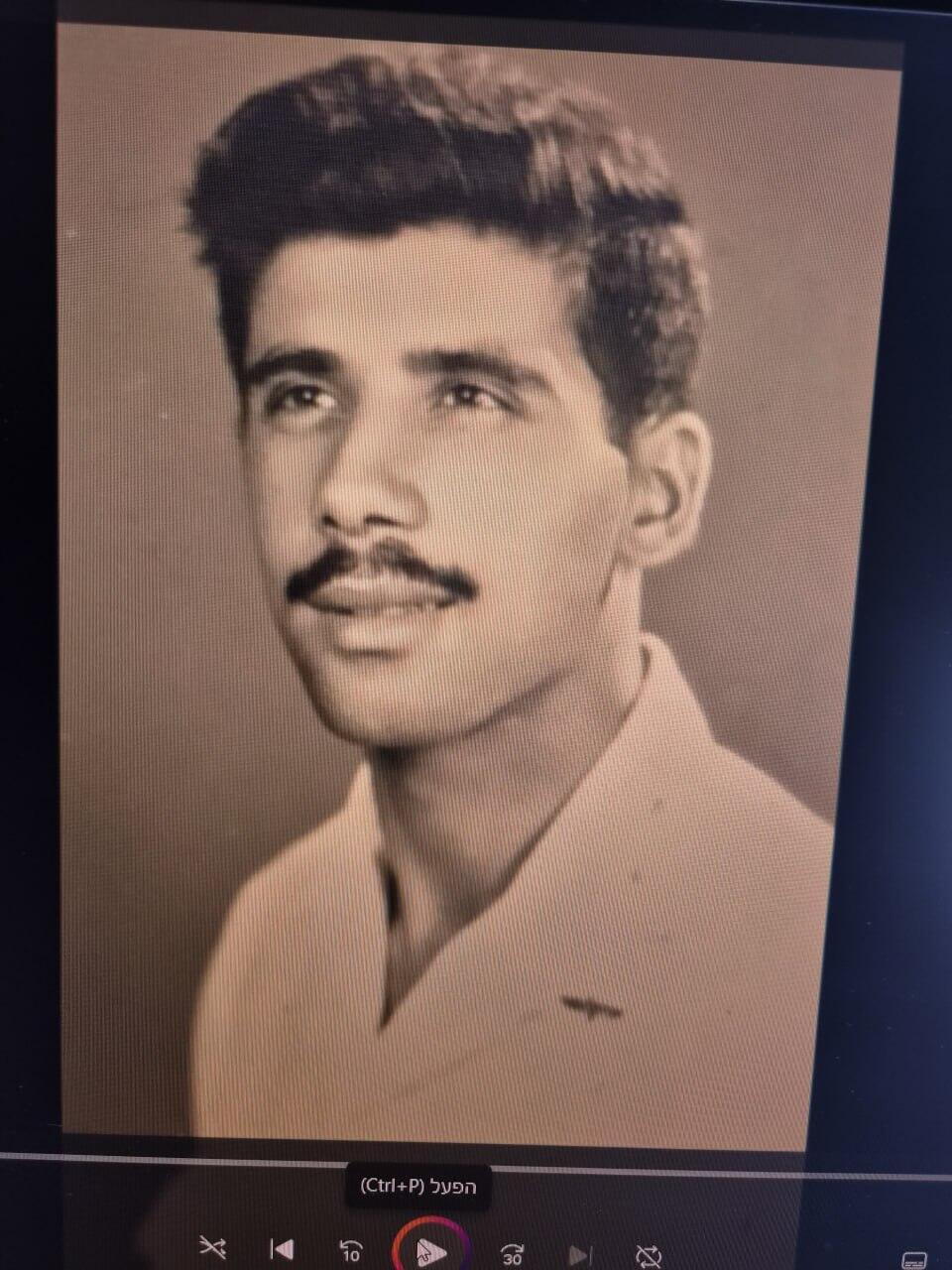
Bar-Oz, writing on behalf of a reconnaissance unit in northern Israel, added: “At this very moment our aircraft are bombing the Golan Heights, and your song is playing on the radio. Tuesday, 9:35.”
Nine days later, Shemer replied from Tel Aviv. “I am glad that it is already possible to congratulate you and the entire unit on your victory,” she wrote, “and I am pleased to hear that I could help you from afar, at least through song.”
The postcard Bar-Oz sent Shemer was preserved in her personal archive and has been displayed for roughly three years as part of the permanent exhibition at Israel's National Library. But until recently, the soldier behind the emotional message remained almost entirely unknown, even though his name appeared on the postcard.
That changed during a tour of the library’s visitor center. As a guide showed the letter to a group, one of the visitors suddenly recognized the handwriting on display as her father’s, identifying the long-anonymous soldier as Aharon Bar-Oz
The discovery led the library to make contact with the family. It also revealed another piece of the story: Bar-Oz had preserved Shemer’s handwritten reply for nearly six decades. His family has now decided to deposit that letter at the National Library as well.
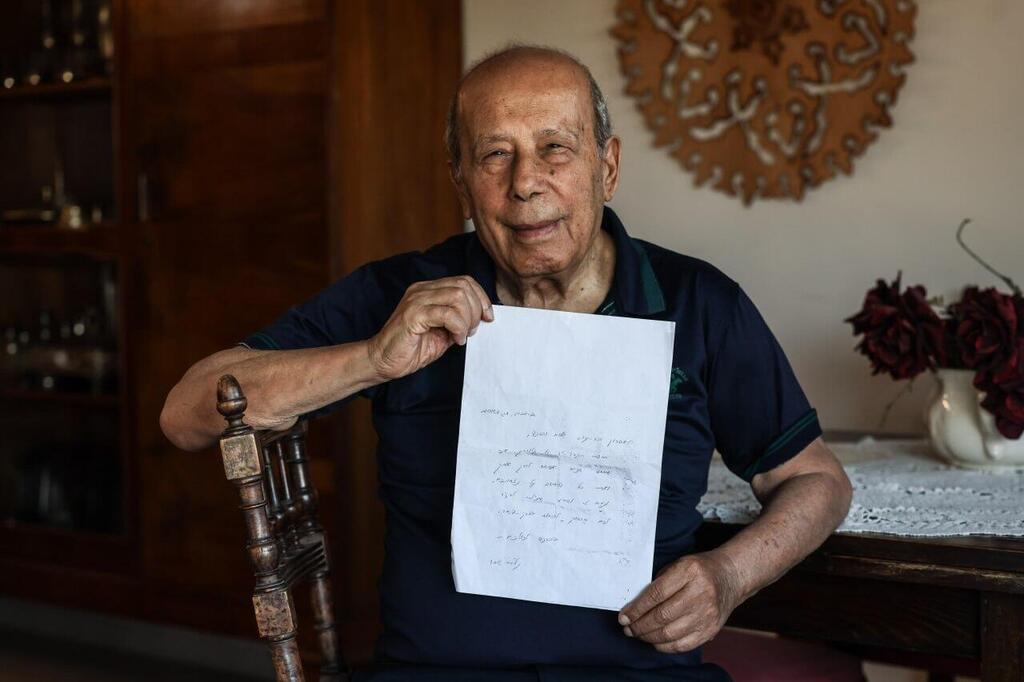
Aharon Bar-Oz today with Naomi Shemer’s reply. “Part of our national heritage”
(Photo: Gil Nehushtan)
“My sister was there on a work tour, listening through headphones, when she suddenly told the guide, ‘That’s my father,’” said Bar-Oz’s daughter, Inbar. “A week later, I visited as well and already knew what she had discovered. I told the guide to let me know when we reached the Naomi Shemer section because I had something to add.
“When we got there, I explained that we also had Naomi Shemer’s reply to my father. It was important to us that it be preserved at the National Library for future generations. This is part of our national heritage.”
A song already living among soldiers
“Jerusalem of Gold,” one of the best-known songs in Israeli music, was written by Shemer at the request of Jerusalem mayor Teddy Kollek and performed publicly for the first time at Israel’s national song festival on May 15, 1967, just three weeks before the Six-Day War.
After Jerusalem was reunified, the song became a national symbol within days, and Shemer even added a new verse.

Naomi Shemer
(Photo: Shalom Bar Tal)
Bar-Oz’s postcard captures a remarkable moment between two eras: it was written just one day before Jerusalem was reunified, when the song was already part of soldiers’ lives in the field but had not yet become a symbol of victory.
“There wasn’t even a table or chair,” Bar-Oz, now 89, recalled. “I had another soldier stand in front of me and used his back as a writing surface. That’s how I wrote the postcard and sent it to Naomi Shemer’s home community Kvutzat Kinneret, on the shores of the Sea of Galilee.
“What surprised me was that out of hundreds of thousands of mobilized soldiers, everyone was singing ‘Jerusalem of Gold,’ and nobody had written Naomi Shemer a letter of thanks and appreciation. I wrote it simply because it felt right, as we were singing the song all the time.”
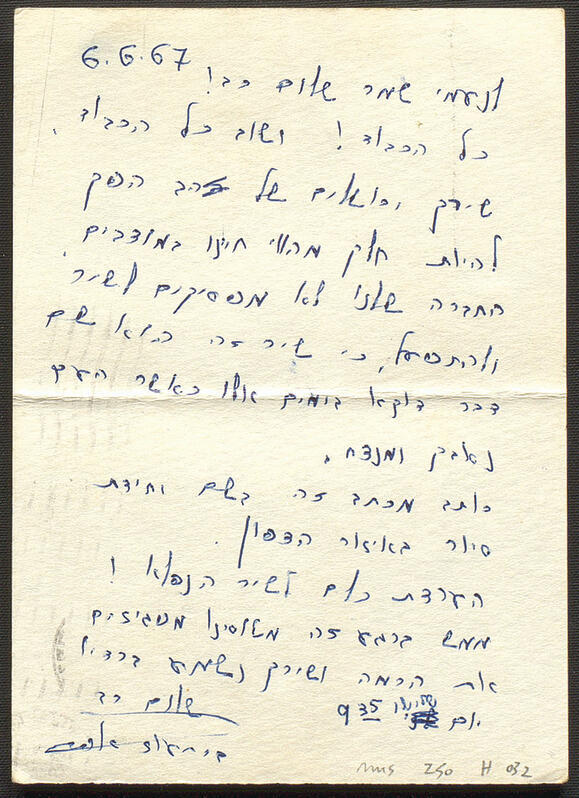
The letter soldier Aharon Bar-Oz wrote to Naomi Shemer
(Photo: National Library of Israel)
Bar-Oz, who was also wounded during the war, remembers receiving Shemer’s reply on pink paper, handwritten and dated “Shavuot Eve.” “I framed the letter and hung it on the wall, and I showed it to everyone who came to our home,” he said.
“Now the time has come for it to be at the National Library. It must be there, especially for the grandchildren and for those who say, ‘We'd rather die than enlist.’”