


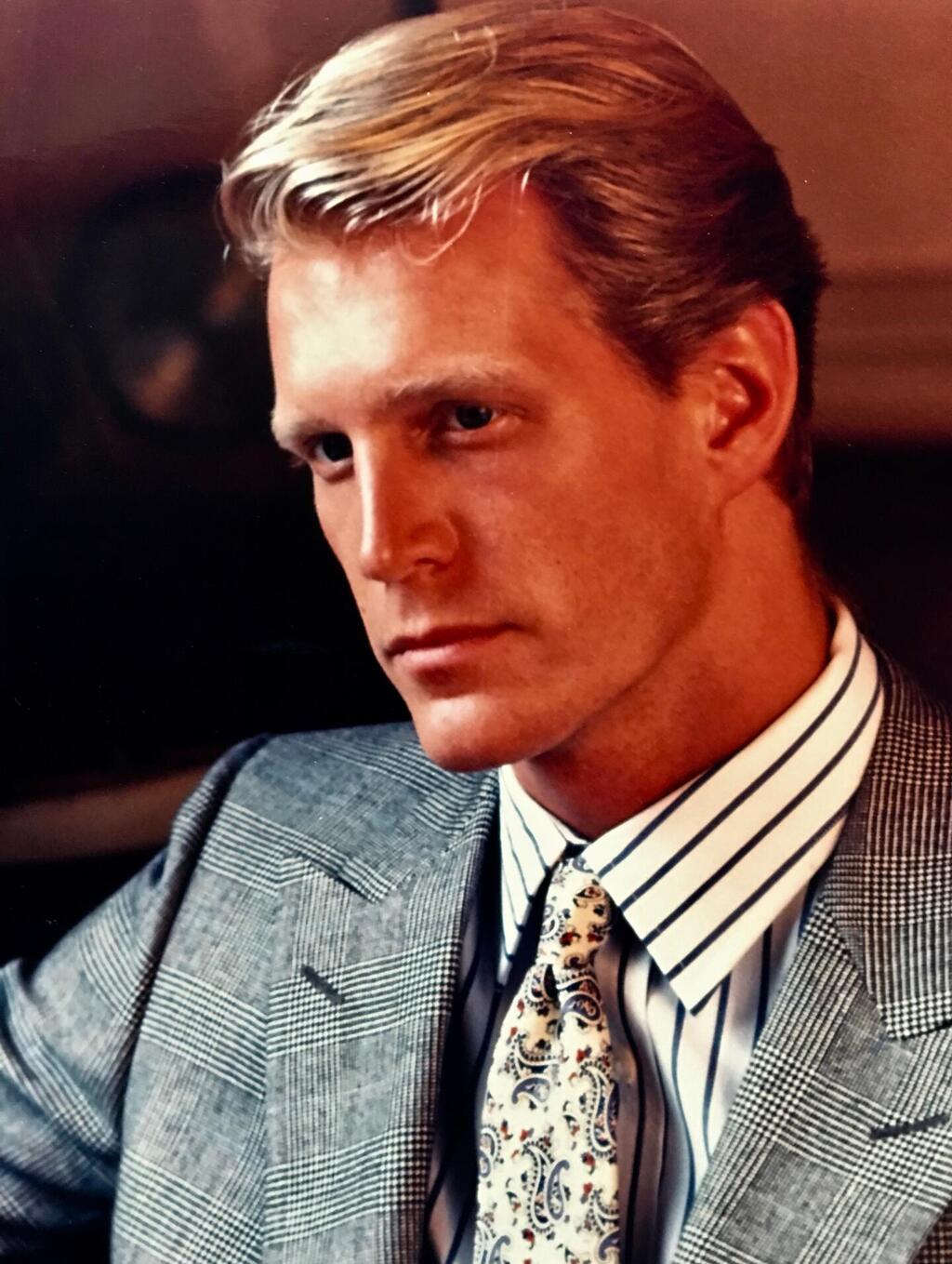
Hoyt Richards’ photograph could have sat next to the entry for the “American dream” in a dictionary during the 1980s and 1990s. Tall, athletic, blond and tanned, he earned a football scholarship to the prestigious Princeton University before becoming the world’s first male supermodel. He traveled the globe and made millions of dollars. Men wanted to be him. Women and men wanted to be with him.
What none of them knew was that every dollar Richards earned was going into the bank account of a cult whose leader claimed to be E.T., a savior from another planet. Nor did they know they never had a chance of being with Richards because the cult forbade its members from falling in love.
And that is only the beginning of one of the strangest cult stories to emerge from the United States in the past 50 years.
The story is now the subject of the three-part HBO documentary series Bring Me the Beauties: A Model Cult, which leaves viewers with one unsettling conclusion: If Hoyt Richards, raised in a loving family, educated at an elite university and seemingly blessed with every advantage, could be drawn into a cult that believed the world would end because a self-proclaimed alien said so, then it truly could happen to anyone.
Diets, tanning treatments and no sex
For Richards, the story began in 1978. He was 16 when he arrived with his family for their annual summer vacation on the upscale resort island of Nantucket, Massachusetts. There, on the beach, he met a 31-year-old man named Frederick Von Mierers, who looked like a creepier, overly tanned version of a Ken doll.
Von Mierers began talking to the teenager about Eastern philosophy, astrology and the hidden architecture of the universe. He told Richards he hosted parties on the island almost every night and invited him to attend. Richards was happy to drink free beer. He was a bored teenager whose life was good but not especially exciting, and he was searching for something bigger.
“At that point, I didn’t really have a passion,” says Richards, now 64. “I was doing well in school, I had friends, I was successful in sports, but there wasn’t anything that really lit me up. So when I met this guy on the beach who was so excited about his life, I thought, ‘That sounds a lot better than having no plan.’” With every party, Richards became more entangled in Von Mierers’ web.
After those Nantucket summers, Richards enrolled at Princeton in New Jersey, just a short distance from New York City, where Von Mierers lived. By the time he graduated in 1985 and his modeling career began taking off, he was fully under his influence.
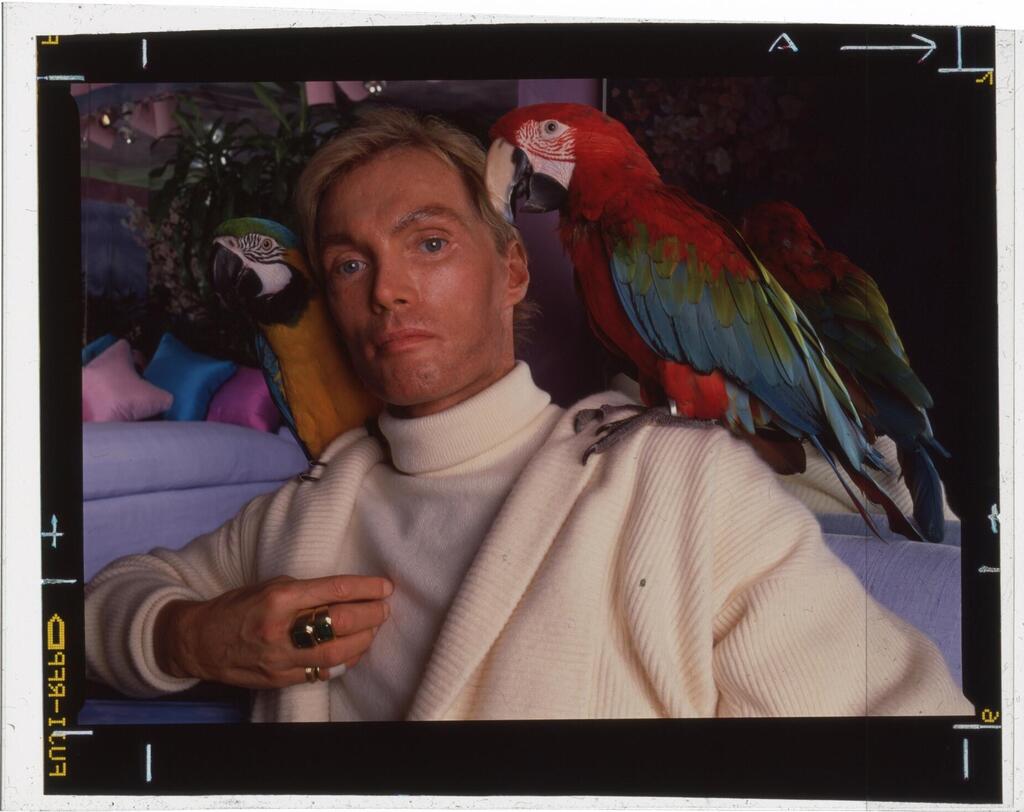
Frederick Von Mierers
(Photo: Courtesy of HBO MAX)
Born in Brooklyn on Christmas Eve 1946 as Fred Meyers, the Jewish Von Mierers claimed that, in the year he met Richards, he had undergone a near-death experience that revealed he was actually an alien prophet. An unusual calling, to say the least.
He founded a group called Eternal Values, made up of young people to whom he promised both spiritual fulfillment and access to Manhattan’s highest social circles.
“Bring me the beauties,” Von Mierers would tell cult members when sending them out to recruit new followers.
They spent their nights in the legendary clubs of the Studio 54 era, while the earliest cult members, including Richards, slept on small futons in Von Mierers’ apartment and lived under a strict set of rules: restrictive diets, regular tanning treatments, cleaning duties and abstinence from sex. Most importantly, they were forbidden from falling in love.
Obedience to those rules, Von Mierers promised, would earn them entry into what he described as “the most exclusive cocktail party on Earth.”
In the documentary, Paul Hinton, one of Von Mierers’ assistants, says Eternal Values members paid male escorts to have sex with Von Mierers several times a week. Although he was gay, Von Mierers claimed to be asexual and completely devoted to the cause.
In one instance, Hinton recalls, Von Mierers instructed him to drive to Times Square so they could find “the biggest piece of trash in the universe” to satisfy him.
Von Mierers possessed the kind of charisma often seen in movies and dismissed as unrealistic. He used astrological charts to manipulate his lost followers, breaking down their confidence piece by piece. He then sold them expensive gemstones that supposedly possessed healing powers.
He also invented an increasingly outrageous biography, apparently to test how far he could push his followers’ credulity. The young recruits believed him.
Among other things, he claimed his parents had died in a car accident, that he had been raised by grandparents who also died, that he had then gone to live with a wealthy godmother, worked as a model and climbed New York’s social ladder. So far, improbable but possible.
Then, according to his story, an alien from Arcturus entered his body.
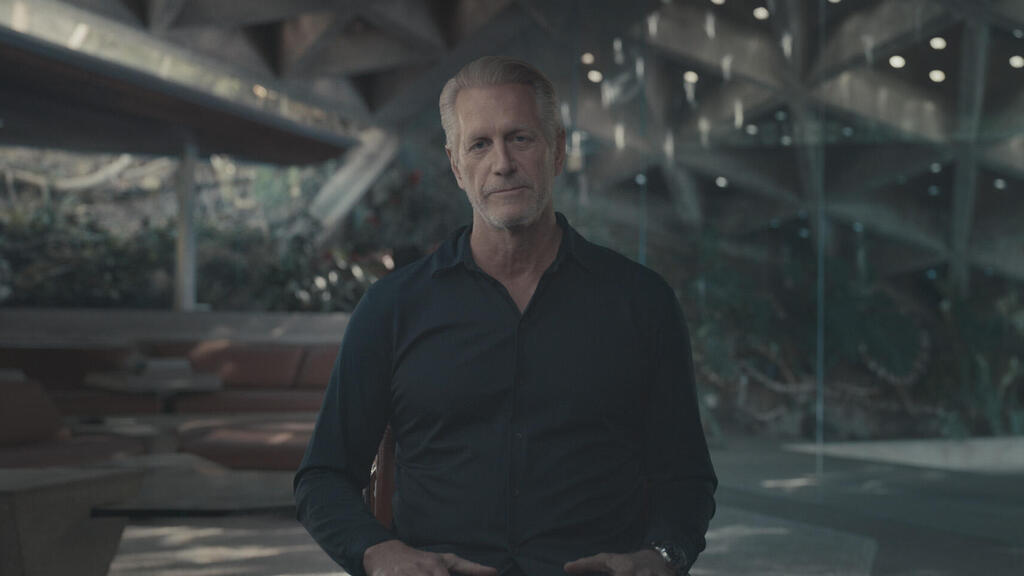
Hoyt Richards in Bring Me the Beauties: A Model Cult
(Photo: Courtesy of HBO MAX)
Arcturus, one of the brightest stars in the constellation Boötes, is about 37 light-years from the sun and has become a popular fixture in New Age culture, UFO mythology and conspiracy theories.
According to Von Mierers, the alien told him he had 10 years to identify and train a new generation of leaders who would be the only survivors when Earth was destroyed in 1999. They would then be rescued by aliens and kept in regeneration chambers until it was safe to return.
When Ruth Montgomery, a former Washington journalist turned New Age guru, wrote in a bestselling book that Von Mierers really was an alien, it served as the ultimate validation for cult members.
Von Mierers transformed Eternal Values into a sprawling business empire that included courses, dietary supplements, fitness equipment, gemstone prescriptions and expensive astrology readings.
Members donated personal funds, including the millions Richards earned as a supermodel, to purchase a large compound in North Carolina, which was considered an ideal landing site for an alien spacecraft. At least it was a more original choice than New Mexico.
'I financed and built my own prison'
Bring Me the Beauties: A Model Cult was created by Emmy Award-winning documentary filmmaker Chris Smith (100 Foot Wave, American Movie). He came across the story by accident.
While interviewing Richards for an unrelated project, Smith realized there was a remarkable story behind the former model’s life. The documentary’s central question is how something like this could happen to someone who appears, on the surface, unlikely to join a cult.
“Hoyt doesn’t look or sound like the way we imagine a cult member,” Smith told Variety. “Suddenly you realize something like this can happen to anyone.”
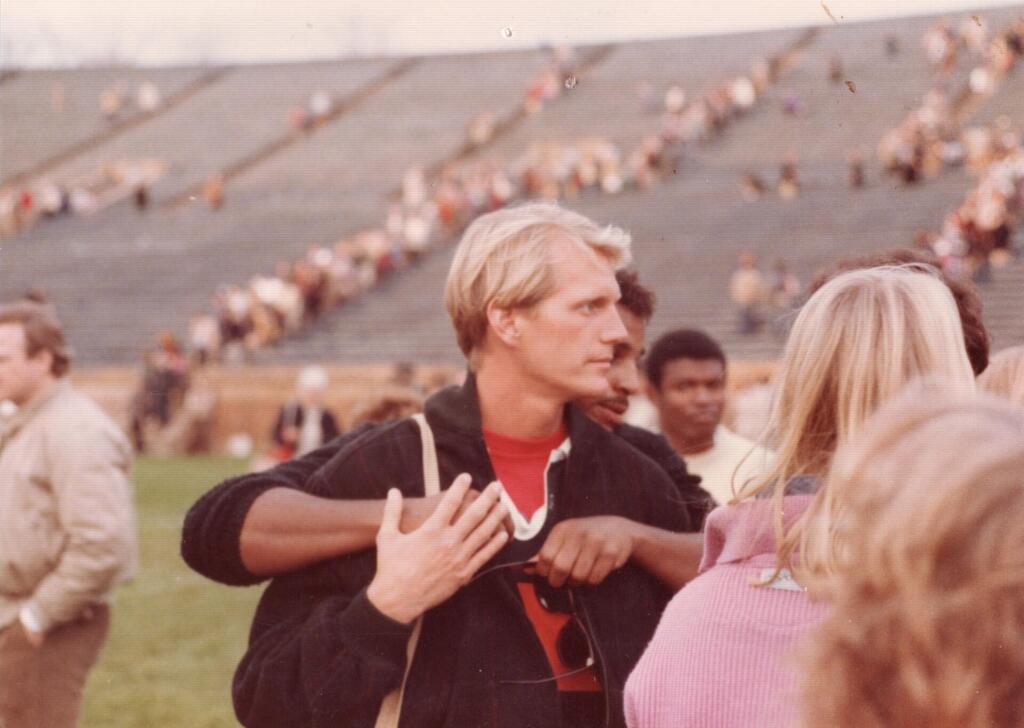
Hoyt Richards in Bring Me the Beauties: A Model Cult
(Photo: Courtesy of HBO MAX)
Richards now describes a gradual process of surrender. Whenever Von Mierers decided someone had crossed a line, that person would endure hours of public humiliation from fellow cult members.
“I can look back and say it was a mental prison,” Richards says. “But while I was living through it, I didn’t see it as a prison. I saw it as the foundation of my life. I joined a spiritual movement that I thought was going to be amazing. Instead, I financed and built my own prison.”
At the height of his modeling career, while flying around the world and staying in five-star hotels, Richards would return to North Carolina and sleep on the floor of the cult compound. He credited the group for every success in his professional life and believed his spiritual work with Eternal Values was driving those achievements.
“I became my own worst enemy because I fell so deeply in love with the narrative,” he says.
As often happens with cults, the organization began to unravel when its leader’s narcissism finally went too far. In 1990, Von Mierers and several followers, including Richards, appeared on The Richard Bey Show, a highly successful daytime tabloid talk show. The appearance was deeply embarrassing. Soon afterward, Vanity Fair published an investigative article about the cult.
Von Mierers even posed for the story after undergoing his fifth facelift, but he died of AIDS five days before the article appeared. Left without a leader, Eternal Values members barricaded themselves inside the North Carolina lake house and began stockpiling weapons and survival supplies.
They purchased large quantities of gold and silver, believing they would be the only forms of currency after the approaching apocalypse. Violent power struggles soon erupted over who would become the next leader. Richards was briefly considered, until the group turned against him as well.
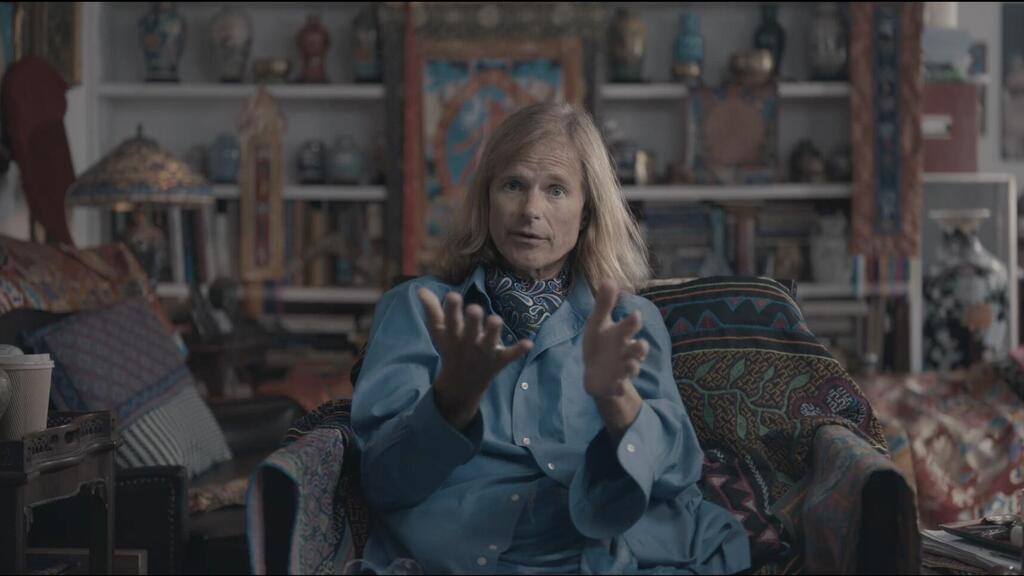
Paul Hinton
(Photo: Courtesy of HBO MAX)
Then came 1999. The apocalypse never arrived. Richards traveled to Paris and London for modeling assignments and was stunned to discover that Europe was still standing. He began to understand what had really happened to him over the previous two decades.
During one modeling trip to Los Angeles, Richards fell in love with a woman named Donna. He concealed the relationship for years until fellow cult members discovered it and punished him for violating one of the group’s most serious prohibitions. After all, Von Mierers had taught that “romantic love is the cause of humanity’s downfall.”
Richards was forced to break up with Donna, shave his head and quit modeling. That was the moment he decided to escape. He crawled past the German shepherds guarding the compound and, once out of earshot, ran for freedom and returned to his real family.
In 2002, Richards’ attorneys reached a settlement with the remaining members, liquidated Eternal Values’ assets and brought the organization to an end. For the past 25 years, Richards has tried to come to terms with what happened by viewing it as an extreme version of something far more common.
“A cult relationship is any relationship where you’ve given your power to someone else, usually unconsciously,” he told The New York Times. “They give you attention, something you perceive as love, and you become addicted to that feeling and the pursuit of it.”
This September, Richards is set to marry Donna, the woman whose existence he hid from the group for four years.
“There was a time when I thought my story was getting too old and becoming irrelevant,” he told the Times. “Now I think my story is even more relevant today than when I lived through it. If I’d had more information, I would have been less vulnerable. I feel an obligation to share this information with young people. It doesn’t guarantee protection, but it gives you a much better chance.”