

Iranian singer Gola fled her homeland in 2011 after being arrested three times, forced to leave her family behind. Since then, she has dedicated her life to protesting the mullah regime through her music and activism.
In an interview marking the screening of Tahara (Mortician), a film she stars in, that was screened at the Haifa Film Festival, she talks about what led her to leave her homeland, her warm feelings toward Israel and her belief that “change in Iran will be sudden; it will happen overnight."
Gola performing in Haifa
(Courtesy of Haifa Film Festival)


Gola (her last name was withheld at her request) was a rebellious child. The woman who would become an Iranian protest singer, and later, a protest singer in exile in Europe, remembers asking as a child why girls were treated differently from boys.
“As a girl, I wanted to ride a bike, I wanted to go watch soccer with all the boys. But I was always told, ‘You can’t do that, you’re a girl',” she recalls in an interview with Ynet. “At seven years old, I already had to wear a hijab. It was very restrictive for me. It was hot, uncomfortable. I never understood it."
By the time she was 16, her rebellious nature, which had already caused tension in her family, took a new turn and became action. “I shaved my head and started riding a bike. I chose a new name, a boy’s name, and for as long as my body allowed it, I lived as that boy, so I could live life, to be able to watch soccer in a stadium, to ride bikes and motorcycles with boys, to play soccer outside."
But not long after, her body started to take feminine shape, which could no longer be hidden. She had to stop behaving like a boy. “I think that’s when I began to protest in another way, through art, through music.
"When I studied the psychology of music in London, I realized in hindsight what music really does to people, to their brains, their behavior. That’s when I felt I could use my music as a tool, as something that can influence society."
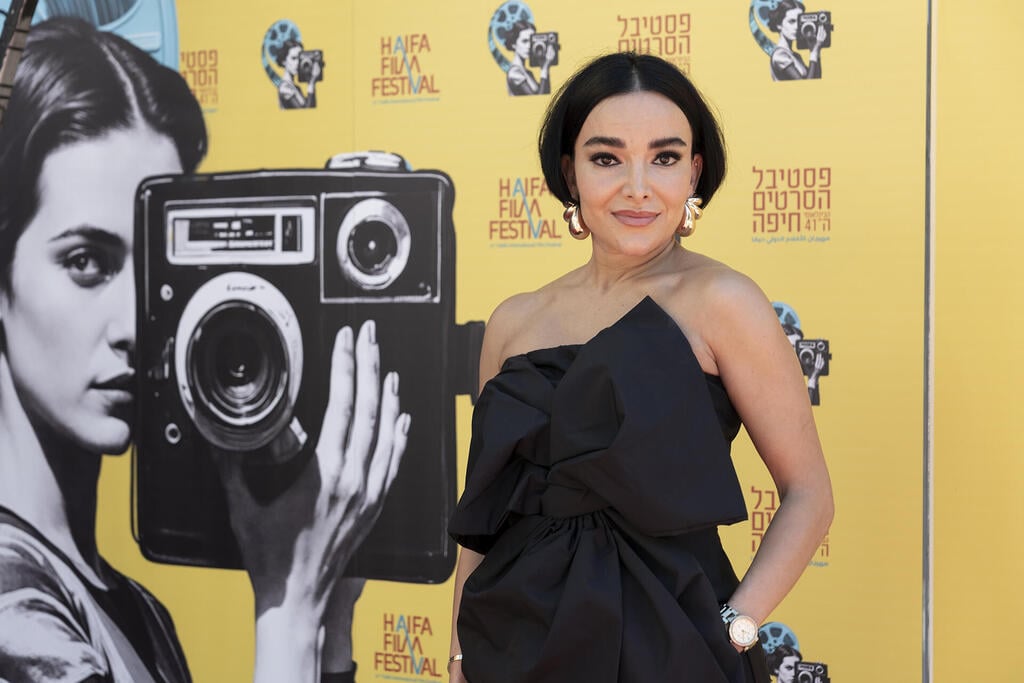
Gola’s path to becoming a leading figure in the Iranian protest movement against the Islamic regime was far from easy. As she began her singing career, she naturally encountered the limits of repression. She was arrested three times by the morality police because of the way she dressed or wore her hijab. She was barred from performing publicly as a musician, even when she followed hijab and censorship rules.
At 19, she formed a girl band called Orchid, aiming to challenge patriarchal norms, but they were only permitted to perform for “female audiences seated only.” After several failed attempts to obtain a permit to record an album, she left Iran in 2011.
While in exile in both Europe and the United States, Gola channeled all her energy into protest art. She founded an independent label to help herself and other exiled women release music on their own terms, performed protest songs and confronted Iranian organizations that tried to censor her during a concert in Canada.
Most recently, she starred in Tahara (Mortician), a film by exiled Iranian director Abdolreza Kahani. The movie, partly based on her own life story, was screened at the 41st Haifa International Film Festival.
The plot follows an Iranian-born mortician living in Canada (played by Nima Sadr), who meets an exiled Iranian singer, Jana (played by Gola). She tells him she intends to end her life as an act of protest, since the Iranian authorities are trying to eliminate her even in Canada, and asks him to wash her corpse after her death.
“The film was intended to raise awareness, because these kinds of stories happen every day worldwide,” explains Gola. “The Iranian regime is everywhere. They’re among us. It could be your best friend and you wouldn’t know it. We’ll never know who they are, no matter where we live, and as long as these people control Iran, we can’t feel safe anywhere in the world."
Do you, like your character Jana, feel fear in your daily life? Are you afraid for your life?
“The threats are real, the fear is real, but I don’t let that fear stop me. My biggest fear is living a life of emptiness, not doing something meaningful in this world. And I truly believe in the afterlife. I truly believe in reincarnation, and if I come back, I’ll come back to a better world."
Your character talks a lot about her own death, about suicide. How did you feel about that decision?
“Jana is the echo of my voice. Her story is my story too; the fear, the hope, the rage, the anger. It’s all real. These are all feelings I carry, but I didn’t play myself. There’s a thin line between me and Jana. She wanted to end her life because she had nothing left to lose, but that’s not a mindset I believe in.
“When I had to understand what drives people to that point, I studied a few who had made that choice. In fact, while we were filming this movie last November, news broke of the suicide of Kianoosh Sanjari, an Iranian journalist who jumped off a building in Tehran.
He ended his life, and the last sentence he tweeted was: ‘We die for the love of life, not for death’. He believed maybe it would change something. That was one of those moments when you realize that Jana is a tribute to so many lives, to all the silenced creators who are outside Iran while the Iranian regime threatens their families back home, interrogates them, detains them.
“It was hard for me. But that’s also what makes Jana so compelling. She thinks she’s going to take her own life, but she still believes she’ll remain afterward. She believes her work will create a change even after she’s dead. She believes in the power of music. She believes in the power of message and communication, and as an artist, that deeply resonated within me too."
So you connected with her artistic side, and with her desire for a better future.
“Exactly. I think one thing I share with Jana is the understanding that music is a powerful tool for change. That’s why I make the music I make. That’s what I’ve been doing since I left Iran. I kissed my family house the last time I left, and I cried.
"I remember that moment. I promised myself it had to be meaningful, that the music I create must make an impact in this world, so that future generations won’t have to leave their homes or go through so much pain just to express themselves or sing or follow their passion. And that’s Jana. She’s thinking about the future. She’s not thinking about herself."
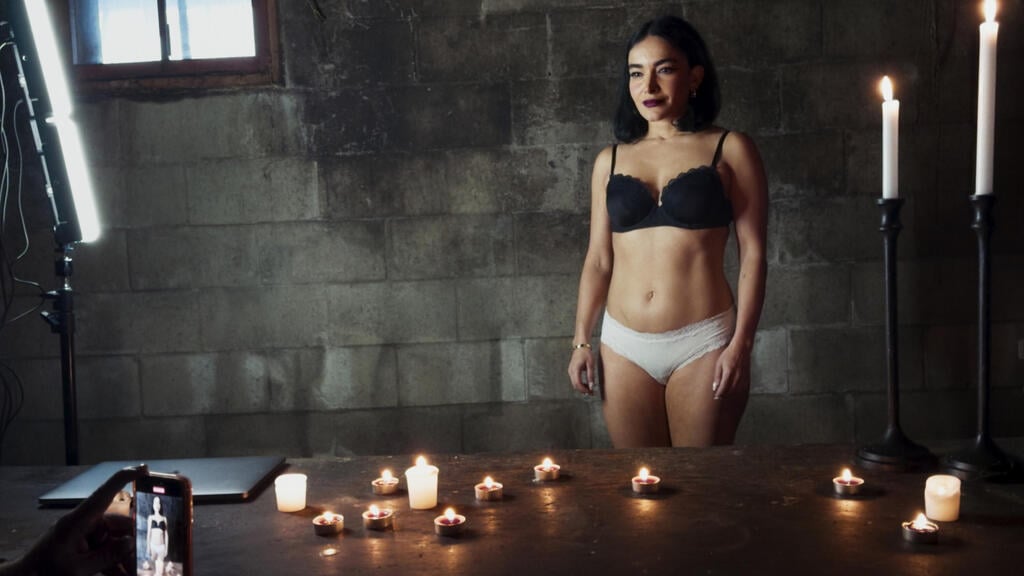
Gola in "Mortician"
(Photo: PR)
Even if she won’t be there to see it.
“When people tell me, ‘You’re doing this because you want to return to Iran one day,’ I answer that I don’t know. I’ve known many people who were full of hope. And then they died full of hope and never returned to their homeland. I’m building my life here. I love Iran, and I’m doing everything I can, within my power, to help bring change there, but not because I want to return to Tehran. I may never go back there."
“I wish my family a good life, but I think it’s better for all of us to simply go our separate ways.”
Despite the relief that came with her choices, Gola’s journey in Europe wasn’t easy. She learned English while also trying to figure out how to create her music. To do that, she founded her own label, Zen Recordings, aimed at helping women like her - newcomers to a country - who don’t yet know the right way, or any way, to collaborate with other musicians.
“The best thing that ever happened to me was being born in Iran,” Gola says. “Because I learned how to find my way. I had to push myself toward something I truly love."
What does it mean to be an Iranian artist in exile?
“Exile is hard, but it’s also very beautiful because there’s a kind of rage in it. There’s anger inside me that fuels the fire, and I can use that energy to create something bigger than myself. And yes, exile has made my pen much sharper. If I weren’t in exile, maybe I wouldn’t be so blunt. In one of my songs I say: ‘Fear me. I have nothing left to lose. I’m exposed, raw, and fearless.’”
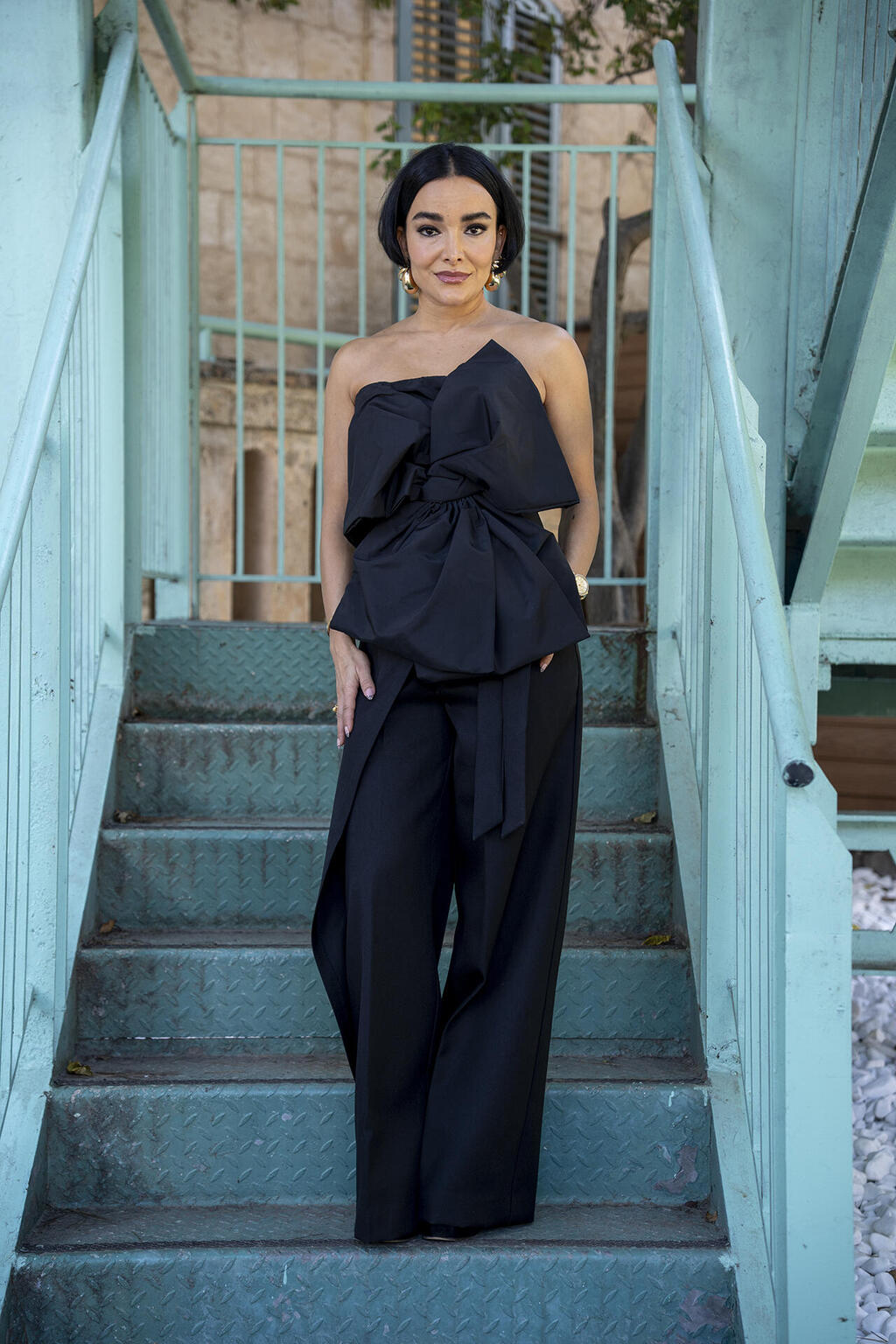
Gola. “Exile is hard, but it’s also very beautiful
(Photo: Tair Zargary)
Your goal is to see the Iranian people freed. Are you aware of the daily changes happening in Iran, in society, on the street?
“I don’t believe change will be gradual. The Iranian regime is deeply committed to its ideology. There won’t come a day when they say, ‘Okay, starting tomorrow you can be a little freer with your hijab, you can choose what to wear.’ They want to hold on to power for as long as they can.
"I believe change will come when people realize their own strength, when the wall of fear continues to fall. The change will be sudden. It will happen overnight."
After the initial shock in Israel following the military strike on Iran, Israelis sat in or outside bomb shelters watching closely for signs that the strike might weaken the Islamic Iranian regime, hoping it would lead to its collapse.
“I hoped so too,” Gola admits. “Even though my family is in Iran. When people asked if I wasn’t worried about them, since I haven’t been in contact with them for the past two years, I said that, to me, peace and freedom are more important than my family.
"Iran is my family. And if you’re picky, if you choose your own family over your country, then change will never come. “So yes, of course I’m concerned for my family. But I’m happy and hopeful for Iran. And that’s more important.”
“During the war, people told me: ‘Are you happy now, that Israel is attacking your country?’ And I said: ‘Wait. Israel is not attacking my country. Israel is attacking the murderers who are killing my country, killing my people.’ That’s different. My country is finally being freed.
"When you’re in a life-or-death situation, like Iran is now, it doesn’t matter who helps you. People are being tortured, people are being killed, by the hundreds and thousands. So it really doesn’t matter who brings about the change.
“The people of Iran are not their government. They’re not the regime. They’re not terrorists. A terrorist organization has taken over our country. Absolutely. We are being hunted. We are captives. And our country has been stolen.”
Is the estrangement between you and your family in Iran a choice or a consequence of separation?
“Both. It started because I sing protest songs, and they disagree with that. That’s their life, and this is mine. This is the mission I’ve chosen, and there’s no chance I’ll stop.
"I wish my family a truly good life at home, but I think it’s better for all of us to simply go our own way. That way, I don’t feel like I have to hold back over their situation, because I don’t want it to influence me, my decisions, my artistic work, or my understanding of why I’m here in this world."
In many ways, the fight against the Iranian regime is a women-led struggle. Whether it’s the hijab, art, or freedom of expression, women carry the banner of revolution. In September 2022, Iran’s women-led uprising, also known as the “Woman, Life, Freedom” movement (Jin, Jiyan, Azadî), sparked hope around the world.
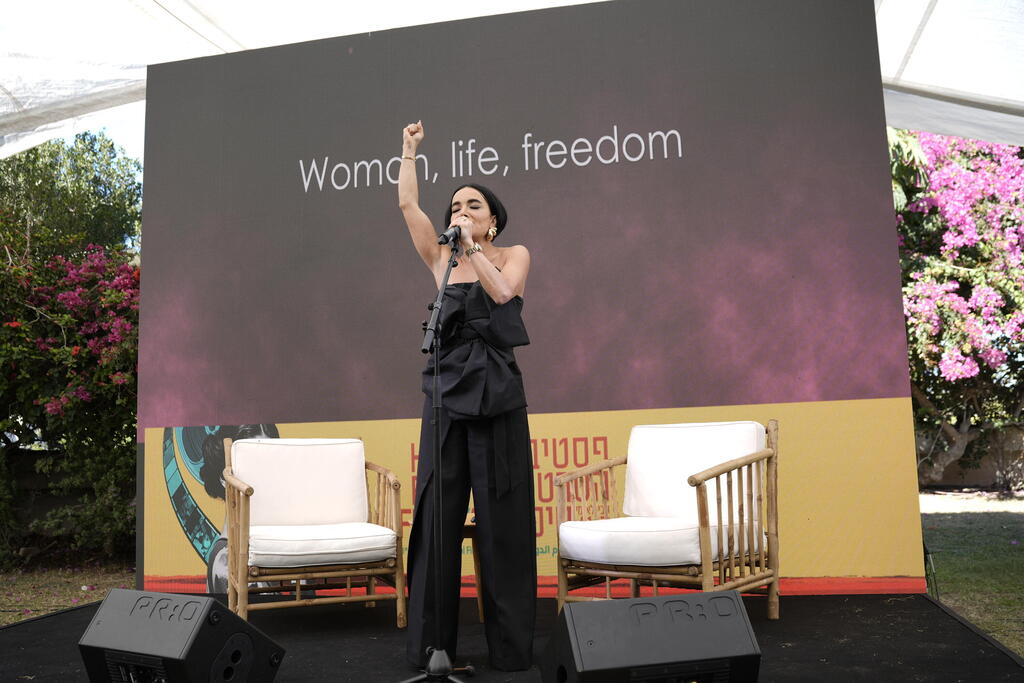
“Woman, Life, Freedom”. Gola performing in Haifa
(Photo: Tair Zargary)
It broke out following the death of Mahsa Amini, a 22-year-old Kurdish woman who was arrested by the morality police in Tehran for allegedly wearing her hijab “improperly.” While in custody, she was beaten and suffered a head injury. She died three days later in the hospital. Authorities claimed she died of a heart attack, but eyewitnesses reported police brutality.
Amini's death ignited mass protests, led mainly by young women, demanding personal freedom and rights. Demonstrations spread to dozens of cities and schools across the country.
The regime responded with violent repression: hundreds killed, including girls and female teens, thousands injured, and tens of thousands detained. Despite the crackdown, the protests are considered one of the most significant uprisings in Iran since the 1979 Islamic Revolution.
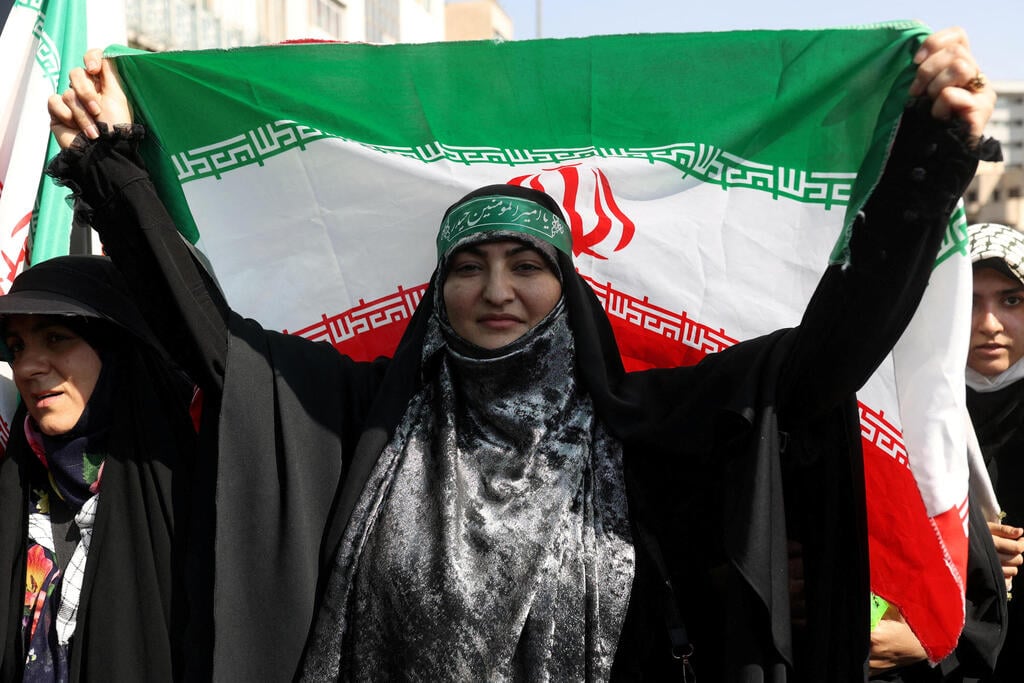
Mass protests following Mahsa Amini's death
(Photo: Reuters)
“It wasn’t an uprising, it’s a revolution, and it’s ongoing,” says Gola firmly. “I truly believe the future of Iran is in the hands of women. Women in Iran are incredibly educated, and now they’re aware of their rights. They can see how the rest of the world lives. They are fearless.
"And I also want to say that men are playing an incredible supporting role, because I truly believe in collective power. You can’t move forward without the other group. If women are holding the torch, men are standing behind them, saying, ‘I’m with you. I’m your father, your brother, your son. Go for it'."
“I collaborated with Idan Raichel, and realized how much our peoples have in common"
Fate would have it that Gola’s first major acting experience included an unusual twist: Tahara (Mortician) was filmed entirely on a smartphone, from the first frame to the last. Director Abdolreza Kahani, himself an exiled Iranian artist, reached out to Gola after hearing her story from the film’s lead actor, Nima Sadr. During their conversation, he gently asked if she would be willing to lend elements of her life story to the character.
“I immediately knew this was a powerful way to speak out loud,” Gola says. “To show them they can’t silence us. I get threats like, ‘Don’t sing those political songs.’ So guess what? This time it’s not just songs, it’s a film. Not only are we not staying quiet, we’re doubling our power.”
How did you feel about the film being shot on a phone?
“At first, it was very intimidating. Nima had acted in the director’s previous film, "A Shrine", which was also shot that way, and he warned me it would feel weird. I told him not to worry, that I’d be fine. But on the first day, when Abdolreza said ‘Action!’ and I was face-to-face with a phone”(she gestures to show how close it was) “I couldn’t ignore it.
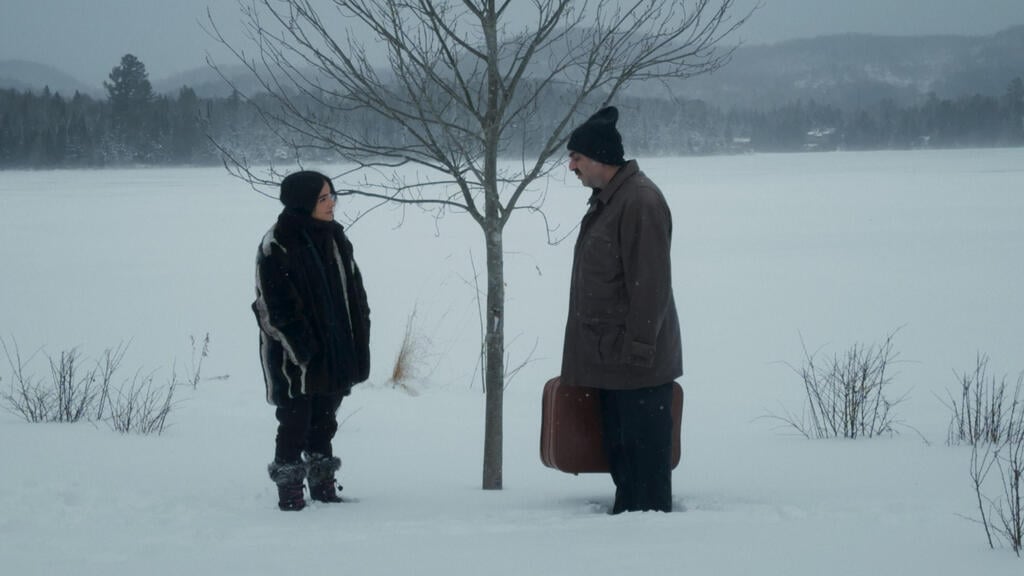
Gola in "Mortician"
(Photo: PR)
"I’m used to cameras. I’ve performed in front of live audiences and 80 million viewers on live broadcasts, with cameras installed on cranes, and I’ve never been intimidated. But here this was hard. We had to work for several days until I adjusted. On the other hand, it was brilliant. So intimate. No shouting, no crew. The moment I was ready, the camera was too.”
“We were a tiny crew; it was one-man cinema. Abdolreza didn’t use a sound team or lighting crew. The lighting was all natural. The audio came from a tiny mic he carried or hid, or one of us held. There was neither a soft-focus lens on the phone."
“After we shot the scene where I asked Nima to step outside so I can show him where he should bury me, the sun had set and we went back inside. It was -30 degrees. We were all shaking, warming our hands by the heater. Then we said, ‘Okay, let’s watch the scene.’ And Abdolreza asked, ‘Where’s my phone? Where’s the phone?’
“We looked everywhere. The phone was gone. We ran out into the snow, searched for half an hour, and finally found it buried in the snow. That’s the problem with this method. Everything can disappear in an instant.”
People are more likely to lose their phone than their film crew.
“Exactly. But Abdolreza kept talking about the beauty of it. If you have an idea, you can just start filming, anywhere in the world. That’s his message to aspiring filmmakers: Don’t wait for the perfect moment, or a big budget, or something glamorous to happen to you. Take your phone, your idea, and go make your film."
Gola’s visit to Israel carried added weight because of the moment in which it took place - just two days before the return of Israeli living hostages held in Gaza. She experienced history up close.
“I have so many Israeli friends,” she says. “The hope, the excitement, the relief I felt from them, it was amazing to be part of that. Finally, the leaders are doing something. And it’s art’s responsibility to tell the stories that will come out of this, to tell them in the best way, to preserve the memory and pass it on while people are still alive, so these things won’t happen again.”
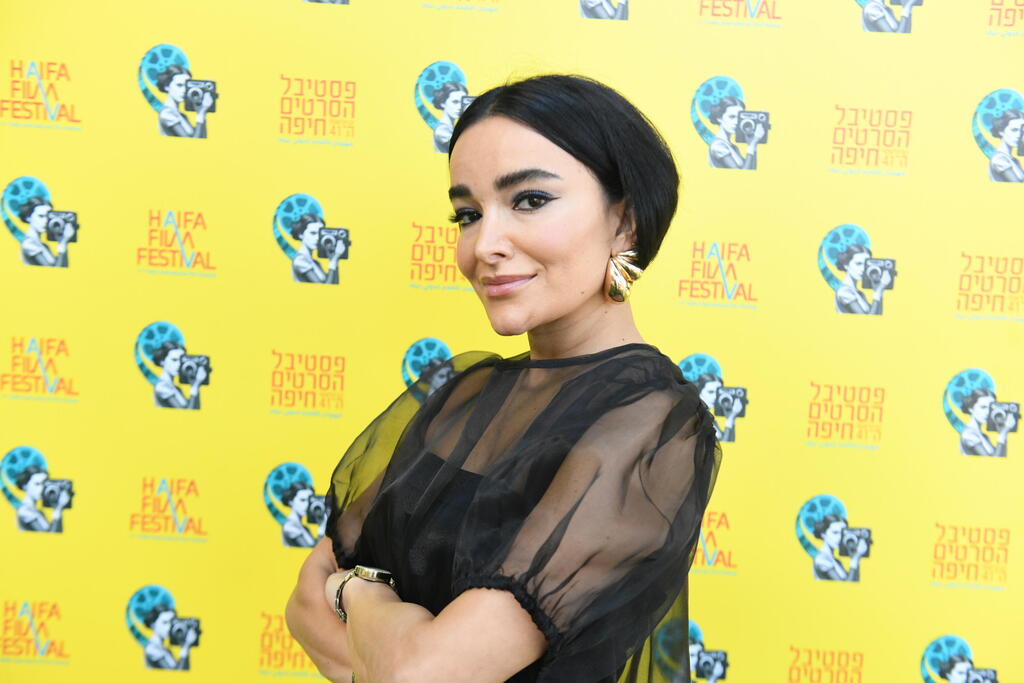
Gola
(Photo: Joe Luciani)
Do you see similarities between Israelis and Iranians?
“There are a lot of similarities in everything, in music and food, it just shows me how much we can get along. I collaborated with Idan Raichel in the past, and realized how much our people have in common.
"That’s probably why the Iranian regime doesn’t want us to connect, because when we do, we’re naturally drawn to each other. These are two people who are only separated by their regimes. Our hearts say something else."