

When producer David Ellison closed his multibillion-dollar acquisition of Paramount Global this summer, Hollywood insiders expected a shake-up in how the century-old studio makes and markets movies.
Few predicted the 42-year-old tech-savvy mogul — son of Larry Ellison, Oracle’s billionaire founder and one of Israel’s most prominent supporters — would find himself at the center of a geopolitical storm about boycotts, cultural politics and the future of the entertainment industry’s relationship with Israel.
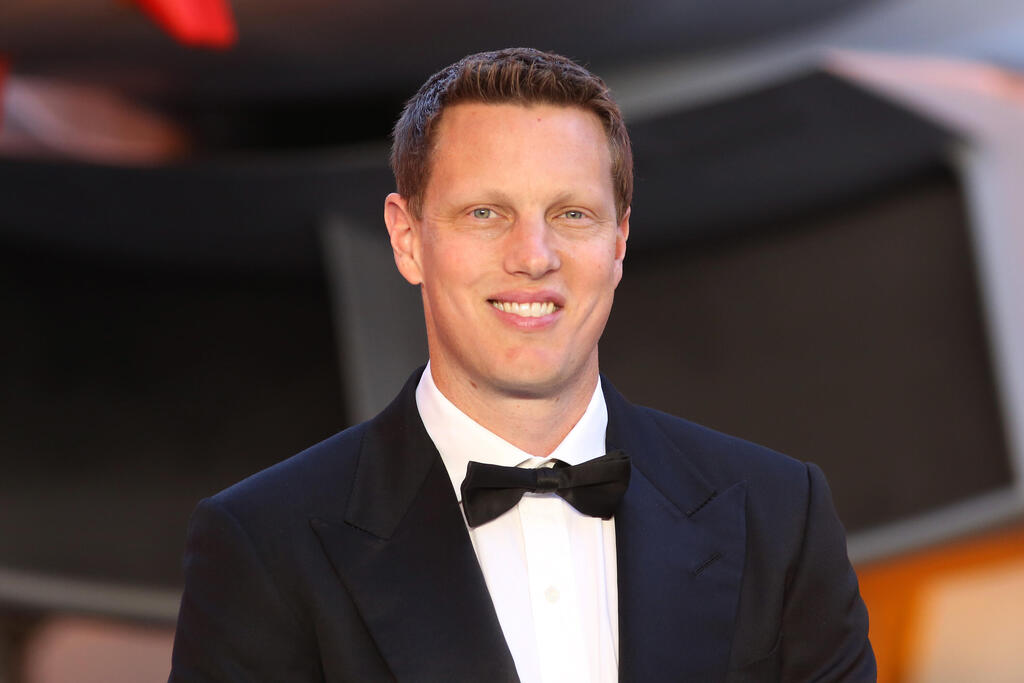
The merger between Ellison’s Skydance Media and Paramount Global, completed in August 2025 after months of negotiations and regulatory scrutiny, united Paramount Pictures, CBS, Showtime, Nickelodeon and Paramount+ under the Skydance banner. The deal marked a generational transfer of power in Hollywood, putting Ellison in charge of one of the few remaining vertically integrated media empires — and immediately forcing him to navigate the industry’s deep divisions over the Israel-Hamas war.
From 'Top Gun' to takeover
Ellison’s credentials in Hollywood were already solid. A former pilot and stunt performer, he founded Skydance in 2010 and built it into a major content producer behind some of the decade’s biggest franchises, including “Top Gun: Maverick,” “Mission: Impossible – Dead Reckoning,” “Star Trek Into Darkness” and “Transformers: Rise of the Beasts.” Known for his disciplined production style and long collaboration with Tom Cruise, Ellison carved a niche as a dependable blockbuster financier who kept budgets tight and creative partnerships loyal.
But the Paramount merger vaulted him into a different arena: one of corporate diplomacy, political sensitivity and global brand management. Ellison’s father, Larry Ellison, 81, is not just one of the world’s richest people — valued by Forbes at nearly $294 billion — but also an outspoken conservative, an ally of former President Donald Trump, and a close personal friend of Israeli Prime Minister Benjamin Netanyahu. He has donated tens of millions of dollars to pro-Israel causes, including Friends of the Israel Defense Forces and medical partnerships with Israeli institutions.
While the younger Ellison describes himself as “not a political person,” the merger has coincided with a moment when politics have become nearly impossible to avoid in entertainment.
Venice boycott puts Israel in the spotlight
Just weeks after the Paramount-Skydance deal was finalized, the Venice Film Festival became a flashpoint. A high-profile pro-Palestinian petition, signed by thousands of filmmakers and actors, called for a boycott of Israeli cinema institutions. Among those listed were Emma Stone, Joaquin Phoenix and Javier Bardem. The petition argued that cooperation with Israeli film bodies amounted to complicity in government policy in Gaza.
Within days, Paramount issued one of the first major Hollywood statements rejecting the boycott.
“We do not agree with recent initiatives to boycott Israeli creators,” the studio said. “Silencing artists based on nationality does not advance understanding or peace. The global entertainment industry should encourage artists to tell their stories and share ideas with audiences worldwide.”
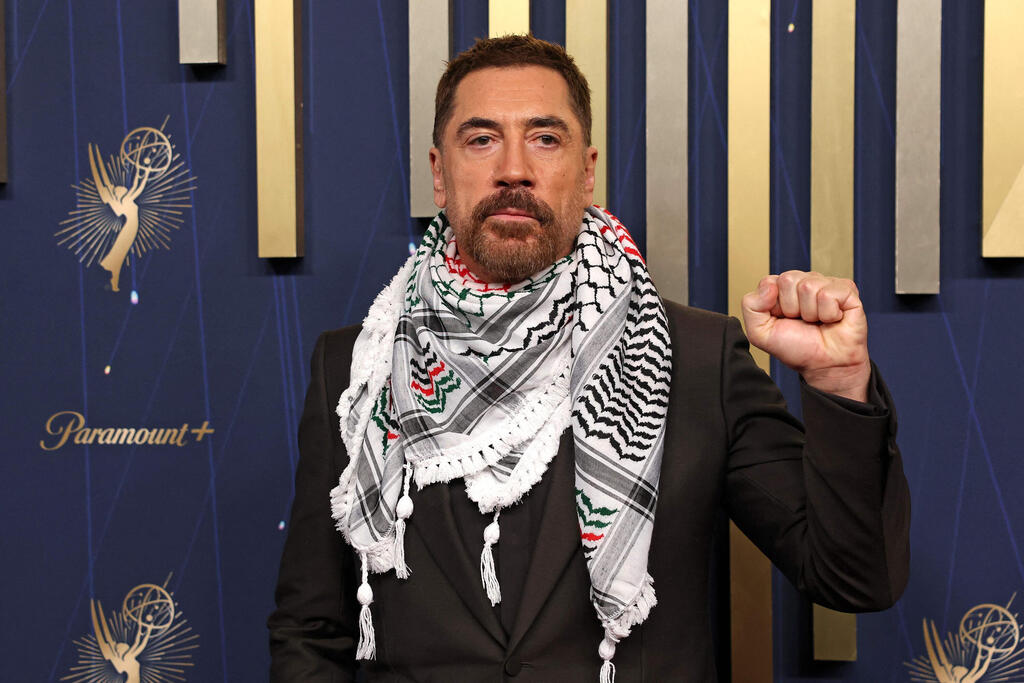
Javier Bardem
(Photo: Patrick T. Fallon / AFP)
The statement was signed internally by Melissa Zuckerman, a senior Paramount executive, and quickly interpreted by industry observers as a sign that Ellison’s leadership was steering the studio toward a more assertive position on Israel than its competitors.
The Venice controversy also unfolded amid reports that Doha Film Institute funded a record 12 productions at the festival, contributing to what critics described as a strongly pro-Palestinian tone. The Tunisian film “The Voice of Hind Rajab,” dubbed by some commentators as a “Palestinian Schindler’s List,” won the festival’s second prize.
Corporate strategy and a cultural statement
Ellison’s next moves reinforced the perception that Paramount under his leadership was not shying away from sensitive political ground. In September, Paramount+ acquired worldwide streaming rights to “First Light,” an Israeli-produced drama about the Oct. 7, 2023 Hamas attacks, directed by Lior Chefetz and starring Israeli actress Rotem Sela.
In a statement announcing the purchase, Ellison said the series “underscores Paramount’s ongoing commitment to storytelling with excellence and accuracy.” The phrasing drew notice — particularly the word “accuracy,” which critics interpreted as a pointed rebuke to celebrities and activists who had minimized or questioned accounts of Hamas’ atrocities.
Hollywood executives privately described the move as unusually personal for a CEO who, until recently, had largely stayed out of political debate. “It was a line in the sand,” said one veteran producer familiar with Paramount’s corporate culture. “He’s saying, ‘We’re not going to apologize for doing business with Israelis.’”
A new culture inside Paramount
Reports of internal change have followed the merger. In Ellison’s first 100 days, the industry publication Variety reported that “Israel is a significant issue at the company,” citing sources who said Paramount keeps a list of talent it will not work with because they are deemed antisemitic, xenophobic or homophobic.
Paramount later issued a partial denial, saying that no formal “list” exists but that management will not work with individuals “who engage in hate speech.” The article noted that the ambiguity appeared deliberate — a way to make outspoken celebrities “sweat,” as one studio source put it.
The studio also confirmed sweeping structural changes: large-scale layoffs, a reorganization of CBS News, and the appointment of journalist Bari Weiss, a prominent pro-Israel commentator and former New York Times opinion editor, as CBS News’ new editor-in-chief. Weiss’s arrival was widely seen as signaling a cultural realignment inside one of America’s most influential news networks.
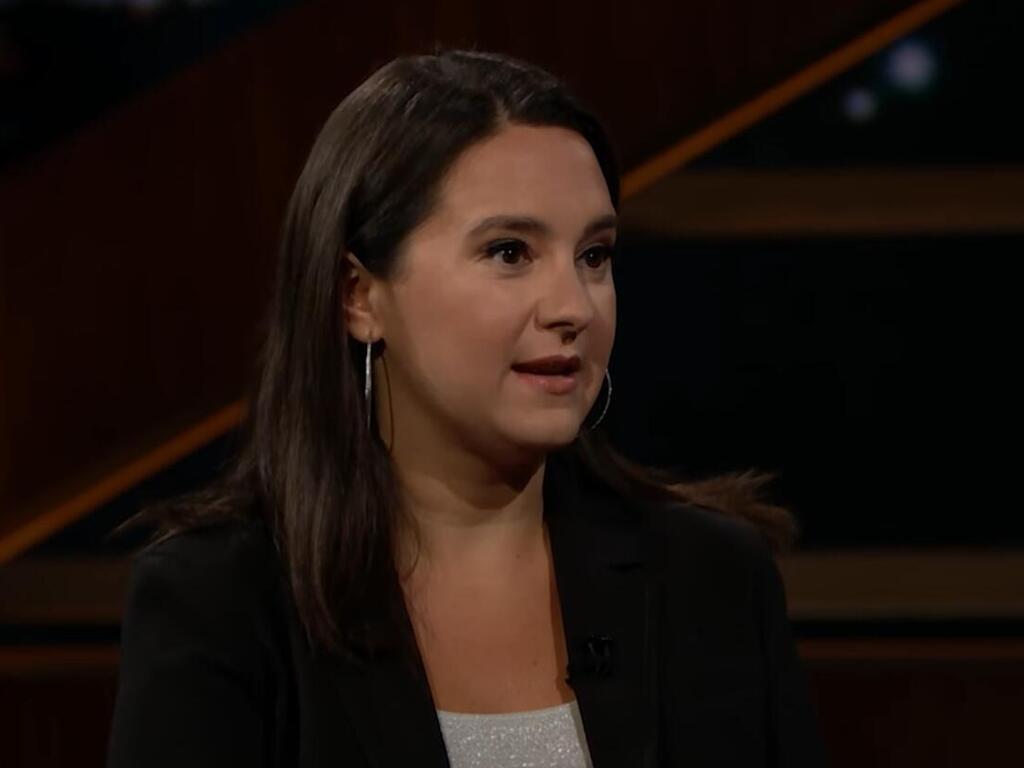
Bari Weiss
The reorganization has not been without controversy. Variety and other outlets reported that CBS had quietly cut several reporters focused on environmental and Gaza coverage. The company denied any political motive, saying the restructuring was purely budgetary.
Warner Bros. joins the pushback
The boycott debate has spread beyond Paramount. In October, Warner Bros. Discovery issued its own statement opposing a boycott of Israel, saying such restrictions could violate anti-discrimination and contract laws. The announcement came shortly after a British Jewish lawyers’ group sent warning letters to major studios, but industry observers said Warner’s timing was also strategic.
Skydance-Paramount is reportedly exploring a potential acquisition of Warner Bros. Discovery, a merger that would consolidate two of Hollywood’s largest content libraries. Ellison has said publicly that if the deal moves forward, the combined company would retire the Max brand and integrate its content into Paramount+. Analysts say Warner’s echoing of Paramount’s stance could be a gesture toward alignment with its potential buyer.
A family business with global implications
Larry Ellison’s influence looms large over his son’s new empire. The Oracle founder is one of Silicon Valley’s few openly conservative billionaires, an early Trump supporter who has hosted campaign fundraisers at his California estate and met repeatedly with Netanyahu.
In 2022, during a brief period when Netanyahu was not in office, Ellison hosted the Israeli leader and his family on his privately owned Hawaiian island of Lanai. Israeli media later reported that Ellison offered Netanyahu an executive role at Oracle, though the job never materialized.
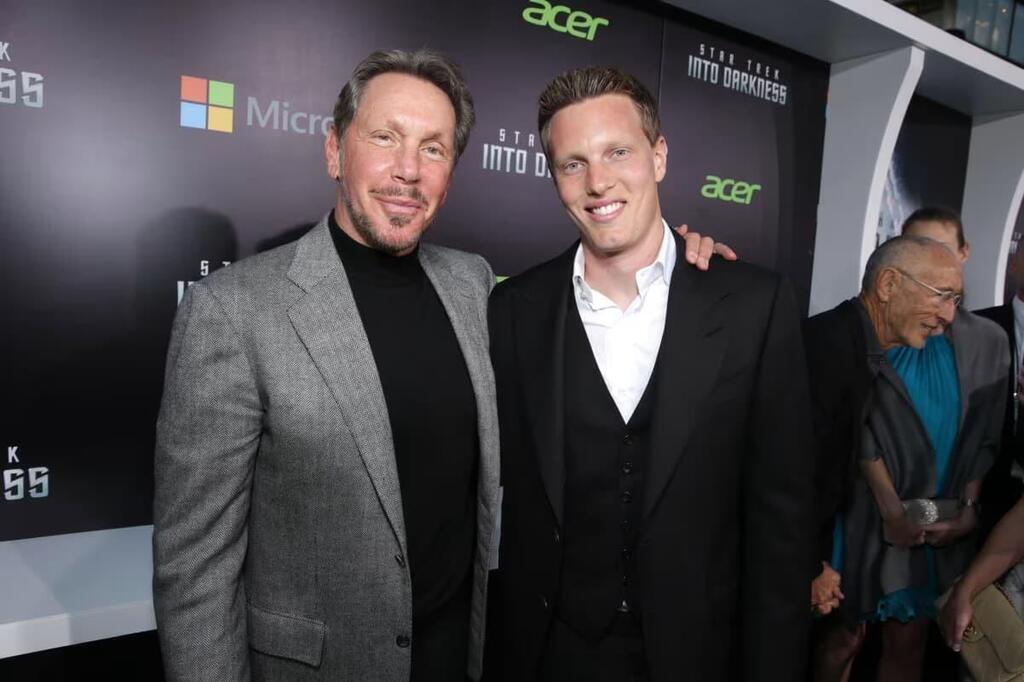
(Photo: Eric Charbonneau/Invision/AP)
The elder Ellison’s fortune, driven by Oracle’s surge in artificial intelligence and cloud computing, has made him one of the few individuals able to move entire industries — and his son’s consolidation of Paramount only deepens that reach into global culture.
“Larry Ellison is now a player in both technology and narrative,” said a Los Angeles-based media analyst. “David is the executor of that influence — and Hollywood is watching how he uses it.”
A changing map of Hollywood power
If Skydance completes its proposed expansion, the post-merger Hollywood landscape could be dominated by six conglomerates: Disney, Paramount-Warner, Universal, Netflix, Amazon, and Apple. Together, they would control nearly all theatrical and streaming distribution worldwide.
Such consolidation raises the stakes for politically charged cultural debates like the Israel boycott. As one entertainment lawyer noted, “If a star like Javier Bardem falls out with one of these giants, he’s not just losing one job — he’s potentially losing access to an entire ecosystem.”
The Variety report said Paramount’s leadership views explicit antisemitism or calls for violence as disqualifying, but where to draw the line between political expression and hate speech remains unsettled. “There’s no blacklist,” one executive told the trade paper, “but there are red lines.”
A cautious but decisive style
Ellison’s public demeanor contrasts with his father’s bluntness. He rarely gives interviews and keeps his statements measured, even as his decisions speak loudly. Those who have worked with him describe a pragmatic, data-driven leader who values loyalty and discretion.
At the same time, his stewardship has signaled a willingness to intervene on issues of principle. His appointment of Weiss, his endorsement of “First Light,” and Paramount’s early anti-boycott statement have established the studio as an outlier in an industry that has often opted for silence on divisive global issues.
“David Ellison may say he’s not political,” said a senior Hollywood agent, “but by the standards of today’s entertainment world, what he’s doing is political — because he’s not afraid to be seen as supportive of Israel.”
Echoes of Hollywood’s past
Some observers warn that the tensions surrounding boycotts and ideological litmus tests evoke uncomfortable historical parallels. The term “blacklist” carries a heavy legacy from the postwar era, when suspected communists — many of them Jewish — were barred from working in film and television during the late 1940s and 1950s.

“Hollywood has a long memory for punishment lists,” said a film historian at UCLA. “Whether it’s on the right or the left, attempts to enforce ideological purity always backfire.”
For Ellison, the challenge may be balancing his business objectives with the perception that Paramount has become an explicitly pro-Israel studio — a stance that could alienate parts of Hollywood’s creative community while strengthening ties with investors and audiences who see Israel as under siege.
A new kind of studio chief
David Ellison’s first 100 days have been a test of leadership in a polarized age: one in which film, politics and identity have become inseparable. His next decisions — on mergers, content, and how his company handles dissent — could determine whether Paramount’s new era is remembered as a model of principled independence or a flashpoint in Hollywood’s latest cultural war.
For now, he has made clear that the Skydance-Paramount empire will not sit on the sidelines.
As Ellison told investors in September: “Great storytelling depends on courage — the courage to stand for truth, and to stand by the people who tell it.”