

Senior Israeli diplomats spent last fall and winter pressing officials and public broadcasters across Europe on an unlikely subject: Eurovision. As calls grew to ban Israel from the contest over the war in Gaza, and as several broadcasters threatened to boycott, Israel worked urgently to keep its place in the world’s biggest music competition.
According to a New York Times investigation, Prime Minister Benjamin Netanyahu’s government treated Eurovision as a soft-power tool, using diplomatic outreach, advertising and coordinated messaging to push back against Israel’s growing isolation and rally support for its contestants.
Gallery
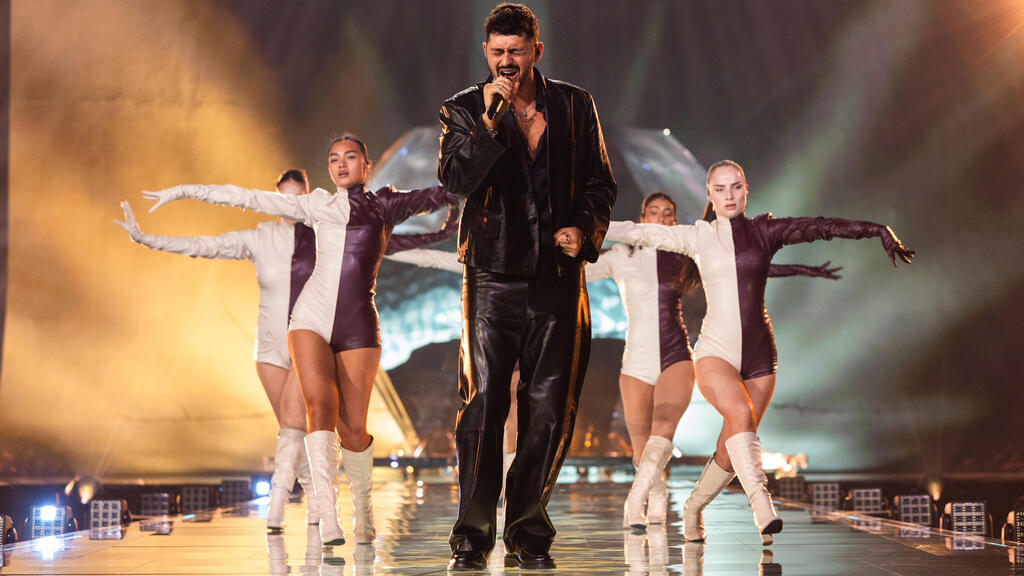
Noam Bettan rehearsing on the Eurovision stage
(Photo: Corinne Cumming, European Broadcasting Union)
The effort came at a moment of intense international pressure. A United Nations commission had accused Israel of committing genocide in Gaza, an allegation Israel strongly denied. Several countries were recognizing Palestinian statehood, a move Israel had long opposed. Yet inside Israeli diplomacy, Eurovision became a surprisingly important front: a chance to show that ordinary Europeans still supported Israel, even as public opinion and political leaders across the continent grew more critical.
The controversy has now pushed Eurovision into one of the deepest crises in its 70-year history. This year’s contest opens Tuesday in Vienna, with Iceland, Ireland, the Netherlands, Spain and Slovenia boycotting over Israel’s participation. The European Broadcasting Union, the nonprofit body that runs Eurovision, is facing financial strain, internal dissent and questions over whether its voting system can withstand organized political campaigning.
Eurovision has long insisted that politics play no role in the event. But the Israel dispute has tested that principle more severely than almost any previous controversy. What was designed as a celebration of music, camp, glitter, national pride and pyrotechnic spectacle has become a proxy fight over Gaza, human rights and Israel’s standing in the world.
Israel has participated in Eurovision since 1973. Its singers compete under the Israeli flag, though the acts are officially entered by Israel’s public broadcaster, Kan. Governments are not supposed to intervene in the vote, and Eurovision is formally a contest between broadcasters and performers — not states.
But Israeli government involvement appears to have begun years earlier. Doron Medalie, a former Eurovision songwriter for Israel, said the government quietly promoted Israel’s acts as far back as 2018, spending more than $100,000 on social media that year. Israel went on to win the contest.
That victory appears to have convinced Israeli leaders that Eurovision was worth the investment. By the 2024 contest in Malmö, Sweden, the first Eurovision after the outbreak of the Gaza war, Israeli officials saw the event as a way to demonstrate public support abroad. European public opinion had largely turned against the war, and some music groups were already demanding that Israel be removed from the competition.
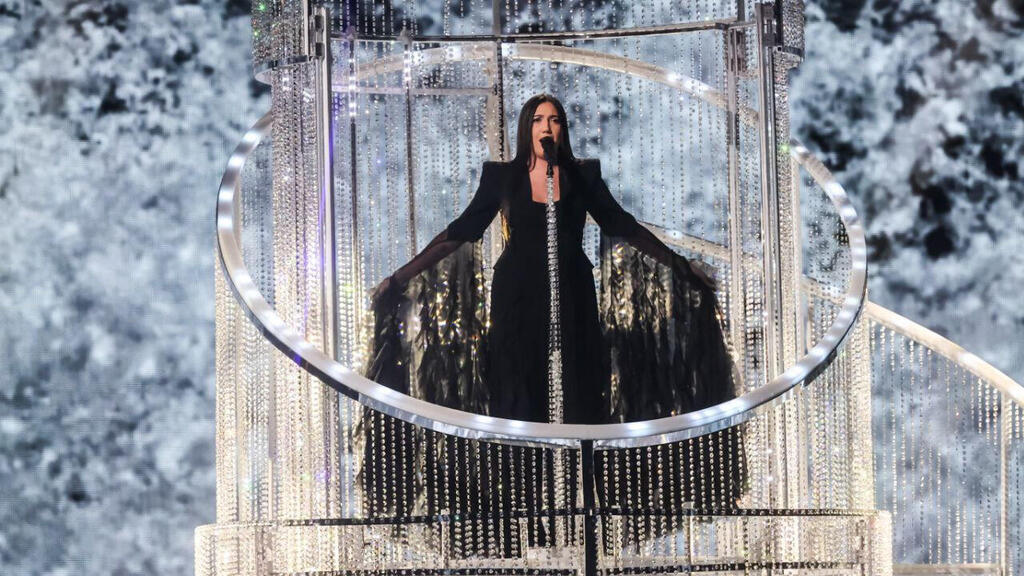
Yuval Raphael at Eurovision
(Photo: Gil Nechustan)
In Malmö, Israeli government advertising related to Eurovision totaled more than $800,000, according to records obtained by the Israeli media watchdog The Seventh Eye and provided to The Times. Most of the money came from the Foreign Ministry. One line item from Netanyahu’s hasbara office — a government body focused on overseas messaging — was marked for “vote promotion.”
Kan said it had no prior knowledge of the government advertising campaigns and, to its knowledge, Eurovision rules had not been violated.
Israel’s 2024 contestant, Eden Golan, finished second in the public vote and won the popular vote in several countries where pro-Palestinian sentiment was strong. In Israel, the result was treated as a political and emotional boost. “The world, it seems, is not against us,” Ynet wrote at the time.
The unusual voting patterns drew little immediate scrutiny. Eurovision was already consumed by other tensions: large pro-Palestinian protests in Malmo, onstage gestures by some artists and the expulsion of Dutch rapper Joost Klein over an unrelated incident involving a camerawoman.
But Slovenia’s broadcaster noticed the results and asked Eurovision organizers to release more voting data. It said it never received a response.
A year later, in Basel, Switzerland, Israel is showing stunned broadcasters and fans again. Israeli singer Yuval Raphael finished second overall and won the popular vote, once again performing strongly in countries where polls showed Israel was deeply unpopular.
This time, the vote triggered a wider backlash.
Journalists at Finland’s public broadcaster Yle found that the Israeli government had bought online advertisements in several languages urging people to vote for Raphael up to the maximum 20 times. Netanyahu himself posted a graphic on social media encouraging people to cast 20 votes for her. Pro-Israel groups across Europe circulated similar graphics.
Israel’s deputy ambassador to Austria, Ilay Levi Judkovsky, told The Times that he had contacted a diaspora group to help rally support for Raphael.
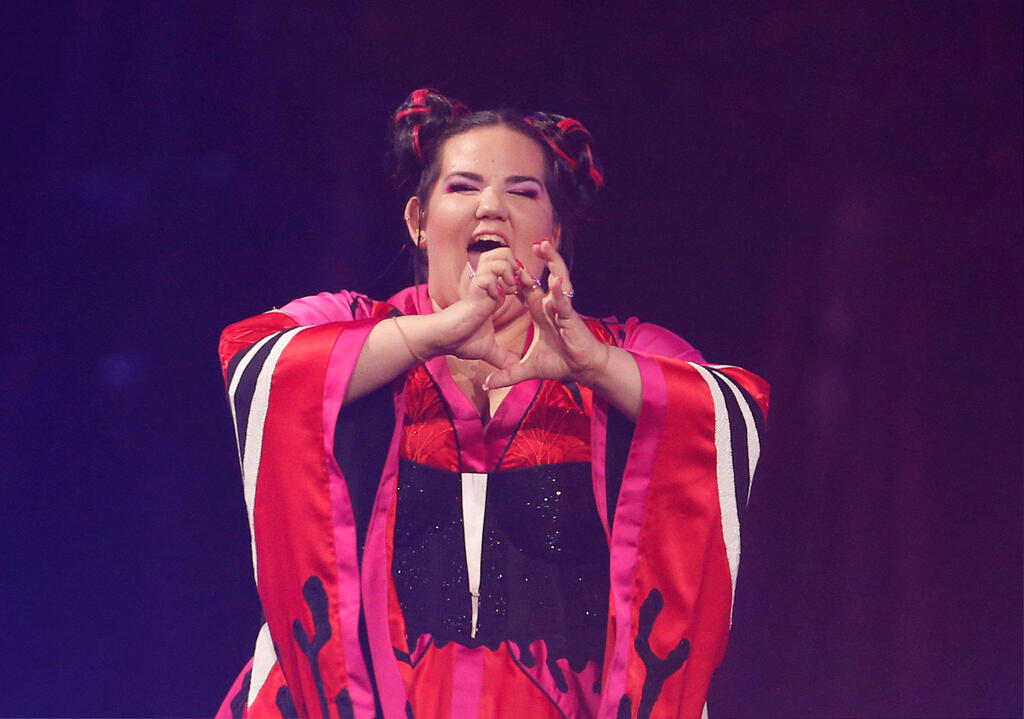
Netta Barzilai at Eurovision 2018
(Photo: Reuters)
Medalie defended the strategy, arguing that Israel spends heavily on security and should be able to fund promotion for Eurovision as well. “Everybody is jealous and triggered because Israel is achieving great results,” he said.
There is no evidence that Israel used bots or covert tactics to manipulate the vote. But Eurovision’s voting structure makes the public vote vulnerable to highly organized campaigns. In some countries, only a few hundred people voting repeatedly could be enough to swing the popular vote, which can then affect the final ranking.
Eurovision director Martin Green acknowledged that Israel’s 2025 campaign had been excessive, but said it did not affect the result.
“We are very, very happy that the result is true and fair and analyzed,” he said.
Still, the organizers did not commission a full outside investigation. Green said Eurovision’s governing body received only “top-line” voting data, not a full analysis. Full vote totals remain closely guarded, even from the broadcasters that participate in the contest.
“The Israeli government has co-opted Eurovision,” said Stefan Jon Hafstein, the chairman of the board for Iceland’s public broadcaster.
The handling of the issue angered several members. At a July meeting in London, Spain called for a debate on Israel’s participation and changes to the voting system, arguing that the contest was susceptible to manipulation. Instead of launching a formal investigation, Eurovision hired Petr Dvorak, a veteran Czech broadcasting executive, to interview members about Israel’s participation.
Dvorak found deep divisions. Some broadcasters felt Israel was using Eurovision as a national promotional tool. Others wanted the 2026 contest postponed or canceled. Some argued that Kan should not be punished for actions taken by the Israeli government.
“Sometimes, they just felt that Israel as a state is sometimes using this event as some sort of promotional tool,” Dvorak recalled.
Broadcasters were later given only a summary of Dvorak’s findings, not the full report, deepening frustration among members who believed Eurovision was avoiding the central questions.
By the end of September, five broadcasters — Iceland, Ireland, the Netherlands, Spain and Slovenia — were openly discussing a boycott.
At a meeting in Croatia that month, Eurovision officials tried to reassure members, but their presentations only added to the confusion. One presentation said Israel’s campaign had not affected the 2025 outcome. Another coached broadcasters on using social media to gain more votes. To some attendees, the message sounded contradictory: online campaigns could influence voting, but Israel’s had not.
The dispute also exposed the financial and political risks for Eurovision. If Israel remained, several countries might boycott. If Israel was expelled, Israel’s allies could walk away. Documents showed that countries including Germany and Estonia opposed banning Israel. Organizers estimated that either scenario could cost Eurovision hundreds of thousands of dollars in participation fees.

Eden Golan
(Photo: Gil Nechustan)
The situation grew so tense that Austria’s national broadcasting chief raised the possibility of Austria withdrawing in support of Israel, according to a person familiar with the discussion. That would have left the 2026 contest, scheduled for Vienna, without a host. A spokesman for Austria’s broadcaster said “it has always been clear” that Vienna would host.
In late September, Eurovision acknowledged in a letter to members that it had “never faced a divisive situation like this before” and announced an emergency vote on Israel’s participation. Privately, its lawyers advised that organizers could legally exclude Israel if they chose to do so.
But the vote never happened. Eurovision canceled it after the Gaza cease-fire and pushed the issue into December. During the delay, Israeli diplomats stepped up their campaign. Israeli embassies contacted broadcasters in at least three countries, and in another country, the Israeli government contacted the foreign ministry to discuss Eurovision.
The Israeli outreach surprised some European officials. When an Israeli diplomat sought to discuss Eurovision with Iceland’s national broadcaster, Stefan Eiriksson, the broadcaster’s chief, questioned why the embassy was involved at all.
“I am a little bit surprised why this is a matter that the embassy is looking into,” he wrote.
Israeli President Isaac Herzog also raised the boycott issue in meetings with world leaders last year. “Israel’s voice should be heard everywhere,” he said. “We should participate, we should raise our flag high, and we should bring the best performers to Eurovision.”
The Israeli foreign ministry did not respond to detailed requests for comment. A spokesman for Netanyahu’s office said he would review questions and consider responding, but did not provide a response.
When broadcasters finally gathered in Geneva in December, Eurovision avoided a direct vote on Israel. Instead, members voted on rule changes: limiting each viewer to 10 votes and discouraging disproportionate promotion campaigns.
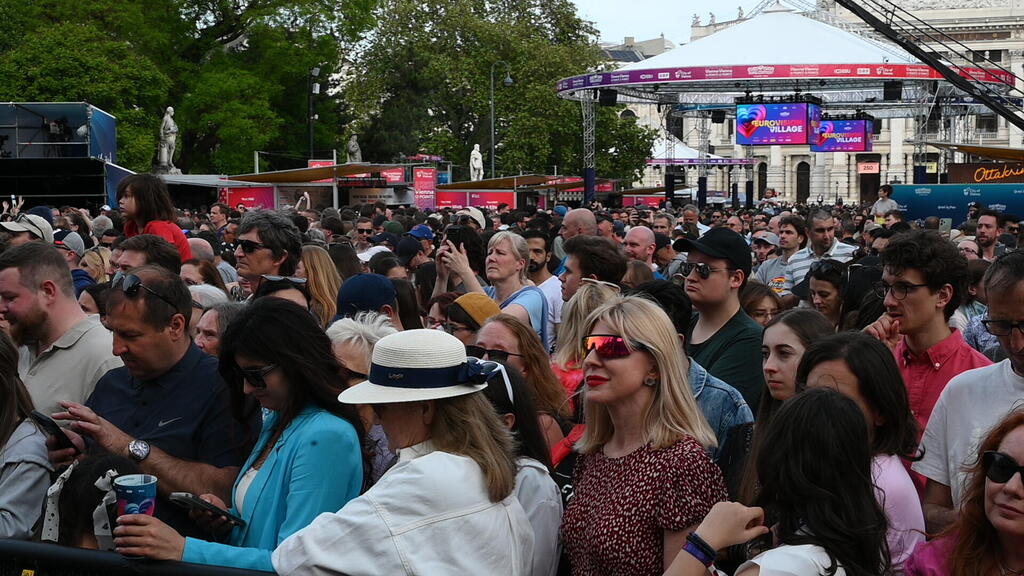
Crowd at the Eurovision 2026 turquoise carpet event in Vienna
(Photo: Yuval Chen)
The structure of the vote had a crucial effect. By approving the rule changes, broadcasters effectively allowed Israel to remain in the contest — without ever directly voting on Israel itself. Delphine Ernotte Cunci, the broadcasting union’s president, acknowledged that the arrangement “might appear to be rather bizarre,” but said not voting directly was “the most democratic solution possible.”
Some broadcasters were unconvinced. Frederik Delaplace of Belgium’s VRT said Eurovision was “hiding behind guidelines” instead of confronting the human rights issue.
The rule changes were passed by secret ballot. Israel remained in the contest. The five dissenting broadcasters moved ahead with their boycott.
Green said the new rules addressed “a perception issue,” not a proven problem. But the controversy has not gone away. Ahead of this year’s contest, other countries are already testing the new system by mobilizing diaspora communities.
Israel’s entrant, Noam Bettan, has also become the subject of renewed scrutiny after a team behind him circulated promotional posts urging people to vote for him 10 times.
This time, Eurovision reacted quickly, formally warning Kan and asking that the posts be removed. Green said that “a direct call to action to vote 10 times for one artist or song” violated both the rules and the spirit of the contest.
He has continued to insist that such campaigns cannot determine the outcome.
The dispute has left Eurovision in a precarious position. The contest depends on the participation fees of its member broadcasters and on sponsors drawn to its image as a rare, joyful pan-European event. But the Israel controversy has made that image harder to sustain. Financial projections reviewed by The Times estimated last year that the boycotts could cost the broadcasting union hundreds of thousands of dollars. Green said Eurovision’s finances were robust, but acknowledged that finding sponsors had become harder.
“It’s certainly one of the biggest challenges we’ve faced,” Green said of the Israel controversy.
For supporters of Israel’s participation, excluding Kan would punish a broadcaster for the actions of a government and politicize a contest that claims to be open to all eligible members. For critics, allowing Israel to compete while its government promotes its singers and conducts a war in Gaza has already politicized the event.
That contradiction has become increasingly difficult for Eurovision to manage. The contest’s claim to political neutrality has survived Cold War tensions, Balkan conflicts, disputes over LGBTQ rights and Russia’s eventual exclusion after the invasion of Ukraine. But the Gaza war has forced Eurovision into an unusually exposed position: trying to remain neutral while one of its participants is at the center of a global human rights crisis, and while that country’s government is accused of using the event to repair its image.
For Israel, Eurovision has proved that a pop competition can still offer something rare: a global stage on which national image, public sympathy and political legitimacy are all up for grabs. For Eurovision, the same realization may be a threat to its future.
What began as a dispute over one country’s participation has become a broader test of whether the world’s biggest song contest can still separate music from politics — or whether that line has already collapsed.