

Unintentionally, beauty queens Melanie Shiraz and Nadine Ayoub, representing Israel and Palestine, respectively, found themselves at the center of yet another conflict, this time unfolding amid the run-up events and photoshoots for Miss Universe 2025.
A misleadingly edited video cast Israel’s representative in a negative light, sparking a wave of online hate. Even Bella Hadid joined in. Then came the dress featuring the Al-Aqsa Mosque. How did politics enter a space meant to promote world peace? As it turns out, this isn’t the first time.
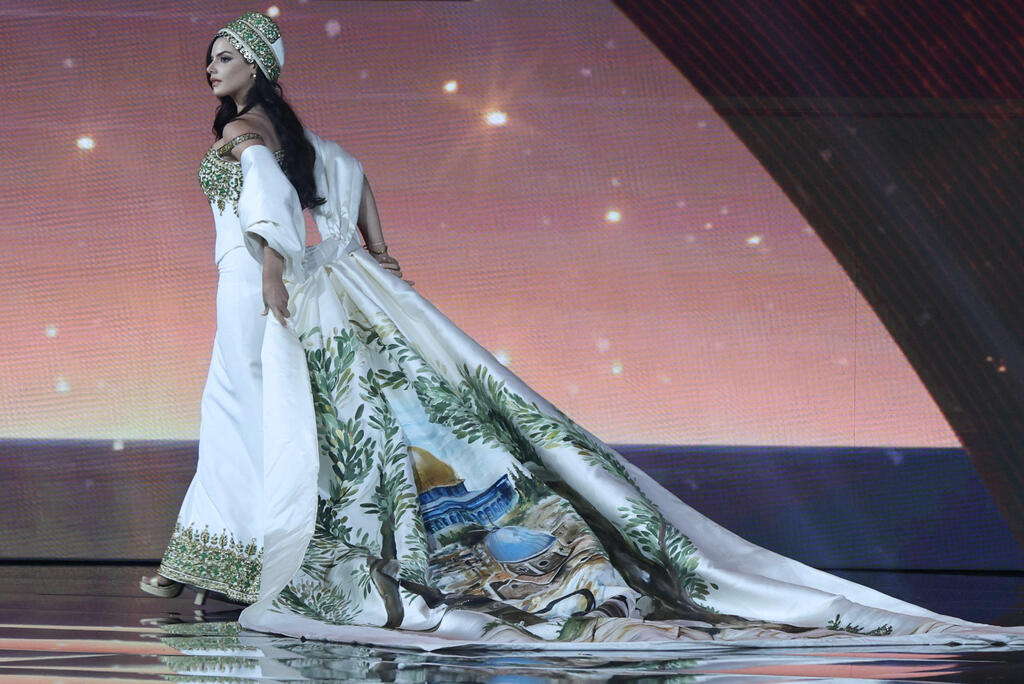
Miss Palestine dress
(Photo: Athit Perawongmetha, Reuters)
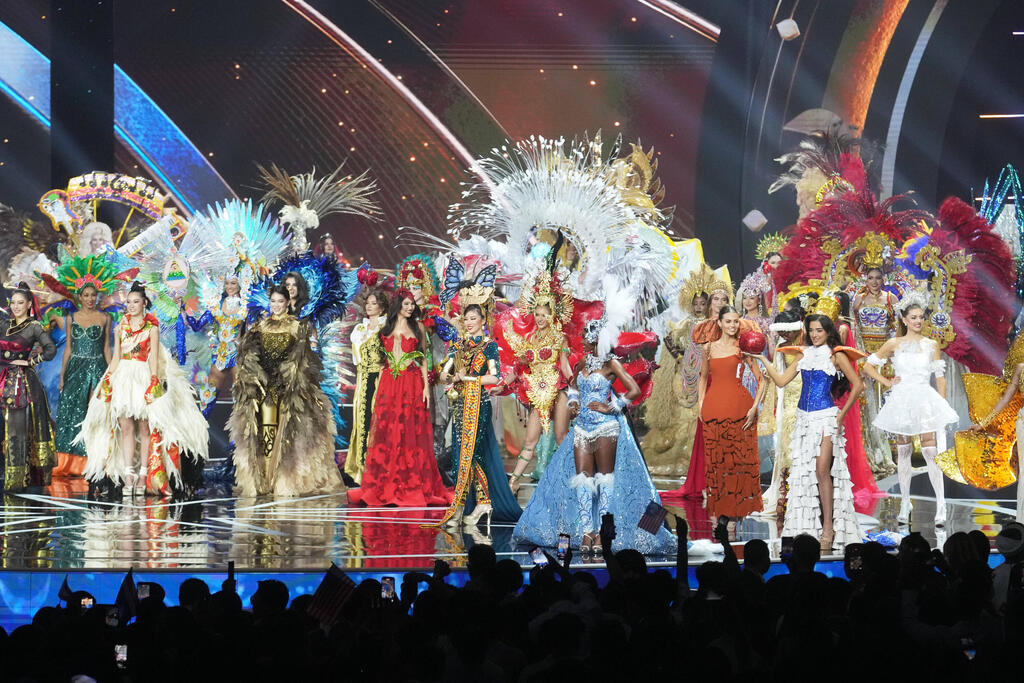
Miss Universe 2025
(Photo: Sakchai Lalit, AP)
“I’ve experienced antisemitism before, but I never imagined it could be this severe. "I experience a level of hatred – in magnitude and depth – that no one will experience", said Miss Israel 2025, Melanie Shiraz-Asor. Against her will, she has become a new chapter in the seemingly endless Israeli-Palestinian conflict.
Yes, even the road to world peace is paved with conflict, and this year, the Miss Universe beauty pageant has become a battleground as well.
On Friday night in Thailand, Miss Israel and Miss Palestine, Nadine Ayoub, will take the stage together. Ayoub is the first-ever Palestinian contestant to participate in the pageant, which was founded in 1926.
Since the announcement in July that Palestine would be participating, the competition has taken on overtly political overtones. Israeli rapper The Shadow even weighed in with a post full of inaccuracies, saying: “Good luck to ‘Miss Palestine’ - fake flag, fake roots, fake story."
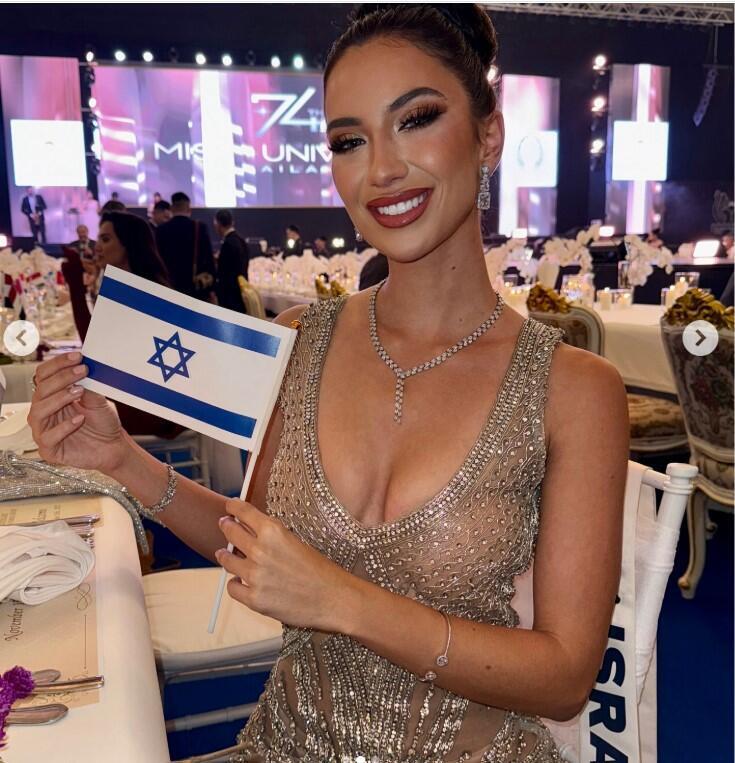
Melanie Shiraz at Miss Universe
(Photo: from Instagram)
Last week, the imagined rivalry between the two contestants escalated when a selectively edited video from the pageant appeared online. It showed Miss Israel seemingly casting a disdainful glance at Miss Palestine.
The video, resembling a poorly executed AI job, spread quickly across social media and news sites worldwide. However, in the original footage and in other angles, it’s clear that Miss Israel was standing behind Miss Palestine, and the sideways glance wasn’t directed at her.
The dubious footage was soon posted to Miss Palestine’s social media alongside the song Unstoppable by Sia, and drew comments like “Israel looking at the real queen” and “What’s going on with Pinky Pinky at the back?” (a jab at the pink dress worn by Miss Israel), ripping Shiraz’s supposed side eye. Celebrities, including Bella Hadid, reshared the video.
In response to the backlash, Miss Israel posted an open letter on Instagram, criticizing not only the public but also the competition and fellow contestants for not denouncing the treatment she received.
"Sensationalizing intentionally misleading, edited, or incomplete content at the expense of another woman is disappointing— from the public, the media, and even from Israeli outlets that should uphold higher standards," she wrote.
"Especially when it takes moments to fact-check. And especially when there are real stories, real crises, and real human beings whose voices deserve attention far more than a manufactured narrative about a glance.
"That a few-second moment became international news speaks for itself. The hatred and dehumanization that followed— including Hitler-related comments and a heightened security situation, over a brief, ordinary expression— reflect far more about the world than they do about me.
"It was hard to cope with at first, but it only reinforces exactly why I am here: to stand proudly as a Jewish Israeli woman, and to advocate for truth, peace, and unity. And it only motivates me more," she concluded.
In a follow-up interview with the New York Post, Shiraz said she had received death threats as a result of the fake video. “It’s not only death threats, but sexual assault threats," she said. "I experience a level of hatred – in magnitude and depth – that no one will experience.”
“Having extra security is not a normal experience. The 'clipped' imagery was deployed with the aim to make me look bad and create a narrative of jealousy," said Shiraz.
Even before October 7, the fashion industry had become a simmering political arena. In international beauty pageants, for instance, Israeli contestants, often young women around 20, some of whom serve in the IDF, were routinely asked about glowing skin, political tensions and Israel’s policies in the territories. They, in turn, rarely shied away from addressing the politics.
Two prominent examples include Israeli designer Galit Levi (formerly a sponsor of the Miss Israel pageant), who designed a Star of David corset art piece for Rana Raslan, the first Israeli-Arab crowned as Miss Israel, for the 1999 Miss Universe pageant.
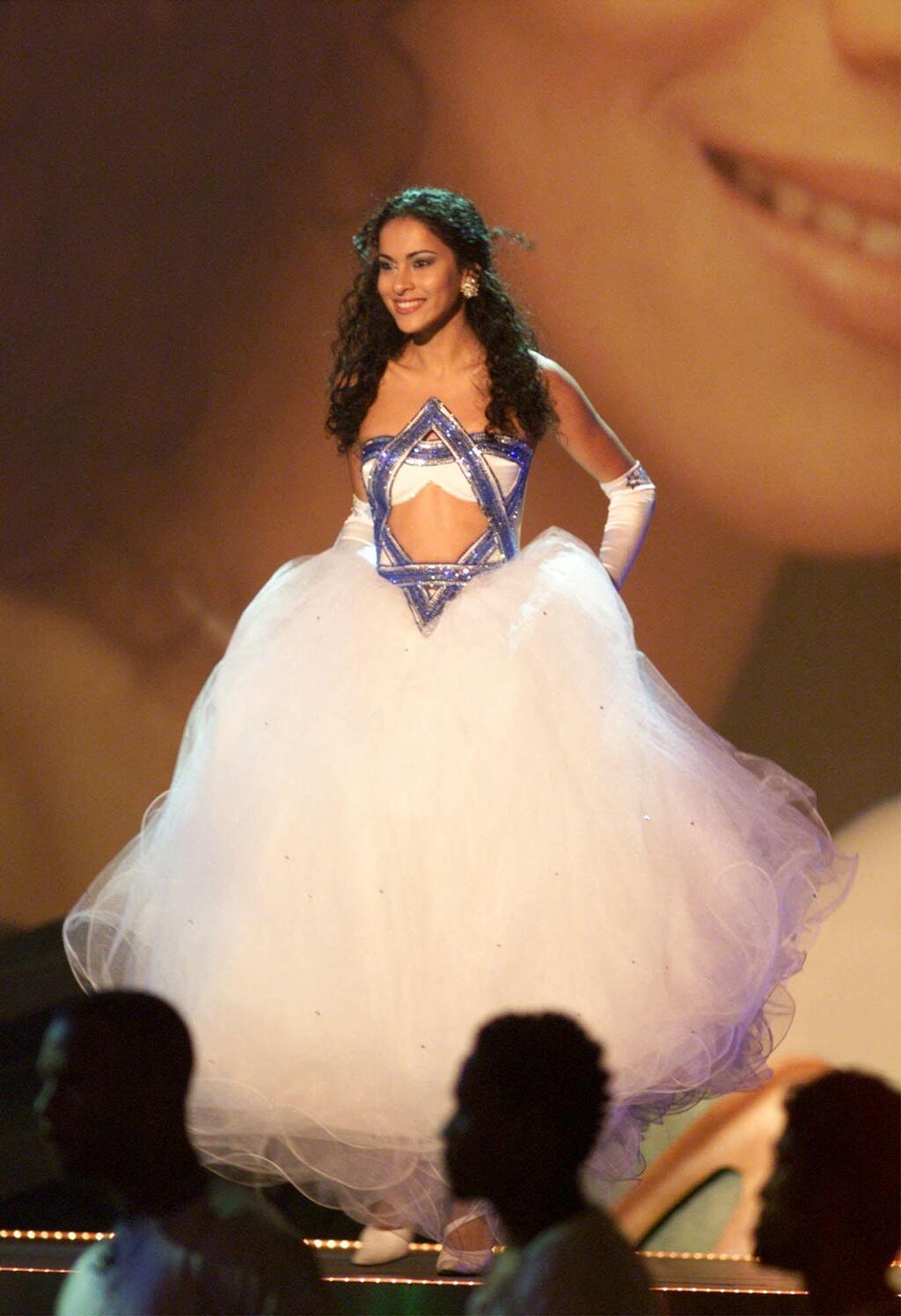
Star of David corset art piece for Rana Raslan
(Photo: AFP)
Another was the choice to send Ilanit Levy, Miss Israel 2001, to the same pageant wearing a bulletproof vest emblazoned with the word “Peace,” at a time when suicide bombers were attacking Israeli city buses.
An Israeli pageant in Miami
Until 2022, the Israeli representative for Miss Universe was the winner of the Miss Israel contest organized by La’Isha magazine, part of the Yedioth Ahronoth Group. Amid growing global discussions around diversity, the #MeToo movement and female representation, international beauty pageants have come under fire as degrading parades where women are still largely judged by their looks, even if character plays a role.
Filling the vacuum is Edgar Entertainment, a private organization owned by Jewish American businessman Edgar Saakyan, which now runs the Miss Universe Israel pageant in Miami. Assuming Israel rightly stepped away from beauty contests on feminist grounds, the question remains: Why return to the competition indirectly?
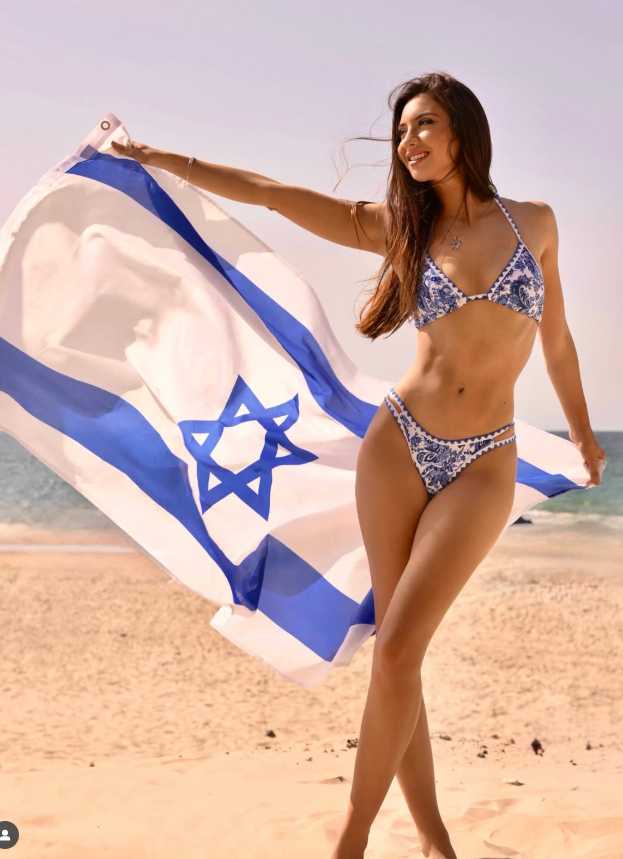
Melanie Shiraz in Israel
(Photo: Nathan Yakobovitch)
This year, the representatives for Israel and Palestine appear more like simulacra of the countries they represent, highlighting the contest’s flexible terminology. One might ask: Does Miss Israel, who was born in Tel Aviv, emigrated with her family to the U.S. and returned to Israel two and a half years ago, truly represent Israel?
And does Miss Palestine, Nadine Ayoub, born in the U.S., briefly lived in the Palestinian territories, moved to Canada and now reportedly lives between Amman, Ramallah and Dubai, truly represent Palestine?
Shiraz, 27, holds a bachelor’s degree in computer science from UC Berkeley and a master’s in business administration from Tel Aviv University. Ayoub, also 27, was born in the U.S. to Palestinian parents; her father from Nablus, her mother from Hebron.
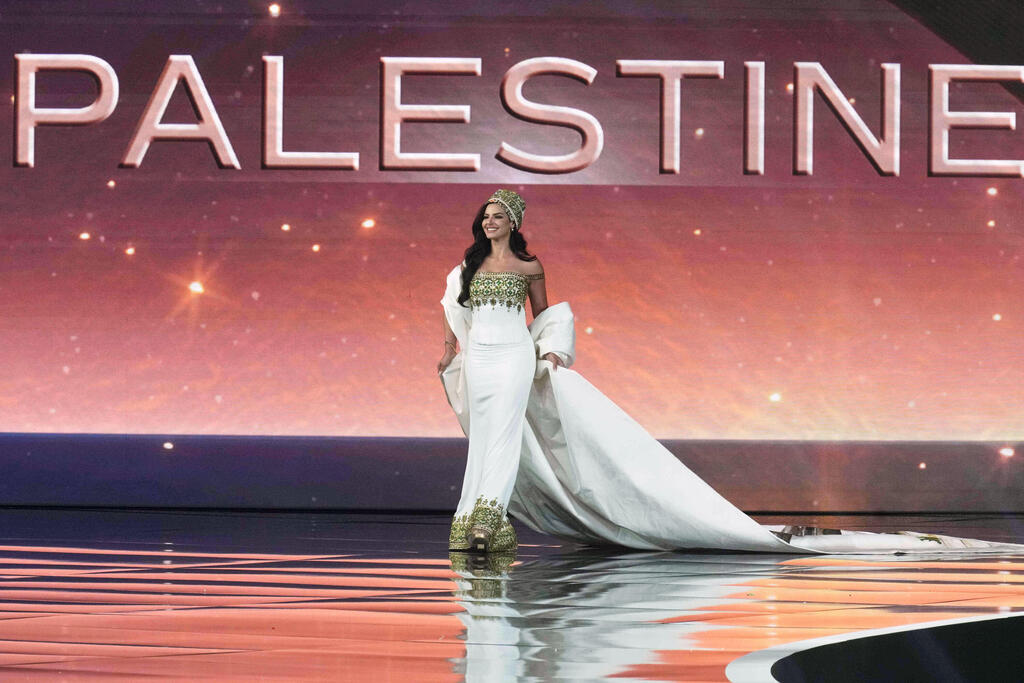
Nadine Ayoub at Miss Universe
(Photo: Sakchai Lalit, AP)
When asked in a YouTube interview how she responds to claims that “Palestine doesn’t exist,” she replied, "I would just say look at me, look at my existence. That is a statement that Palestine exists, and that we exist and we will always exist."
Ayoub holds a bachelor's degree in literature and psychology and founded the Olive Green Academy, an educational initiative connecting sustainability with modern technologies such as AI. She also leads community projects through Sayidat Falasteen, an organization promoting Palestinian women’s empowerment through traditional embroidery.
In 2022, Ayoub competed in the Miss Earth pageant, the third-largest beauty contest globally after Miss Universe and Miss World, as Miss Palestine, making it to the final four and earning the title “Miss Earth Water.”
In fact, Miss Earth was the first international pageant to recognize a Palestinian state back in 2016. Behind the scenes was Yara Mashour, editor-in-chief at Lilac magazine, which served the Arab sector from its base in Nazareth. In the first pageant, both Israel and Palestine were represented by Palestinian models: Natalie Rantissi from Ramallah for Palestine, and Meera Kahli from the Galilean town of Tarshiha for Israel.
Ironically, the most controversial outfit at the time was worn by Israel’s representative, Meera Kahli, who chose a keffiyeh-patterned style maxi dress designed by Israeli designer Dodo Bar-Or.
“It triggered a lot of reactions and questions about the identity of Palestinian Israelis and underlying tensions,” Mashour told us then. “On Facebook, people accused Israelis of stealing not only hummus but now also the Palestinian national dress. That is, non-Israeli Palestinians accused her of wearing Palestinian attire, while Palestinians in Israel didn’t like that she was wearing an Israeli designer."
Wearing Jerusalem
This year, national costumes once again became a political flashpoint. In the “National Costume” segment of the competition, both contestants delivered clear messages.
"My national costume for Miss Universe carries symbols that speak to the heart of the Israeli story," wrote Shiraz. Her self-designed dress featured the yellow ribbon symbolizing hostages held in Gaza, alongside red anemones, Israel’s national flower. "These flowers represent the lives lost since the war began, a collective tribute to families, friends and communities forever changed. I designed this piece to honor our story, our grief and the light we continue to hold onto."
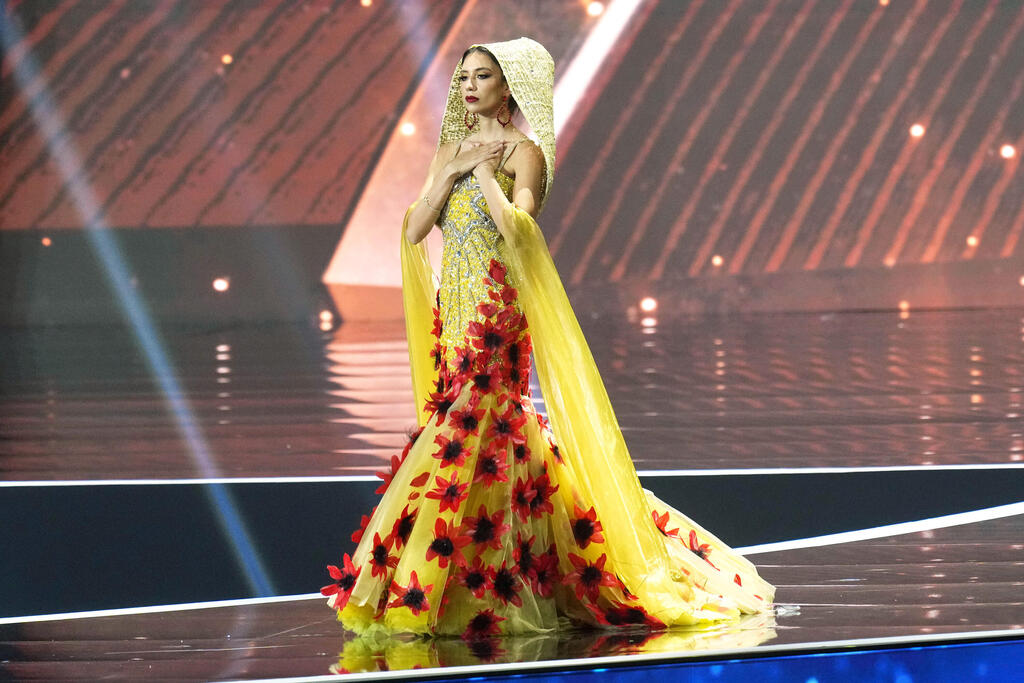
Melanie Shiraz in national costume. Yellow ribon and red anemones
(Photo: Sakchai Lalit, AP)
Ayoub opted for a more traditional look, donning a gown and head covering designed by haute couture designer Neven Elkady of Abu Dhabi.
"Today, I unveiled a national costume that carries the soul of my people, the grace of Palestinian women, the poetry of tatreez, the legacy of our ancestors and the spirit of a land where faiths, art and history live side by side," she wrote in pastoral tones.
Miss Palestine dress. Al-Aqsa and the Church of the Holy Sepulcher
(Photo: Athit Perawongmetha, Reuters)
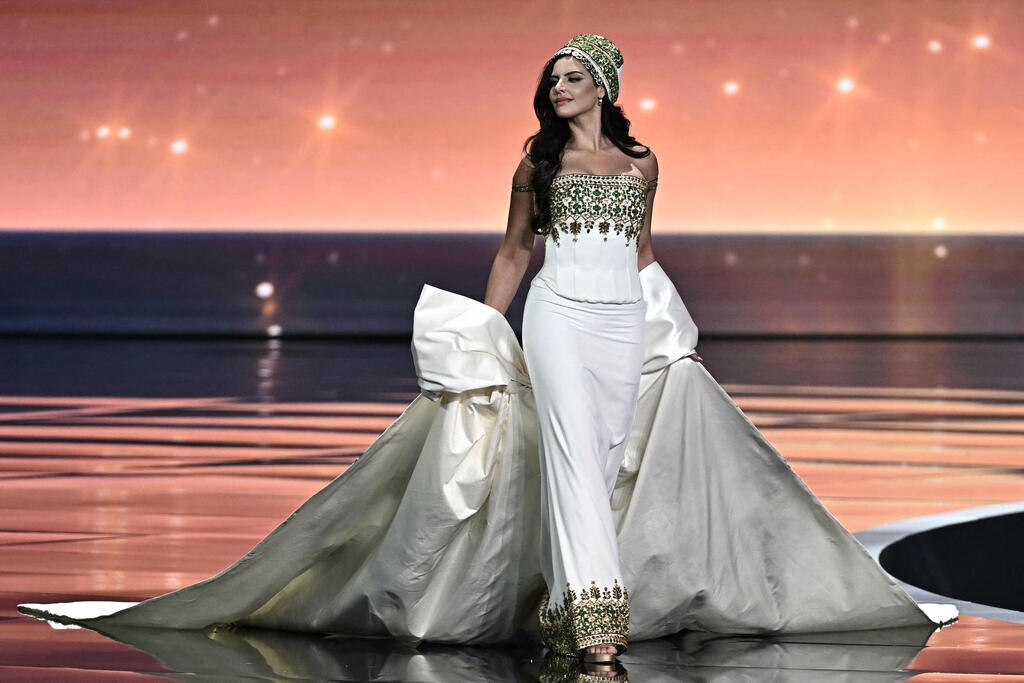
(Photo: Sakchai Lalit, AP)
"From the hand-embroidered motifs to the painted cape honoring Al-Aqsa and the Church of the Holy Sepulcher, every detail whispered identity, coexistence, resilience and hope."
Ayoub’s dress echoed another Jerusalem-themed gown, the one worn by Transportation Minister Miri Regev at the Cannes Film Festival in 2017. While Regev’s dress, designed by Aviad Arik Herman, was printed with Jerusalem’s skyline, Ayoub’s featured a hand-painted image of the Temple Mount, with the golden Dome of the Rock at its center.
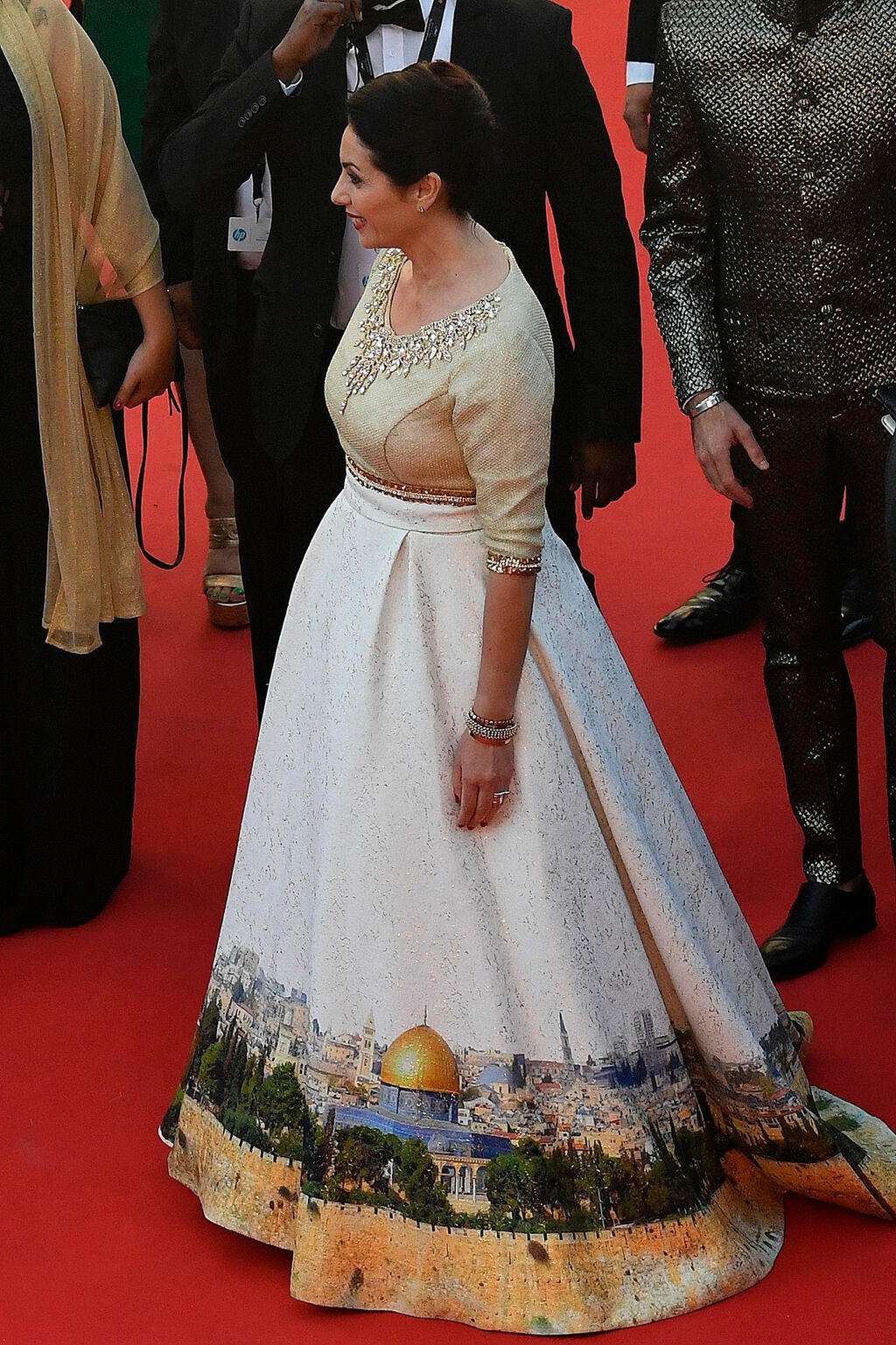
Miri Regev dress, Cannes Film Festival in 2017
(Photo: AFP)
“This wasn’t just a dress for me,” Ayoub wrote. “It was my heritage. It was my memory. It was Palestine on the global stage."