

“The Divine,” “Empress of the Theater,” “Woman of Scandal,” “the first international star,” “queen of poise and princess of gesture” — these are only some of the nicknames and titles attached to Sarah Bernhardt, the French actress, daughter of a Jewish mother, who starred in the 19th and early 20th centuries and was considered the most famous actress in the world.
The writer Victor Hugo praised her “golden voice,” while the artist, poet and filmmaker Jean Cocteau called her “the sacred monster.” Oscar Wilde extolled her artistic intelligence and stage charisma, arguing that her presence on stage transcended the text itself. Wilde saw her as an actress capable of turning every role into a personal creation, combining beauty, intellect and daring. Bernhardt was most likely the actress who inspired writer Marcel Proust in creating the key figure of La Berma in the novel “In Search of Lost Time.”
Bernhardt was even honored with poems and an anthem written for her jubilee celebrations, which were marked with a lavish banquet and a festive gala evening at her theater. Over the years, a peony flower was named after her, as were cookies: A Danish pastry chef named chocolate cream-filled, coated macarons after her.
Bernhardt, the first actress to perform on five continents, also had her detractors. British playwright George Bernard Shaw attacked “the childish egotism of her acting, which does not make one think higher or feel deeper.” Russian playwright Anton Chekhov, for his part, wrote that he was far from admiring her. “She is a very intelligent woman and knows how to produce an effect, has enormous taste and understands the human heart,” Chekhov believed, “but she wanted too much to astonish and overwhelm her audience.” Russian writer and playwright Ivan Turgenev was far more cutting and vicious: “All she has is a wonderful voice. The rest is cold, false and restrained; a repulsive chic Parisian of the worst kind.”
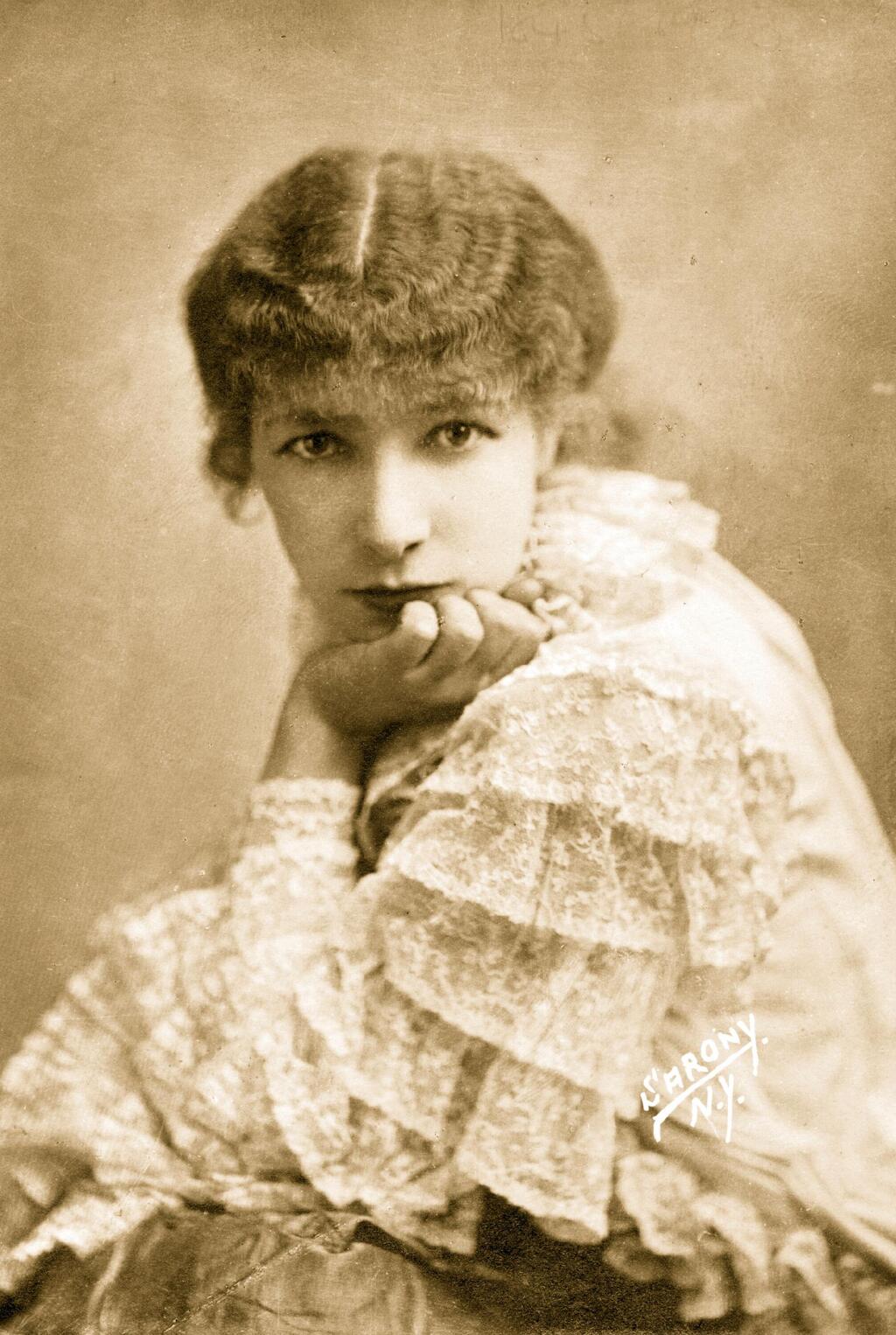
It can be said that the adored and much-covered Sarah Bernhardt was the first celebrity. She knew how to create scandals, generate media noise, attract attention and spark debate. Norman Lebrecht, in his book “Genius & Anxiety: How Jews Changed the World, 1847-1947,” described Bernhardt as the woman who “invented celebrity.”
When Bernhardt died in 1923 of kidney disease at age 78, the mourning crossed continents. She was buried in Paris’ Père Lachaise Cemetery, where many cultural icons are interred. Her funeral procession was grand, attended by 1 million people. A century has passed since then, and she still draws interest. Her Wikipedia entry exists in 165 languages, including Yiddish. Now audiences can become acquainted with Bernhardt’s life and exploits through the film “The Divine Sarah Bernhardt,” which is arriving in Israeli cinemas.
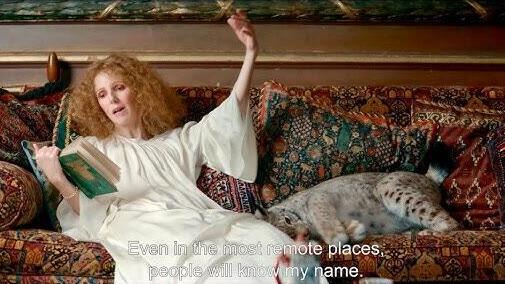
From 'The Divine Sarah Bernhardt'
(Photo: Courtesy of Eden Cinema)
Because Bernhardt’s life — she was born to a Jewish courtesan and to a father whose name went undocumented for many years, though it is now known that he was a French lawyer — was filled with scandals, romances, dramas and countless stage appearances, director Guillaume Nicloux understood that compressing such a packed biography into a single film would be an impossible task. He therefore chose to focus on significant moments in her life.
“We found two important, striking moments in her life, amid the madness and turbulence of it,” Nicloux said in an interview. “The 50th birthday celebrations held in her honor at the end of the 19th century and the amputation of her leg in 1915. In 1887, during a performance tour in Brazil, Bernhardt injured her right knee while jumping in one of the plays. For 30 years, she suffered from infections and severe pain. After a serious infection and gangrene developed, doctors determined that amputating the leg was the only way to save her life. Her right leg was amputated above the knee. But the amputation did not prevent her from continuing to act, or even from visiting soldiers during World War I while in a wheelchair. In general, we decided to avoid the obligations of a traditional biography and not tell Sarah Bernhardt’s story in the usual way. Strangely, the two things we focused on are barely documented.”
Nicloux cast Jewish actress and director Sandrine Kiberlain as Bernhardt. When I met Kiberlain at an elegant luxury hotel in central Paris, not far from the theaters and cinemas where Bernhardt once starred, I wondered whether she had been afraid to portray someone so iconic. “It could indeed be intimidating, so I tried not to think about the legend that Sarah was,” Kiberlain admitted. “The wonderful role required me to play Sarah performing in several plays. It was like playing 15 roles in one. And it was a role that came to me at the right time — one of the most beautiful, rich and challenging roles I have played in my career. I would not have been able to play it without all the other characters I have portrayed over the course of my career. I tried not to be frightened or troubled.”

Sandrine Kiberlain
(Photo: Pascal Le Segretain/Getty Images)
Kiberlain launched into extensive research and immersed herself in Bernhardt’s life. “The truth is that before I began the research, I did not really know her. I knew she had been a great dramatic actress, that she shone on stage and was an international star. But I did not know how free she was as a woman, and I did not know how much courage she had. As soon as I read the script, I fell in love with her.
“Sarah was a marvelous actress, but she wrote nothing about herself. We have no memoirs from her. There are only letters that show how she lived and how she loved, and photographs that show what she looked like, but it is very sad that there is no organized record. You could say I dived into the script and into all the documents and archival materials I read. It helped me create the image I had of her, her rhythm and the way she spoke the words. It helped me bring her energy, courage and freedom. I used my imagination and did not try to imitate her. On the first day of rehearsals, it was as if she came out of me, and the director was very surprised.”
Lovers, mistresses and other animals
Bernhardt shattered conventions and even played male roles, including Hamlet. She also had a weakness for men. Her love life was especially stormy. It is not always clear whether the gossip published about her was true. Early in her career, she had an affair with a Belgian nobleman, the father of her only son, Maurice, who spent most of his life working as a manager and agent for various theaters and artists, and managed his mother’s career in her later years, though not with great success.
After Bernhardt left the Comédie-Française, and after Maurice was born, she struggled to find roles and was often forced to work as a courtesan. She survived thanks to wealthy, influential lovers — bankers, industrialists and ambassadors. She also had affairs with many of the actors who appeared with her on stage. Bernhardt did not hesitate to pursue affairs that helped advance her career, from theater managers to editors of major and important newspapers. Many of her early lovers remained her friends even after the romances faded. Later, when she was already famous and successful, her lovers included military officers, aristocrats, playwrights and famous actors. She was even said to have had an affair with Edward, Prince of Wales. When Edward was crowned king of Britain as Edward VII, he sailed on the royal yacht to visit her at her summer home.
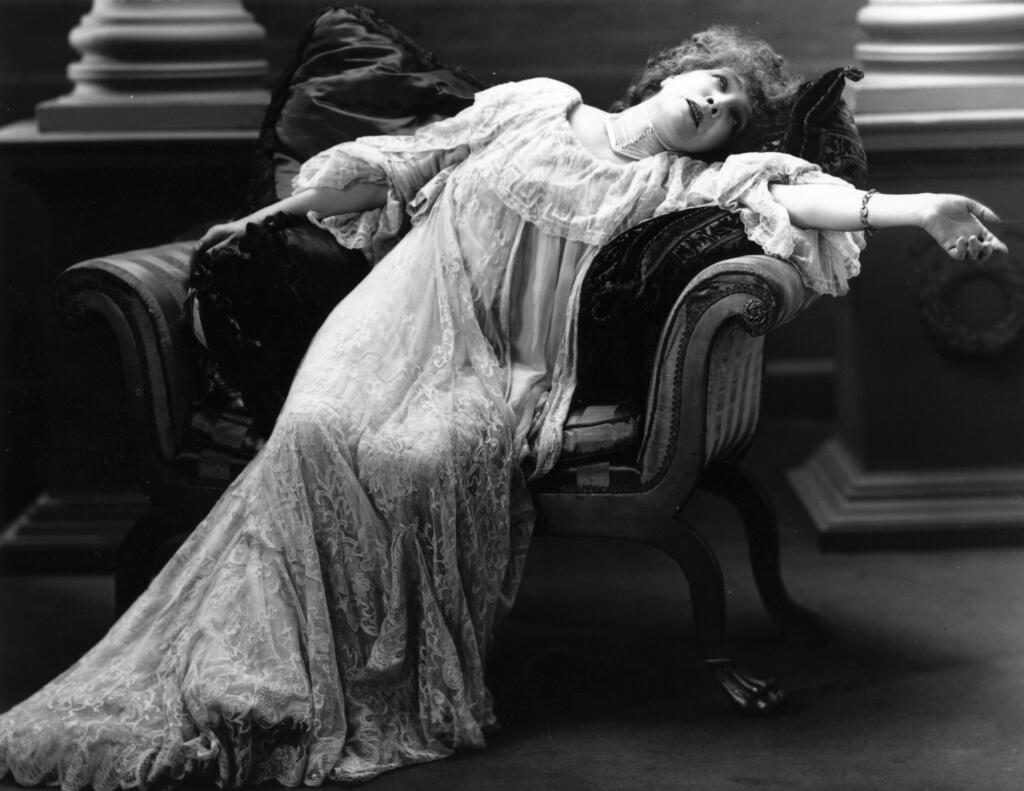
Sarah Bernhardt
(Photo: Hulton Archive/Getty Images)
Bernhardt married only once. In 1882, she formalized her relationship with Aristide Damala, a Greek military officer and diplomat who also dabbled in acting. The wedding took place in London, but the groom proved to be a dubious figure — unfaithful, wasteful, drug-addicted and prone to trouble. The two separated very quickly, and in 1889 Damala died of an overdose of cocaine and morphine.
Her last serious romance was with the handsome Dutch-born actor Lou Tellegen, who was 37 years her junior. Tellegen may not have been a particularly brilliant actor and had a heavy Dutch accent, but that did not stop the aging and lustful actress from signing him as the leading man for her American tour. She assigned him a compartment in her private train car and took him as her escort to every event and party. At the end of the tour, an argument erupted between them and he chose to remain in the United States. In 1934, he took his own life.
Rumors also attributed to Bernhardt a lesbian affair with her friend, the Impressionist painter Louise Abbéma, who was nine years younger than she was. Abbéma painted the two of them boating on a lake in the Bois de Boulogne, and regularly spent vacations at Bernhardt’s summer home. They remained close friends until Bernhardt’s death.
“Sarah’s flamboyance, her free and liberated sex life and her need to fight for freedom of speech emphasize the fact that Sarah truly wanted to be herself,” Kiberlain says. “But she also cared for others and was utterly fearless. All of that somehow entered me, and that is how I created her.”
Of course, “The Divine Sarah Bernhardt” does not reconstruct all of these sensational affairs. The filmmakers chose to focus on her relationship with Lucien Guitry, father of director Sacha Guitry and one of the most prominent and respected French actors of the late 19th and early 20th centuries. Guitry often acted alongside Bernhardt, and the two were part of the same Parisian artistic circle and were even considered the “royal couple of French theater.”
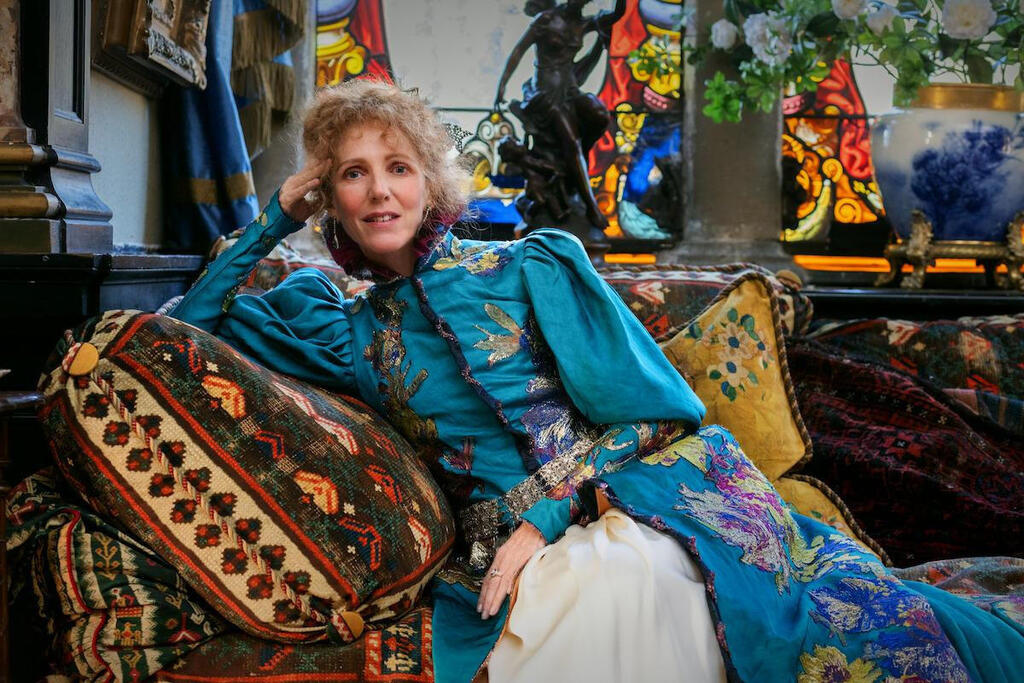
From 'The Divine Sarah Bernhardt'
(Photo: Courtesy of Eden Cinema)
The film turns this close and complex relationship into a central emotional axis. Indeed, some biographers have claimed that they had an affair, and that Guitry’s first marriage was damaged by it. Although persistent rumors of this romance circulated for many years, there is no historical proof or unequivocal evidence; no love letters or diaries have been found confirming an intimate relationship. What is certain is that they were close friends and shared artistic admiration and personal chemistry. The role of Guitry, who was 15 years younger than Bernhardt, is played by the wonderful French actor Laurent Lafitte, who portrays him with restraint and sensitivity, as a counterweight to Bernhardt’s explosive energy.
Bernhardt, a vegetarian, was known for her love of exotic animals — in the late 19th century, this was seen by the upper classes as a symbol of wealth, originality and adventurousness — and kept, among other animals, parrots, monkeys, chameleons, a cheetah, a lion, a boa constrictor, a wildcat and a crocodile. Legend insists that she fed the crocodile milk and champagne, which led to its death. Bernhardt also used to travel the world with some members of her private menagerie.
A self-marketing genius
The star also had a brilliant instinct for publicity and public relations, which helped her maintain her status. She used her animals to arouse interest around her. More broadly, Bernhardt knew how to use the press, photography and scandals to build and strengthen her brand. The press followed her every whim, including a hot-air balloon trip. She made sure to be photographed by the leading photographers, sold signed photographs and even lent her name to commercial products. She used to pose lying inside a coffin in her home, and spread rumors of her impending death to sell tickets to her plays.
Writer Henry James saw her as someone who knew how to turn every event into news, and said she had “an absolute genius for self-advertisement.” James argued that she had turned her art into a product and her publicity into mere publicity, calling her “the muse of the newspapers.” He did not spare her, declaring: “She is the greatest impostor of the century. The world has gone mad over her madness.”
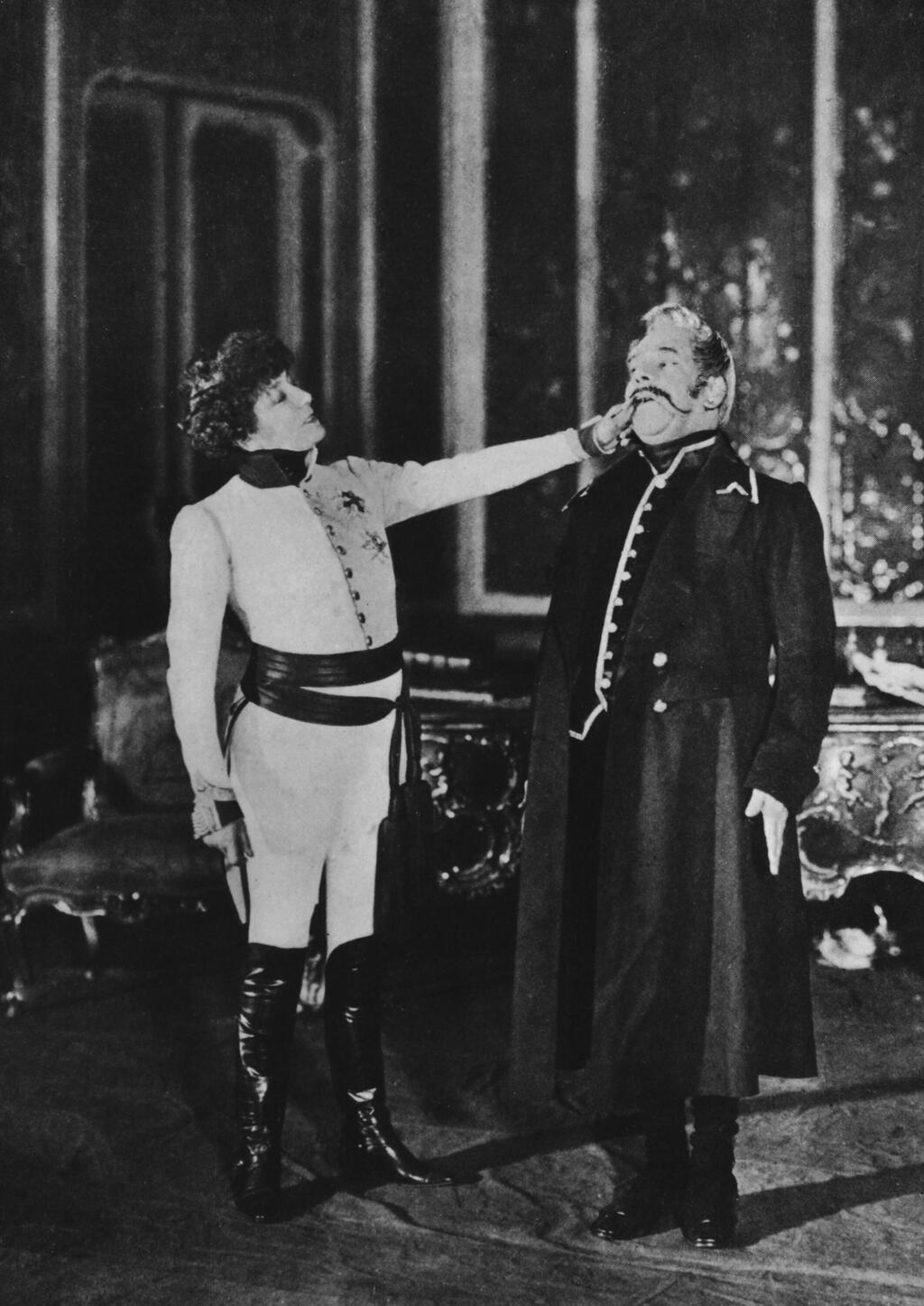
Sarah Bernhardt
(Photo: Rischgitz/Hulton Archive/Getty Images)
Bernhardt’s biography includes an amusing anecdote that illustrates her fondness for headlines: In 1910, Bernhardt visited Egypt, where members of the local branch of the Carmel Mizrahi Winery from Rishon Lezion, with her consent, staged a collision between the carriage in which Bernhardt was traveling and a cart transporting wines for distribution to customers in the city. “No one was hurt in the accident, but the press in Egypt and abroad reported the collision with ‘Carmel Mizrahi wines,’ and thus free advertising was created for the wines of the Land of Israel, thanks to the actress,” David Tidhar wrote in the “Encyclopedia of the Founders and Builders of Israel.”
“The Divine Sarah Bernhardt” does not ignore her Jewish roots. Moritz, her maternal grandfather, was a Jewish eyeglass merchant from Amsterdam who traveled extensively. Years later, Bernhardt wrote that her French father’s family financed her education and insisted that she be baptized as a Catholic. But although she was a devout Catholic, she never forgot her Jewish heritage. In one interview, she was asked whether she was a Christian and replied: “No, I am a Catholic and a member of the great Jewish race. I am waiting until the Christians improve.” On the other hand, when she was once asked by a musician whether she prayed, she answered: “No, never. I am an atheist.”
The film also addresses Bernhardt’s involvement in the defense of Capt. Alfred Dreyfus. On Jan. 5, 1895, a humiliating military ceremony was held in France: Dreyfus, a Jewish officer in the French army who had been accused of spying for the Germans despite being innocent, was stripped of his rank. He was deprived of all ranks, medals and decorations and convicted of treason. Only in 1906 did the Court of Appeals rule that he was innocent, and Dreyfus was reinstated in the army.

Dreyfus’ story touched the actress’s heart
(Photo: Getty Images)
His story touched the actress’s heart. Immediately after his public humiliation, she became convinced of his innocence and was appalled by the antisemitic atmosphere surrounding the trial. In 1898, she wrote a letter of support to writer Émile Zola, one of Dreyfus’ greatest supporters, shortly after he published his famous article “J’Accuse,” and praised his courage.
The Dreyfus affair divided Parisian society. A conservative newspaper ran the headline “Sarah Bernhardt has joined the Jews against the army,” and she became a target of antisemitic caricatures. The affair caused a family rift and created great tension: Her son Maurice condemned Dreyfus and even refused to speak to her for a year because of their disagreement on the issue.
“The film ‘The Divine Sarah Bernhardt’ reminds us that antisemitism has always existed and that it exists now as well, and that is terrible and incomprehensible,” Kiberlain said when we met. It is worth noting that Kiberlain took part in the large demonstration against antisemitism held in Paris after October 7, and even gave a speech at an event held in one of the theaters.
“Sarah fought for Dreyfus not only because of her Jewish roots — justice was very important to her,” she emphasizes. “She thought the Dreyfus trial was unjust. Injustice activated her. She could throw a glass in her son’s face because of acts of injustice. That is why I love her.”
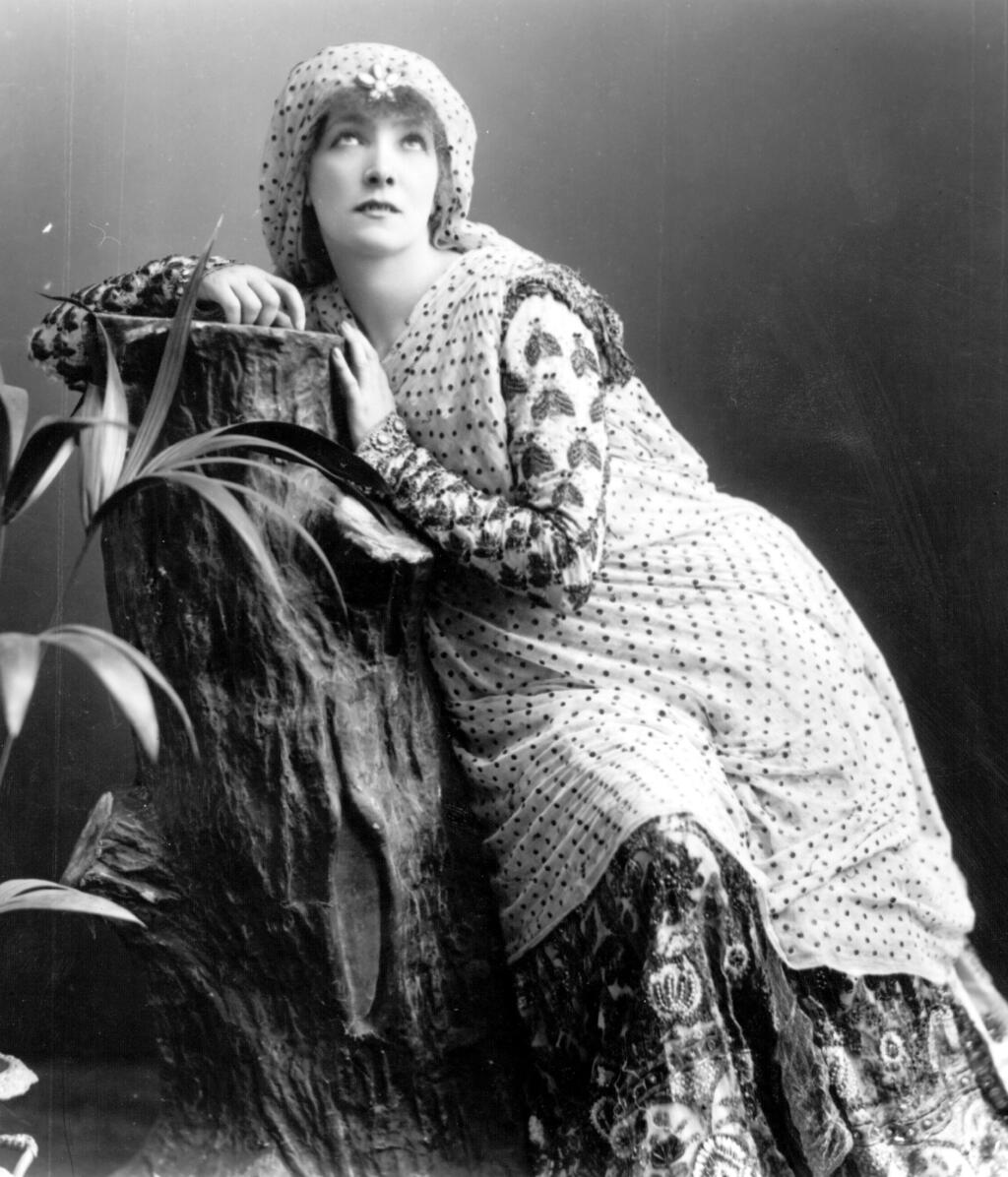
Sarah Bernhardt
(Photo: Hulton Archive/Getty Images)
Speaking of antisemitism, when the Nazis occupied Paris during World War II, they changed the name of the Sarah Bernhardt Theater in Paris, which she had founded and managed, because of her Jewish origin. The Nazi occupiers renamed it the Théâtre de la Cité. Only in 1947 was the original name restored.
The star has been commemorated more than once. In 1960, she received a star on the Hollywood Walk of Fame. In 1980, pop art genius Andy Warhol published a series of paintings, “Ten Portraits of Jews of the Twentieth Century,” and Bernhardt appears in the series alongside Golda Meir, Sigmund Freud, Franz Kafka and Albert Einstein. Bernhardt’s story and image have appeared in films, including in recent years, and in several plays. In 2004, a play written by Roy Chen was staged in Israel, with Lia Koenig portraying her.