

In one of the most powerful scenes in Stephen King’s masterpiece, Danny, Jack Torrance’s son, is forced to return to the book his father had been using to teach him to read.
He opens it at the page where their last lesson ended. By then, Jack has descended into murderous madness, and Danny must teach himself to read. He carries himself into language as though bent beneath the weight of orphanhood itself, delivering words through effort and sweat.
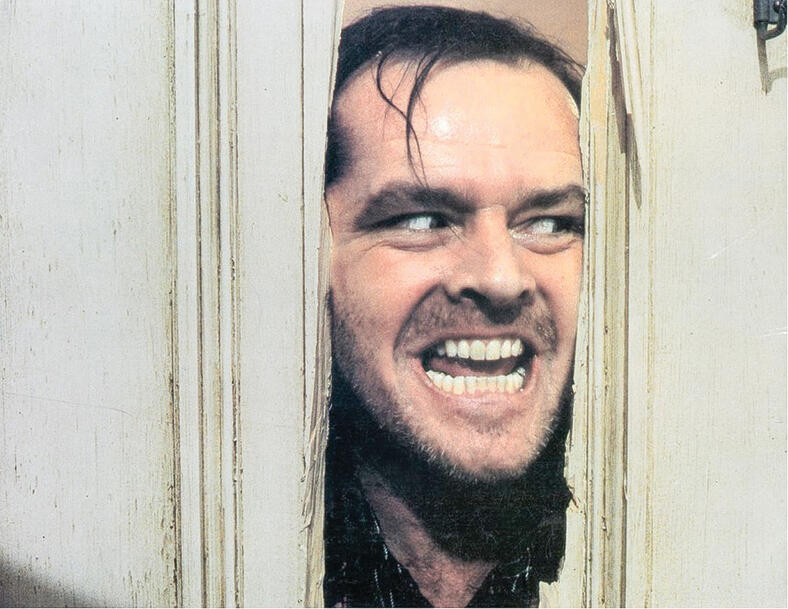
In that scene, King touches on one of the foundational moments of philosophical literature: A son whose father has betrayed his role and abandoned him without words is forced to initiate himself into language, seize himself by the hair and pull himself from the drowning basin of abandonment, like Baron Munchausen.
Mary Shelley’s creature in “Frankenstein” undergoes something similar. Victor Frankenstein recoils from the stitched collection of limbs he has created because it fails to produce, as his narcissistic fantasy demanded, the noble metal of his own singularity.
Wandering alone, the creature finds shelter in a pigsty and looks out toward an illuminated cottage. Inside it, he witnesses a miracle that nature will never grant him: Human beings who have been given names speak to one another. The creature will forever remain language’s rejected lover. He will expose its mechanisms, catalogue its blindness and indict its complicity in the first injustice of every human life: the family. Yet he will never desire anything more.
Those who enter language naturally can treat it with the weary carelessness of natives. Those who pitch their tents at its border will forever court its guardians with extravagant offerings and attend to its paths with the meticulousness of a painter’s brush. They dance because they were never taught to walk, and they become artists against their will. So does Frankenstein’s creature, who eventually becomes the novel’s principal narrator, and so does Danny Torrance, who discovers within himself the gift that separates him from other people: the shining.
In that sense, “The Shining” is also the story of an artist’s birth. At first glance, however, the artist in the Torrance family is Jack, the father who takes his family to spend the winter in an isolated hotel so he can finally complete a play. “The Shining” therefore begins at a point where so many books by one of the most prolific writers alive begin: writer’s block.
In his memoir “On Writing,” King notes, with wonder but without resentment, that among the thousands of questions interviewers have asked him, not one concerned language. I remember the 1980s, when I had only begun reading King. In the waiting room of a dentist’s office lay an old issue of Time magazine. Its books section included a short review of King’s latest novel. The critic concluded: “King’s language, as usual, is simple, fast and careless.” Let us depart from that habit and ask the question no one asked.
Who is writing whom?
Jack Torrance wants to write his work, but the ghosts of the Overlook Hotel, especially the spirit of the caretaker before him, who murdered his wife and two young daughters, form an alliance with the demons thriving in the cellar of his soul and drive him into madness.
That is the standard reading of King’s novel. It is also the source of the familiar and persistent complaint, voiced above all by King himself, that Stanley Kubrick’s film was too cold and failed to show how the hotel’s horrors reflect the father’s haunted and unstable inner world. Before constructing another variation of that established interpretation, however, we should listen suspiciously to its opening sentence: Jack Torrance wants to write his work.
Let us remain with it a moment longer. Jack sits down inside language and intends to treat it as his property. He plans to turn the haunted hotel into a home. Ever since Frankenstein’s unwanted creation, assembled from tissue gathered from the gallows and the grave, confronted its maker with a language that was breached, hybridized and unable to return from its dispersal to baptize him in his own name, the language of the Gothic novel has itself been a haunted hotel. It is a mass grave of dead signs, a drainage pit in a great city after the rain.
Language is a house whose memory-soaked walls cannot be concealed beneath the plaster of identity. It is, in truth, a house unfit for habitation. From time to time, we are tempted to believe we are its residents and that the ghosts are the ones disturbing our nights with the sound of hurried footsteps.
But as in Julio Cortázar’s meta-Gothic story “House Taken Over,” we are repeatedly condemned to discover that we are the dead, the ghosts terrifying the true inhabitants through the routine of our imagined existence.
The uncanny lies in the very attempt to turn the hotel into a home: to imagine closing the door, perfuming the air with the smell of your body, wiping away the stains left by strangers and engraving your name into every crease of the sheets. It means writing your own thing inside the hotel, writing anything that is not the muttering of its dead as they gather in battalions upon your tongue. But only the hotel writes. Only the hotel dictates.
The writer who binds the pages into a single cover and signs it with his name is always a plagiarist. Throughout King’s work, in novels such as “The Dark Half” and “Secret Window, Secret Garden,” anonymous creatures of darkness repeatedly demand justice from the author who imposed his own name upon their creation and stole their glory.
Again and again, the hotel breaks into the cramped one-man performance of ownership that writers stage before a mirror and destroys it through its sealed languages: REDRUM. The ritual of purification, the basis of every sin and the father of every monster, instantly becomes a séance.
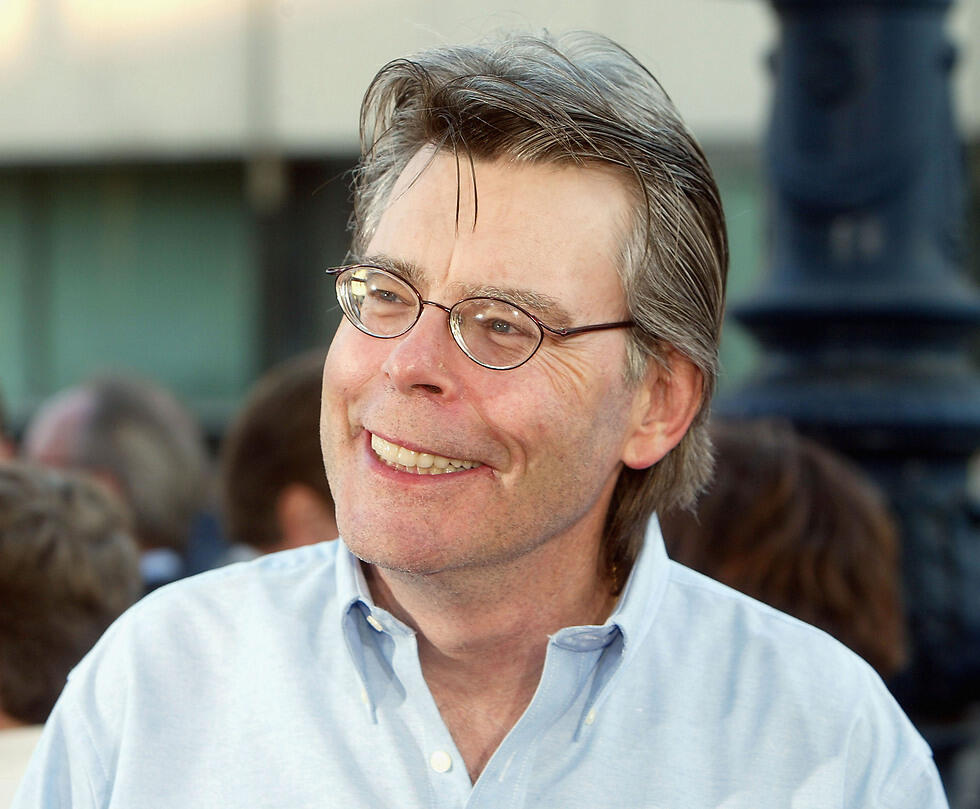
Stephen King
(Photo: GettyImages)
“The Shining,” then, does not describe a creative process that has become corrupted. It exposes the corruption built into the very intention to create, the basement of horrors born from the desire for a room of one’s own. Jack Torrance is not a father whose imaginary creations devour his fatherhood.
He is a creator whose deadliest fantasy, the fantasy of fatherhood itself, distorts his work because it gives rise to the desire to impose his voice upon the hotel. It is not Jack’s dark impulses that drive him toward disaster, but the bourgeois economy of identity. Or, more simply, duty, which history has already taught us may be the darkest impulse of all.
At this point, King is no less radical than Kafka, whose characters transform into strange creatures or suffer bizarre deaths at the threshold of entering the familial and economic order. Put simply, whoever becomes a father cannot write. The writer is the one who loses his way through the hotel’s teeming corridors and sends a ghostly groom to his own wedding.
The unforgettable characters in King’s later novel “It” offer another example. The members of the Losers’ Club, now adults, only barely sustain the half-parodic parasitic structure of identity. Yet the irony rising from the abyss, from the perspective of It, hovers above everything they do and turns them into permanent impostors within the circles of family, work and community.
Jack’s “madness,” then, is nothing more than the windowless dungeon of the demand for normality. He enters the hotel armed with the incantation of order, which commands him to silence the play of ghosts and serve his own name in the manner of the fathers.
Here, one of the most painful differences between the novel and Kubrick’s film becomes clear. In the novel, Jack abandons his play and begins writing a kind of chronicle of the hotel. Yet more than he writes the hotel, the hotel writes him. It empties him of the final furnishings of home and feeds his forgetful anonymity to its starving ghosts.
Kubrick’s film approaches writing differently. At one point, Wendy is horrified to discover that throughout the entire period in which Jack claimed to be writing, he had filled hundreds of pages with a single sentence: “All work and no play makes Jack a dull boy.”
To understand what force Jack is trying to repel through this hysterical compulsion to repeat, which compresses the melancholy of duty into a grotesque formula, work and boredom without play, we must trace the saying’s origin. It is a proverb dating back to the 17th century. Over time, however, writers added a second line: “All play and no work makes Jack a mere toy.”
Just as the word Danny sees in his visions, REDRUM, reveals itself in the mirror as MURDER, Jack’s solitary sentence must also be read through its reflection, through its negative. The man who tried to silence the whispers of the dead through the deadening command of function becomes, in practice, a toy shaken in their invisible hands.
The man who desperately tried to keep the hotel’s skeletal guests outside his room and cleanse his name of their speech made his typing fingers dance to the rhythm of their dream and carried the creaking of their bones across his filling pages.
In failing to make a name for himself, the man who was once Jack Torrance called out the names of the dead in every room. In failing to write seriously, he released the rolling laughter of language. And instead of composing his own book, he recorded the hidden skeleton of every book ever written.