

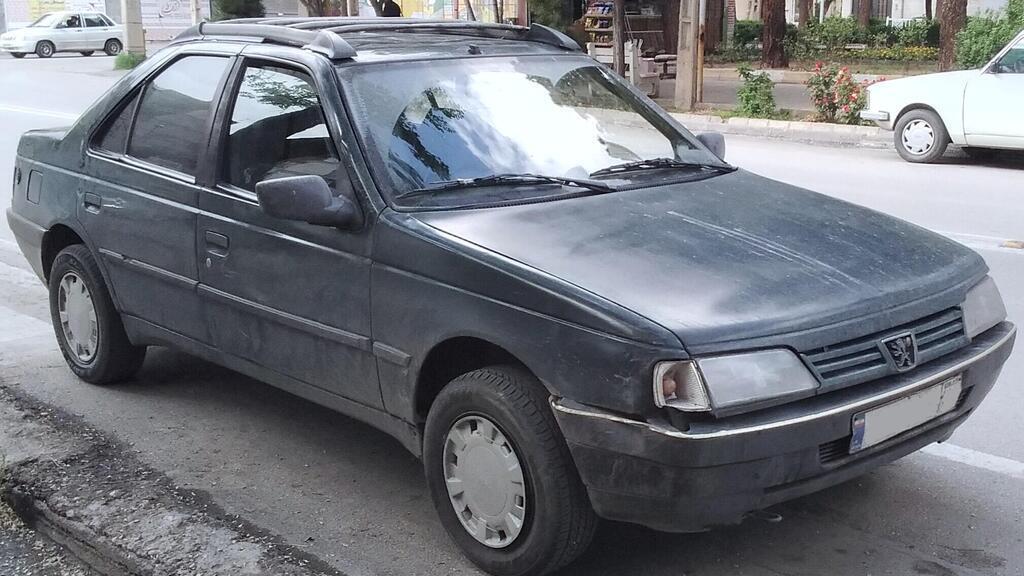
Anyone watching the footage coming out of Iran can’t help but notice one striking detail: in many of the areas hit by Israeli airstrikes, the cars parked nearby would be considered vintage—or just very old—by Israeli standards. In one clip, people gather around a destroyed Peugeot 405, a model that disappeared from Israeli dealerships in the 1990s. Elsewhere, first-generation Peugeot 206s appear—now rare in Israel—alongside long-outdated Renaults and various Iranian-made vehicles that never reached Israeli roads but are still seen as top-tier in Iran’s domestic car market.
Iran’s automotive industry has a surprisingly rich history. In many ways, it mirrors Israel’s own manufacturing past up to the 1980s. Decades of international sanctions cut Iran off from Western carmakers early on, leaving the door wide open for Chinese brands long before names like BYD or Chery made it to Israeli showrooms. Today, these Chinese manufacturers dominate the Iranian market—though at steep prices. Interestingly, Iran’s car industry also played an early role in the careers of two Israeli auto tycoons. Just days ago, reports indicated that one of Israel’s airstrikes hit an engine production plant in Iran. The full strategic impact is unclear, but any blow to Iran’s automotive infrastructure could prove significant.
A closer look reveals that Iran is more than just a consumer market. It’s actually a major global car producer. According to the European Automobile Manufacturers Association, Iran ranked 11th worldwide in car production in 2022. That year, out of roughly 68 million vehicles built globally, over a million were made in Iran. The country had climbed from 19th place the previous year—a leap largely driven by government efforts to flood the domestic market with low-cost cars and ease growing economic discontent.
It’s a familiar strategy. Many populist leaders hostile to Israel have launched “people’s car” projects aimed at winning public favor. Erdogan has the Turkish-made TOGG, modeled after a similar plan from General Gürsel in the 1960s. Nasser tried the same in Egypt. Even Hitler famously backed the Volkswagen Beetle—though it never really caught on in Germany during his lifetime.
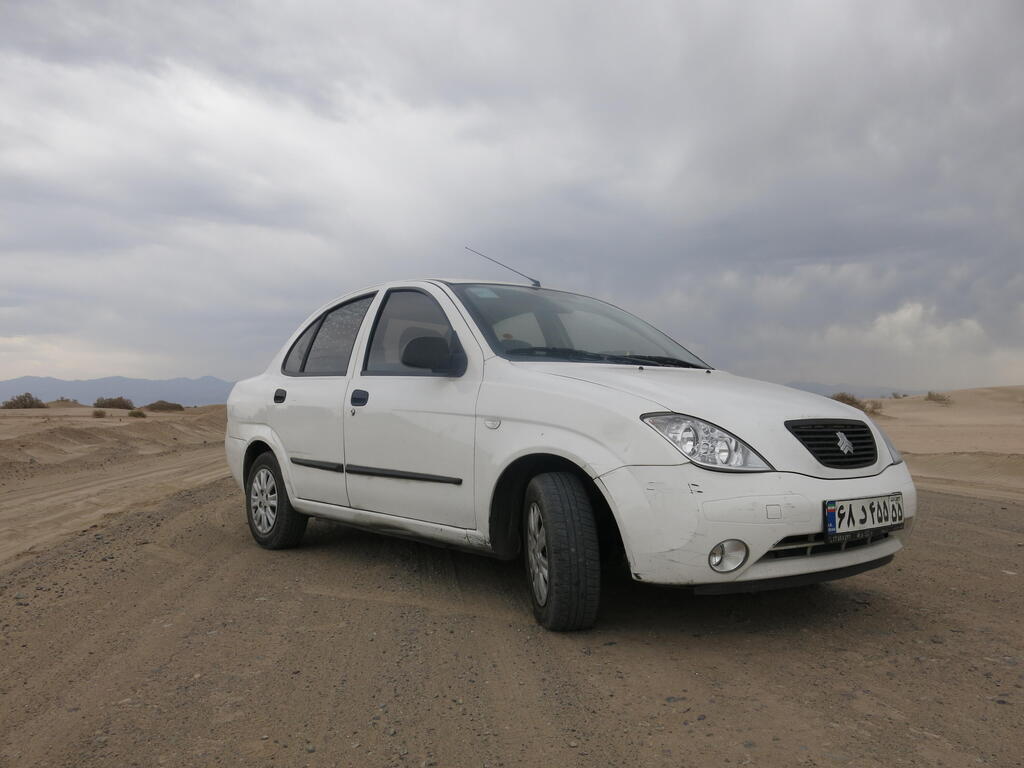
Saipa Tiba
(Photo: Saiba)
With a population of over 90 million and a landmass six times the size of Israel, it makes sense that Iran would cultivate a large domestic auto industry. But unlike France, the U.S., or Israel, Iran’s automotive development has been shaped by constant geopolitical shifts. Western brands would enter, only to exit following regime changes, creating space for others aligned with the current government. The regime has consistently treated the auto industry not just as a business but as a strategic tool for managing the domestic economy.
Iran’s first exposure to automobiles came through royalty. Mozaffar ad-Din Shah, while touring Europe in the early 20th century, purchased a Ford Model A in Brussels and brought it home. Not long after, Renault became the first company to officially export cars to Iran, offering a line of 100 vehicles to the monarchy. These were reserved for loyal elites, while most citizens still traveled by donkey or camel.
Until the 1960s, the bulk of Iran’s cars came from Europe—similar to trends in other Middle Eastern and African nations where France and Italy held sway. American cars were also present, especially in neighboring Iraq. In the 1930s, a Jewish-Iraqi businessman named Yehezkel Aini became the Iraqi distributor for both General Electric and American auto brands. Sensing rising tensions, Aini immigrated to Israel and in 1946 founded The Eastern Company for Cars and Commerce, which imported British Vauxhall cars. His descendants now co-own the Israeli importers of Land Rover and Chevrolet.
Get the Ynetnews app on your smartphone: Google Play: https://bit.ly/4eJ37pE | Apple App Store: https://bit.ly/3ZL7iNva
By the late 1960s, Japanese brands arrived in Iran. One young Jewish entrepreneur, George Horesh, began importing HINO forklifts. In the early 1970s, he expanded to Toyota. Horesh fled Iran before the Islamic Revolution of 1979, eventually becoming Toyota’s official importer in the UK. In the 1990s, he immigrated to Israel, where he now owns Union Motors, the Israeli Toyota distributor. The company still imports HINO trucks and forklifts—Horesh’s original business line.
In 1962, Iran launched its first domestic automaker, Iran Khodro, based in Tehran. With technical support from Peugeot and Britain’s Hillman, the company released the Paykan in 1967. Based on a Hillman design, the Paykan became known as Iran’s national car.
Many of the vehicles seen in recent footage from Iran—especially the Peugeot RD—come from Iran Khodro. Although it resembles a Peugeot 405, the RD is actually a hybrid model combining the Paykan’s old rear-wheel-drive platform with Peugeot bodywork. The RD remained in production until 2016. Peugeot 206s were also built in Iran until just a few years ago.
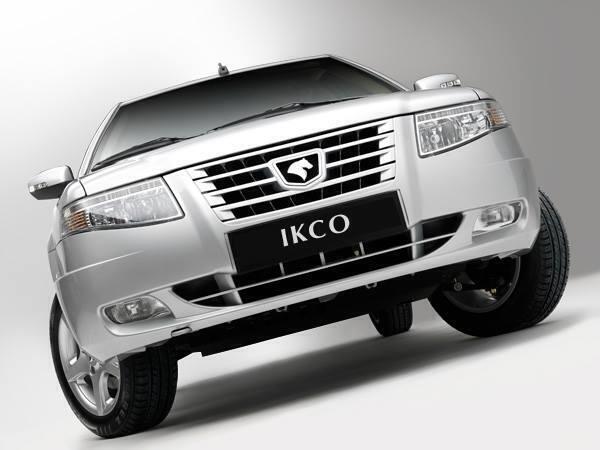
ICKO SAMAND
(Photo: Icko)
Another key player is SAIPA, founded in 1965 as a joint venture with Citroën. The French company withdrew in 1975, but SAIPA continued under Iranian ownership. It later acquired Pars Khodro, which now builds various Chinese and Korean models. One vehicle often mistaken for a Renault 5 is the Sepand K—an Iranian-made car based on the Renault 5 design, produced from 1976 to 2005.
The Samand, another familiar name, is Iran’s attempt at a modern sedan. Built on a Peugeot 405 platform, it uses front-wheel drive and was also produced in Syria until 2012. Unlike the Peugeot RD, the Samand was aimed at replacing the aging Paykan.
Despite the flood of older French and Iranian models still crowding Tehran’s streets, today’s best-selling cars include newer domestic designs. According to local automaker data, the top-selling vehicle last year was the Tiba, a compact city car built by SAIPA. The Peugeot 406 followed in second place, with the Samand in third.
While Iranians can technically buy new foreign cars, they face steep costs. Chinese manufacturers like Chery and Dongfeng—already familiar in Israel—dominate imports. But a Chery Tiggo 8, for instance, costs around $42,000 in Iran (about 150,000 shekels). That’s lower than in Israel but still far out of reach for the average Iranian.