

I. A vintage culinary archive
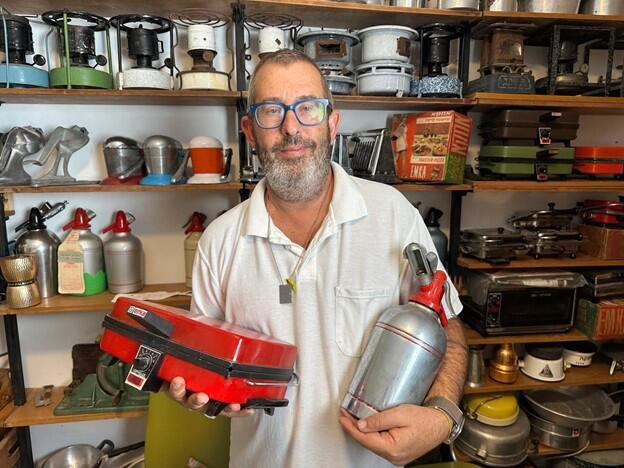
Oded Zwickel, an avid Israeli collector, has dedicated himself to preserving thousands of artifacts representing the history of the Israeli kitchen. His collection, housed in a dedicated shed he calls the “Tzrif” (shack) in his garden, transports visitors back in time, often evoking the 1950s.
Zwickel’s passion is focused on kitchenware and cooking-related objects, nearly 3,000 in total, with almost all strictly “Made in Israel.” Only four items in the collection are foreign-made, included because they were once commonly used in Israeli households. Zwickel’s central aim is to preserve memory and identity. He notes that his collection generally stops in the 1980s, when most kitchen items in Israel began to be manufactured abroad.
II. The collector’s philosophy: Memory, material and durability
Zwickel traces his passion to childhood, influenced by his father, whom he describes as a “keeper” who held onto objects rather than discarding them. Roughly 20 years ago, Zwickel decided to focus on culinary items produced in Israel.
For him, the physical object and the memory it represents are inseparable. Holding an artifact allows him to imagine its original context: the kitchen, the curtains, the table and the family life around it. Zwickel believes that old objects often “tell the truth better than history books.”
He also emphasizes their durability. His 70-year-old Amcor refrigerator still works with its original compressor, once a familiar household hum. He notes that many modern appliances are designed to break quickly to drive consumption, while older Israeli products were built to last. One example is the Amcor Super Mixer, advertised as “Does everything easily,” which served as blender, juicer and food processor in one — and still functions today, unlike many contemporary models.
III. Local manufacturing and the Zionist ideal
A core theme of the collection is the story of local production. Zwickel points out that “everything related to the kitchen was produced in Israel at some point,” reflecting the early Zionist ideal of buying Israeli-made products to build the land.
Bar Gindy
From the 1930s onward, Israel’s founders emphasized self-reliance and domestic industry. At its peak, the country had eight aluminum factories producing kitchen items. Today, kitchenware is no longer produced domestically, and companies like Soltam, once associated with cookware, now manufacture weapons.
IV. Iconic inventions and nostalgic items
The collection showcases examples of Israeli innovation and resourcefulness, particularly during the austerity period known as Tzena.
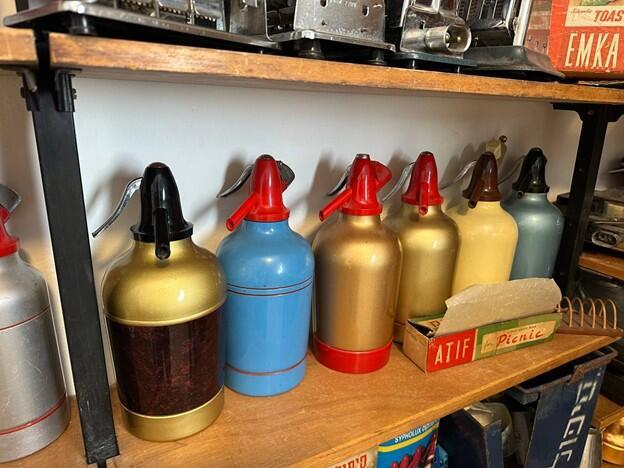
Sipulox and soda culture: Unlike the traditional Sifon, Sipulox allowed people to make soda at home using a unique CO₂ cartridge design patented in Israel. The company operated until 1980.
Ben Gurion rice (Ptitim): Created at the request of Prime Minister David Ben Gurion amid global rice shortages, Ptitim became a wheat-based substitute that later spread internationally.
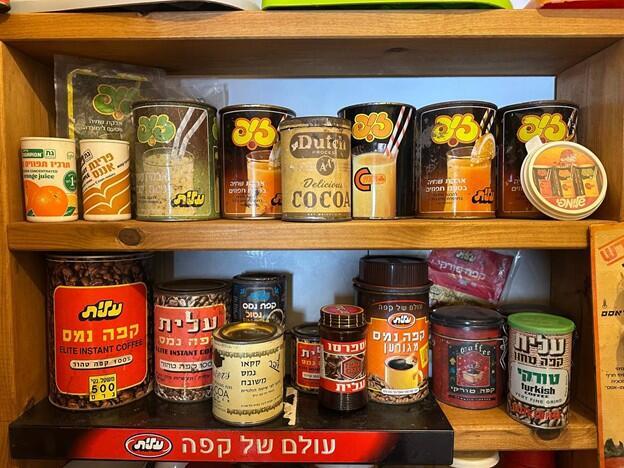
Resourceful repurposing: Israelis commonly reused instant coffee tins as pitchers by removing the labels and modifying the lids — a practice born of necessity, not environmentalism.
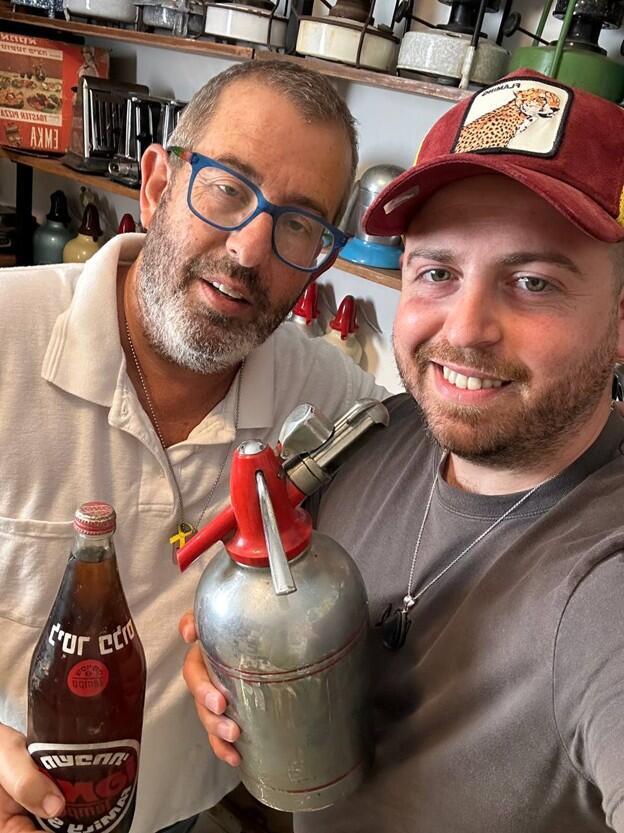
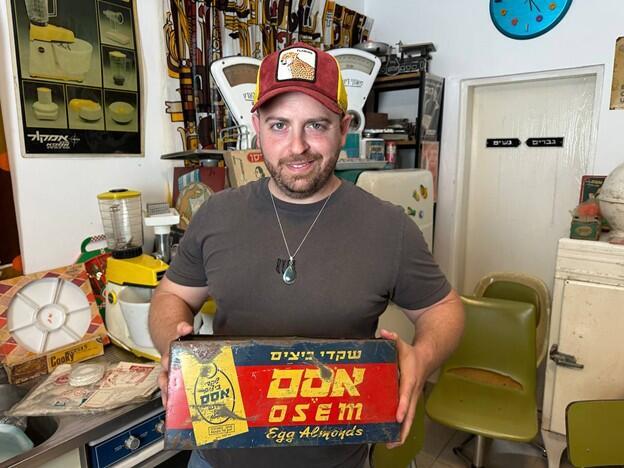
Oded Zwickel and Bar Gindy
The “weirdest” items: Zwickel identifies three quirky artifacts: the Nimatkhon (metal trivet for hot pots), the Discople (a plate for distributing heat on stovetops) and the Mahpechit (an inverted plastic jar for dispensing olives or pickles while retaining brine).
V. Nostalgia vs. identity: The case for preservation
Zwickel argues that Israel, as a young state, risks forgetting its past — particularly everyday cultural history beyond wars and tragedies. He believes there should be museums dedicated to vanished trades and products, and criticizes major food companies like Elite, Osem and Tnuva for not establishing permanent, functioning museums that showcase the history of Israeli culinary culture, noting that they currently only put on temporary, commercial exhibitions.
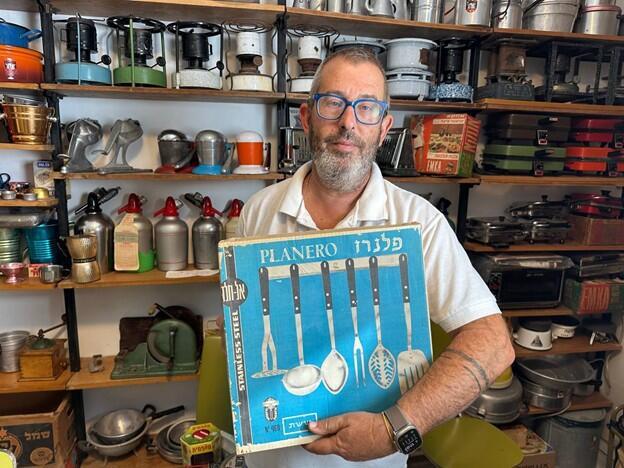
Zwickel’s work plays a vital role in documenting Israeli cultural history, validating the importance of nostalgia and Israeli-ana. Zwickel himself stresses that while the food of the past was simply “different,” not necessarily better, its authenticity and simplicity stand in stark contrast to today’s complexity.
- For more stories from Oded and other collectors, check out the People and Collectors podcast. The full interview is available with subtitles in English and 50 other languages.