

What do they do about the overdraft, how much are they paying for their home, and what dream did they fulfill in the shadow of war? People from across Israel speak candidly about their lives before and during the war. This time: the Gal family from Kfar Yehezkel.
Photographed: Yaron, 47; Ronit, 47; Peleg, 18; Matan, 16. Not pictured: Navot, 20, a soldier.
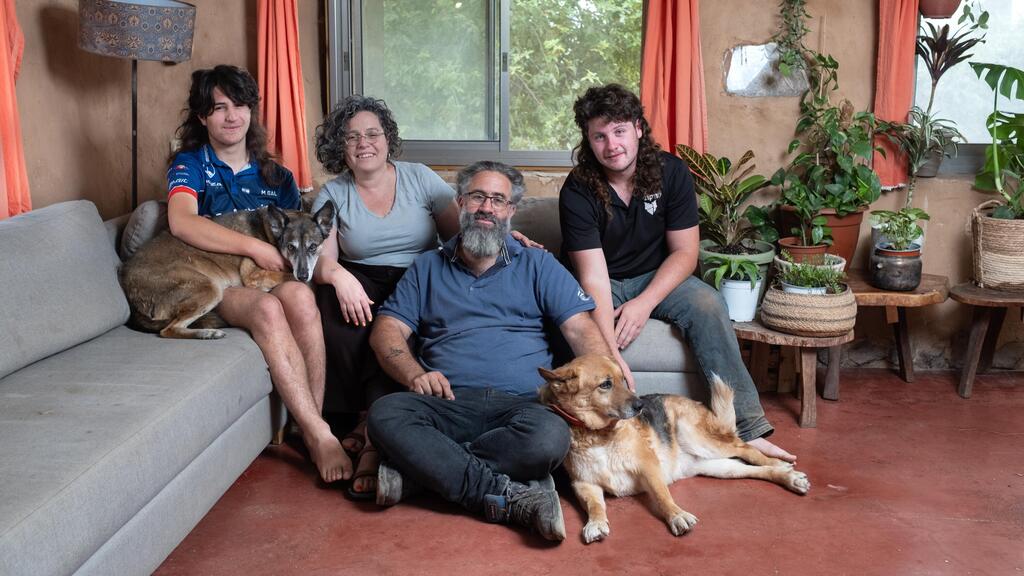
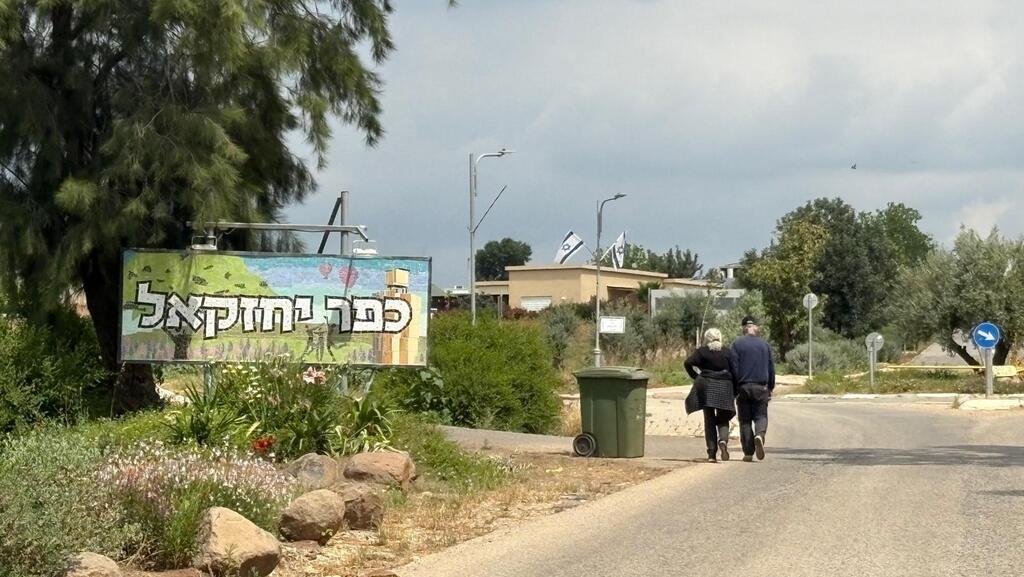
Kfar Yehezkel?
Ronit: “Nahalal was the first moshav established in Israel, 20 kilometers from here. The second was Kfar Yehezkel, founded just three months later, but nobody knows that.”
Yaron: “My family was among the founders. They arrived here in March 1922. Today we live on the historic family farm together with my two sisters and my mother. Everyone has their own unit, but it’s crowded, and recently we bought another farm in the moshav where we’re building our own house.”
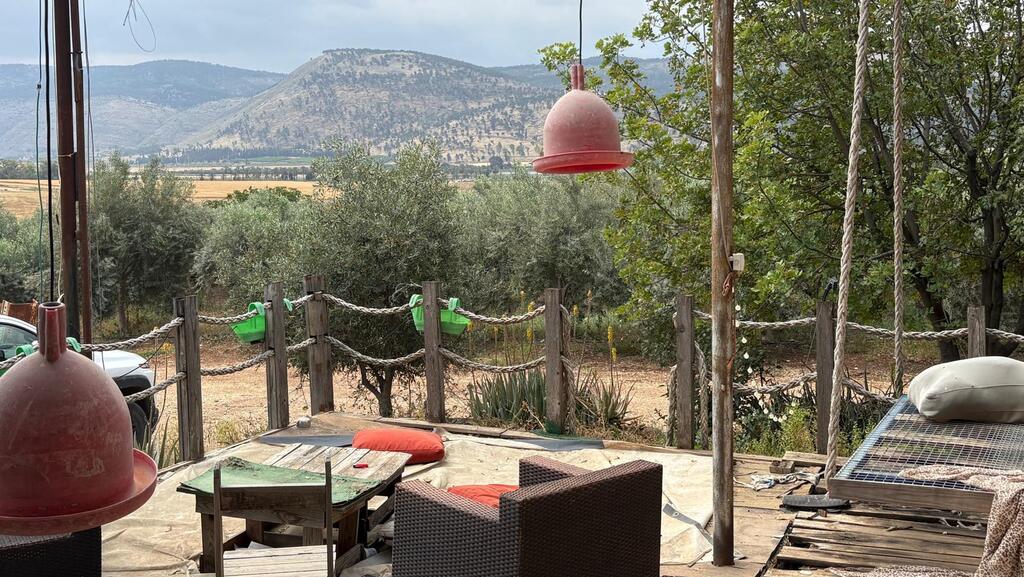
(Photo: Asi Haim)
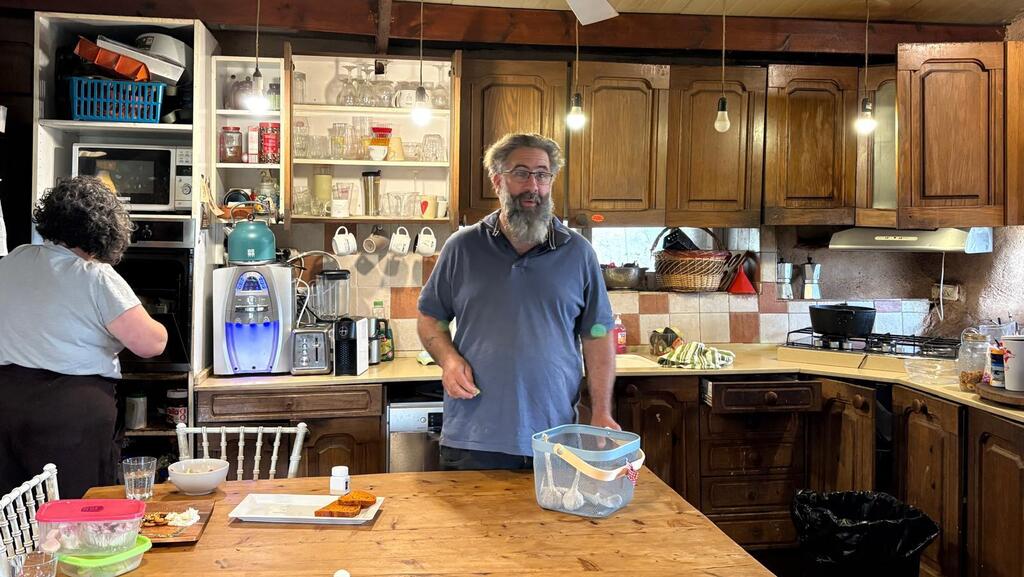
(Photo: Asi Haim)
Crowded?
Yaron: “For a family farm to survive, it has to pass to just one person. If it’s divided among several siblings, by the third generation there’s no room left. And if my children have to wait another 30 or 40 years for one of the siblings to die so there’ll be room for another house, they won’t wait around or build their lives here. That’s what causes family farms to slowly die out, and eventually they have to be sold and the money divided. That’s why we decided to leave the mud house we built ourselves and buy a new property.”
Living like a commune?
Ronit: “It’s a tribal kind of society. Several generations living together has a lot of advantages.”
Peleg: “It’s fun because all the cousins grow up together.”
Yaron: “But there are challenges too. It’s not easy. You have to know how to set boundaries because the doors are always open and people come in, or my grandmother, when she was still alive, would ask, ‘Why did you come home at 2 a.m.?’ Why do you care, Grandma?”
(Photo: Asi Haim)
Mud?
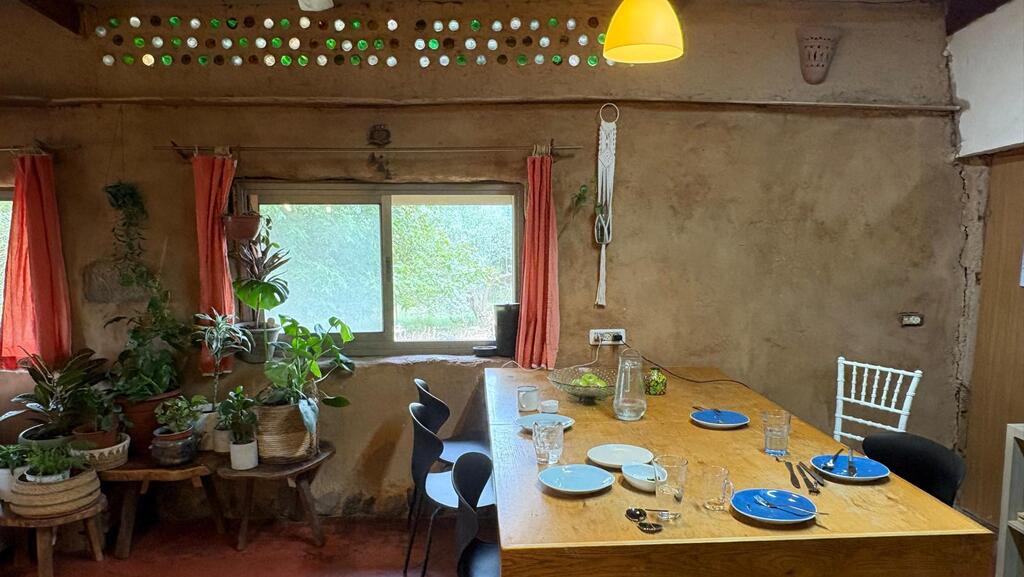
Ronit: “We’ve lived in this house for 16 years. Yaron built it himself out of straw bales and mud, with seven layers of earthen plaster on top. The idea was that it would be temporary, but temporary has lasted quite a few years.”
Yaron: “Even though this type of construction has existed for thousands of years, it’s not legal because it’s a natural material. So what people do is build a steel or wooden frame. Financially, it saved us money and we didn’t need a mortgage. It cost about 200,000 shekels [$56,000] to build. It was really a community effort, everyone came to help.”
(Photo: Asi Haim)
Ronit: “Peleg and Navot have a trailer outside where they sleep, but Peleg eats, drinks and hangs out here. In the new house we’re building, everyone will finally be together.”
What do you do?
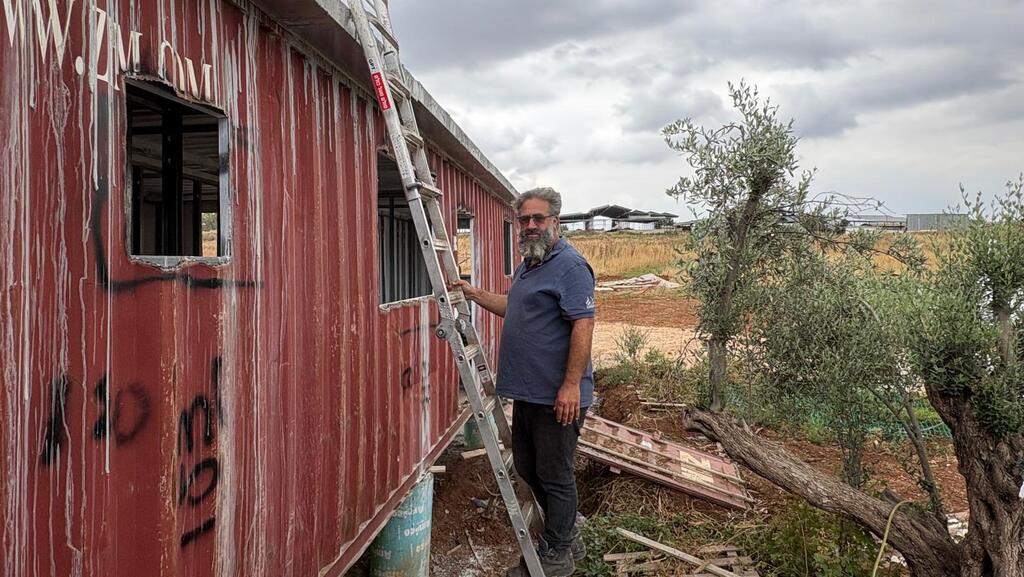
Ronit: “I manage communities, in real life, not on Facebook. Basically, I’m the CEO of Ram-On moshav. In my previous job I was secretary of our moshav during a period when plots here were subdivided and the community expanded. I implemented that process as part of my role, and when I finished the job, we also received approval to buy a farm. We bought a four-dunam plot along with another 43 dunams for agriculture for 2.4 million shekels [$670,000]. We’re building the new house out of shipping containers.”
Shipping containers?
Peleg: “They’re not conventional parents, so I never thought they’d hire a contractor and build a normal house.”
Matan: “After they bought the farm, Dad was sitting on the couch one day and suddenly said, ‘We’re building a house out of containers.’”
Yaron: “The idea is economic because I’m doing the work myself with Peleg and Matan. In the end, things are simple, and my motto is that if you’ve gotten too complicated, you’re probably doing something wrong.”
Ronit: “My luck in life is me. ‘You want containers? No problem.’ If he’d told me we were building with concrete blocks, I would’ve been suspicious.”
(Photo: Asi Haim)
Cost?
Yaron: “It’s fast, easy and cheap construction. A 140-square-meter house for less than half a million shekels [$140,000], mainly because we’re building it ourselves. For example, we didn’t buy new aluminum windows. We bought secondhand windows from a demolished house and made the openings according to their dimensions. That saved a significant amount.”
Ronit: “Our approach to life is mindful consumption, and most of our furniture is secondhand. The house is being built inside an ancient olive grove, and it was important to us to harm as few trees as possible and to keep a simple, rural look that blends into the landscape rather than standing out as a giant concrete monster.”
Yaron: “Ronit also started making videos and posting them online, but our problem is that it happened too quickly and we still don’t have infrastructure like sewage and electricity.”
Videos?
Ronit: “I never intended to become a star. I made one video and suddenly people got excited and started asking questions about the house and when the next episode was coming. So I said, ‘OK, I guess we have to continue.’ Maybe it’ll inspire other people to think differently.”
Yaron: “I’m a mechanical engineering technician and a civil engineering technician, and most of my life I managed construction projects. Oct. 7 hit me hard. I was near the Nova music festival during a Midburn production weekend. A friend and I went to rescue people from Nova. We picked them up from the fields and took them to Moshav Patish. It was terrible. After that I spent half a year in reserve duty with the paratroopers, and I felt like I couldn’t go back to being an employee. I was diagnosed with post-traumatic stress disorder.”
Ronit: “It’s restlessness and triggers that come from nowhere, irritability and outbursts that weren’t there before. The sleep isn’t good.”
Yaron: “I realized there wasn’t much choice and we had to pay for the house, so I became self-employed doing contracting work. But the pressure of constantly looking for work wasn’t good for me. Today I’m a certified inspector for lifting equipment, testing forklifts and cranes, lecturing at a college for construction site managers, and building the house.”
Financial situation?
Yaron: “It’s a less stable period, but we’re surviving.”
Ronit: “We’re doing OK, but it’s not easy for anyone in Israel right now. In any case, we have no right to complain. Look where we live.”