

“Until a few months ago, we used to make wigs for oncology patients using real hair that closely resembled their natural hair to the extent that no one could tell it was their own that fell out,” says Sima Azulay-Dayan, who runs Herzlia Wigs alongside her mother, Herzlia Dayan, after whom the salon is named.
“But then we realized they needed something even more personal, a wig made from their own hair. That way, they feel it’s truly a part of them, and that gives them tremendous confidence."
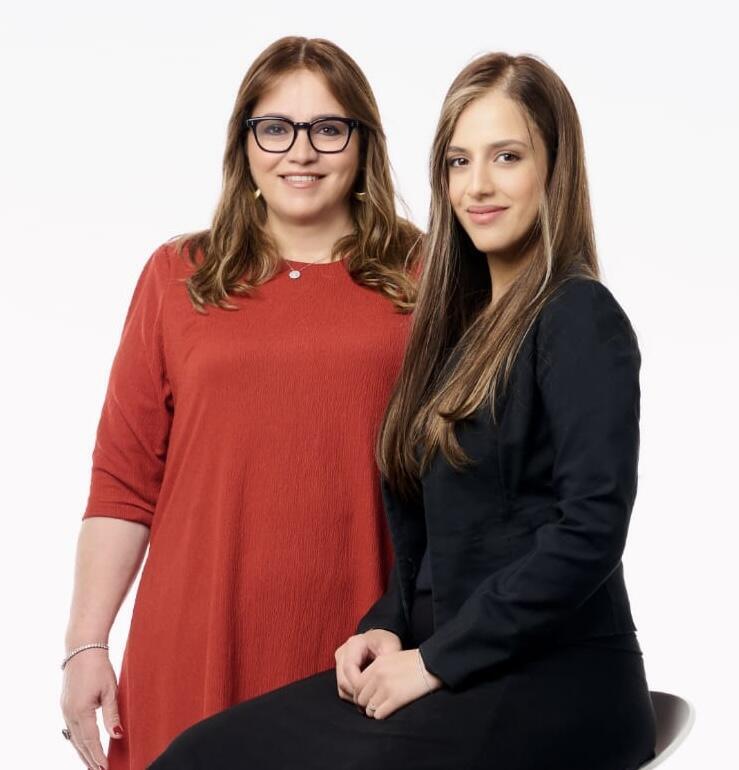
For many women, hair is far more than aesthetics; it’s intertwined with femininity and identity. Losing it can feel like losing a piece of yourself. A wig made from a woman’s own hair offers comfort during an intensely vulnerable period. With the right styling and a perfect fit, the result looks so natural that those around her may not even notice she’s wearing a wig, which helps preserve the woman's sense of self-worth and identity.
Located in the Chabad village of Kfar Chabad, Herzlia Wigs has been around for 24 years. “We started in a small room in the house, and now we’re an empire,” Azulay-Dayan says. The salon serves both religious and secular women - some with thinning or damaged hair, others (including celebrities) who want to change their look without altering their natural hair, and women undergoing cancer treatment.
Their handmade wigs use high-quality “virgin” hair which was never dyed, straightened or curled, originating from Russia and Ukraine. “The hair is woven into a transparent, flexible mesh that mimics a natural scalp,” says Azulay-Dayan. In addition to custom wigs made from donated hair, the salon offers a special service for cancer patients: creating a wig from their own hair.
How does it work?
“Women come to us after being diagnosed with cancer, but before starting chemotherapy,” Azulay-Dayan explains. “That way, we can cut their hair while it’s still healthy and free from any chemicals that might affect it during treatment. We shave their head down to zero, and within a few days, we create a high-quality wig using their hair."
"The wigs can be dyed or styled however the client prefers. The base is made from a much softer fabric than standard wigs, designed to sit gently and comfortably on a bare scalp. We use completely different materials for cancer patients to ensure maximum comfort,” Azulay-Dayan says.
How much does it cost?
Prices start at 10,000 shekels (about $2,700). “Each wig is made through a meticulous, personalized process with the highest quality materials, including a mesh imported from Switzerland,” she adds.
What about the emotional toll involved in cutting off the hair?
“We try to make the process as light and non-traumatic as possible,” Azulay-Dayan says. “We even work with a psychologist who guides us on how to approach each woman with sensitivity. It’s not easy, but even before they have time to feel the emotional blow of losing their hair, they already have a wig made from it. It offers some relief. The wig becomes a part of who they are."
"My original"
The idea of making a wig from a woman’s own hair is also central to Jerusalem’s Chaya Bronfman Wigs, a salon that has been operating for more than a decade. “We’re a business run by four sisters, each with her own department,” says Bronfman. “We attend global hair conferences, keep up with international trends, and bring the latest innovations to the wig world."
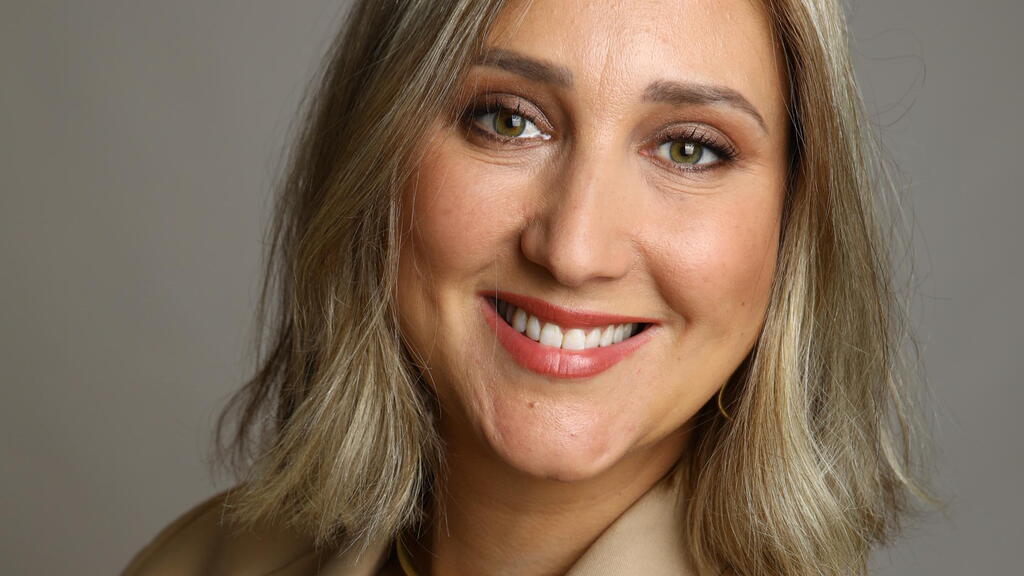
No one can tell it's a wig. Chaya Brongman
(Photo: Seli Ben Ari)
Their special service for cancer patients is called 'My Original'. “One day, a woman with long, beautiful hair came in and told us it was going to fall out. I thought, what a shame to lose it. So over time, we developed a method for turning the original hair into a wig."
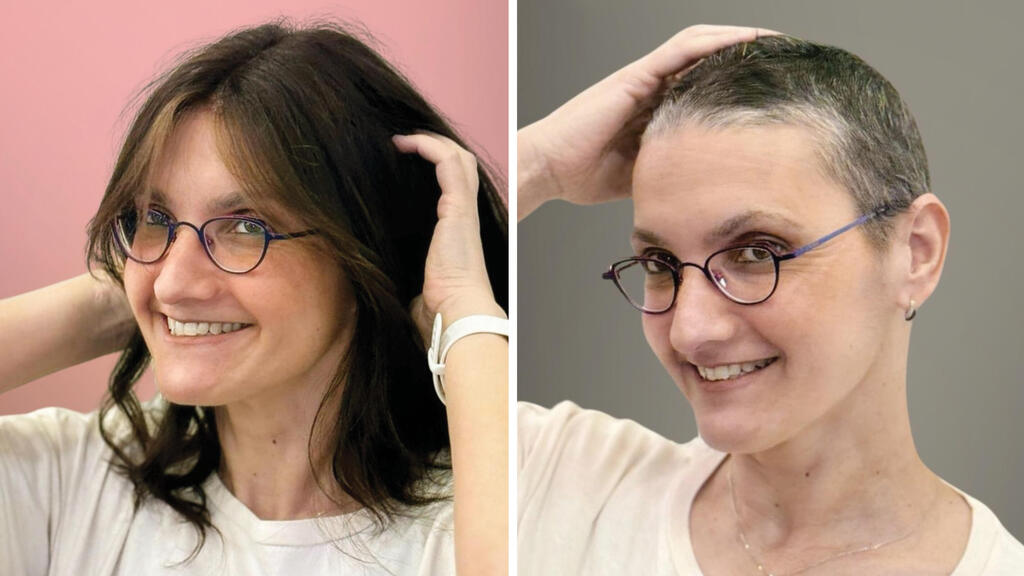
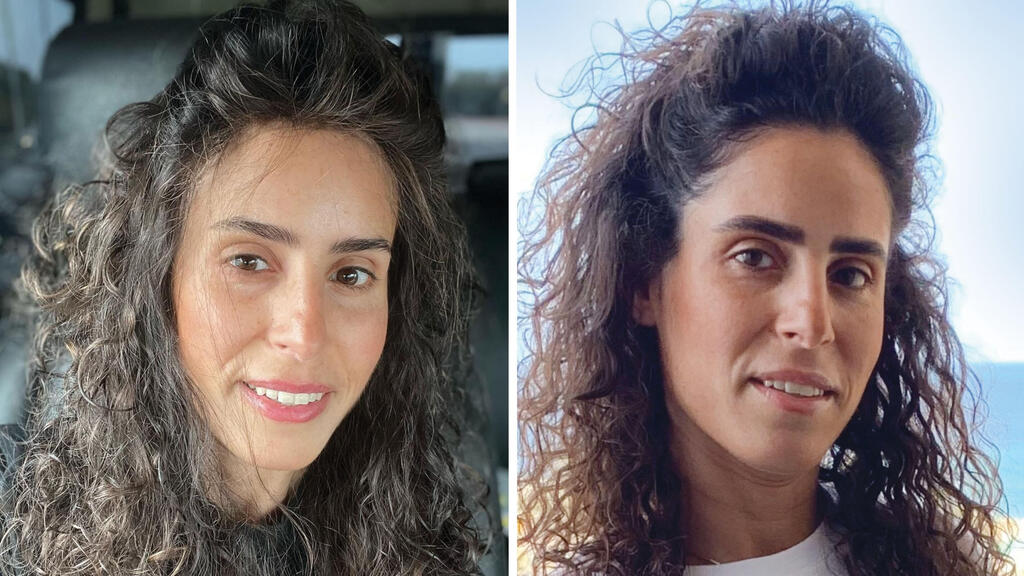
Michal Maymon, Bronfman's client, before (right) and after; wig made from own hair
(Photo: Private album)
How is it done, technically?
“We remove the hair using a special technique that preserves the position of every single hair so it can be reinserted into the wig exactly where it came from,” Bronfman explains. “Then we process it in a structured way, similar to an assembly line, which helps us work faster.
"The hair is arranged into ‘wefts’—rows of hair sewn by machine. Those wefts are then attached to the wig cap, and we finish everything by hand. The entire process takes a few hours, and in the end, the woman leaves with a wig made from her own hair."
How much does it cost?
Between 11,000 and 16,000 shekels (around $3,000 to $4,400).
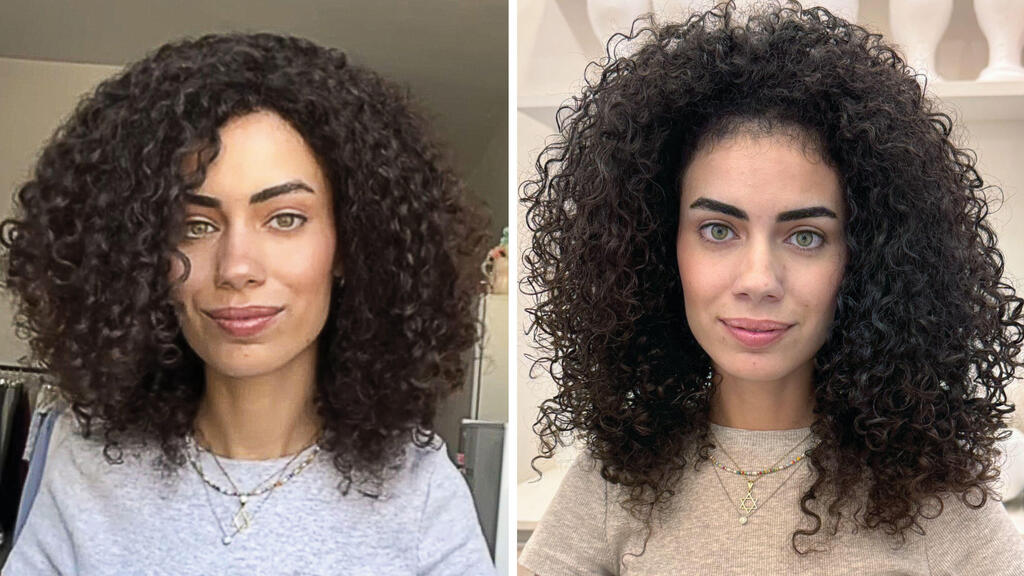
Nitzan Buskila, before (right) and after. Wig made by Bronfman
(Photo: Private Album)
How do the women feel?
“It’s emotional,” Bronfman says. “When they first come in, you can see the weight in their eyes. They’re scared of what’s coming. But when they get their wig, it’s an empowering moment. Cutting the hair is hard, but we handle it with sensitivity. They always tell us their fears were unfounded."
“I’m not exaggerating when I say that the first thing many of them ask their doctor is: ‘What will happen to my hair?’”
Rinat Cohen with a wig made out of own hair
(Photo: Private album)
Why is hair so meaningful to us?
“Hair is part of who we are; it’s part of our identity,” says Azulay-Dayan. “One time, a university lecturer came to us with a long braid. It was the feature she was most known for. For her, losing that hair meant losing a part of herself.
"When we made her a wig from her own braid and placed it on her head, she was overjoyed. She said it meant she could keep living her life - go to work without having to deal with stares from students. As long as she doesn’t say anything, no one knows it’s a wig or that she lost her hair."
“The wig gives them the ability to choose when to share and when to stay private. There’s a huge difference between waking up to clumps of hair on your pillow and making the empowered decision to cut your hair and turn it into a wig beforehand. In that moment, they’re choosing the situation, not being dragged into it, and that’s an incredibly empowering choice.”
“I’m still me”
“Cancer brings physical changes and a sense of losing control. Knowing they can keep wearing their own hair, even in wig form, gives women confidence and helps them feel like, ‘I’m still me,’ even in the hardest moments,” says Batel Elhadad, who has been running her wig studio in Givat Shmuel for more than a decade.
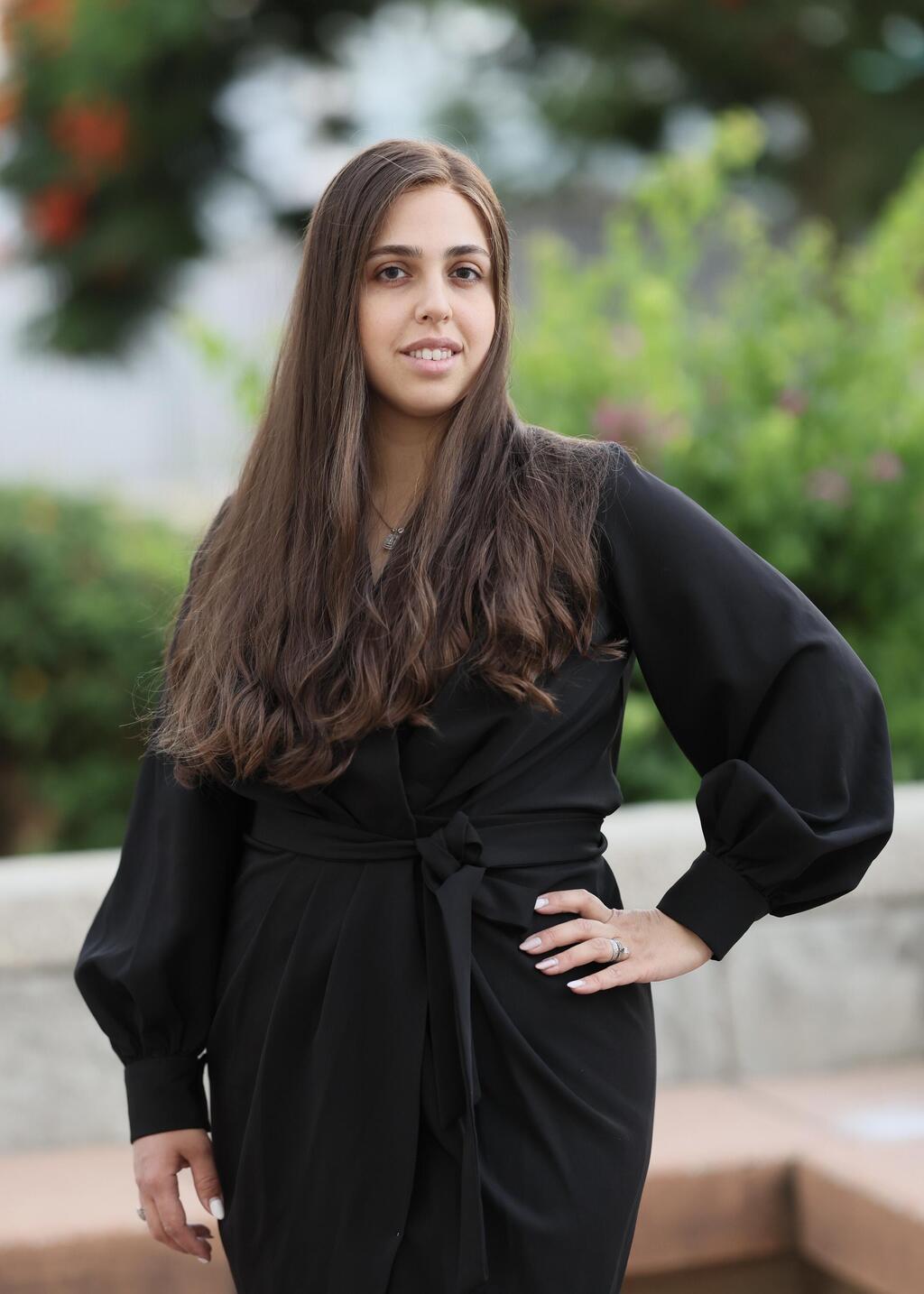
Batel Elhadad
(Photo: Netanel Elhadad)
Elhadad's journey began with her own personal experience. “When I got married and wore a wig for the first time, it felt uncomfortable. It didn’t look or feel natural. I’ve always had a love for hair, and I knew I wanted to learn how to make wigs that look and feel like the real thing, ones that align with a woman’s identity.
"I trained and refined my craft because I wanted to offer every woman a truly personal solution. Whether she wants to recreate her original look, or refresh and upgrade it."
What does the process involve?
“The first step is a hair assessment. I examine its condition, length, volume and texture. If needed, I’ll suggest adding extra hair to achieve the desired result. Then I cut the hair myself, making sure it’s collected in a way that best suits wig creation. From there, I custom-design the wig based on her lifestyle and needs. I hand-weave each piece for the most natural appearance possible."
Prices at Elhadad’s studio start at 3,000 shekels (around $800), depending on the type of wig.
What kind of feedback do you get?
“It’s always moving. Women come to me worried the wig won’t feel or look natural. But at the end of the process, they stand in front of the mirror, smiling, and tell me they finally feel like themselves again. That’s the real success. That’s what makes my work so fulfilling."
Free wigs for cancer patients and survivors
The Israel Cancer Association offers free wig loans to women undergoing cancer treatment or in recovery. The service is available at the organization’s national headquarters in Givatayim, where clients can meet with a wig specialist for a personal fitting. Wigs can also be brought in for cleaning and styling.
The initiative operates at additional locations across the country and accepts wig donations to expand its collection. The Israel Cancer Association is a nonprofit, offering all services free of charge thanks to public donations.
To schedule an appointment or for more information: Tel. 03-5721678, Email: [email protected], or toll-free info line: 1-800-599-995.
Have you heard of the Ice Cap?
An “ice cap” is a cold helmet used to prevent or reduce hair loss during chemotherapy. The device cools the scalp with a gel-filled cap, narrowing blood vessels and limiting the amount of chemo medication that reaches hair follicles, thus reducing hair loss.
The treatment isn’t suitable for all types of cancer or chemotherapy, and its effectiveness can vary. However, studies and patient reports suggest that it helps about 60% of users reduce hair loss.
While considered safe, the device is currently very expensive, costing around 200,000 shekels (over $50,000).
Thanks to donations, the Israel Cancer Association has helped fund some of these caps in oncology departments throughout the country.