

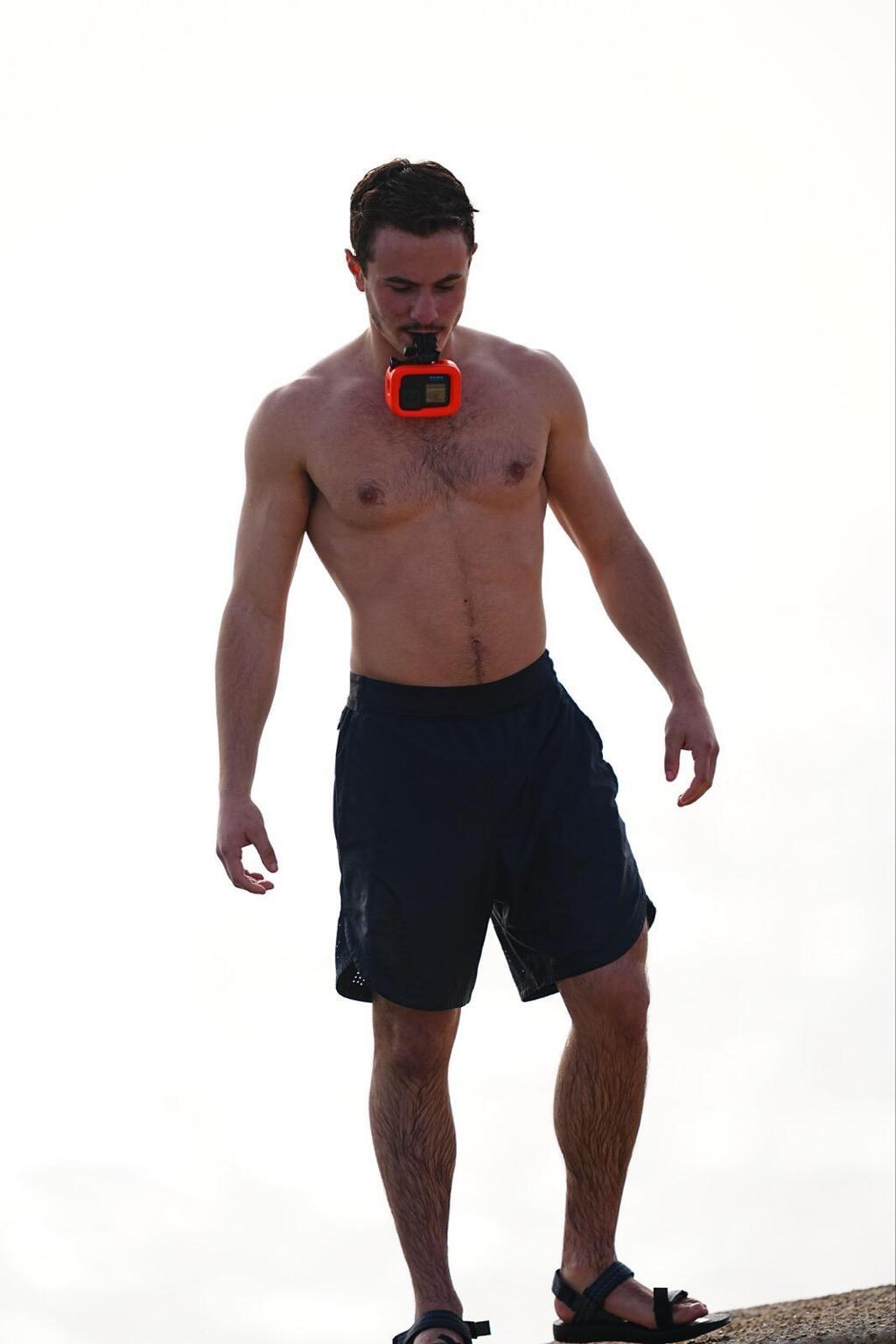
Ilay Zloof, 20, is a cliff jumper and an adrenaline junkie who has turned terrifying acrobatic jumps from towering rocks into wild pools and hidden springs into a way of life. “This is not something you just show up and do,” he tells ynet. “Every jump is a process. You stand there, look, check, go into the water first, come back out, look again, and then decide. At that point, there are no more thoughts. You just jump.”
Warning note: Cliff jumping is an extremely dangerous sport, and most of it takes place at public sites where jumping is prohibited. Anyone who violates the law also risks a steep fine.
Israel’s fearless cliff jumper
(Video: Courtesy of Ilay Zloof)


Naturally, the conversation turns to one of Israel’s best-known jumps, a 9.5-meter plunge into the sea from the high wall of Acre. “For years, I’d watch videos of guys jumping from the wall in Acre,” he says. “It looked incredible. I told myself I had to get there. It’s a classic jump, one of the most beautiful in Israel.”
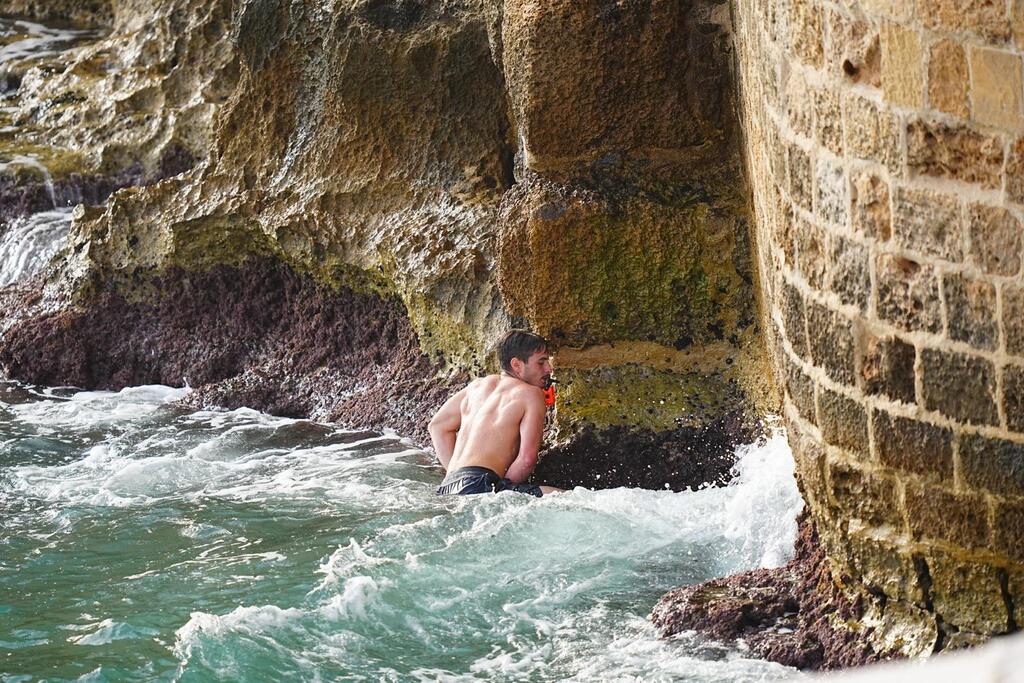
“I never jump without checking first,” he stresses. “Before every jump, I get into the water and check very carefully: where it’s deep, where there are rocks, where you can jump and where you can’t. “I follow a set routine every time. This is not something where you rely on luck. I see videos, people show me where it is, but in the end, I check it myself. There is no chance I’m jumping without checking it myself.”
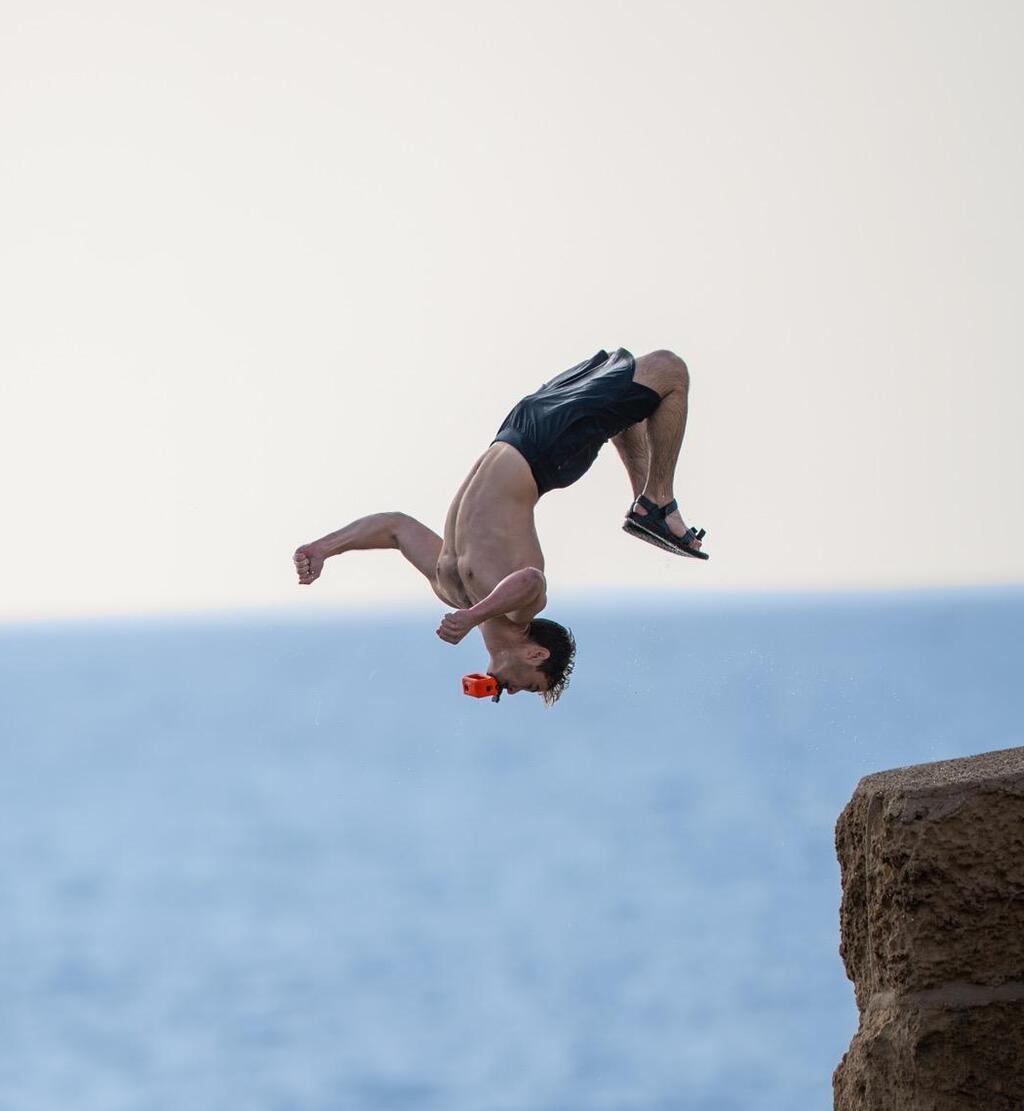
On the wall itself, he meets plenty of other jumpers. “There are a lot of locals who go there to jump,” he says with a smile. “Sometimes they get into the frame when I’m filming, and it’s a little annoying, but that’s part of the place. It’s an active spot, and you won’t always have it to yourself.”
“Being alone is something completely different. The view, the sea and the quiet are a big part of the experience.” That is exactly when the adrenaline starts to kick in. “You get to the wall at sunset, feel the wind, look at the water. If I’m with friends, we sit for a bit, get into the mood. Then comes that moment when you’re standing on the edge, then, in a split second, you decide, and you jump.”
It turns out that even with experience, the fear does not disappear. “For me, at least, every jump is adrenaline,” he says, laughing. “Even if I’m not doing a flip, just a regular jump, it still feels insane. It’s a kind of medicine. It’s fun, it’s healing. That feeling after you hit the water is just crazy.”
He describes the moment after landing with excitement. “You enter the water, and your whole body feels it. It fills you, and that’s why you keep coming back to it again and again.”
But alongside the thrill, Zloof is also acutely aware of the danger. “You think about the danger all the time,” he says. “You ask yourself: Is it deep enough? Is it safe? Am I good enough for this trick? If you’re not calculated, it doesn’t end well.”
He says experience does not erase fear, it sharpens it. “When you do new tricks, or jump somewhere you haven’t been before, it’s no less frightening than it is for someone jumping for the first time. Maybe even more.”
And he knows. “My biggest fail (jumping accident) was in Acre,” he says with a sigh. “I tried a triple backflip, three flips in a row, and it was only the second time I had tried it. I didn’t enter the water well. Instead of going in straight, I landed on my chest and face, and it hurt a lot." The fact that it was a “relatively low” 9.5-meter jump probably saved him. “At greater heights, that could have ended very differently. Here, I knew that even if I got it wrong, the risk was lower.”
Despite all his confidence, Zloof never jumps alone. “There is always someone with you. In Acre too, my friend was ready to jump in if needed. He asked from above if I needed help. At first I said yes, then I realized I could manage. After 10 minutes, I was already fine, and I went up for another jump.”
For him, that is precisely the point. “It’s that feeling that you’re doing something most people can’t do. It gives you a sense of capability. It’s not just the jump, it’s everything around it.”
‘I don’t recommend inexperienced people do this’
At home, they have gotten used to it. More or less. “My mother comes to film me,” he says, laughing. “My father says, 'Don’t show me'.”
As for signs prohibiting jumping, he says, “There are signs like that almost everywhere in Israel. It’s like signs ‘no swimming without a lifeguard.’ In the end, it’s a matter of responsibility. I don’t recommend inexperienced people do this.”
After extreme jumps across Israel, including at the Meshushim Pool waterfall, came his biggest challenge yet: Ein Akev. “I stood there for a long time and realized it was the highest jump I had ever done,” he says with a sigh. “It’s important to say, jumping there is forbidden. “Rangers patrol the area, it’s a nature reserve, and it’s extremely dangerous. There have been accidents there, including cases in which people nearly drowned. Someone was even killed there two weeks ago. This is not an 'innocent' place.”
“I came with a lot of friends, people who were ready to help with anything that might happen,” he says. “I knew it was going to be a high jump, but I didn’t know exactly how high.”
As always, he starts from below. “First I warm up, jump from a lower height, around 7 meters, get into the rhythm, and then decide whether to go up.”
Ilay Zloof in action
(Photo: Noam Uzan)
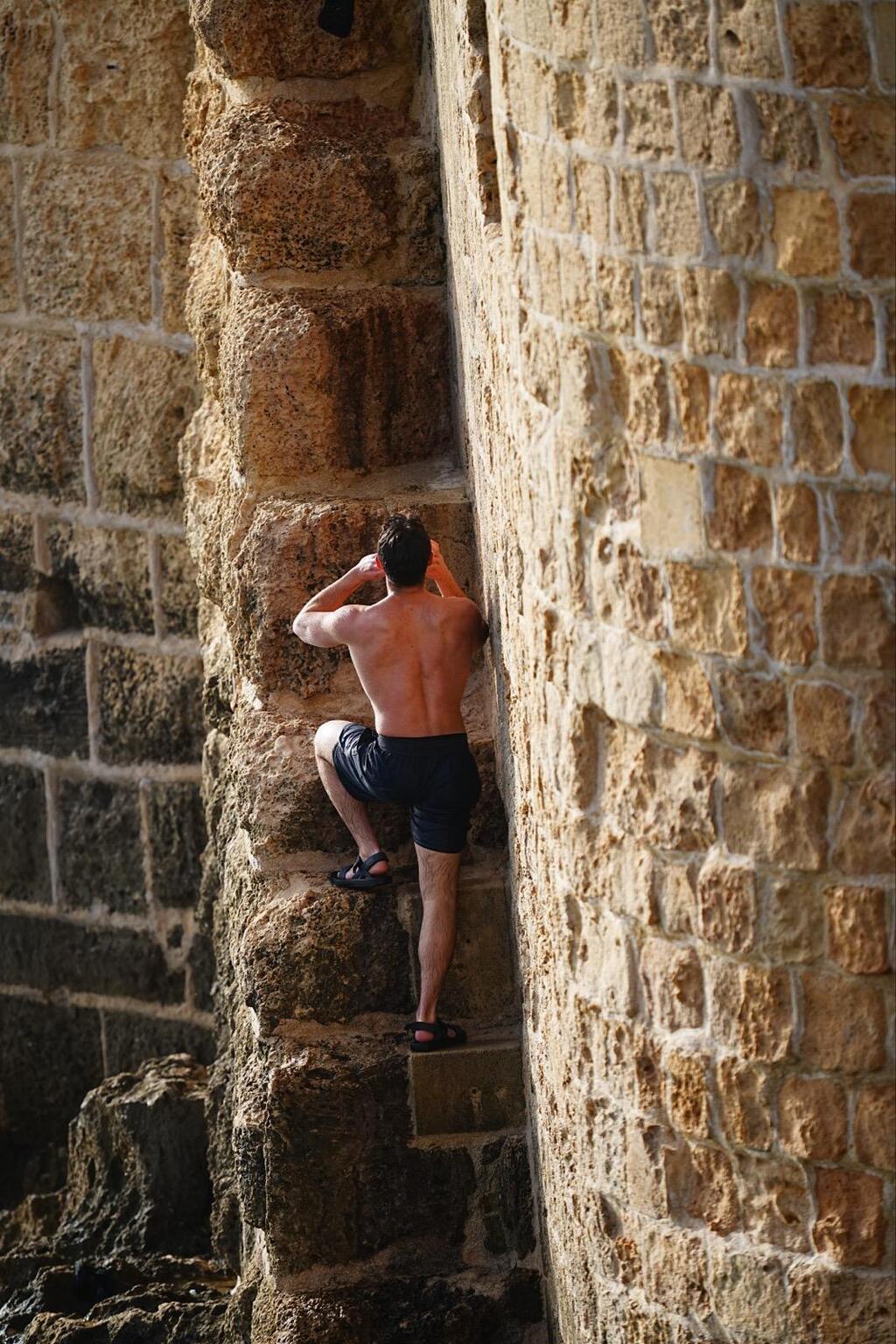
Climbing to the jump point in Acre
(Photo: Noam Uzan)
(Photo: Noam Uzan)
Then comes the moment on the cliff. “You stand there, and the whole canyon opens up in front of you. It’s an insane sight. And you know everyone is looking at you, hikers, families, asking themselves who this lunatic is.”
That is where the measuring comes in. “I have a 30-meter rope. I tie it to a rock, lower it down, and someone below tells me when it reaches the water. That way I know exactly how many meters I’m going to jump.”
Then he realized just how high it was. “All of a sudden, I understood it was much higher than I had thought. I stood there for a long time, just looking at it and taking it all in.”
That moment, he says, is the most important. “I had planned to do a flip, but once you see the height and understand the risks, you realize it’s not the moment. I decided to do a straight jump instead. That’s risk management: knowing when to back off.”
Then he jumps. “You enter the water like a pencil,” he says, referring to a feet-first jump. “It’s a few seconds, but it feels much longer, and then suddenly you’re already in the water.”
Back at the top, the feeling remains. “There were a lot of people there, but no one jumped except me,” he says. “When I came out of the water, all my friends jumped on me. It’s an incredible feeling, every single time. You come up shouting and smiling, and all that energy just bursts out of you.”
He sums it up with a rule that cannot be compromised. “It is always better to have someone in the water with you. “If you’re jumping from a height, you need someone there who can help if something goes wrong. This is a dangerous sport.”
For anyone thinking about trying it, he has this advice: “Don’t push it at first. Start low, build up gradually and, most important, never get overconfident about safety.”
Warning: Cliff jumping is an extremely dangerous sport. This article is not an invitation or encouragement to jump from cliffs. The dangerous jump sites mentioned have been closed to jumping by the authorities.