


“As a disabled woman, one of the things I’ve experienced, and something I hear from many other disabled women, is a sense of disconnection from the body,” says Ariella Goichman Garber, a fashion history researcher and lecturer and an activist for disability visibility. “The body can be a source of discomfort and pain, something we sometimes have no control over.”
“We cannot control suddenly losing sensation in our hands or legs. We have no control over what will hurt that day,” she said. “Being able to play with lingerie and shape the body through clothing like a corset gives you a great deal of control over the body.”
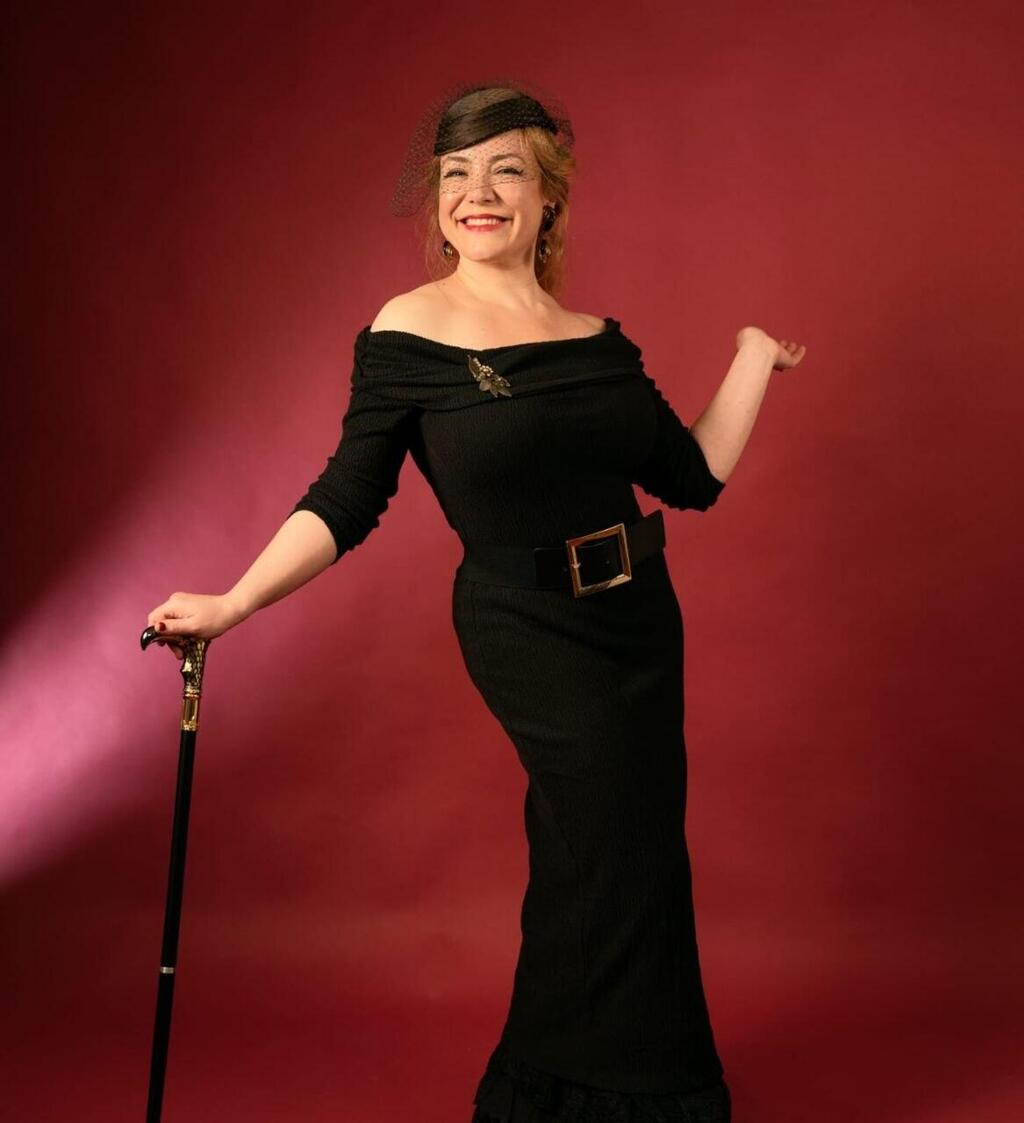
Goichman Garber was born with spina bifida, a congenital condition in which the spinal column does not fully close during early fetal development (during the first month of pregnancy). The resulting opening in the vertebrae can lead to functional or motor impairment.
In her case, it resulted in lifelong nerve damage affecting her lower body. “My right leg still doesn’t function,” she said. “I walk with crutches, I have no sensation in my feet, and that led to years of surgeries, orthopedic rehabilitation and lots of ‘fun,’ in very large quotation marks, when it came to my relationship with my body, self-image and ultimately sexuality.”
You have lived this way for as long as you can remember.
“One of the things I talk and write about is that I don’t really have that feeling of loss,” she said. “I completely understand people who experienced an illness or an accident and, in addition to the new body they now have to adapt to, also experience loss and grief for the life they had before. But I don’t know anything else. I was born this way.”
At what age did you realize you were different from other children?
“When you have to go to third grade wearing a ring fixator on your legs. It was the mid-1990s, and there wasn’t much awareness in Israel. Kids at school asked me if I was dressed as a robot or an alien. Want to raise children with an especially dark, cynical sense of humor? Send them to third grade in Israel wearing a ring fixator,” she says with amusement. “That was when I realized my body could also become a source of cynicism and sarcasm.”
How did that affect you as a teenager?
“Like so many things that come into focus during adolescence, it started when relationships with the opposite sex began and I started comparing myself with other girls whose bodies were more balanced, healthier, what people might call, in quotation marks, ‘more normative.’”
So what did you do to avoid feeling different?
“I began searching for people who looked like me, but there were none. I grew up in Ra’anana, went to a regular school and barely encountered children or teenagers who looked like me outside periods of hospitalization and rehabilitation. So I turned to popular culture. As far as I could tell, the only disabled characters in the media in the ’90s were the Phantom of the Opera or Quasimodo from The Hunchback of Notre Dame.”
“There was no other representation of disabled people, and even today there is very little. “It is much harder to show physical disability without turning it into an issue. If you show a physically disabled person on screen, people tend to make it a special episode or feel they need an entire storyline about it. There are very few physically disabled people who simply exist, without it becoming an issue, without some special flashback explaining why this disabled person exists in our landscape.”
What kind of attention did you get from boys as a teenager?
“There was always a combination of curiosity and apprehension. I could see my friends or other girls getting a different, more ordinary kind of attention, with less hesitation.
“If a boy tried to approach me or talk to me, there could be attraction and interest, but I always had crutches, and there were periods when I used a wheelchair. You could see the wheels turning in their heads: ‘How do I approach this? How do I start a conversation? What do I do?’”
Because people don’t want to offend you, so they become overly cautious.
“In my 20s, those awkward interactions took on a different form because guys thought that ‘Hey! I was in a hospital once too’ was a great pickup line. Or, you know, ‘My cousin uses crutches too.’ I completely understand the awkwardness and where it comes from, but it still left me thinking: Can’t you just say ‘Hi’? Are there really no other ways to break the ice with me?”
So what did you do? How did you cope with that feeling?
“I started looking for representation wherever I could find it. One of the sweetest things that happened in that context was when I first saw Disney’s Sleeping Beauty at age 12, and I spent the entire movie staring at her corset.
"Today I lecture about Disney princesses, but at the time I couldn’t have cared less about the film itself. I fell in love with the corset she was wearing. I saw this illustrated garment and immediately turned to history books, a 12-year-old digging through them trying to understand what a corset actually was.”
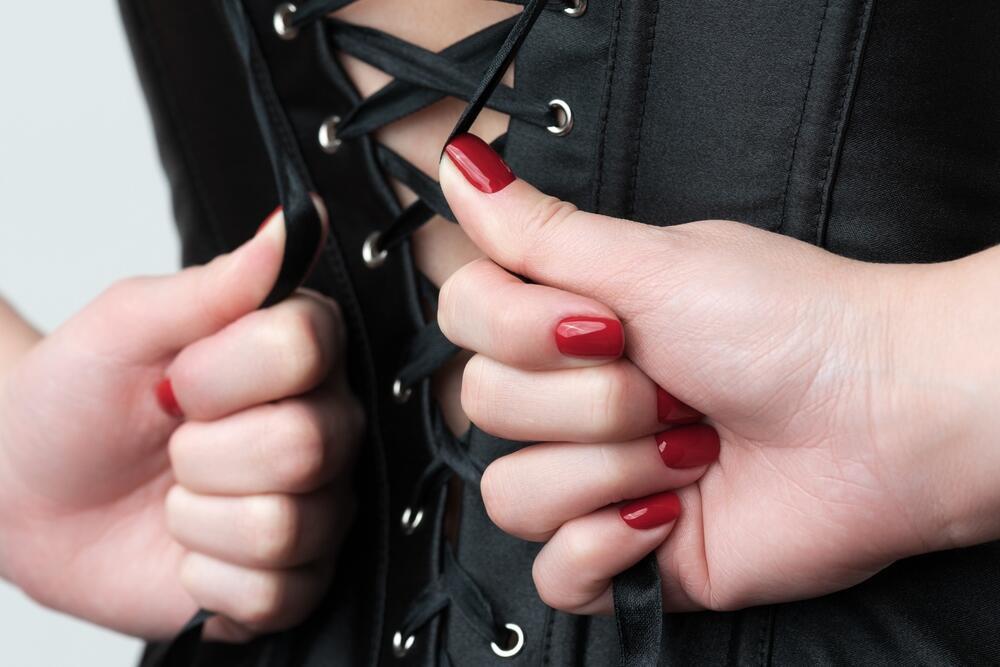
‘Want to show a woman constrained in a Hollywood film? Use a corset’
(Photo: Shutterstock)
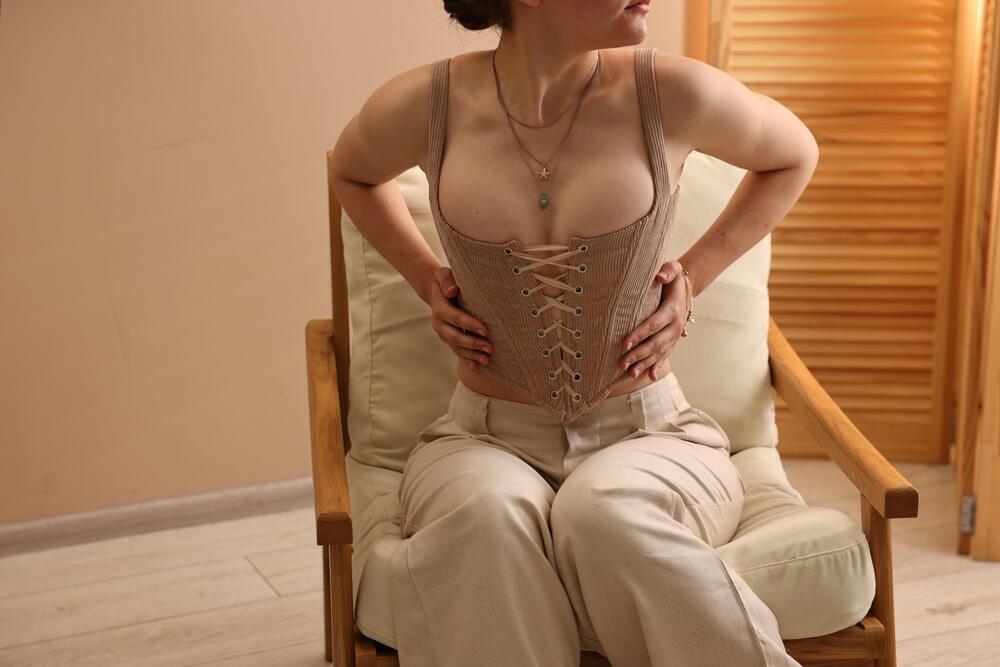
‘I discovered Hollywood had spent years shaming the corset’
(Photo: Shutterstock)
What did you learn?
“I discovered an item of clothing that, in historical images, helped women reshape their bodies. Women could decide through the lacing what to loosen, what to tighten, what to emphasize and what to conceal. Later, I discovered that Hollywood had spent years shaming the corset, transforming it into a shorthand for female oppression."
“If you want to make a period film, for example, and show that your female character is suffering under social conventions and has to marry someone she doesn’t love, the easiest visual device is to have her suffocating in a corset.”
I’m shocked.
“Hollywood essentially took extreme cases from history, women wearing exaggerated corsets to dramatically alter their figures, and turned them into a visual shorthand for showing a woman being constrained or suffocated by the social conventions of her time.
"But when I dug through history books, I found very different images. I found women exercising in corsets, women working in fields in corsets, and I saw that this garment, this tool, could help women reshape their bodies or decide how they wanted their bodies to look.”
Falling in love with yourself
At 14, Goichman Garber discovered Helmut Newton’s photographs in Vogue. “He photographed German supermodel Nadja Auermann in corsets, latex and tight-fitting clothes, but what was new to me was that he also connected it to disability,” she explains. “He photographed her wearing the same kind of ring fixator I had on my leg as a child. He photographed her in a wheelchair and with crutches. He did all of it because he wanted to show that disability could also be sexual, that disability could be sensual.”
And you see that and... what? Rush online to order yourself a corset?
“It was only in the early 2000s, with Google and the beginnings of social media, that my world really opened up. Suddenly I could see where to buy corsets and where to find adaptive lingerie. “At first, of course, I could only find them abroad, because there was still very little awareness of adaptive lingerie in Israel.”
What is adaptive lingerie?
“Lingerie that is beautiful, sexy, lacy and comfortable, but also has snaps along the sides or in the front. I remember that when I was six and hospitalized after surgeries, one of the first things my mother would do was take my pajamas and undershirts from home, sew snaps into the sides and bring them to the hospital so I could wear them even with ring fixators or casts. She wanted me to feel more like myself, more connected to the things I knew from home.”
“I fell in love with babydolls and corsets and lingerie in general. I approached it with the same mindset: How can I feel more like myself in this world? It became something that really helped me reconnect with my body. It also helped me feel more comfortable later in intimate situations and relationships with the opposite sex.”
In what way?
“When you live in a body that hurts and cannot perform all the movements you want it to, you tend to disconnect from it. To avoid living in dissociation, you have to give it pleasure and enjoyment so you can remain present inside it. I realized that if I wanted a relationship with the opposite sex, and if I wanted to feel comfortable in intimate situations, I first had to fall in love with myself.”
What do you feel when you wear a corset?
“I feel pulled together, I feel held. I feel like something is supporting me, holding me, and that helps me psychologically too. Because I have no sensation in my feet, I often feel as though my legs aren’t grounded. A corset gives me that sense of being held and grounded in place. For me, there is something deeply psychological about it.”
That’s incredible.
“It’s no coincidence that lingerie has historically served as a means of expression and identification for marginalized communities. Corsets, for example, became a recognizable symbol among LGBTQ men in Europe around World War II. Many gay men performed in Berlin cabarets, where they could find both employment and community in venues that offered refuge from persecution and exclusion.
“When the Nazis came to power, their identity and sexuality were labeled ‘deviant.’ They were persecuted because they were seen as a threat to the social and moral order. So they didn’t just work in those cabarets but also hid there. It was literally underground.”
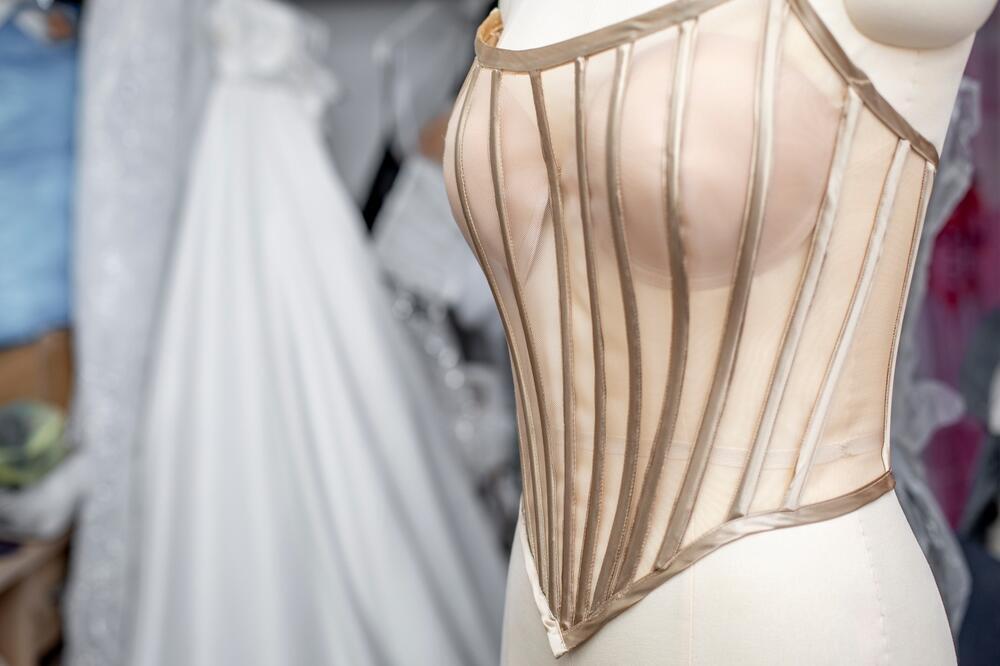
Corset. In the mid-20th century, it was used as a means of identification among gay men
(Photo: Shutterstock)
“After World War II, when gay men went out to bars, they could recognize one another by a corset peeking out from under their clothes or a corset belt visible beneath a jacket. It became a kind of symbol and a way of signaling to one another, especially leather corsets.”
Neither kinky nor dark
In recent years, international fashion catalogs have increasingly featured amputees and other people with disabilities. In Israel, too, fashion shows held since October 7 have included models with disabilities, including people with prosthetic limbs.
“That is such an important part of healing and rehabilitation,” Goichman Garber says. “Knowing that we can take part in something as basic and everyday as getting dressed in the morning, going out into the street and looking like the people around us.”
“A few years ago, I attended a special seminar at ALYN Rehabilitation Hospital, where I received treatment as a child, and which specializes in rehabilitating children with disabilities. They held a special day focused on sewing and designing adaptive clothing for children with disabilities.
“A social worker there said something that has stayed with me ever since: When people see a disabled child dressed like everyone else, they don’t see him as a disabled child, but rather a child with a disability. That distinction is incredibly important to how we define ourselves as human beings, to our sense of independence and to our sense of belonging in public space, knowing that we can look like everyone else.”
You’re married and a mother today, but what was it like being single and getting around on crutches?
“I noticed there was very little understanding that we are people with autonomous desires when it comes to sexuality and relationships, that we have our own preferences in both. You know that joke about how people are always trying to set gay people up with other gay people? People would say to me, ‘Oh, I have a disabled brother. Want me to introduce you?’”
“Another misconception about disabled people is that if we have a sexuality, express it openly and talk about it, then it must automatically be kinky. There’s nothing wrong with kink, but not all of our sexuality is kinky, and not all disabled people are into kinky sex.”
Where do these misconceptions come from?
“I think it’s because disabled people’s sexuality is still viewed as, in quotation marks, ‘unnatural,’ and therefore as kinky, dark or somehow outside the mainstream. We need to recognize that different kinds of people share the same public space. Israel is a very conservative country, and sex education here is also highly conservative, focusing largely on women’s health and reproduction. There needs to be a much broader conversation.”
When did you first see your body as a source of pleasure?
“That happened when I was 20, on my first trip to London. I went to Camden Market and found a latex corset. I remember trying it on in front of the mirror and suddenly seeing that my body could stand differently and change posture.
“Even while leaning on my crutches, I could suddenly stand much more upright. The shape of my body could change, the way clothes fell on my body could change, and it gave me a sense of control and empowerment I had never felt before.
“That’s something we’re not taught. We’re not taught how to fall in love with our bodies, how we can take control of what happens to us physically, or how we can approach intimacy and sexuality from a place of self-love.”