

Chumi Polak is a familiar name in Israel’s fashion industry: a busy stylist who works on productions, commercials and with artists. But many people only recently learned her name in a very different context, as the partner of musician and judge Assaf Amdursky, whom she has been dating for the past year and a half. Polak had also dressed Amdursky over the years, and when the timing was right, love followed.
“I dressed Assaf about four years ago for a fashion production with Hadar Josephine, who was then his wife", she says. “We knew each other because we work in the same industry, but each of us had our own life. He was married, and I was in a five-year relationship that also included an engagement.
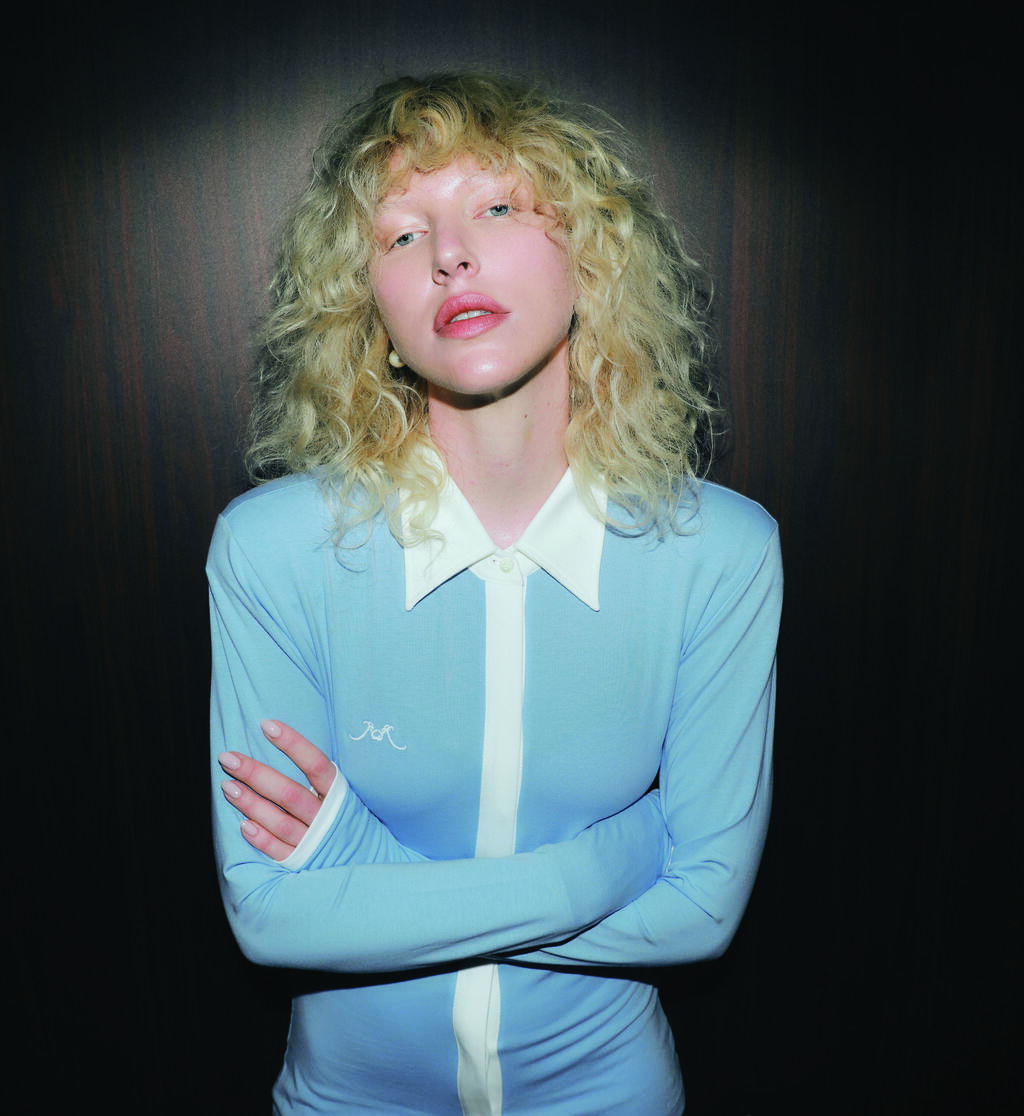
“Then, a year and a half ago, I went out to dinner at a restaurant with my good friend, stylist Tomer Almoznino, and a few other friends came too, including Assaf. We talked a lot that evening, and we had an amazing click and connection. And here we are today.”
You kept it secret for a long time, and it only became public about six months ago.
“That’s true,” she said. “I was coming out of a very serious relationship, and Assaf was also after a separation. From that place, I wanted to make the best and most correct choice for myself, and at first I really didn’t want it to come out. I wanted to examine the relationship before my name became attached to it.
“When it came out, we had already been together for almost a year. We went to an event hosted by photographer Shai Franco, who is a mutual friend, and we were already in an amazing place, so I didn’t care.”
Amdursky is 55 and you are 36, a 19-year age gap.
“That’s true, but there’s a difference between a 20-year-old woman dating a 40-year-old man and a gap like this at our age,” she said. “I think the age difference becomes much less significant. Assaf is Peter Pan, someone who is constantly in motion. He’s a second-year film student and also plans to pursue a doctorate. He is always doing something, he takes care of himself and he looks wow.
“I’ve also been through a thing or two, and I feel very mature. I don’t think I could be with a man in his 30s. I feel Assaf is a man who knows what he wants, and I love that.”
‘They shut me out’
Polak’s appearance, an edgy blonde with a cool haircut and hipster style, gives little hint that she came from a completely different world. She was born in Jerusalem to a Haredi family, the eldest of six children. “Chumi is short for Nechama,” she said. “My mother called me that from a young age and it stuck. It’s a name that always raises questions and I always explain it. In recent years, I’ve even started introducing myself again as Nechama. Nechama Miriam Pearl Polak.”
Her mother was born in London, “a Yiddish-speaking Haredi woman who came to Israel and married my Haredi father. I have a wonderful family and amazing parents, and I am very close to everyone. On the other hand, I was always something a little unusual in that landscape.
“I felt people didn’t understand me. I asked questions in a society where questions were not encouraged. I was stubborn, someone who stood her ground, not the kind of good, obedient girl who tries to please everyone. I was a bit wild and hyperactive. I had character.”
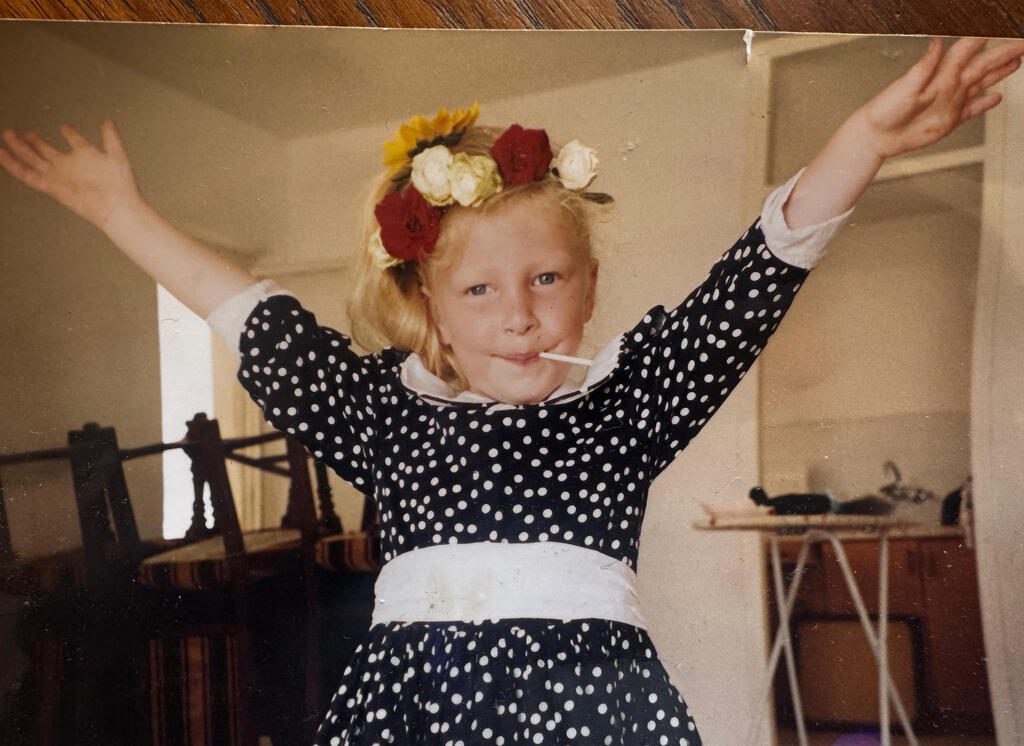
Polak as a child
(Photo: Or Danon)
Polak grew up “in a very Haredi neighborhood” and studied at Bais Yaakov girls' school until ninth grade, when her family moved to Bnei Brak. “My father became close to a certain admor (Hasidic rebe), and my parents moved to live in his court,” she said.
After the move, she began studying at the Shechernsky seminary in Tel Aviv, “until they kicked me out of school in ninth grade.”
What happened?
“One day we had a free period at the seminary, and my cousin, another friend and I ran away to the beach through a hole in the fence,” she said. “We rolled up our tights and our skirts and got our feet wet in the water.
“That evening, an older red-haired man came to my parents’ door with a letter saying someone had seen us and that I was suspended from school immediately. They demanded that we apologize and sign a code of conduct bylaw. My mother begged me to do it, but I refused. I didn’t feel I had done anything so terrible that I needed to apologize. My cousin and the other friend apologized, signed and were allowed back. I was expelled.”
In the Haredi community, she said, being expelled from one school makes it difficult to be accepted to another. “That’s how I found myself without any framework for half a year, and people more or less shut me out,” she said. “Before that, I had been very popular in class. Suddenly, no one called. Silence.”
“During that half year, I had free time, I started going out and discovered the world. A little before I turned 16, I moved to Jerusalem. I had a few friends there who were older than me. I moved in with them and started waitressing. I was still religious and waitressed in long skirts. After half a year, I moved to London.”

Chumi Polak
(Photo: Or Danon)
It's a bold step.
“Yes,” she said. “I did extreme, dramatic things without fear and without much thought. I’m more measured today, but that’s my nature. I’m impulsive and I’m not afraid. No one in my family left home or left religion, but I just did. I flew to London without thinking it through, with 100 pounds in my pocket.
“I had a friend there who worked at mall carts, and I have a British passport because of my mother. I sold hair and beauty products from carts inside stores like Harrods and Selfridges and made a lot of money. The pound was worth eight shekels, and sometimes I would make 1,000 pounds a day.”
Have you already left religion at that stage?
“It took some time. But I remember that Shabbat in London when I was 17, when I left the house and ordered a hamburger with bacon. Both Shabbat and bacon. I woke up in the morning and said, ‘Okay, let’s see what happens,’ and nothing happened. It was cool.
“I never had an issue with Judaism. I just wanted to see everything. But faith always stayed in me, and actually the older I get, the more I return to religion. For the past five years, I’ve been eating kosher again, and I also keep Shabbat once a month. It does me good. When I visit my parents, I always dress modestly.”
How did your parents react?
“At the beginning, it was very hard. They were young, my age now, and didn’t know what to do with me. For half a year we weren’t in touch. After the disconnect ended, I came home, and I remember that my father’s entire beard had turned white, all at once.
“It was not a simple period. Everything was very emotional. I felt rejected. From my younger siblings’ point of view, I had suddenly disappeared. I had been like a mother to them.”
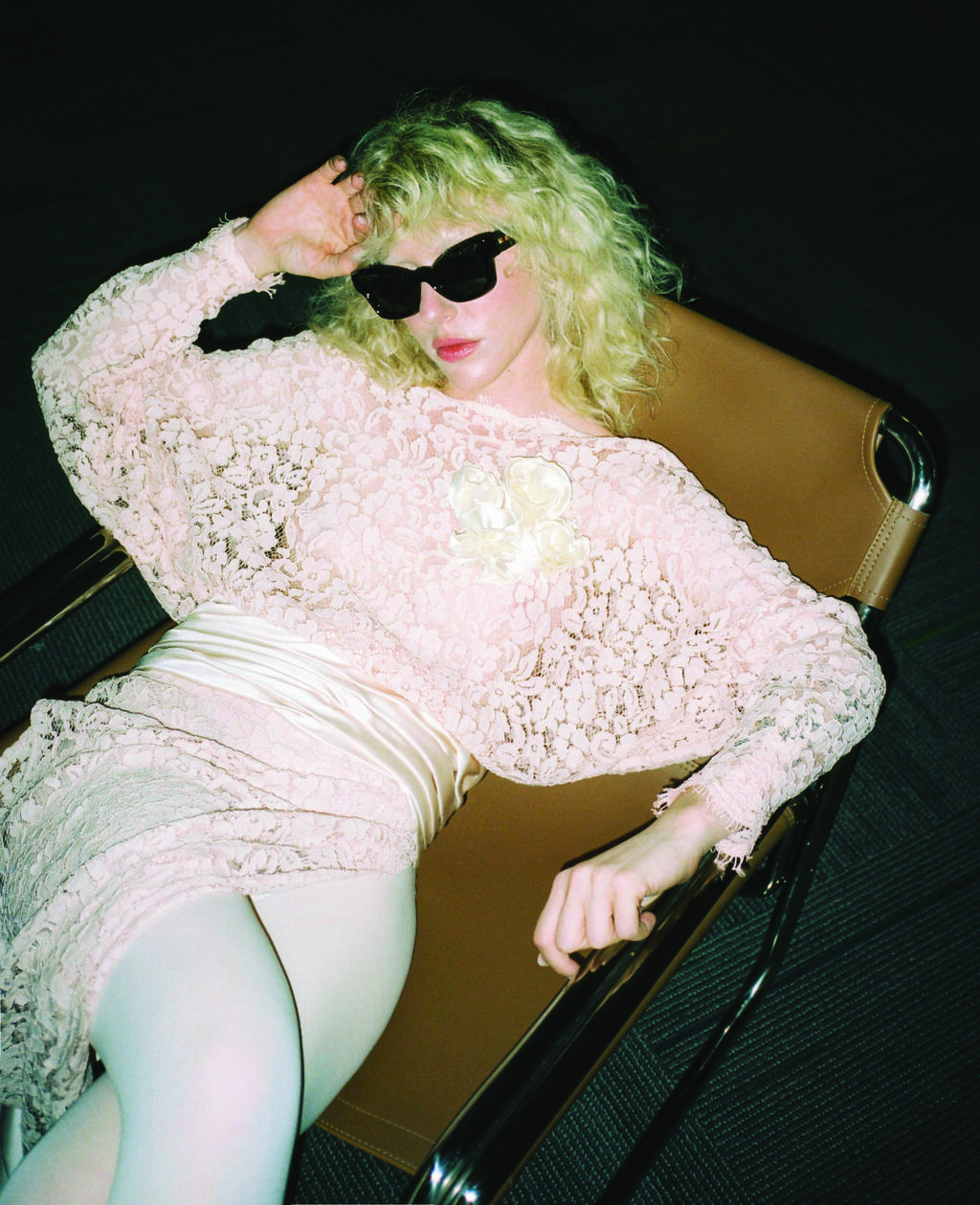
Faith always stayed in me
(Photo: Or Danon)
‘Everyone will know who I am’
From London, Polak continued to Wales and Scotland, then to Australia and New York. “Until age 22, I traveled like a wild horse. I just wanted to run.”
When did you enter the fashion world?
“At 25, after I returned to Israel. I was waitressing at Manta Ray, working nights as a selector at the Breakfast Club and studying architecture and interior design at the Holon Institute of Technology.
“I had a friend who was a stylist, and when two jobs came in for her at the same time, she asked me to replace her. That’s how it happened. I fell in love with the profession, left my studies and poured everything I had into styling.”
“I told myself, ‘Okay, within six months everyone will know who I am.’ I approached photographers and modeling agencies, and for half a year I worked for free. At night I worked the door at Breakfast, and during the day I did endless fashion productions.
“I worked hard. I developed concepts, approached stores and designers and convinced them to lend me clothes, then went to agencies and persuaded them to give me models. I scouted locations, built the story, handled the shoots, picked up the clothes and returned them. Slowly, it happened, and my name became known.”
What do you love most about styling?
“I’m very good in the commercial field, and I’ve done many campaigns and advertisements. Dressing female talents, I like less. It’s a lot of dealing with things, it takes a lot of time and patience, and I’m a very all-in person.
“But in recent months, I’ve been dressing Frida,” she said, referring to the singer and former “Big Brother” contestant. “I made an amazing change for her. I met her at Idan Laros’ show during Fashion Week. I had a vision for her, and since then we’ve been together. She is an iconic figure, and beyond the fact that she is an amazing musician, she has a vibe and a look that no one else has. We tightened the character and built a more uniform line for her style.”

Polak
(Photo: Or Danona)
Where do you find unique fashion pieces?
“In vintage stores, online and on trips to Paris. I have a studio where I keep all my collections. These aren’t necessarily pieces I wear myself. I buy them so they’ll be available. Once every three months, I hold fashion events where I collaborate with bloggers and style figures who also want to sell items. I curate the selection for them and release pieces from my studio. There are amazing things there, not junk. Every item passes through my eyes.”
Do you dress Amdursky now?
“No. He wanted me to, but I’m not willing. He has Tomer Almoznino dressing him, and he does an amazing job. Assaf recently shot a video for a new song in Greece, and Tomer dressed him while I styled Tehila Rich, who appeared in the clip.
“I prefer not to mix work and my relationship, and I have enough work as it is. In everyday life, Assaf has amazing taste. He has style and knows what looks good, so he doesn’t need my help. He also thinks everything I wear looks good on me.”
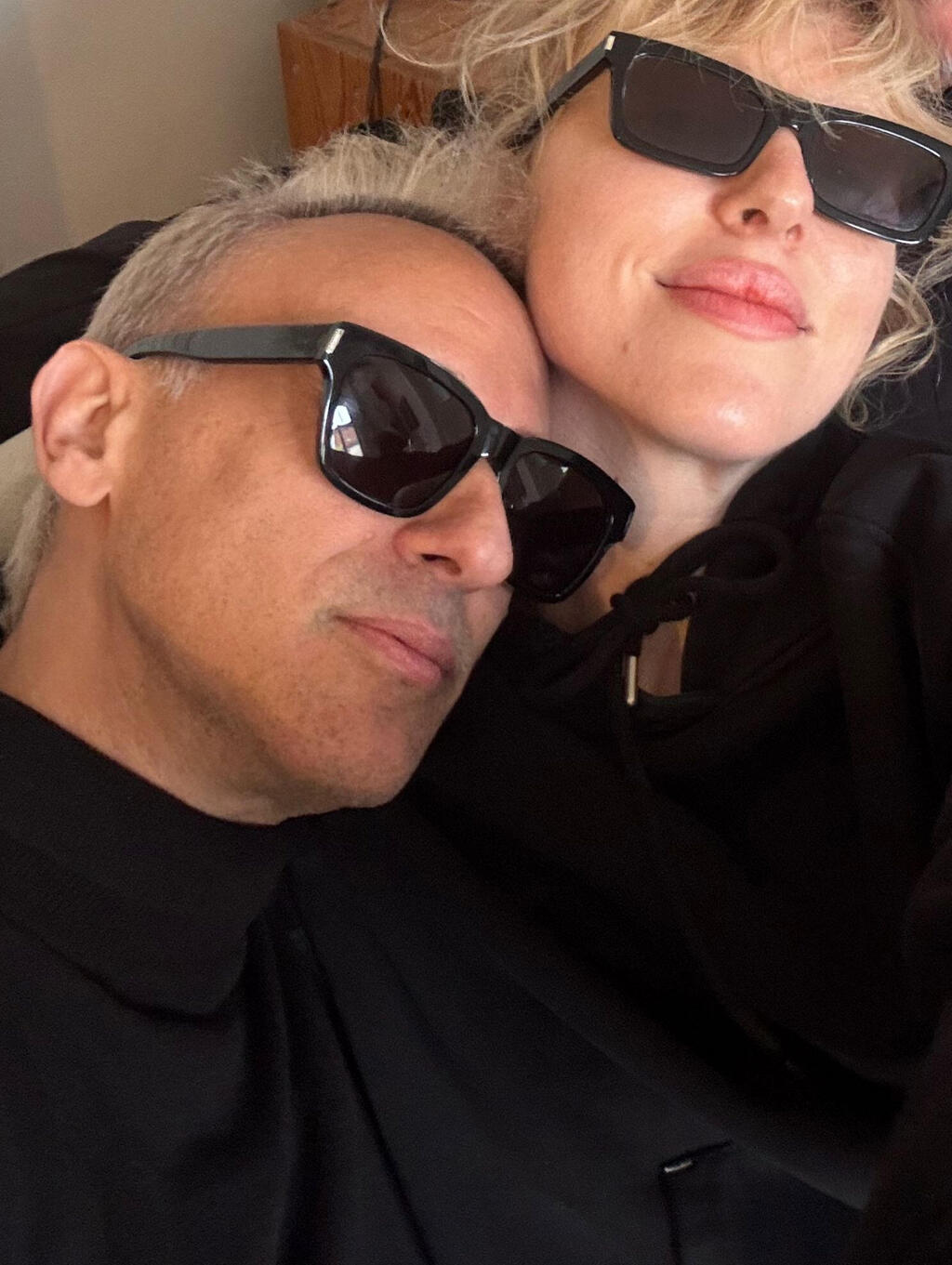
Polak with Assaf Amdursky. “An amazing connection”
(Photo: Private album)
After years behind the scenes, you have suddenly become part of a power couple that attracts gossip column interest. How does that feel?
“It feels strange when I’m introduced as ‘Assaf Amdursky’s partner,’ because I feel I’ve stood on my own for many years. At first it was a little weird for me, but it’s fine. Everything is good.”
How would you define your style?
“I’m very eclectic, and every day I can be someone else. I love vintage and mixing designer pieces with vintage, but not anything too revealing. Even as a stylist, I don’t dress people very exposed. I don’t like it. The Bais Yaakov girl stayed in me.
“You’ll never see me in tank tops or flip-flops. It just doesn’t feel refined to me. I also work a lot with the Haredi sector. I understand the nuances and subtleties, what is allowed and what isn’t, the language, and the trends there.
“To this day, I still have amazing pleated skirts from seminary. There’s no style like that. I shortened one into a mini and gave it a Miu Miu feel, and left another as a midi. It’s wow, and it’s chic.”