

As on every evening in recent months, Ruth got into bed hoping that Zechariah was already asleep, and as on every evening, he was still awake. Zechariah hugged her and she pulled away. “We can cuddle, but I don’t feel like having sex, if that’s what you have in mind right now. I’m really sorry, I just don’t feel like it,” she said.
A disappointed Zechariah turned his back to her and fell asleep. Reality and dreams blended in his mind: at moments he and Ruth mated like mice, and a moment later the two were shouting at each other in the kitchen. As Zechariah sank into sleep, on the other side of the world dreams were turning into reality, and sour aggression was becoming pink romance.
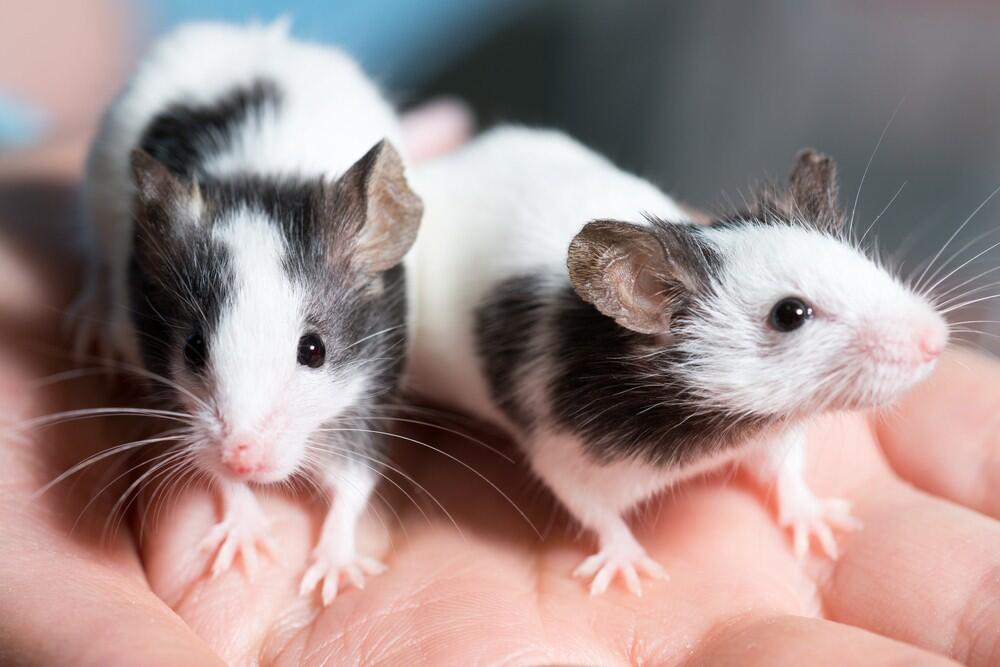
At the California Institute of Technology (Caltech), Prof. David Anderson, one of the world’s leading active brain researchers, placed a male mouse into a cage already occupied by another male mouse. From the perspective of the resident male, this was an insolent intruder encroaching on territory that was not his, leaving the incumbent no choice but to attack the newcomer violently.
During the fight, a tiny microphone was meant to record the sounds made by the two mice. These are sounds at frequencies humans cannot hear, so they were supposed to be translated into an image on a computer screen. But the screen remained blank, because mice fight in silence.
After a few moments, Prof. Anderson pressed one of his buttons. A beam of light was sent into the brain of the attacking mouse, and its behavior immediately changed completely: instead of aggression, it displayed homosexual sexual desire toward the other male. It tried to mount and mate with him, while the visitor—who just moments earlier had been fighting for his life—tried with all his might to escape the forced mating (you’ll agree it was not the visitor’s best day).
Was this merely something that looked like same-sex mating, when in fact it was aggression? It is well known that male mice sometimes mount each other in a way that can look like an attempt to mate, but is actually something entirely different, more related to a display of dominance. But a few moments later, an image appeared on the computer screen showing that this time the mice were indeed making sounds—sounds characteristic of lovemaking.
Did the mouse moan? We don’t really know the meaning of these sounds in mouse language, but we do know that the beam of light stopped the violence and triggered a burst of desire and homosexual sexual behavior. It was, in effect, a “make love, not war” button. These findings were published in the prestigious scientific journal Nature (Nature) in 2021. If only Zechariah and Ruth had such a button.
Back to Prof. Anderson: the results of the experiment encouraged him to take the idea one step further. Instead of adding another unfortunate mouse to a cage already occupied by a territorial one, he placed a mouse-like doll inside. He pressed his magical button, and once again a beam of light was sent into the brain of the resident mouse. Immediately afterward, the mouse—until then indifferent to the doll—began to mount it and attempt to mate with it. Again, sounds turned into images, though it is unclear whether the mouse was moaning or simply serenading the doll with love songs.
Jokes aside, we see that every time Prof. Anderson presses the button, the mouse produces a burst of desire directed at anything new in its environment, even a doll. Crazy? Amazing? Wait for the next experiment.
From desire to role reversal
A male and female mouse were deep in vigorous mating when Prof. Anderson pressed a button. This time, the beam of light was aimed at the female’s brain, and what happened next was completely unexpected.
The female pushed the male off her, then mounted him and began making rhythmic pelvic thrusts, as if she were attempting to penetrate him. As soon as the light was turned off, the roles reversed once more, returning to the familiar order with the male on top.

(Photo: Shutterstock)
In other words, the push of a button triggered not just desire in the female mouse, but distinctly male sexual behavior. Typically, female mice arch their backs during mating, raising the pelvis to allow penetration. Interestingly, in humans too, a similar arch is often perceived as sexually attractive—some claim high heels accentuate this posture in women. But in this case, the female mouse did not display the usual mating behavior. She acted like a male.
The connection between neural circuits and male-typical sexual behavior in females was first reported in 2007 by Prof. Tali Kimchi of the Weizmann Institute’s Department of Neurobiology. During her postdoctoral research in the lab of Prof. Catherine Dulac at Harvard, Kimchi used genetic engineering to alter a gene essential for mouse communication. The result: female mice exhibiting male behavior. Their study, too, was published in Nature.
The type of communication the researchers altered involves animals manipulating each other’s behavior to their advantage—via scent chemicals known as pheromones. For example, certain pheromones secreted by adult male mice can trigger early menstruation in virgin females that smell them. In another case, pregnant females who smelled pheromones from a male that wasn't the father miscarried their litters.
Despite some human companies today marketing perfumes containing pheromones that claim to make others more attracted to the wearer, it’s worth noting that the human pheromone system is largely vestigial. To date, no scientifically validated human pheromones have been found. Then again, it would be strange if humans were the only mammals entirely lacking them.
The best-known “proof” of human pheromones came in the early 1970s from Prof. Martha McClintock, who found that the menstrual cycles of women living together appeared to synchronize. For decades, this was taken as evidence of human pheromonal communication. However, the research ultimately failed to withstand scientific scrutiny, and no conclusive proof of menstrual synchrony—or human pheromones—has ever been confirmed.
Another possible sign that humans may produce pheromones comes from research showing that men undergo hormonal changes during their partner’s pregnancy. But how could a woman’s pregnancy biologically affect the man? One theory is that it’s due to a pheromone the woman emits—though it could just as easily result from other factors.
Whether or not humans have pheromones, one thing is clear: when Prof. Kimchi altered the pheromone pathway in female mice, they began displaying male-typical sexual behavior. This pointed to a dormant neural network in the female brain responsible for behaviors usually only seen in males.
Similarly, in Prof. Anderson’s experiments, female mice also demonstrated male sexual behavior uncharacteristic for females. These findings raise big questions: Do female mammals possess a pre-existing neural circuit that, when activated, can trigger behaviors usually seen only in males? How does this circuit form, and why is it there in the first place? Could males, in turn, have a dormant network for female-typical behavior? And is this also true in humans? As of now, science has no clear answers.
Back to Prof. Anderson and his so-called “desire button.” To understand why his experiment matters—and why it was done in mice—we need to talk about what counts as scientific proof.
For most of human history, knowledge was shaped by belief. If someone charismatic said something, it was taken as truth. In recent centuries, however, science has offered a new framework—one that demands evidence.
To prove that a specific brain region is responsible for sexual desire, scientists must show two things. First, that the region consistently lights up when the subject experiences desire, and remains inactive when desire is absent—establishing correlation. Second, to demonstrate causation, they must activate that region and see desire result—or block it and see desire stop. Prof. Anderson’s experiment was groundbreaking because it showed a causal link between activating a brain region and triggering sexual behavior.
In humans, scientists can use brain imaging to see if the suspected area activates during arousal. But switching it on or off—deliberately manipulating it—is still beyond our reach.
Here’s how Anderson did it in mice: scientists know that certain algae produce a protein that changes its electrical behavior when exposed to light. The mice were genetically engineered (something not done in humans) to produce this light-sensitive protein, but only in the neurons within the specific brain network Anderson suspected was linked to desire.
So when he pressed the button, he was activating a laser that delivered a beam of light through an optical fiber inserted via a one-millimeter hole in the mouse’s skull. While the light reached the whole brain, only the engineered neurons containing the algae protein responded, triggering electrical activity.
Then Anderson made another discovery: activating the desire-related network simultaneously suppressed activity in a neighboring neural circuit linked to aggression. In essence, switching on desire switched off violence.
Activating love, not war
When Prof. Anderson activated the aggression circuit in a mouse’s brain, the result was immediate and intense: the mouse attempted to attack everything in its environment—not just other males, but even females. In the wild, females are typically spared from male aggression. In some species, like fruit flies, females emit pheromones that suppress aggression; in others, like mice, males produce pheromones that identify them as male and trigger attacks from other males.

(Photo: Shutterstock)
But once the aggression network in the brain is switched on, the mouse targets anything nearby with frightening fury.
What’s striking is that the neural circuits for desire and aggression are located side by side in the brain—and both are activated by the hormone estrogen. This overlap led Prof. Anderson to suggest a potential treatment approach for people struggling with severe violent behavior: reducing estrogen’s impact. This strategy already exists in certain breast cancer treatments. The challenge, however, is that the desire network also responds to estrogen, meaning that suppressing it might reduce not only aggression but also sexual desire.
Estrogen, it’s worth noting, is synthesized from testosterone. In mice, lowering estrogen primarily reduces aggression. It’s possible that future research will identify ways to target these two circuits separately, allowing for treatments that reduce violence without impairing libido.
In the meantime, there have already been documented cases of individuals with extreme violent tendencies—or pedophilic behavior—who were later found to have brain tumors in regions linked to aggression. Once the tumors were removed, the violent or predatory behaviors disappeared.
Another possible intervention? Activate the love circuit. Research shows that stimulating either the desire or aggression network suppresses the other. In short: if you make love, you’re less likely to make war.
In the spirit of the 1960s, let’s end on that note. Hopefully, I’ve convinced you that the brain contains a specific region with a built-in neural circuit—a literal “desire switch.” It’s located in the hypothalamus, part of the limbic system, and for those curious, it goes by the name mPOA. Sure, there are worse names.
- Dr. Amos Gdalyahu is a neuroscientist and educator. He teaches the “Biosexology” course in the sex therapy program at Sheba Medical Center, lectures on human sexuality in Tel Aviv University’s continuing medical studies program and the European Society for Sexual Medicine (ESSM), teaches neurobiology at Tel Hai College, and writes the blog A Brain Like That about sexuality and the brain.