

Flamenco dancer Adva Yermiyahu was supposed to begin her studies at the College of Management Academic Studies when she decided to recalculate her route.
“I was sitting in my parents’ apartment and told my mother, ‘I don’t understand why I need to go to the College of Management if the thing I love most in the world is also a profession. I want to do flamenco!’”
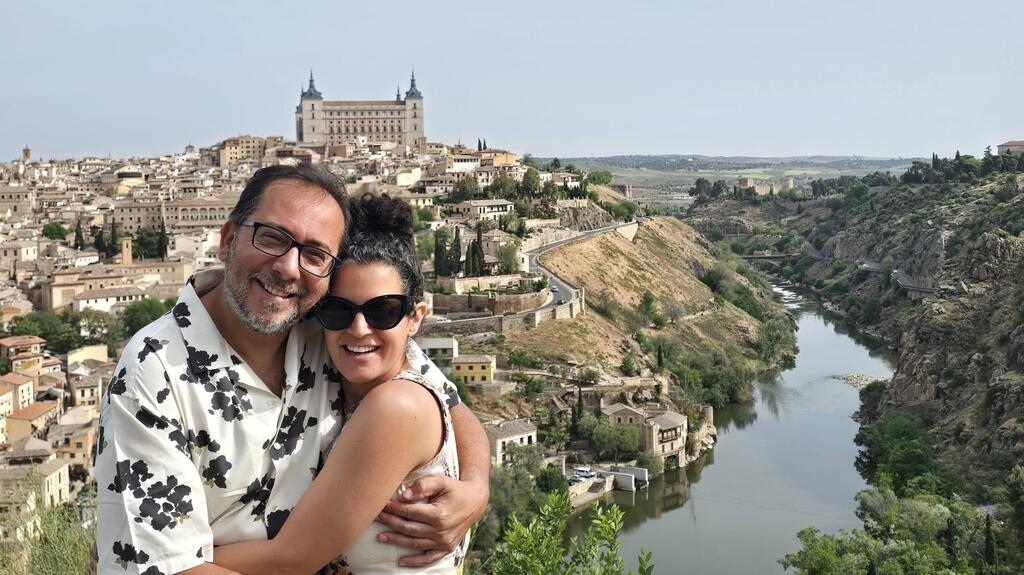
To her delight, her mother, an art therapist, supported the decision, and Yermiyahu decided to give up her studies in Israel and travel to Spain to study flamenco professionally. She moved to Seville, where she was exposed to the world of visual performance and dance, and spent a year working on a show with local artists. But then something happened that she did not expect.
“In the final week of rehearsals for the show, I decided that I had fulfilled my biggest dream and that I was going back to Israel because I was looking for a relationship and really wanted an Israeli man. I had a dream of living in Tel Aviv, where I grew up my whole life, and having my mother and father help me raise the children, with a regular day at our house.”
A few days before her return to Israel, she went out for a beer with a friend, and a local guitarist named Manuel began talking to them. Her friend would later say that from the moment Manuel arrived, he and Yermiyahu could not stop talking. Their conversation flowed, and time flew by without them noticing, until the bar where they were sitting closed.
When they each went their separate ways, Yermiyahu admitted to her friend that she felt a strange connection to the Spanish guitarist, though she definitely assumed that was the end of the story. After all, in a few days she would be on a plane, on her way to live the rest of her life in Israel.
But Manuel had other plans. Until Yermiyahu’s flight, he did not stop sending messages and calling. Yermiyahu tried to fend off the courtship, which seemed to her unnecessary and without a future, but eventually she relented. Two days before her scheduled return to Israel, she went out with him on a date.
The date was wonderful, and the initial connection she had felt on the night they met only grew stronger. Yermiyahu did return to Israel, but she was no longer sure where her heart was, in Spain or in Israel. She and Manuel began talking every day, all day. At the time, Manuel was playing at a tablao, a Spanish flamenco club that is very well known in Seville. At the same time, Yermiyahu, who was struggling to continue planning her Israeli future, found herself traveling for a month to teach flamenco in China.
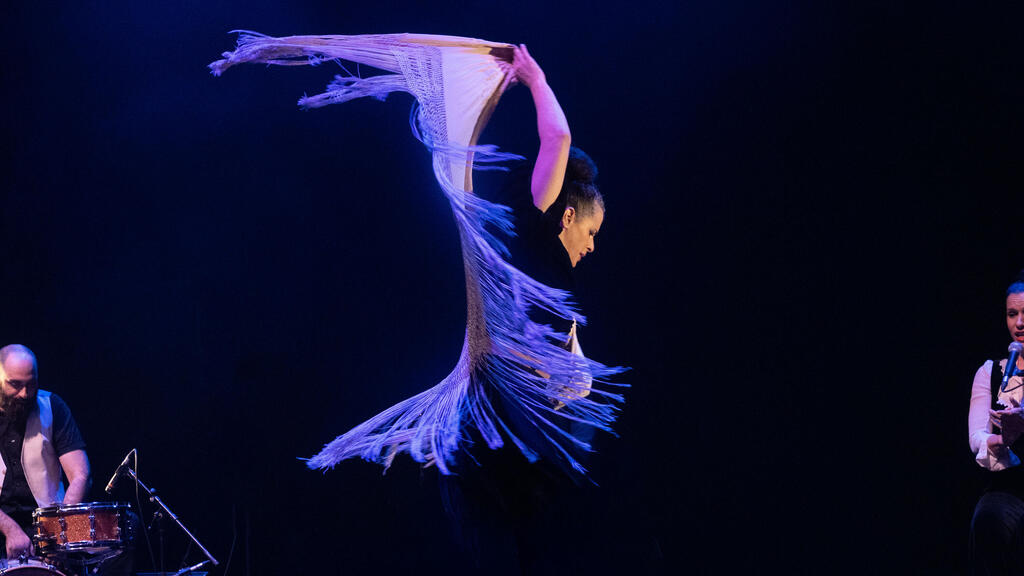
Adva Yermiyahu dancing flamenco
(Photo: Dan Ben Ari)
The longing drove her crazy, and she decided to persuade her manager to bring a true professional flamenco guitarist straight from Spain for the final week of the course in China. The manager was enthusiastic, and then Yermiyahu admitted to her that she was in love with that guitarist. And so Yermiyahu and Manuel found themselves spending their second date at Disney World in Shanghai.
After a week, the course ended, and Yermiyahu returned to Israel while Manuel went back to Spain. They marked their third date during Hanukkah, when Manuel came to visit her in Israel, and by then he had already met Yermiyahu’s entire Israeli family.
So did the Spaniard defeat the dream of an Israeli groom?
“Of course I never imagined this would be the relationship I was looking for, that he would be the one I would start a family with. It was very, very hard for me to accept that my life partner would not be Israeli. It was a dilemma that accompanied us from the beginning. It was also hard for Manuel to process the fact that his partner was not actually Spanish.”
Why? What were you afraid of?
“We were afraid that if we started a family together and it didn’t work out, what would happen then? We have mutual friends who had an Israel-Spain relationship, but it didn’t work out for them, and we didn’t want that to happen to us too. We were also afraid of the cultural differences because language is a very deep thing, and we communicate in a language that is actually my third language.
“So yes, I have improved a lot, and my Spanish is at a very high level, but sometimes I can’t find the exact word. A gap in conversation is also a cultural gap.”
Yermiyahu lists other differences that frightened her at the start: Although she has had a relationship with Spain for 15 years, since she began dancing flamenco as a child, she will still never be Spanish. She also does not know how to make Spanish food, she did not grow up on the comedians Manuel grew up with, so they simply do not make her laugh, and there is, of course, the family-size gap between an average of three children per family in Israel and Spaniards, who usually make do with one child.
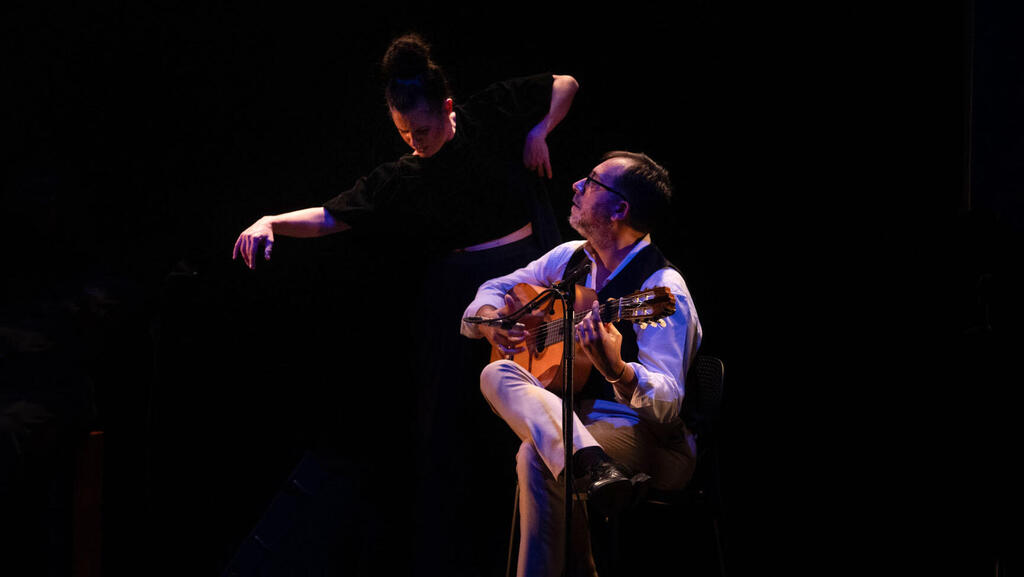
Adva Yermiyahu and Manuel
(Photo: Dan Ben Ari)
The Israeli family style is also usually very tribal, while in Spain many families meet only on holidays and special occasions, a few limited times a year. Even the feeling of Fridays in Israel, which simply does not exist there, at the far end of the Mediterranean, is hard for her. “My Shlomo Artzi is not his Shlomo Artzi,” she explains.
Despite all that, the two did not give up. Their relationship began moving along the axis between Spain and Israel, sometimes together, sometimes apart. During one stretch, Manuel traveled to Japan for several months of work, and at exactly the same time Yermiyahu returned to Seville to work on a new piece. Manuel suggested that she stay in his apartment, and when he returned from Japan, they suddenly realized they had effectively moved in together. For them, it was only the fourth date.
Their personal lives increasingly merged with their professional lives. When Manuel was working on a show, he invited Yermiyahu to dance to the sound of his guitar, and when Yermiyahu performed and needed a talented guitarist, Manuel was the obvious choice.
Then came COVID-19. Between lockdowns and masks, after a long period in which she had not seen her family, Yermiyahu decided she had to return for a visit. But the strict regulations allowed Manuel to enter Israel only if he was registered as her husband. The two gathered a few friends, went to City Hall in Seville and married in an official civil ceremony.
Flamenco, the glue that had first connected them, was there too. “We had a wedding party, and the flamenco singer who had performed with us before married us. Instead of blessings, each musician friend sang us a song,” Yermiyahu recalls. They held their second wedding in Israel, at her brother’s bar.
What do your life and creative work look like today?
“Today we have two children and live in Madrid. Artistically, we have learned to take the best from both cultures. Flamenco artists can be very closed off. They want only flamenco. But I happened to fall in love with a flamenco guitarist who is very open and very curious, so I connected him with local Israeli artists and introduced him to Israeli music.”
In recent years, they have been moving between tablao clubs in Madrid and Seville and Spanish music festivals in Israel, including the “Days of Flamenco” festival, which will take place July 7-11 at the Anis Cultural Center and Inbal Theater in Tel Aviv.