

London, 1750. A typical gray day in the English capital. Rain pours down, turning the streets into a sticky slurry of mud and filth. Men hurry for cover, heads bowed, getting soaked with characteristic resolve. All but one: Jonas Hanway, a philanthropist and respected merchant, walking upright — umbrella in hand.
To understand why that seemed like a provocation, some context is required. The umbrella was not a new invention. Women in London had already been using it in the early 18th century, and it was considered a legitimate accessory. For a man, however, it was almost taboo. An Englishman was expected to “withstand” the weather. Using an umbrella was seen as blurring the line between toughness and indulgence — between masculinity and femininity.
Gallery
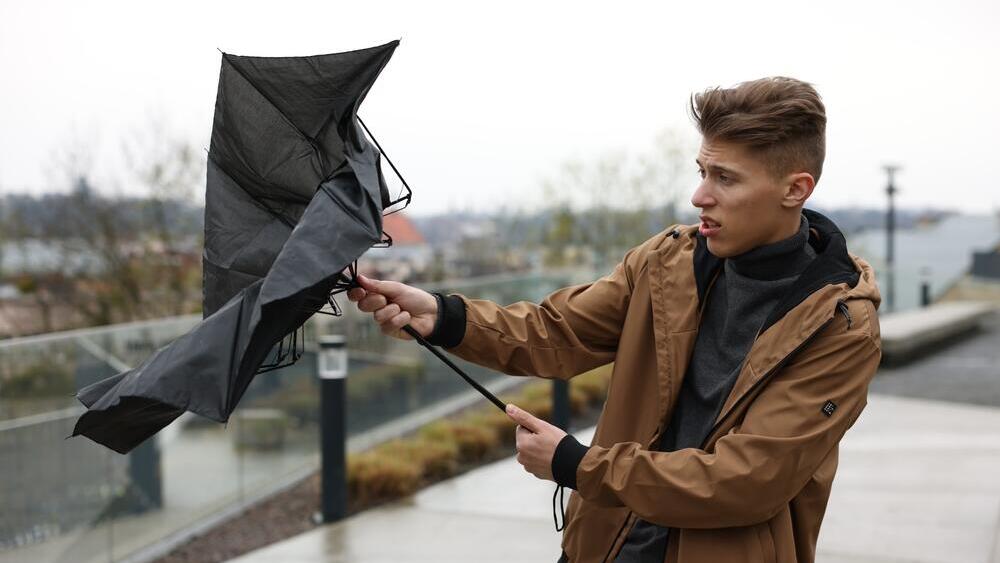
Why does such a useful object arouse such deep antagonism?
(Photo: shutterstock / New Africa)
Hanway paid a price. Passersby mocked him and repeatedly called him “a Frenchman” — not merely as a nationality, but as an insult, shorthand for a culture the English viewed as delicate, pampered and overly feminine. A man shielding himself from a bit of London rain? To them, it signaled the adoption of foreign and ridiculous manners.
There was also an economic front. Carriage drivers whose livelihood depended on rain quickly grasped the equation: Rain equals money. If men began walking dry, who would pay for a short ride? Historical accounts describe not only ridicule but harassment directed at Hanway. The message on the street was clear: Stay wet, but do not stray from the code.
Over time, the umbrella became less scandalous and more mundane. But the idea behind it — that an umbrella is not just an object, but a statement — has not entirely disappeared.
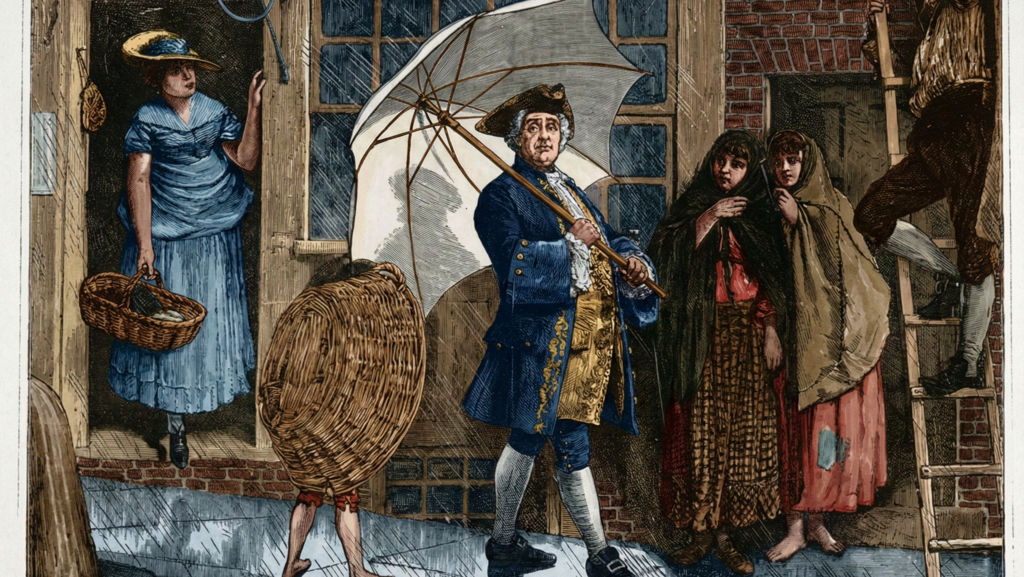
Jonas Hanway with his umbrella
(Photo: Harper's Weekly, 1871)
'In the military they taught us it was forbidden, and it stuck'
Nearly 300 years have passed, and it is Israel in 2026. Technology has changed and fashion has shifted, but a quick glance at the local street suggests the complex has endured. Here, the military ethos of “we do not melt in the rain” blends with daily practice to create a distinct dynamic.
“I have an umbrella at home, but I only use it when I have no choice — when it is really pouring,” one interviewee admits. The barrier, he says, has two layers. “First of all, it really is annoying to hold something in your hand all the time. And second, I cannot really explain it, but I feel a bit embarrassed walking with an umbrella in the street.”
For others, the umbrella has become a museum piece in the closet. “I have an umbrella I have never used, no matter how heavy the rain,” says Meir from Jerusalem. “It is a hassle — I have nowhere to put it, it breaks, it is just cumbersome.” His stubborn refusal even produces amusing social interactions. “Sometimes random people offer to let me stand under their umbrella.”
Shai, a reserve officer, points to what he sees as the root of the Israeli barrier — the military imprint. “There is also an issue of ‘vasach,’” he recalls, using Hebrew slang for swagger or macho posturing. “During my training, it was clear that no one dared walk with an umbrella. Until one of my friends decided to put an end to it. He just started walking with one and kind of broke the custom.”
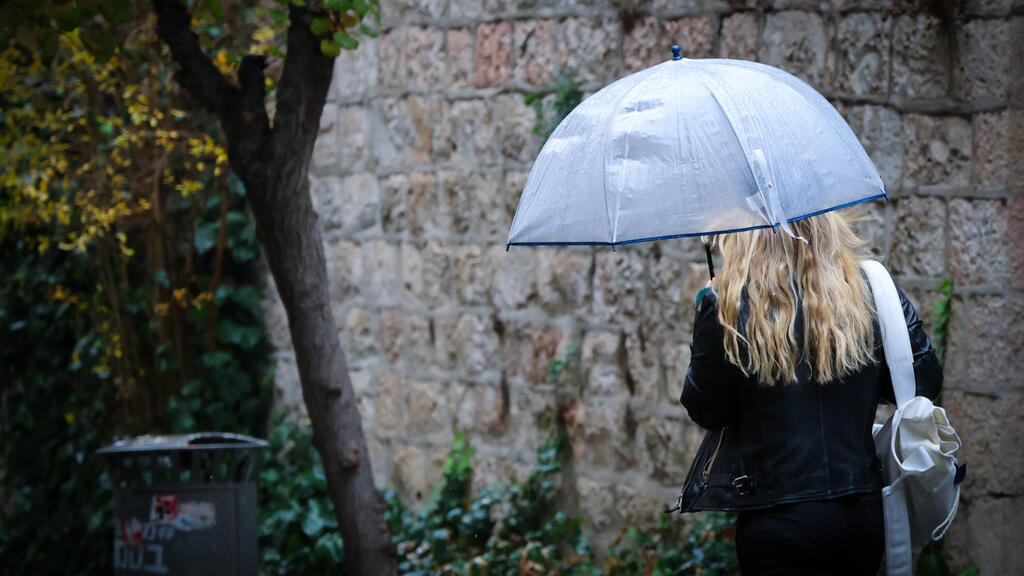
Feminine object?
(Photo: Roy Elman)
What about elsewhere? The sentiment appears to be universal, repeating itself in different variations. Arguments range from frustrated practicality to social anxiety.
“Who the hell wants to drag that thing around all day? One hand is occupied and it drips on everything — you might as well get wet,” one commenter wrote online. Others echoed the U.S. Marine ethos of toughness: “In the military they taught us it is forbidden, and it stuck. What am I, made of sugar? A little water never killed anyone.”
In especially rainy places such as Portland, Oregon, or Seattle, Washington, the debate can take on tribal tones. “Here, umbrellas are for tourists. Locals just put up a hood. If you have an umbrella, you are signaling you do not belong.”
Finally, there is the aesthetic argument, delivered with bluntness: “While a high-quality technical coat signals ‘I am prepared,’ an umbrella always looks like a cheap accessory I got stuck with and signals ‘I am trying to escape.’”
The fear of looking ridiculous: The psychology behind the umbrella
If we are speaking of the military, the swagger is not uniquely Israeli. In the United States Marine Corps, aversion to umbrellas was for years anchored in uniform regulations. On May 16, 2013, a storm erupted in Washington in what the internet dubbed “Umbrella-Gate.” During a rainy news conference alongside Turkish President Recep Tayyip Erdogan, President Barack Obama asked Marines to hold umbrellas. Critics in conservative circles immediately charged that the image weakened or humiliated the troops.
The debate was grounded in fact. At the time, Marine Corps dress regulations included an explicit clause permitting women in uniform to carry a black umbrella — in the left hand to allow saluting — but granted no parallel permission to men. Only six years later, in November 2019, were the rules officially changed. Marine leadership announced that all Marines would be allowed to carry black umbrellas with service and dress uniforms during inclement weather.
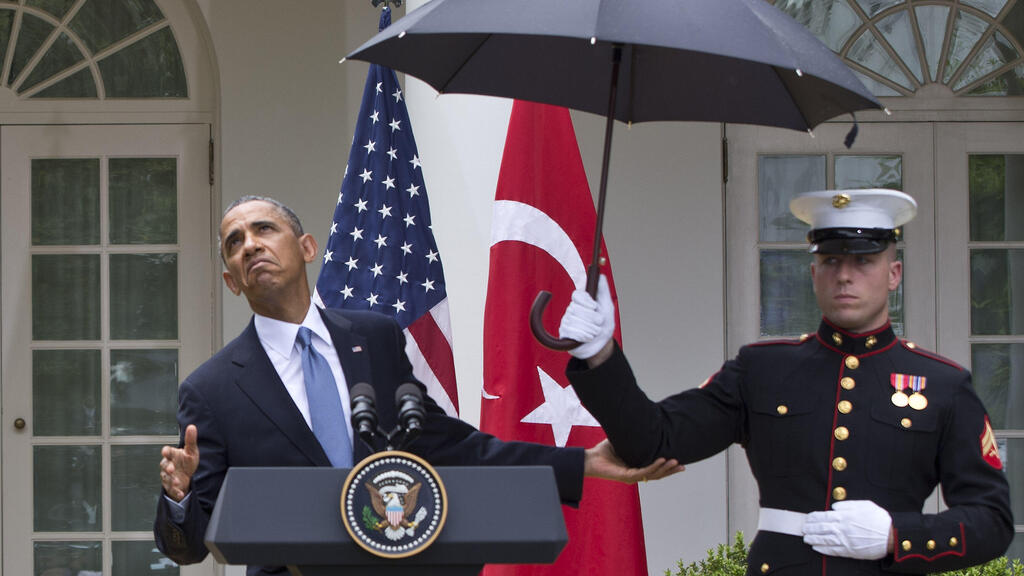
Obama and the umbrella incident
(Photo: AP Photo/Jacquelyn Martin)
Why does such a practical object arouse such deep antagonism? Social psychology offers one lens. In 2008, researchers Joseph Vandello and Jennifer Bosson introduced the concept of “precarious manhood,” the idea that masculinity is viewed as a social status that must be repeatedly proven and can be easily lost.
In those terms, even something as ordinary as rain can become a small stage for status. Standing outside and absorbing the weather signals toughness, control and resilience. Opening an umbrella, by contrast, can be perceived as creating a bubble of comfort — not because the umbrella says anything about your personality, but because cultural codes attach meaning to even the most innocent actions. In other words, as one commenter put it: If you are not made of sugar, you do not need protection.
'A romantic accessory'
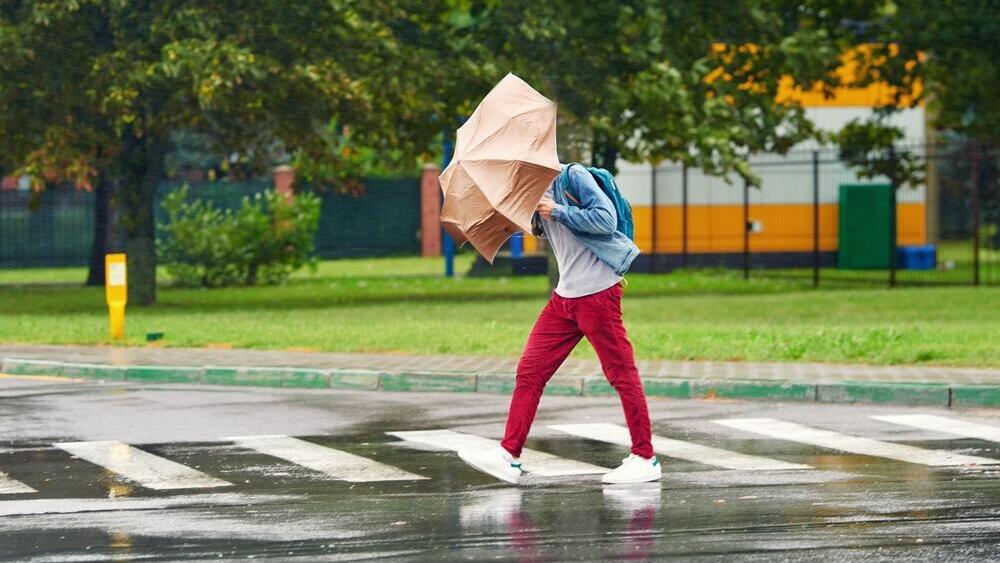
Beyond psychology, there is also a practical anxiety: the moment it flips. That sudden gust of wind that turns the umbrella inside out, transforming in a split second someone meant to control the situation into a comic figure wrestling with a rogue object. Then comes the less dramatic — and more familiar — part: stepping from the street into a lobby or office, when the dripping umbrella becomes a dirty, unwieldy nuisance with nowhere to put it.
It turns out this is not only about convenience, but about what social psychologists call “proxemics,” the study of personal space. According to the model developed by anthropologist Edward T. Hall, each person has an invisible bubble of personal space. When a man opens an umbrella and invites another person to stand beneath it, he crosses in an instant from social space into intimate space — less than about 18 inches apart.
(Gene Kelly is not ashamed of his umbrella)
Hall’s research helps explain why the situation can trigger genuine physical discomfort in many men. For those raised on a classic masculine ethos that prizes distance and territorial control, the forced narrowing of space — shoulder to shoulder under a single sheet of fabric — can feel like an intrusion into protected territory.
Film and literature have only deepened the barrier. In popular culture, the umbrella is a romantic prop, allowing a couple to draw close under cover of rain. As a result, the male brain may make an automatic association between umbrellas and vulnerability or emotional exposure. For many men, standing alone in the rain and getting wet is a declaration of resilience and independence. Sharing an umbrella is an act of softness and partnership — precisely the dissonance that produces the aversion. They prefer to absorb the water rather than relinquish their territory.
Gen Z: It’s not about gender — it’s about 'aura'
And then there is the generation that sets the tone in almost every arena. For Generation Z, resistance to umbrellas is no longer framed as a “girls’ item,” but as a new form of social anxiety: the fear of appearing awkward — what the internet calls “the ick.”
(Photo: shutterstock / Tricky_Shark)
Cultural analyses suggest that using an umbrella is seen as an act that lowers one’s “aura points,” an unofficial virtual measure of charisma. In that view, nothing is less cool than someone struggling on the street with an object flipping in the wind, or the clumsy moment at a shop entrance trying to close a dripping umbrella without getting wet.
For many, the solution is not to grow up and carry an umbrella — but to upgrade. Enter the Gorpcore trend: the adoption of technical jackets and outdoor gear as everyday fashion, including branded items. The term itself was coined in 2017 by The Cut to describe the migration of functional mountain wear to the street. An expensive raincoat is no longer just protection — it is also a fashion statement: precise, streamlined, signaling readiness — and, not least, leaving both hands completely free for a smartphone.