

“There are things you get used to as an American who decided to move to Europe,” says Melissa Reardon, a North Dakota native who crossed the Atlantic more than a decade ago and now works in the PR department of a major German corporation in Munich.
“You get used to paying for ketchup and mayonnaise when you buy fries. You get used to salespeople not smiling when you walk into a store, and you understand they are just waiting for you to leave. You get used to the low standard of international food, especially Mexican food.
“But I will never get used to the fact that people in Europe seem allergic to air conditioning. I can understand it on the ecological level. Fine, maybe not in homes. But in public places? In banks? In large stores? Munich had two weeks of horrible heat, and there was nowhere to escape. Elderly people died from the heat. It simply makes no sense to me.”
Anyone who opened a climate map of Europe in June was met with a wall of red. Country after country, from Britain in the west to Spain in the south, the Czech Republic in the east and Sweden in the north, broke heat records, with temperatures climbing above 40°C (104°F). And that was only June. The hottest months are still ahead.
Unlike the United States and Japan, where about 90% of households have air conditioning, the figure in Western Europe is only about 20%. In much of the world, when the weather turns scorching, people turn on the AC and relax indoors. In Europe, similar temperatures can turn into a survival episode.
“I can understand the European logic that says there is no need for air conditioning for just four weeks a year,” Reardon says. “But when I read about elderly people dying, it becomes very hard to accept any other argument. I also think Europe is not really ready to admit that, when it comes to surviving a scorching summer, the American solution may have been the right one.”
Money and bureaucracy
Until recently, Europe did not need a serious debate about how important air conditioning was to productivity. Temperatures simply did not demand it. An average summer would hover around 25°C (77°F) and then ease off.
In recent years, however, extreme heat waves have become an annual ritual, alongside massive wildfires, and Europe’s average temperature is rising at twice the pace of the rest of the world. That rapid warming has become one of the clearest signs climate experts point to when warning about the accelerating impact of global warming.
It has also created an absurd situation: air conditioners consume energy and emit gases, adding to the very problem they are meant to solve. But as temperatures increasingly climb past 40°C (104°F), more Europeans are buying them as protection from that same warming.
Another reason for Europe’s resistance to air conditioning is the high cost of energy, compounded by an energy crisis whose end remains unclear. Many households would rather suffer for a month or two each year than take on higher bills in an uncertain economic climate.
European buildings are also much older than American homes, many of which were built with air-conditioning infrastructure or integrated cooling systems. Across much of Europe, especially in the north, buildings were designed to fight cold, not heat. Installing air conditioning in an apartment often means paying more for infrastructure and, worse, navigating a bureaucratic inferno involving neighbors, landlords and complicated building-preservation committees.
Anyone familiar with European bureaucracy and the reluctance to change may understand why some people decide it is easier to burn through two months of summer than buy and install an air conditioner.
Cooling off with water cannons
Europeans have long looked down on America’s air-conditioning culture, seeing it as an indulgence that comes at the expense of concern for the planet. But that argument becomes harder to sustain when, in just three countries, France, Belgium and the Netherlands, more than 3,700 deaths were recorded during the late-June heat wave.
Estimates suggest that in the past four years, more than 200,000 people have died across the continent because of extreme heat, most of them elderly or homeless. Others, including children, drowned after entering rivers or lakes in an attempt to escape the heat.

Street cooling in Greece
(Photo: Petros Giannakouris/AP)
The extreme weather has already melted many Europeans’ climate principles. Viral videos filmed in electronics stores across the continent have shown violent arguments between customers trying to reach rapidly emptying shelves of cooling devices. Samsung and LG, two of Europe’s leading air-conditioner manufacturers, have reported sales increases of hundreds of percent. Retail chains such as France’s Carrefour have reported selling about 30,000 air conditioners a day.
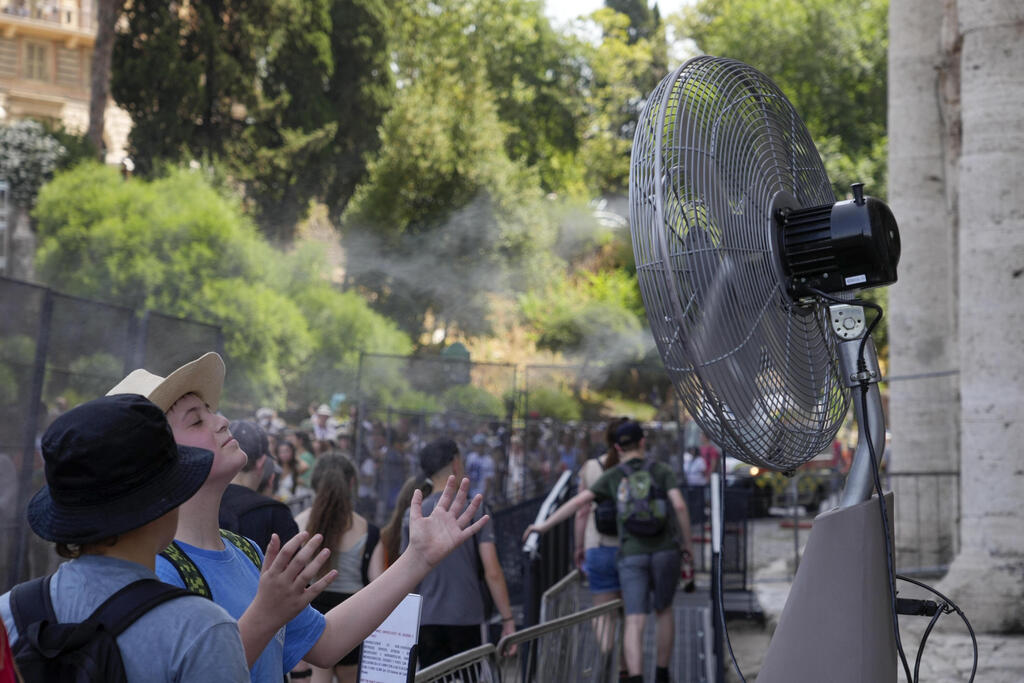
Sales of ice bags, fans, battery-powered hand fans and electric cooling devices have also reached highs in recent weeks. In Berlin, police used water cannons in central areas of the city to cool residents and tourists suffering through the exhausting heat.
The cultural battle sometimes produces decisions that may be justified, but still look absurd. Take Spain, one of Europe’s hottest countries. Officials there concluded that because air conditioners release heat outdoors, they contribute to rising urban temperatures. The result was a rule barring public buildings from setting air conditioning below 27°C (80.6°F).
Manufacturers, installers and retailers all report a surge of hundreds of percent in demand for home air conditioners. By 2050, Europe is expected to have 275 million air conditioners in apartments and houses, double the number in 2019. The European air-conditioning market is already estimated to be worth billions of dollars a year.
“Look, you simply can’t work like that,” Reardon says. “At some point in the office, the heat makes it impossible to function, especially after a night when you barely slept because it was so hot. I completely understand the climate and energy arguments, but there is a real productivity problem when people are expected to work in temperatures like these.”
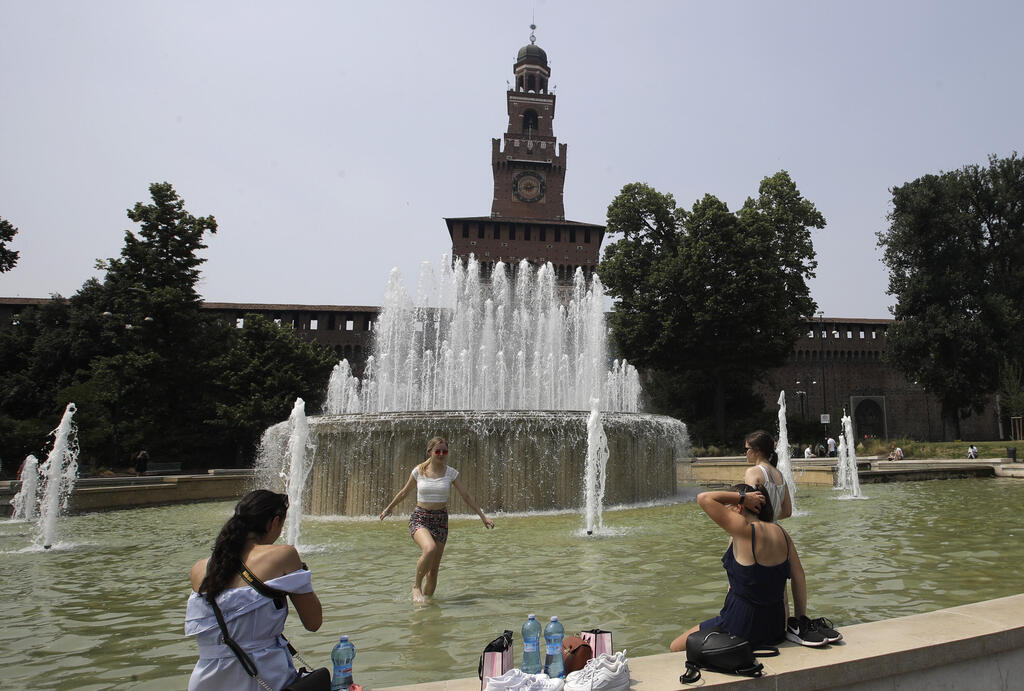
Women cool off in a fountain in Italy
(Photo: Luca Bruno/AP)
Many buildings across Europe were designed to capture as much sunlight as possible and retain heat. That works well in winter, but during heat waves like the one recorded in late June, it can turn apartments into ovens.
Anyone who manages to convince the neighbors and the landlord that, despite the noise and pollution, installing air conditioning would be useful must also make the case to building-preservation and urban-appearance committees, which are not exactly eager to see the backs of AC units hanging off building façades.
Anyone who has spent time in Europe in recent years has seen the increasingly common absurd image of a portable air conditioner inside an apartment or shop, with its hose pushed through an open window.
Businesses that depend on tourism are also warning that the lack of air conditioning is hurting them. Many visitors, they say, either stay in their hotel rooms or retreat to air-conditioned shopping centers, skipping traditional shops, cafés and restaurants that offer no escape from the heat.
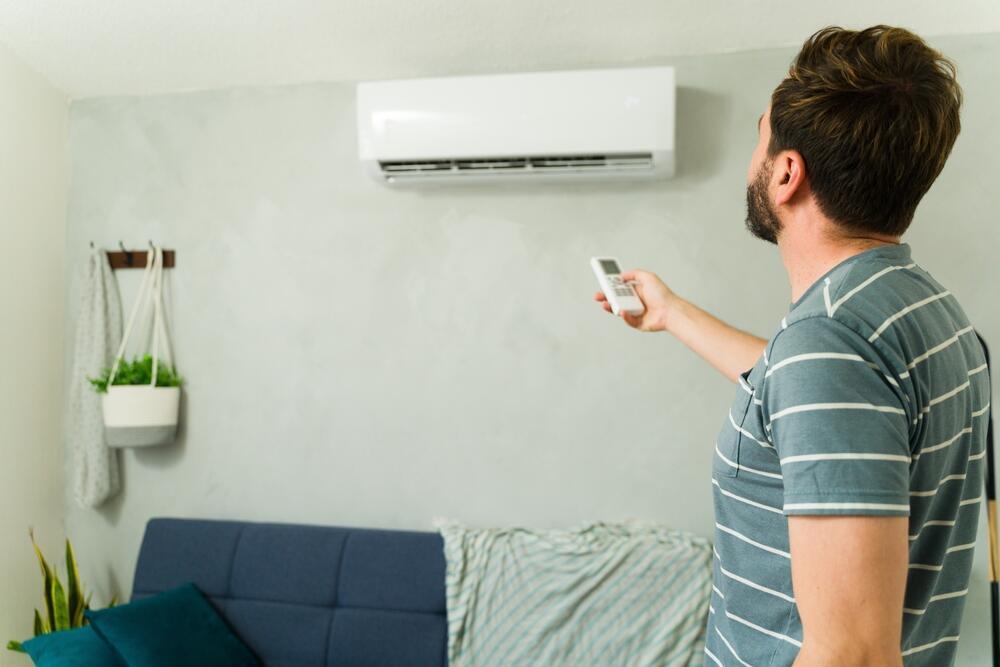
AC
(Photo: Shutterstock)
The politics of air conditioning
Inevitably, the air-conditioning war has become another battle between European and American politicians, as well as a source of internal division within European countries. Europeans accuse Americans of irresponsibility on a matter they see as existential for the global population, while Americans point to the severe death toll as justification for their support of air conditioning.
Marine Le Pen, the far-right candidate in France, has already promised that if elected president, she would carry out a large-scale air-conditioning reform plan. Studies have shown that air conditioning can reduce heat-related deaths by 75%, and that installing air conditioners saved the lives of 190,000 Europeans between 2019 and 2021.
Jean-Luc Mélenchon, the far-left candidate in France, responded to Le Pen’s remarks by arguing that “we must not install more air conditioners; it only causes more damage.”

Heat wave in Rome
(Photo: Andrew Medichini/AP)
In Italy, half of households have air conditioners, and their use accounts for about a third of household electricity spending. In Spain, more than 40% of households have AC. But the figure is rising steadily even in colder countries such as the Netherlands, Germany and England, where air-conditioning rates still hover around 10% to 15%.
The heat waves and the struggle over AC installation are also changing architecture, with a growing emphasis on creating shade. They are changing European work patterns as well, as more businesses split working hours so employees can work during cooler parts of the day and take a break between two shorter shifts.