

In 1982, popular late-night host Johnny Carson introduced his next guest to enthusiastic applause. A diminutive, smiling Jewish woman with a pronounced German accent walked into the studio. When she sat down on the couch opposite him, her feet did not reach the floor. She did not appear bothered.
Carson quickly asked his first question: Why are people uncomfortable talking about sex? Dr. Ruth Westheimer smiled. She knew the answer, of course, but the subject did not embarrass her in the slightest. Over the course of the interview, she spoke freely about masturbation, sexual experiences and sex education. As an experienced sex therapist, she understood that sex and sexuality are inseparable from human life, and that there is no reason to be ashamed of being a sexual person.
Gallery

Dr. Ruth Westheimer. There is no reason to be ashamed of being sexual beings
(Photo: Dipasupil Dia/IL Gettyimages)
For decades afterward, the friendly, grandmotherly figure devoted her life to teaching anyone willing to listen that discussing sex was not merely permissible, but important. “If we could bring about talking about sexual activity the way we talk about diet, food, right without it having this kind of connotation that there's something not quite right about it, then we would be a step further,” she told Carson.
(Dr. Ruth Westheimer’s first appearance on The Tonight Show Starring Johnny Carson, June 11, 1982)
Breaking the taboo
Until the middle of the 20th century, public discussion of sex and human sexuality was largely controlled by doctors, psychiatrists and religious authorities. Sexuality was generally treated as a moral or medical issue rather than a natural part of life.
The dominant view assigned women a passive role in sexual relationships, while men were seen as the active and initiating partners. Many sexual behaviors now recognized as normal, including homosexuality and even masturbation, were considered shameful deviations.
One of the people who did the most to change Western attitudes toward sexuality was Sigmund Freud, the founder of psychoanalysis.
Before Freud, public discussion of sexuality was generally confined to reproduction, divorce and morality. Freud made sexuality central to the understanding of personality, human development and the mind, arguing that sexual drives in their many forms shaped a significant portion of human behavior and even personality.
Through his immense influence, those ideas spread during the first half of the 20th century into psychology, psychiatry, anthropology, sociology, literature, cinema and popular culture. Open discussion of sex gradually became more legitimate.
At the same time, scientists began developing a more biological approach to sexuality. Researchers examined subjects including the relationship between nutrition and fertility, the effect of temperature on sperm production and the sexual behavior of monkeys and apes.
Their findings showed that sexuality was not merely a psychological or moral matter, but involved a complex combination of neurological, hormonal, social and cultural systems.

sexuality was not merely a psychological or moral matter
(Photo: Shutterstock )
Anthropologists also began examining how societies around the world understood sex and sexuality. Large cross-cultural studies revealed enormous differences in attitudes toward sexuality, masturbation, sex education and same-sex relationships. The central conclusion was that there was no single universal model of human sexuality.
That finding was far-reaching. Until the early 20th century, many people assumed that European Christian norms regarding sex and sexuality represented the only authentic expression of human nature. Anthropologists were among the first to demonstrate that societies had developed many different patterns of partnership, gender, courtship and sexuality.
Researchers also examined ancient societies, including classical Greece and the Roman Empire, and found that many sexual behaviors considered unusual in the 20th century had once been common and accepted aspects of everyday social life.
Historical studies further revealed deep gaps between the moral standards societies publicly proclaimed and what people actually did in private.
Diversity and a continuum
The first major revolution in the scientific study of sex in the United States was led by biologist Alfred Kinsey. In the mid-20th century, Kinsey interviewed thousands of men and women and used their responses to publish two groundbreaking reports: Sexual Behavior in the Human Male in 1948 and Sexual Behavior in the Human Female in 1953.
His studies showed that human sexual behavior was far more diverse than previously assumed. Among other findings, Kinsey reported that many women did not reach sexual satisfaction through penetrative intercourse and that sexual attraction could not always be divided neatly into the two separate categories of heterosexuality and homosexuality.
He developed what became known as the Kinsey scale, which presented sexual orientation as a continuum rather than a rigid binary division.
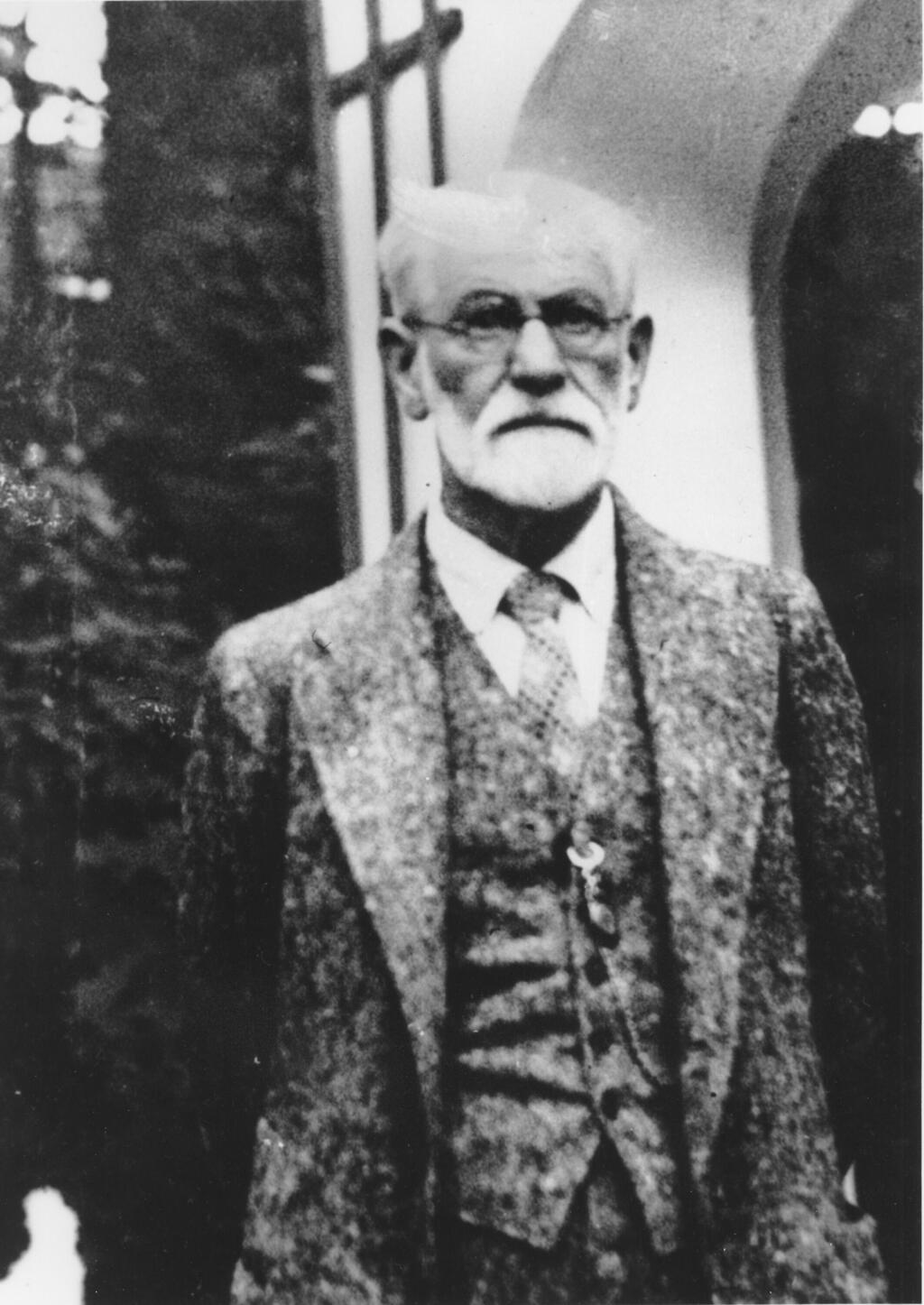
Sigmund Freud, transformed Western attitudes toward sexuality
(Photo: AP)
In the 1960s and 1970s, gynecologist William Masters and his research partner, Virginia Johnson, led the next breakthrough by systematically studying the physiology of human sexual response in a laboratory.
They recruited hundreds of volunteers. Some engaged in sex with partners and others masturbated alone, all under controlled laboratory conditions. During the activity, researchers measured their heart rates, blood pressure, physiological changes in their sexual organs and other bodily responses.
Their findings produced a major shift, particularly in the understanding of female sexuality. At the time, ideas about women’s sexual response were still heavily influenced by Freud’s distinction between vaginal orgasms, which he considered mature and healthy, and clitoral orgasms, which he regarded as childish and underdeveloped.
Masters and Johnson showed that the clitoris was a central organ in female sexual pleasure. Their findings helped overturn outdated assumptions about women’s bodies.
Another major contribution was their development of effective, evidence-based sex therapy. Before their work, people who dared to complain about sexual difficulties were often referred for lengthy psychoanalysis that offered limited practical help. Masters and Johnson demonstrated that many sexual problems stemmed from poor communication, false information and habits that could be changed.
Based on that understanding, they developed therapeutic principles and practical methods that sex therapists continue to use today.
What do people think about sex?
In 1976, German-born American sexologist Shere Hite expanded the conversation further with her influential book The Hite Report. Unlike Kinsey, who had mapped sexual behavior through statistical research, and Masters and Johnson, who had focused on the physiology of sexual response, Hite was primarily interested in subjective experience: what women felt, thought and wanted sexually.
The report’s best-known contribution was its challenge to prevailing assumptions about female orgasm. Based on thousands of open-ended questionnaires sent to women across the U.S., Hite concluded that most women did not regularly achieve orgasm through penetration alone, but through clitoral stimulation. The finding strongly reinforced Masters and Johnson’s conclusion that there was no physiological basis for Freud’s distinction between vaginal and clitoral orgasms.
The influence of The Hite Report extended far beyond the scientific understanding of female sexuality. It became an international bestseller and formed part of the second wave of feminism, challenging traditional ideas about womanhood and sexual behavior. Many women said that reading the book marked the first time they encountered descriptions of sexual experiences that reflected their own lives.
Scientifically, the report remained controversial. Hite did not claim to have conducted a statistically representative survey. Instead, she sought to give a voice to experiences that earlier studies had ignored. Today, The Hite Report is considered one of the texts that most profoundly shaped public discussion of female sexuality.
From social theory to people's living room
Then came Ruth Westheimer, who brought decades of research on sexuality out of academia and into radio, television and people’s homes. Earlier pioneers had changed what society knew about sex; Dr. Ruth changed what ordinary people felt comfortable asking, discussing and revealing about their own lives.
Despite decades of scientific progress, public discussion of sex remained largely taboo in the U.S. at the beginning of the 1980s. At best, it provoked embarrassment. At worst, it caused scandal.
Then this tiny woman with a heavy German accent and a cheerful voice began speaking calmly, knowledgeably and without shame about subjects many people preferred to hide: orgasms, contraception, masturbation, impotence, relationship problems and sexual pleasure.

Ruth Westheimer brought conversations about sex into people's living room
(Photo: AP)
Ruth Westheimer, known simply as Dr. Ruth, was not the first person to study human sexuality. Her pioneering achievement was bringing conversations about sex into the family living room in a way that was accessible, friendly and often funny.
For decades, she was among the figures most closely identified with sex education in the United States, influencing how millions of people thought about sexuality, relationships and pleasure.
War and peace
Ruth Karola Siegel was born in Frankfurt, Germany, in 1928 to an observant Jewish family. At the age of 10, she was sent to Switzerland as part of the Kindertransport. The move saved her life, while her parents and the rest of her family were murdered in the Holocaust.
After World War II, she immigrated to British-controlled Mandatory Palestine, joined the Haganah (the main Jewish defense organization before Israel’s establishment) and trained as a sniper. During Israel’s War of Independence, she was sent to besieged Jerusalem, where a Jordanian shell seriously wounded her.
(Westheimer discusses her childhood)
After recovering, she moved to France and studied psychology at the Sorbonne. She later immigrated to the United States. In New York, she completed a master’s degree in sociology and a doctorate in education at Columbia University before beginning work as a sex therapist.
Her work in family-planning centers and relationship counseling exposed her to the distress people experienced because they lacked even basic information about sexuality. That experience laid the foundations for the career that would make her a household name.
Dr. Ruth began her broadcasting career in 1980 as the host of the radio program Sexually Speaking. Using clear, direct language and her trademark lack of embarrassment, she answered listeners’ questions about relationships, sexual difficulties, contraception and the anxieties surrounding intimacy. She answered with warmth and humor, offering practical guidance without judgment or moralizing.
The program was an immediate success. What began as a brief 15-minute segment soon expanded to an hour and then two hours. TV programs, interviews, newspaper columns and bestselling books followed.
Dr. Ruth regularly used precise anatomical terms such as penis, vagina and clitoris rather than hiding behind vague language or euphemisms. She repeatedly emphasized that sexuality was a healthy and natural part of life. Women, she said, were fully entitled to sexual pleasure and should feel comfortable asking for what they wanted, explaining their needs and teaching their partners what pleased them.
She promoted contraception and comprehensive sex education, explained the importance of safer sex during the AIDS epidemic and challenged common myths about masturbation, penis size and sexual performance.
One of her most memorable lines was that the most important six inches of a man’s body were those between his ears. Communication, thoughtfulness, listening and sensitivity, she argued, mattered far more than physical characteristics.
Despite her revolutionary image, Dr. Ruth often stressed that she did not regard herself as an unrestricted liberal. She was not an advocate of sex outside marriage or frequent casual encounters. Instead, she emphasized intimacy within stable, committed relationships.
As a Jewish woman raised in a religious environment, she frequently cited Judaism’s positive attitude toward sexual pleasure within a committed partnership. In her view, the Jewish concept of Shlom Bayit, peace in the home, included mutual sexual satisfaction, while Jewish tradition recognized that sexuality was not intended only for reproduction and raising children.
At the same time, she did not hesitate to challenge conservative traditions. She supported full equality for LGBTQ couples and treated them with the same respect and sympathy she showed heterosexual couples.
Over the course of her public career, Westheimer published dozens of books about sexuality, relationships and sex education. Among her best-known works were Sex for Dummies, Dr. Ruth’s Guide to Good Sex and The Doctor Is In.
She also appeared on and hosted numerous radio and TV programs. Combined with her frequent appearances on television talk shows, the work made her one of the most recognizable media personalities in the United States.
Alongside widespread admiration, some of Dr. Ruth’s positions drew criticism from both conservatives and more liberal commentators. Some liberals objected to her loyalty to the institution of marriage and her opposition to casual sex. Other statements she made later in life provoked sharper criticism, and she acknowledged that not all her views had stood the test of time.
Among her controversial positions was the suggestion that consent could not always be withdrawn during sex and that a point could be reached beyond which it was no longer legitimate to say, “Actually, no.”
Nevertheless, even many of her critics agree that she helped millions of people learn to discuss sexuality openly, respectfully and with a greater foundation in knowledge.
Essential knowledge made accessible
Ruth Westheimer lived a long and eventful life. She and her late husband, Fred Westheimer, had two children: Miriam Yael, her daughter from an earlier marriage, who works in education, and Joel, a professor at the University of Ottawa in Canada. Dr. Ruth died at her Manhattan home on July 12, 2024. She was 96.
Her rare combination of professional knowledge, humor, personal warmth and public courage made her one of the most influential figures in the history of modern sex education. Her life also demonstrated that scientific knowledge alone is not enough to improve society. It must also be communicated in a way people can understand and use.
By the time Dr. Ruth first went on the air in 1980, she had access to decades of accumulated research: Kinsey had documented sexual behavior, Masters and Johnson had investigated the physiology of sexual response, feminism had raised new questions about female pleasure, and the contraceptive pill had transformed women’s lives. Still, many people remained too embarrassed to ask even the most basic questions about their bodies.
Dr. Ruth’s breakthrough was therefore not merely the information she offered but the way she made that information accessible. She demonstrated that people could discuss a subject as intimate, difficult and controversial as sex without fear, moralizing or shame. In that sense, she was not only a sex therapist but also one of the 20th century’s most effective and successful science communicators.
This article is published courtesy of the Davidson Institute of Science Education, the educational arm of the Weizmann Institute of Science.