

“If I grow up in a religious, conservative environment where I’m constantly told things like ‘hymen’ and ‘your family’s honor lies between your legs, so keep them closed,’ then it’s no surprise that in such a place we see more sexual issues like vaginismus,” says Gloria Borsha, a sex counselor and pharmacist in a discussion about sexuality in the Arab community.
Vaginismus is an involuntary contraction of the vaginal muscles that occurs during attempted penetration. It doesn’t only apply to intercourse—it can happen when inserting a tampon, menstrual cup or during a gynecological exam. It’s one of the most common female sexual dysfunctions, and Borsha says it’s among the leading reasons couples from Christian and Muslim communities in the Arab world come to her clinic.

“I always tell them—‘Guys, pain isn’t supposed to be part of your sex life,’” she explains. According to Borsha, a comprehensive international study conducted in 2023 reviewed prior research and found that vaginismus affects anywhere from 7 to 68 percent of women.
“Those numbers are wild!” she exclaims. “The huge gap comes down, first of all, to the shame many women feel about admitting something hurts. A lot of them simply don’t dare say it out loud. But the second reason is the enormous disparity between liberal countries like Denmark—where rates range from 0 to 8 percent—and more conservative countries like Ghana, where 68 percent of women experience it, or Turkey, where the rate is between 41 and 58 percent.”
“The explanation,” Borsha adds, “lies in access and open discourse around sexuality in each country. In my clinic, I see clearly how—even though social media has started to open up the conversation—this is still a deeply conservative society. This issue comes down to access. In most cases, women’s pain isn’t physiological—it’s purely because there’s no open dialogue around sex. And by the way, even with issues like premature ejaculation or mismatched libidos, it’s usually not physiological. It’s emotional.”
Today there’s also talk about how your first time shouldn’t hurt. Even losing your virginity isn’t supposed to be painful.
“Virginity is a deeply problematic concept to begin with. It’s used to scare you. They tell you you’ll bleed, that it will hurt terribly, that you won’t be able to walk for three days.”
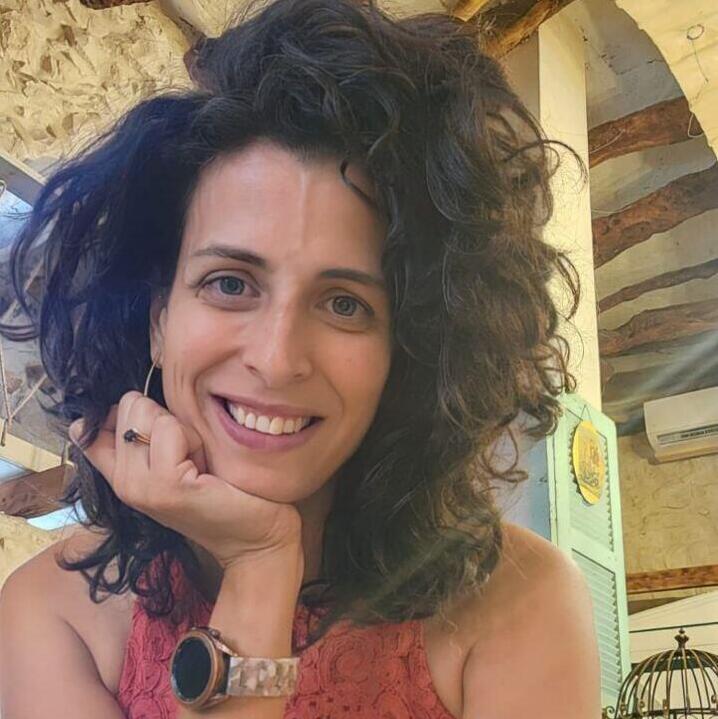
Gloria Borsha
(Photo: Courtesy)
"The whole bed will be covered in blood."
“Honestly, every woman who comes into my clinic, I tell her, please, introduce me to this woman who couldn’t walk for three days afterward. But on a more serious note, unfortunately, in many cases, this can amount to a form of sexual assault. There’s often pressure on the woman and performance expectations on the man, and intercourse happens by force. Even without malicious intent, physiologically, damage occurs.”
And the bleeding—why does that happen?
“Because she wasn’t aroused enough. Or because of fear, intimidation and internalizing the idea that it’s supposed to hurt, based on all these absurd myths we were raised on. Many women believe this is what it’s supposed to look like. So let’s set the record straight.
“Today, we no longer call it the ‘hymen.’ In 2015, Swedish researchers coined a new term. In Hebrew, it’s called the ‘vaginal opening.’”
What exactly is that tissue?
“It’s leftover tissue from fetal development. It contains very few blood vessels—minimal ones—and no nerve endings. So it’s not supposed to hurt. We always joke that ‘virginity’ should be left to astrology. Beyond that, how do you even define whether someone is a virgin? If you masturbated, does that mean you’re no longer a virgin?”
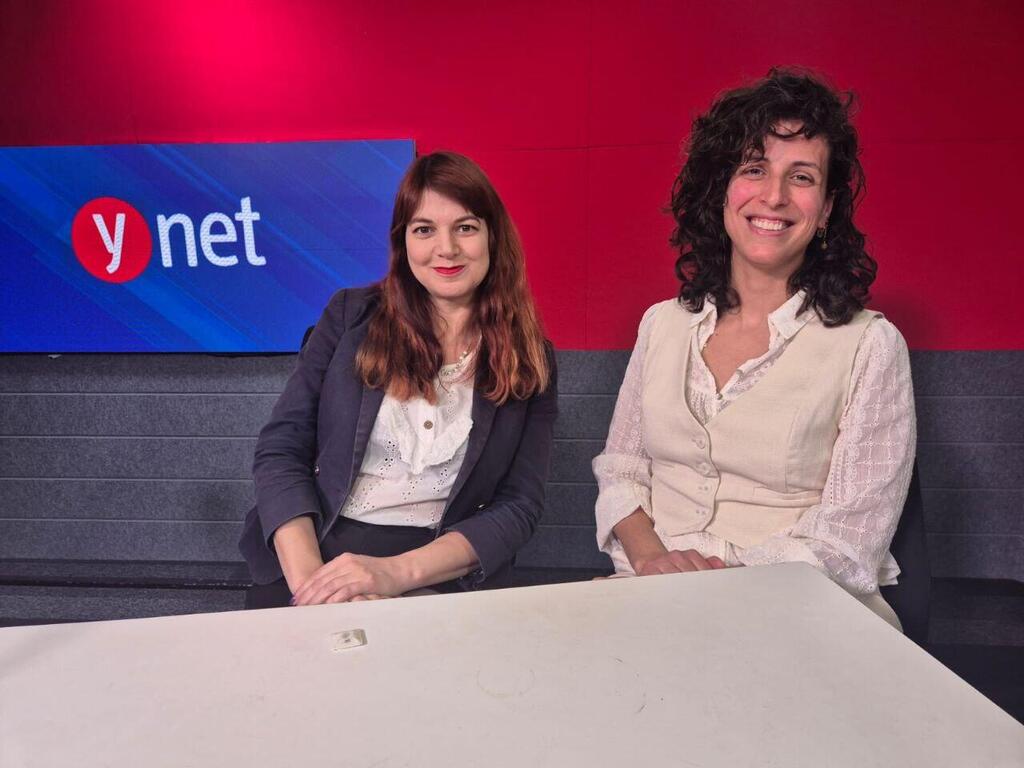
Lori Stadtmauer and Gloria Borsha
(Photo: Courtesy)
Historically, virginity was defined by the presence of a hymen.
“And then they discovered that it can tear in many ways unrelated to sex—and that some women aren’t born with it at all. The issue is that it was never supposed to be defined as a ‘membrane’ because it isn’t closed. If someone is born with a fully closed membrane, that’s a medical condition that requires treatment. It’s rare—about one in a thousand women—and it requires a surgical procedure.”
Yet in religious and ultra-Orthodox communities in Israel, hymen reconstruction surgeries are still performed.
“Yes, and here’s what actually happens. Either they partially close the opening or they take tissue from the vaginal wall. The success rates—meaning whether bleeding occurs during later vaginal intercourse—are not based on any solid evidence. It’s completely unprofessional.
“In many countries, this ‘test’ or procedure is defined as illegal, and even as a form of sexual harm, a direct violation of human rights.”
The address for our kids on sex education? It should start here
Gloria Borsha, 39, was born in the mixed city of Ramla. Raised in a conservative household and educated at a Catholic school, she holds two degrees in pharmacy from the Hebrew University of Jerusalem. Becoming a pharmacist, she says, was her childhood dream.
“I worked in community pharmacies for years,” she recounts. “Most of my job involved people—shifts, chain pharmacies. I really love people, and I genuinely enjoy talking, offering tools and actually helping.”
Over time, Borsha began noticing a pattern: people would approach her at the pharmacy with questions about their sex lives.
“I grew up in a culture where, if you don’t know who to ask, you ask the pharmacist,” she explains. “Pharmacists were always accessible. No need for an appointment, unlike with doctors. You’d just find yourself walking into the pharmacy and asking.”
“I got a lot of those questions during evening shifts—always phrased through someone else: ‘My boyfriend wants to know how he can last longer.’ That sort of thing. In Arab society, we don’t ask sexual questions directly. It’s always framed through ‘a friend’ or ‘a partner.’ Still, I was always comfortable talking about these topics, despite coming from a very conservative background.”
So how do you explain that openness?
“I always say it must be written on my forehead: ‘Tell me your deepest secrets.’ Maybe it’s because I’m genuinely nonjudgmental. Even today in my clinic, I only have two rules: you don’t harm yourself, and you don’t harm others. Beyond that? Have fun.”
“People would come to me with questions about sex, and at first, I didn’t even know that ‘sex therapist’ was a profession. One client once told me she went to a therapist who scolded her for still being a virgin at 25.”
A textbook example of insensitivity.
“Right? It was wrong on so many levels, but that moment stuck with me. Later, I met my partner, we got married, spent a year living in Tel Aviv, and then moved north. In Haifa, I discovered that sex therapy was something you could actually study, and I enrolled in a program at the University of Haifa. It was a real eye-opener.”
“I began studying while parenting—my son was three or four months old—and I finished while pregnant with my second child. As I combined the two—parenting and studying—I started to see the direct connection between the challenges we face as adults and the environments we grow up in as children.”
“There’s a concept I love from Dr. Emily Nagoski, an American sex educator, called ‘my sexual garden.’ She says that we’re all born with a piece of fertile land—and from the start, our environment begins planting things in it, until we reach adulthood.”
“Some people get there and realize their garden is overgrown with toxic weeds, or has too many boundaries—no sunlight can reach it. Others have too few boundaries, and outside forces trample through. To me, this explains so much about how we experience sexuality, our bodies and our sense of boundaries.”
“It also connects to the high number of women suffering from vaginismus. Because what gets planted in your garden in those earliest formative years? That’s very hard to uproot later in life.”
You told me earlier that when you began studying sexuality, you realized you didn’t even know the names of the sexual organs in Arabic.
“That’s right—because at home, they were never called by name. Now I’m part of the Arab Forum for Sex Education, which operates under the Israeli Association for Sex Education, and we’re working day and night to transform how sex education is approached and to promote a healthier, more open dialogue.
“Sex is still a taboo, and we lack the language—we don’t even have a vocabulary for sexuality. Meanwhile, our kids are being exposed to porn for the first time at an average age of just eight. They start asking questions, and we as parents don’t know what to say.
“That’s why I always say—the best way to fight porn is to make ourselves accessible as parents. When we do that, we become the safe, nonjudgmental, accepting address for their questions.”
Even if parents limit screen time, kids can still be exposed elsewhere.
“Exactly. Parents don’t always realize that even if they don’t give their child a phone or internet access, someone else in class will. Then the child will come to them with questions, and it’s critical that we help them process it—so it doesn’t become traumatic.
“That’s something we discuss a lot in the forum—we work to empower parents, teachers and educators. So don’t be afraid to talk about it. It’s perfectly okay to say, ‘I don’t know. Let me check and get back to you.’ Then you consult a professional and return to your child within 24 hours. Don’t dismiss their questions.”
Can you give an example from your own parenting experience?
“Sure—my son, who’s almost six, heard someone say ‘What the fk’ and asked me what it means. He speaks three languages, can read, he’s a little nerd like his mom. He understood ‘what’ and ‘the,’ but not ‘fk.’
“So I told him, ‘Let me look into it,’ and I’ll admit I got stuck. I reached out to a friend who’s a parenting coach and said, ‘Listen, my kid wants the meaning of fk.’ In the end, I came back to him the next day and said, ‘It’s a curse word. Just like sometimes there are different words for the same thing—some are neutral, others are really harsh. Like “poop” versus “st.” It’s the same idea.’ And I left it at that.”
Looking ahead, where do you see things going in Arab society? Do you see signs of change around sex education and open dialogue?
“There are definitely early signs—and I’m very optimistic. Right now I’m involved in a number of projects aimed at real change, and so far, the public response has been very positive.
“One of the initiatives I’m working on is with clergy—helping prepare couples for marriage. The goal is to reduce divorce rates, but it also opens the door to discussing sexuality. The idea is, if we’re talking about housing, careers and finances—then sex needs to be part of that conversation too.
“The fact that these community leaders are beginning to recognize the importance of this topic is a huge reason why I feel hopeful.”
First published: 21:05, 01.19.26