

It happens almost without notice. First, a parent leaves work early for a therapy appointment. Then come missed days, lost promotions and reduced hours, until eventually holding on to a job becomes impossible.
That is what happened to Adi. For years, her professional path seemed clear: She was an English teacher and educational counselor, loved her work and had plans for advancement. Then the demands of raising her son, who is on the autism spectrum, began dictating a very different schedule.

“He had very serious behavioral difficulties, sensory regulation problems, trouble adjusting and I would constantly get calls from school,” she said. “At first, I only reduced my hours. Later, I could no longer hold a job at all.”
Adi is one of many parents of children with disabilities facing an almost impossible reality. About 1.7 million people with disabilities live in Israel, including some 338,000 children and teenagers. Behind each one is a family coping with medical and educational treatments, relentless bureaucracy and intense emotional and financial pressure.
One of the deepest and least discussed consequences is the damage to parents’ employment, particularly among mothers.
According to a recent study, half of parents of children with special needs are unable to work, even though 93% say they want to. Intensive caregiving, the high cost of living and the security situation of the past two years have pushed many families toward emotional and financial collapse.
Kesher, an organization that supports special-needs families, has spent recent years trying to close that gap. Its employment program helps parents return to the workforce after years in which their professional experience, self-confidence and belief in their own abilities have been eroded.
“In the workshops, the first thing we do is restore participants’ belief in themselves and in their ability to return to work,” said Dana Kotick Shezifi, who has led the program for the past five years. “We examine what is genuinely important to each participant in a workplace, what their personal dreams are as parents and as individuals, and how those aspirations can fit both the realities of the labor market and their family’s needs.”

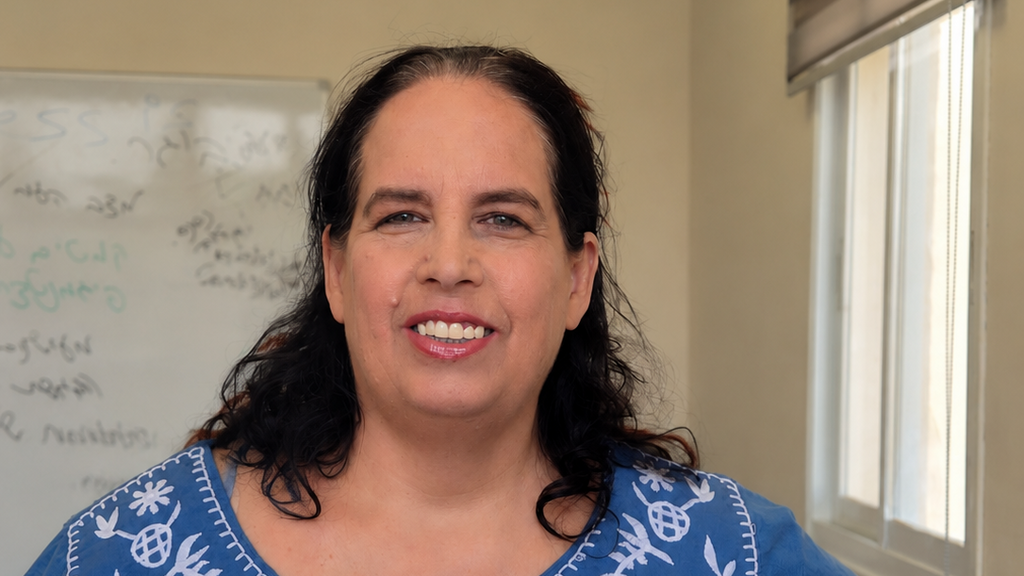
Adi
(Photo: Courtesy)
The decision to begin with confidence is deliberate. Beyond the loss of income, many parents also experience a loss of identity. Women who once saw themselves as skilled, independent and successful suddenly feel irrelevant. After several years outside the workforce, the first thing to collapse is often their belief that they are capable and that any workplace could accommodate them.
‘I felt I was disappearing’
“It is very difficult to hold a job over time when you are the mother of girls with special needs,” said Carmit Rotman, who lives in Kibbutz Netiv HaLamed-Heh and has two daughters with disabilities.
“I lost my partner just as my daughters were being diagnosed, and suddenly I was facing everything alone: schools, treatments and emotional struggles at home,” she said. “Their educational settings kept calling me to come in because they could not manage the girls.”
Carmit Rotman
(Photo: Courtesy)
During that period, Rotman retrained as a teacher and worked as a kindergarten teacher, but struggled to maintain steady employment. “I couldn’t attend professional training or commit to extra hours,” she said. “Then I broke my shoulder and spent a year at home. I felt as though I was disappearing into everyone else’s lives.”
After years spent “just trying to survive the day,” as she described it, Rotman heard about Kesher’s program.
“At first, I was very skeptical,” she said. “Then I met other parents who understood exactly what I was going through. I did not have to explain why it was difficult for me to commit to a job, why I was afraid of full-time work or why there were gaps in my résumé.”
Meeting other parents changed not only her attitude toward employment, she said, but also how she viewed herself. “I can say wholeheartedly that my approach to work changed,” she said. “I suddenly understood that I am also allowed to think about my own future, rather than merely surviving the daily struggle.”
Alongside emotional support, the program provides practical tools. “We teach participants how to build a résumé that explains employment gaps, how people search for work today, how to network properly and how to dare to send out a résumé again,” Kotick Shezifi said.
“The parents receive group and individual support for months, but one of the most important things is the feeling that they are no longer alone.”
‘Suddenly, our whole life turned upside down’
Ayelet (alias), a 36-year-old married mother of two from southern Israel, remembers clearly when her family’s life changed.
“We noticed in the first few months that our son smiled less and responded less, but everyone kept reassuring us that there was no reason to worry,” she said. “Only when he entered daycare did the more significant difficulties begin to emerge.
“The teacher said he had trouble following instructions, coping with transitions and communicating. We tried moving him to another setting, but problems began there as well. No one actually said ‘autism,’ but we decided to have him diagnosed.”

‘Suddenly, our whole life turned upside down’
(Photo: Shutterstock)
After several sessions with a developmental psychologist, the family received the diagnosis: Their son was on the autism spectrum. “Suddenly, our whole life turned upside down,” she said. “The daycare told us we had to be available all the time. I had just found a new job that made me very happy, but I was forced to leave.”
One of the biggest shocks, she said, was realizing that no system was equipped to support the family at that moment. “Our son, who was 3 at the time, attended kindergarten for only four hours a day. We could not find a suitable communication kindergarten, and I had to remain constantly available,” she said.
“I fought as hard as I could, contacted every possible authority and cried endlessly. At first, I was convinced this was an exceptional situation happening only to us. Then I discovered that countless other families were going through the same thing.”
Eventually, a communication kindergarten was found for her son, and Ayelet attempted to return to work with a clearer understanding that her reality had changed. “I realized I needed a workplace close to home, with greater flexibility and a position that suited our lives as they are now,” she said. “But I was full of fear, both for my son and for myself. I did not know whether I would manage to return to work at all.”
For Adi, the Kesher program also marked a turning point. “The COVID pandemic broke us,” she said. “Months at home without a proper educational framework took a heavy toll on my son and his ability to cope. Eventually, I could no longer work at all.”
After years of feeling professionally adrift, the program gave her space to imagine a future again. “I met parents facing the same challenges I was, and that alone was healing,” she said. “We received lots of information and practical tools to help us find the right place in the workforce.”
The most important change, however, was internal. “After years of uncertainty, I began studying cognitive behavioral therapy (CBT),” Adi said. “Today, I am already thinking about the clients I will treat as part of my internship. The program gave me far more than a professional change. It restored my belief in myself.”
Loneliness, burnout and loss of meaning
The workshops have also produced an unexpected insight: The years in which parents were forced to put their careers on hold often helped them develop valuable skills.
“It turns out that while we were at home and overwhelmed with raising a child with special needs, we developed precisely the abilities that are now highly sought after in the workplace,” Kotick Shezifi said. Those skills include time management, independent work, problem-solving, mental flexibility and the ability to manage complex systems.
“Some parents live in a constant state of survival,” she added. “They are so busy holding the child and the family together that they forget they also deserve personal development, independence and a professional life. Sometimes, new paths emerge precisely from the crisis.”

Dana Kotick Shezifi: ‘Some parents live in a constant state of survival’
(Photo: Courtesy)
Kesher CEO Damian Kelman said the program grew out of a need that repeatedly emerged from families themselves. “Parents of children with disabilities want to work, but they struggle to do so,” he said. “We understand that the difficulty is not only financial. Many parents also face loneliness, burnout and a loss of self-worth and meaning. Work is not merely a livelihood, but also belonging, independence and a sense of capability.”
Several workshop cycles have been completed so far, with strong results, according to Kelman. By the end of the program, 85% of participants had either found work or reached advanced stages of the job-search process.
“But for us, the real measure of success is not simply whether participants find a job,” he said. “It is the profound change they describe, moving from feeling stuck and irrelevant to experiencing progress, momentum and renewed confidence in themselves.
“We believe that strengthening a child with a disability begins with strengthening the parents. When parents regain faith in themselves, it changes the entire dynamic at home.”
For Rotman, that change is already evident. “I feel that I am in a place today that is far better suited to who I am,” she said. “Most importantly, I realized that I do not have to choose between being a good mother and being a woman with a professional future.”