


You may have noticed more people lately sporting two or three tiny, sparkling earrings arranged along the outer edge of their ears. For anyone unfamiliar with the latest fashion, it is an old piercing trend making a comeback, with a rather exotic name: the Australian piercing.
At first glance, the look seems delicate enough, with small earrings lined up vertically to accentuate the ear's natural contour. But their location, right along the outer rim, raises important questions about the risks involved and the damage that could remain even after the jewelry is removed.
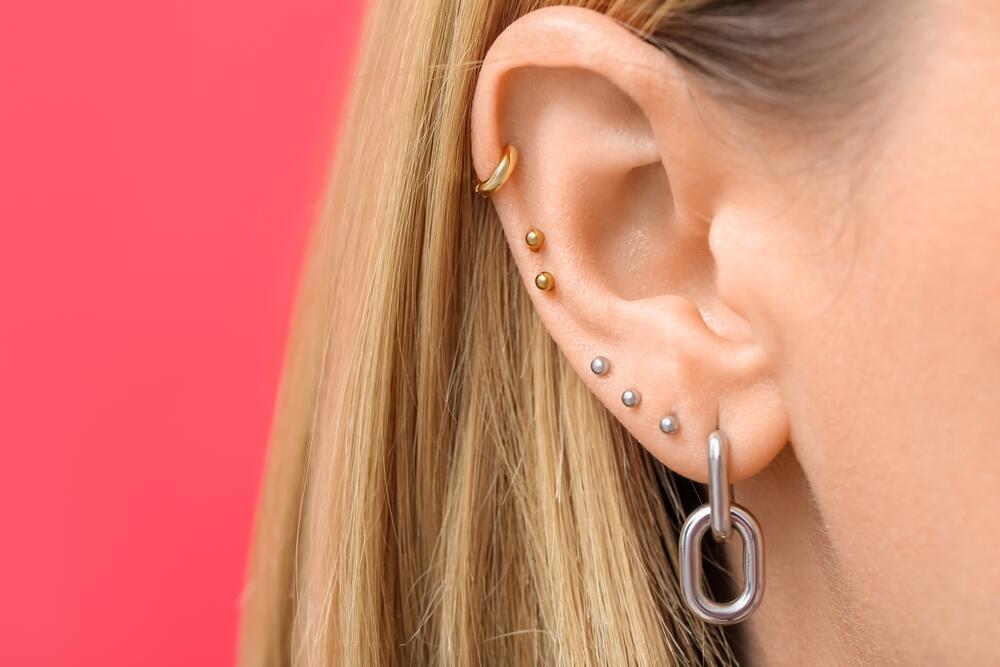
The Australian piercing, also known online as Australianos, is typically positioned along the outer edge of the ear, usually around its middle section. Each earring is inserted through a separate piercing, with the decorative front facing outward.
The name is not a medical term, and even among professional piercers, there is no universally agreed definition of its precise placement. In practice, the anatomy of the ear and the chosen location determine how much tissue supports the jewelry and whether the piercing passes through skin alone or also involves cartilage.
Dr. Snir Bar, an ear, nose and throat specialist with Maccabi Healthcare Services in southern Israel, is familiar with the various types of ear piercings and the complications they can cause.
For him, the fashionable name is less important than the anatomy underneath. "'Australian' isn't a medical term like helix or tragus, which refer to specific anatomical parts of the outer ear," he explains. "It may be considered very attractive and fashionable, but it comes with challenges. This is an area that's more prone to complications, and professional piercers know that too."
His concerns are based partly on what he sees in his clinic. "I'm seeing more and more complications lately," he says. "Not long ago, a woman came to my clinic for an unrelated complaint. When I looked at her piercing, I noticed granulation tissue, an abnormal growth of tissue around the site. I asked her about it, and she said her piercer had told her to leave the earring in and keep applying ointment. In my opinion, that was a mistake."
Why the location matters
To understand why piercing location makes such a difference, start with something simple: touch your ear.
The soft, flexible earlobe feels very different from the firmer structures above it. "Traditional earrings were originally placed in the earlobe, which is part of the outer ear that doesn't contain cartilage, only soft tissue," Bar explains. "That's a very significant distinction, and anyone can feel the difference for themselves."
"The rest of the outer ear gets its shape from cartilage, which is a firmer tissue than the skin and soft tissue surrounding it. Once people started piercing cartilage, many more problems began to appear."
One of the most important differences between the earlobe and cartilage is how the tissue receives oxygen and nutrients. "Cartilage doesn't have a direct blood supply from blood vessels," Bar explains.
Instead, oxygen and nutrients reach it through blood vessels in the surrounding tissue and then diffuse into the cartilage itself. "This is where many of the complications begin, and a lot of them stem from this very fact," he emphasizes.
The first major complication is infection. "If the procedure isn't performed properly, infection is probably the most common complication," Bar says. "It's important to have it done by someone who has been trained, at a licensed business, using disposable equipment and working in a clean, sterile environment."
How the piercing is performed matters far more than what it is called. Warning signs do not necessarily appear immediately. "It can take several hours or even days. You may start seeing redness, local warmth and swelling, and it can progress to an abscess, a collection of pus that requires an incision and drainage."
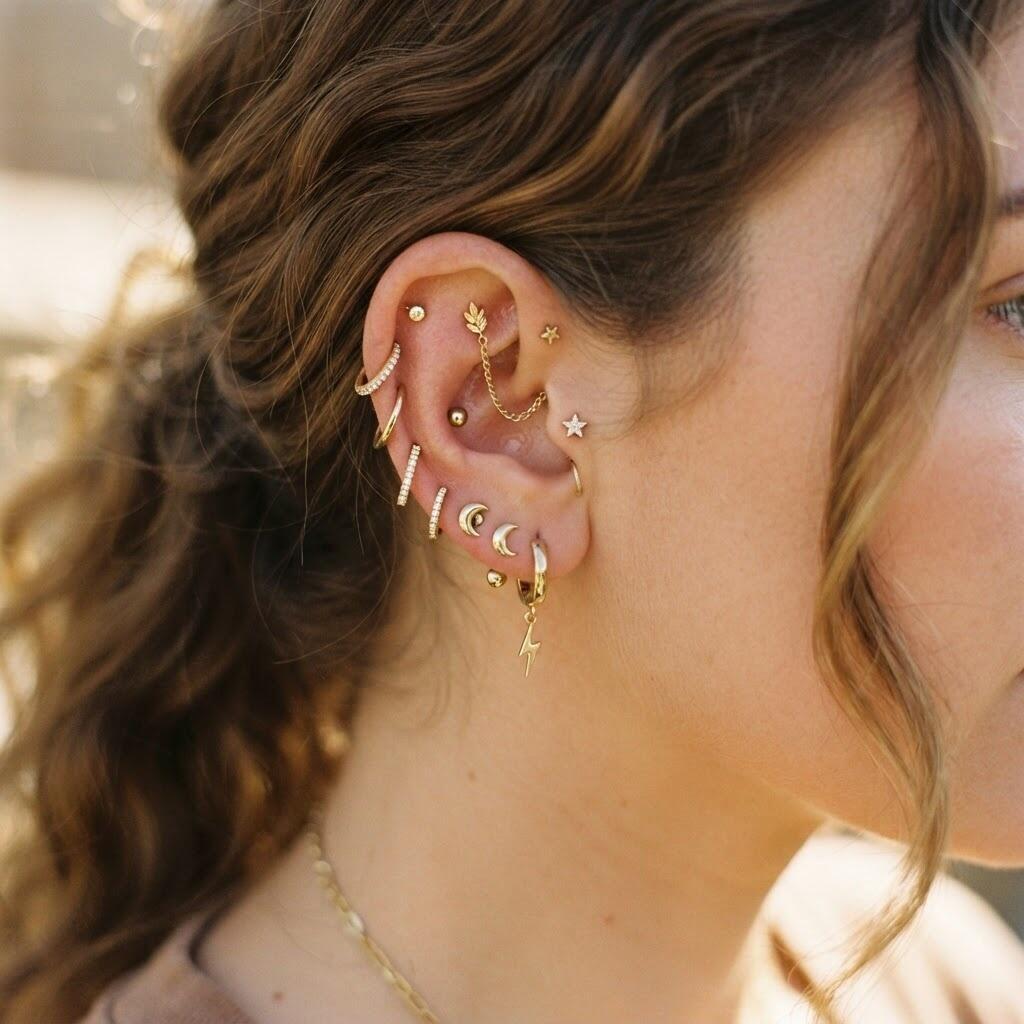
If a complication is suspected, medical attention is important
(Photo: Shutterstock/Shutterstock AI)
According to Bar, most infections are mild and resolve when treated promptly. But delaying medical attention can lead to more serious consequences.
"We sometimes see people who have let an infection go on for too long," he says. "The area becomes swollen and edematous, and the tissue swells to the point where the earring or its backing becomes embedded in the skin.
"At that stage, removal is very painful. It requires an injection of local anesthetic and an incision, which is not a pleasant procedure. When this happens to young children, sometimes general anesthesia and surgery are required."
In more severe cases, the shape of the ear itself may be affected. "There are cases where the skin becomes swollen and the cartilage develops a permanent deformity," Bar warns. "Sometimes the cartilage suffers irreversible damage, and that's something we want to prevent.
"It's not the most likely scenario in every case, but it's something people need to keep in mind and not neglect. If you suspect a complication, it's important to see a doctor."
 Dr. Snir Bar, ENT specialist with Maccabi Healthcare Services in southern IsraelPhoto: Moran Nissim
Infections are not the only possible complication. Other reactions can produce similar symptoms, making it difficult for someone examining their ear at home to understand what is happening. Itching, bumps and swelling may look alike, even when their underlying causes are different.
"Another possible complication is an allergic reaction to the metal itself or rejection of the piercing," Bar says. "It can be difficult to distinguish these from an infection, but sometimes the reaction is more chronic.
"With an infection, the pain can be very severe, even unbearable. With other types of reactions, there may be less pain and redness, more itching and milder symptoms that persist over time."
Another complication is granulation tissue, the abnormal tissue growth that Bar noticed in his patient. "This is another reaction by the body, but it may not even be painful," he explains.
"Tissue grows around the piercing and may cause swelling or a sensation of pressure. It's a reaction involving abnormal healing. In other cases, simply puncturing the skin can lead to a hypertrophic or keloid scar," Bar says. "It's a thickened scar around the piercing site."
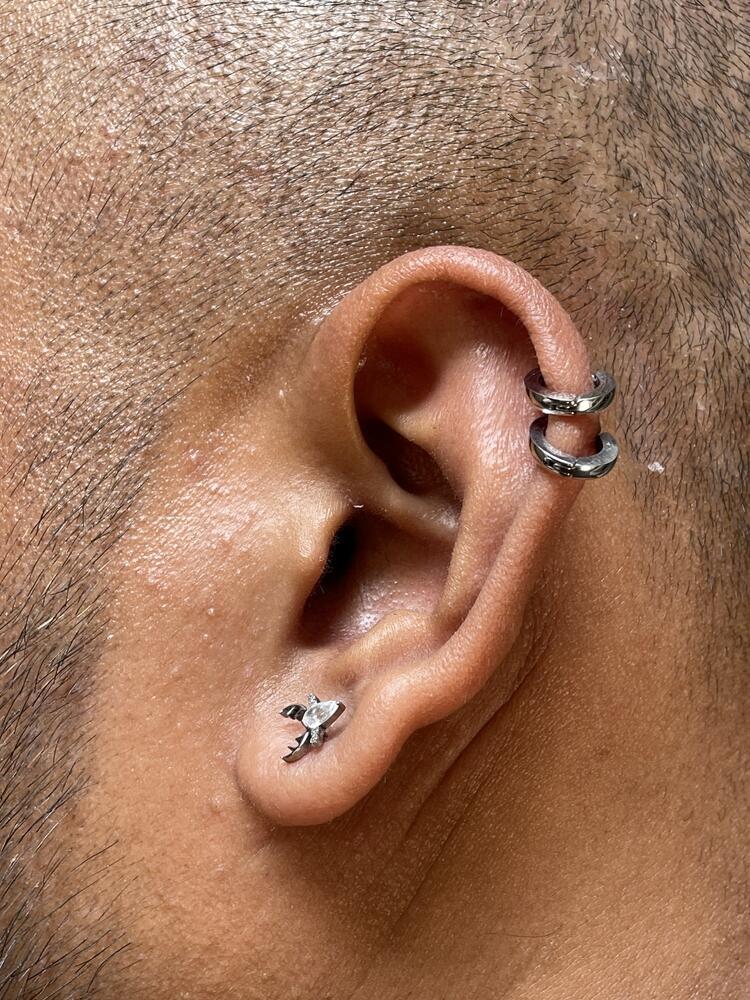
Metal allergies may also be involved
(Photo: Shutterstock/Diana Widoera)
Because the symptoms of infections, allergic reactions and abnormal healing can overlap, Bar warns against relying solely on the person who performed the piercing to diagnose or treat a problem.
"Patients often tend to go back to the piercer and ask what to do," he says. "The piercer may also feel responsible and try to handle the treatment themselves." But dealing with medical complications is not the piercer's responsibility.
"Once there's a complication, you need to see a doctor. It could be a family physician, an ENT specialist, a plastic surgeon or another doctor who treats these conditions." Israel's Health Ministry identifies redness, swelling, pain and discharge from the piercing site as warning signs requiring prompt medical examination.
Should you remove the earring?
One of the most common questions when complications develop is whether the jewelry should remain in place during treatment. According to Bar, leaving jewelry in place when removal is medically necessary can interfere with recovery.
"It's very difficult to achieve proper healing in cases where the piercing needs to be removed but is still in place, just by applying ointment around it," he says. "That's a mistake I see quite often."
However, he emphasizes that there are exceptions and that, when removal is necessary, it is preferable for a doctor to perform it.
The decision should be made after a medical examination. Guidance from Britain's National Health Service, or NHS, advises people who suspect an infected piercing to leave the jewelry in place unless a doctor instructs them otherwise. In other words, redness or swelling does not automatically mean the earring should be removed at home.
How to reduce the risks?
For anyone considering an Australian piercing, Bar recommends taking several precautions before going ahead. "First, make sure the outer ear is healthy and in good condition, without wounds, lesions, burns or anything else that could be aggravated by the procedure," he says.
"Second, have it done by someone who has received proper training, at a licensed business that uses disposable equipment whenever possible and follows Health Ministry regulations."

Proper sterilization and hygiene are essential when getting a piercing
(Photo: Shutterstock/Pixel-Shot)
It is also important to ask how the piercing will be performed. Israel's Health Ministry warns that piercing guns can be difficult to clean thoroughly, particularly their plastic components, which cannot be sterilized in an autoclave. The Association of Professional Piercers (APP) also warns that piercing guns can damage tissue and cartilage.
After the piercing, it is important to obtain written aftercare instructions and follow them carefully. "There are recommendations to use saline sprays, and that's fine," Bar says. Daily care is an important part of healing, but routine cleaning is not a substitute for medical attention if symptoms suggest a complication.
"The earrings may be small, and getting them pierced may seem like a minor decision," he says. "But if complications develop, treating them can be far more complicated. If you suspect something is wrong, don't ignore it. See a doctor."