

Adi Skarishevsky, 36, from Ramat Hasharon, is a new mother, a member of the Link20 social movement under Edmond de Rothschild Partnerships' umbrella, and an employee of the Israel Electric Corporation.
“I was born with cerebral palsy (CP). It’s not entirely clear what happened, but there were distressing symptoms following the birth. The diagnosis came when I was three months old. The doctors told my parents I would never walk, never talk, and wouldn’t have control over my bodily functions. That’s where my journey began. I had developmental delays, but each time I managed to do a bit more.
Gallery
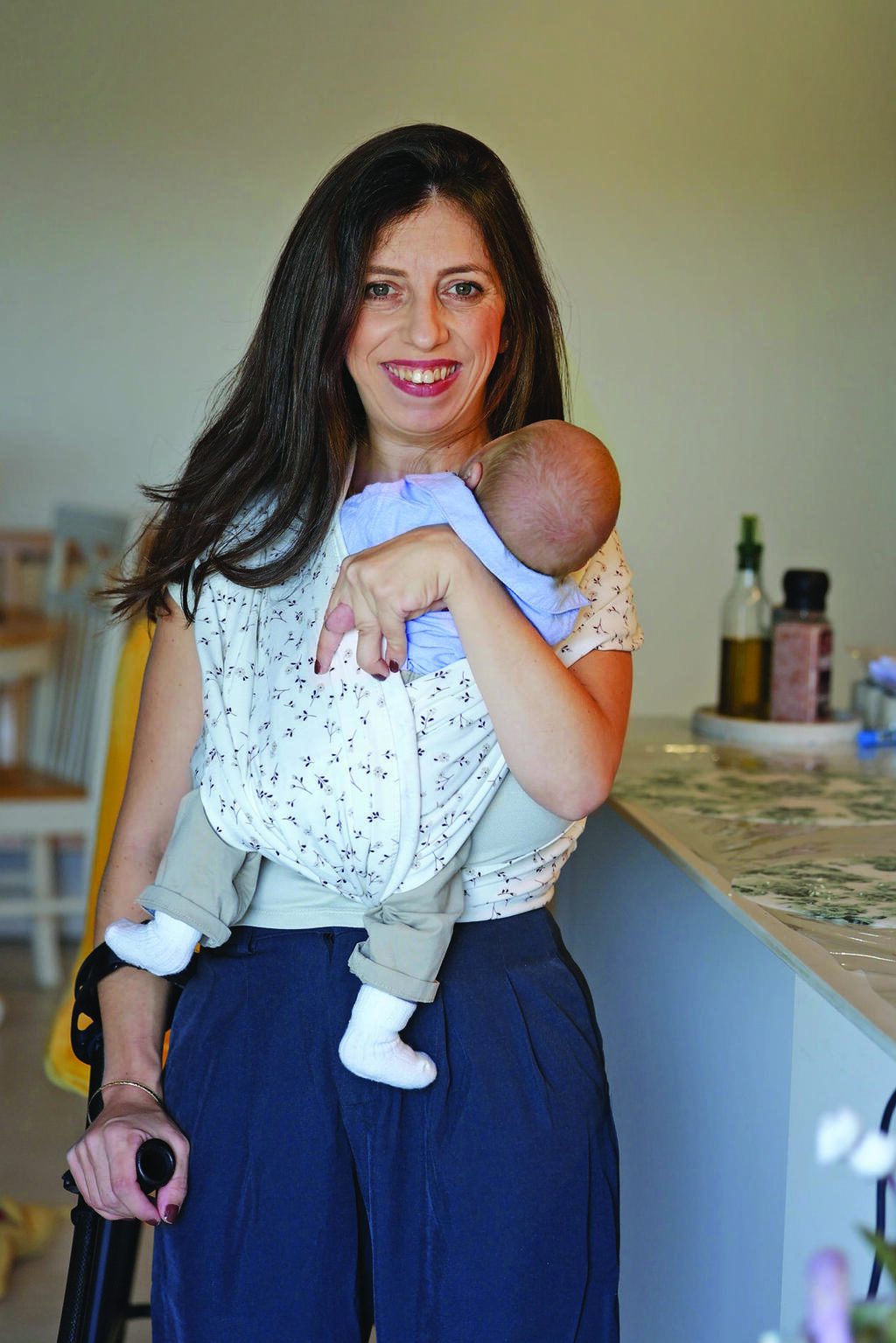
Adi Skarishevsky and her son Oz Meir. 'I named him Oz for the strength it took to get here'
(Photo: Avigail Uzi)
“CP varies in symptoms; some people are fully dependent, while others function quite well. For me, it affects my walking and balance. I use a crutch and have a mobility scooter for long distances. I believe I got to where I am thanks to therapy, faith, and my parents, who always pushed me forward and never let me give up.
“From kindergarten through high school I had a personal aide, and I tried not to miss out on anything, even school trips. I was exempt from military service but chose to volunteer and served for two years in the Air Force. My disability never stopped me from flying abroad alone or sharing an apartment with roommates in Tel Aviv. These things may seem trivial, but they’re not.
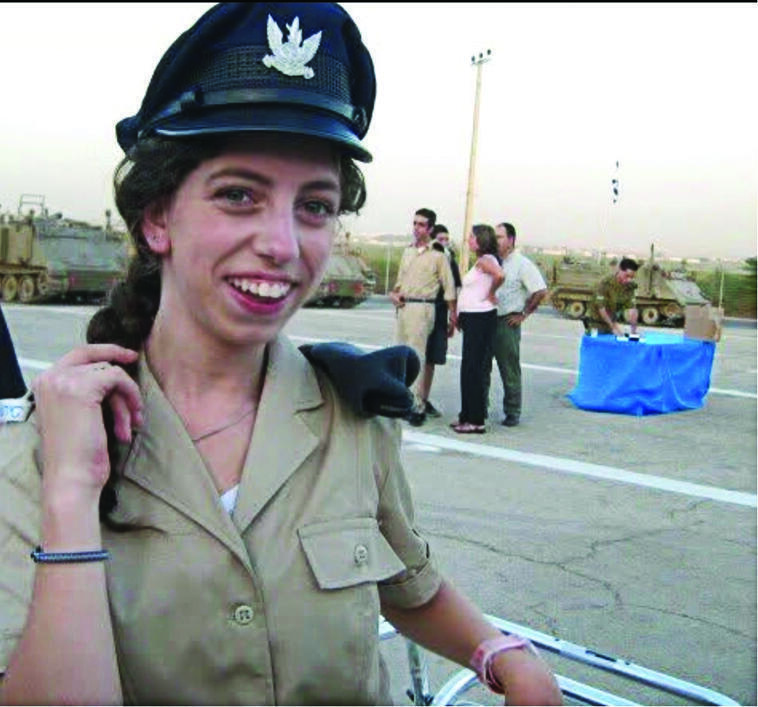
'I was exempt from military service but chose to volunteer'
(Photo: Private album)
“When I signed up for a bachelor's degree in human resources, I was told it would take me five years. After six months I realized I wasn’t going to stay behind. I caught up and studied just like any other student.
“Over the years, I had a few relationships, but nothing serious. It just didn’t happen. Some men told me outright they wouldn’t date a woman with a disability. Others canceled the date the moment they found out. Some were afraid of what their friends or family would think. On dating apps I never hid my disability; I wrote that I had a mobility issue and included pictures with my crutch.
“At 31, I realized time wasn’t on my side and looked for other options. I chose a sperm donor, froze my eggs, and also froze embryos. A year and a half ago, on Yom Kippur, after a period of confusion and another failed attempt at a relationship, I prayed in a small synagogue and felt clearly that the time had come for me to become a mother.
“I had a lot of worries: how my body would react to the hormones, whether I would get pregnant, whether I could carry a pregnancy, how I’d handle the birth. This was during the height of the war, when everything was in turmoil. I chose to disconnect from the news and background noise and stay in an optimistic 'bubble', surrounded by people who made me feel good. My parents and close friends supported me every step of the way.
"The road to motherhood exposed even more layers of inaccessibility and lack of awareness. In many women’s health clinics, the exam tables aren’t adjustable, and I often had to rely on the doctor to help me climb up. During one checkup, a nurse asked where my husband was. When I told her I was a single mother, she asked if I understood what I was getting into and how I planned to manage with a baby. It struck a painful chord, but I chose to move forward.
“During IVF treatment I couldn’t inject myself with the medication, so I drove to my parents' every day. My father gave me the shots, and sometimes my personal trainer did. I went through three rounds of IVF. The third one worked.
“During the pregnancy I met one doctor who changed everything: Prof. Shali Mazaki-Tovi, Director of Gynecology and Maternity Center at Sheba Medical Center. He was the first to see me as Adi, not ‘Adi with a disability.’ He didn’t ignore the disability, and neither did I, but it didn’t define what was possible. He was the only one who supported my dream to have a natural birth and not a C-section. I continued going to physical therapy, exercising, and working until my eighth month.
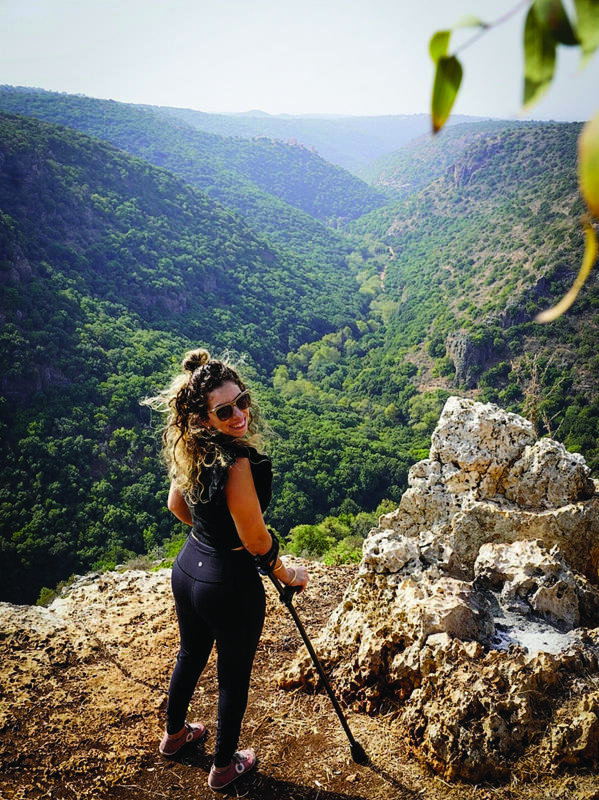
"I walk with a crutch; I’ve tried not to miss out on anything"
(Photo: Private album)
“Last November I arrived at the delivery room. The labor lasted 26 hours and was complicated; it involved high muscle tone, a fever, high blood pressure, and a slowing fetal heart rate. I ended up in the operating room, but with four final pushes I got the natural birth I had dreamed of.
“I named my son Oz Meir. ‘Oz’ for the strength it took to get here, and ‘Meir’ after my grandfather and the light I try to bring to the world and the light my baby brings to me. I live close to my parents and am adjusting to this new chapter. It’s true I can’t do everything, but others are my hands and feet. I have a full-time caregiver, and together we find solutions.
“I may not be able to lift my son from the stroller, but once he’s in my arms, it doesn’t matter. When he grows up, maybe I won’t be able to run with him in the park, but I’ll be able to do other things with him. Sometimes I worry he won’t see me as his mother because I don’t do everything a mom typically does; I don’t bathe him or soothe him while standing, but then I remind myself it will all be okay.
“Since childhood I’ve moved between the ‘regular’ world and the world of people with disabilities. I was active in nonprofits, and today I’m part of the Link20 network, an initiative of the Edmond de Rothschild Partnerships that promotes the rights of people with disabilities. I served for six years on the alumni council, led a team, and advocated for equality, making bomb shelters accessible during wartime or improving public transportation access.
“I’ve been working as an HR recruiter at the Israel Electric Corporation for eight years. One of the projects I’m especially proud of is ‘Nitzan Or,’ a program designed to integrate people with disabilities into the workforce. I also volunteer with groups of wounded soldiers for water-skiing activities and give lectures in schools and organizations called ‘Your Limping Sister,’ where I share my personal story.
“Someone once asked if my strength and belief in myself came from my CP or if it’s just my personality. There’s no clear answer. I’ve had surgeries, I’ve been through failures and painful experiences, but they’ve all shaped me. In the end, I believe every person, disabled or not, needs goals in life, big or small.
“Bottom line: When I was a kid, I didn’t go to parties because my friends didn’t understand they had to stay close to me. Later in life, I found one friend who grabbed a chair for me. So I know that everything comes at the right time."