


A happy relationship is an elusive concept. We tend to think marital happiness depends on personality, luck or years of careful maintenance. But when the data is examined, a less romantic and far more intriguing picture emerges. Paradoxically, the years in which we expect to feel most fulfilled, the years of starting a family and raising children, are precisely the years when relationship satisfaction declines. Only much later, when it seems the hardest part is behind us, does it begin to rise again. Why does this happen?
The question of whether children truly bring happiness to a relationship is not new. Yet research accumulated over many years paints a consistent, and not always intuitive, picture. Large-scale studies conducted over recent decades point to a recurring pattern that appears again and again, almost regardless of a couple’s personality or social background.
Gallery
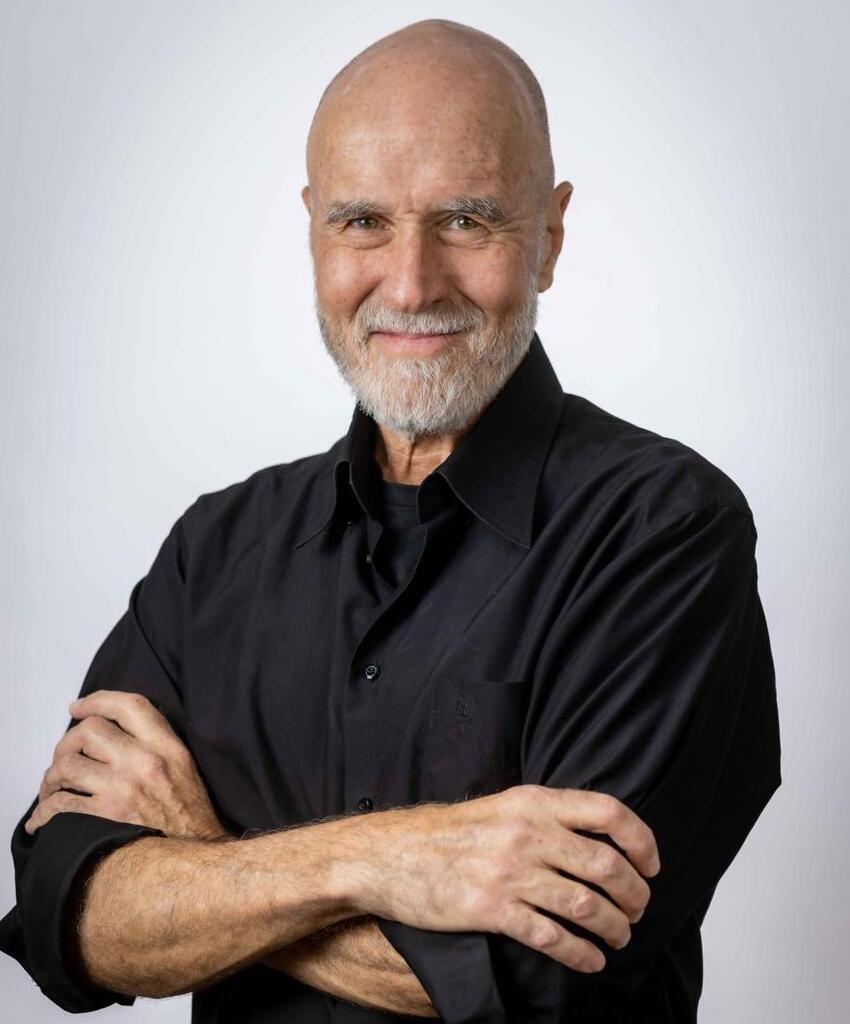
'Contrary to the common perception, happiness actually increases at older ages', Prof Yoram Yovell
(Photo: Eric Sultan)
‘I think the interesting question is why this happens. It is not one study, but many studies, and together they increase our confidence that we are dealing with something real,’ says Prof. Yoram Yovell, a psychiatrist and brain researcher. ‘Many studies conducted in the Western world, in countries like Israel, industrial, capitalist, modern societies, show that couples’ happiness over the course of their relationship rises and falls according to a fairly clear pattern. ‘From the birth of the first child until the children leave home, both partners’ levels of happiness and satisfaction are lower. The lowest point is roughly when the first child reaches adolescence. These are the data. Of course, this is an average. There are couples who manage to avoid this, but they are not many.’
When do we flourish?
‘Before children are born and after they leave home, happiness is higher. In the years before having children and in what are commonly called the “empty nest” years, when children have left home, couples’ relationship satisfaction and personal happiness are higher, exactly the opposite of what we tend to assume. ‘Contrary to the common image, happiness actually increases at older ages.

'The lowest point comes during adolescence, it is interesting to ask why'
(Photo: Shutterstock)
As people grow older in the Western world, they become happier on average. There are exceptions, of course, but when you look at the averages, the best is still ahead of us. Most of us will be happier later in life, and that is good news. The problem is that most of us are now deep inside what I call the “valley of death”, meaning most of us have children, and we are asking ourselves, “What happened to us?”’
A massive social experiment
If this pattern repeats itself among so many couples, the obvious question is not only what happened, but how it happened. Prof. Yovell shifts the discussion away from individual psychology toward the broader social structure, suggesting that the decline in parental and marital happiness is not a personal failure but the result of a deep historical shift in how we live, raise children and build families.
‘I think it happened without any bad intentions, but we are in the middle of a very large social experiment,’ he says. ‘Until the Industrial Revolution, almost all human beings lived in extended families, which is probably how our species evolved. When you look at the animals closest to us, the apes we evolved from, and when you look at early human societies, everyone lived in three-generation extended families, with grandparents, parents and children living together. To this day, that is how people live in traditional societies. That was the default for all humans everywhere.’
The Industrial Revolution, he explains, changed the rules of the game. ‘Several things happened. Mobility increased. Until then, people lived more or less where they were born. They were born in a village and lived there their entire lives, and even if they left, they usually returned. From this emerged a new way of life that we now take for granted, but simply did not exist 200 years ago: the nuclear family, a two-generation family of parents and children.

'Most of the time we feel guilty, and rightly so'
(Photo: Shutterstock)
‘Why does this matter? Because in nuclear families, raising children becomes a zero-sum game. In traditional societies, there is always someone who can step in when the father is at work and the mother is at the end of her rope: an aunt, a grandfather, a neighbor, someone who is not one of the two parents, who is available and can help with the children. Today, we no longer have that.’
The shift from extended families to nuclear families was not the only change brought by industrialization. At the same time, the way children grow up, and the amount of time they spend with their parents, also changed. ‘Before the Industrial Revolution, children spent most of their time with their parents. Boys went out to the fields or hunted with their fathers and learned their trade from them. Girls stayed with their mothers, helped with household tasks and learned how to be mothers themselves. They were with us, we raised them, and they learned how to function from us,’ Prof. Yovell explains. ‘Once we started sending them to schools and we were no longer with them, we began to feel guilty, and rightly so. All parenting guides and psychologists tell us how important it is to be with our children, which is true. Then every free moment outside of work comes with enormous pressure to be with them all the time. ‘This is especially true in Israel. We are a society that sanctifies children more than other Western societies. We constantly feel guilty that we have not done enough and that we need to do more for them.’
Mothers pay the price
In other words, the daily reality of modern parenting places an extreme psychological burden on parents. ‘If you look at your children and mine, who are they with? Either with their father, their mother, or with someone we pay: teachers, instructors, educators, kindergarten teachers, caregivers. Someone on the payroll. This creates a very heavy mental burden for parents. ‘I will say something extreme. The role of parenting, which has always been difficult throughout history, has become almost impossible in recent years. Those who pay the highest price are mothers, women, because they have taken on an entire new set of responsibilities and challenges, without any meaningful reduction in the load placed on them by raising children.
'Because the country is small and because we still retain traces of a traditional society, grandparents here are more involved in raising children and grandchildren than in other Western countries, particularly the United States. This is likely one of the key reasons Israel’s happiness levels are genuinely among the highest in the world'
‘Many fathers have their work, and work becomes the ultimate mistress. A person works long hours and is not at home, and he says, with some justification, what do you want from me? I am providing. Someone has to keep this whole thing going. If the mother is the primary breadwinner, and the father still goes to his job and does not stay home, and there are no active grandparents and no paid caregiver whose job it is, then the mother is left with an impossible burden.’ This burden is not merely theoretical. It is a daily reality Prof. Yovell has encountered in his clinical work. ‘I no longer do this, but for many years I worked as a therapist in New York. I had a patient who was a senior executive at one of the major Wall Street firms. One day she came into my office, sat down, looked at me and said, “Dr. Yovell, I need a wife.” That is where many women find themselves today.’

Mothers are coping with an impossible burden
(Photo: Shutterstock)
Still, this picture is not identical everywhere. Much of the research informing our understanding of parental and marital happiness comes from countries where family structures are even more fragmented and distant than in Israel. ‘Most of the studies we have come from Western countries, especially the United States. These are very large countries, where people often see their grandparents only during the holiday season, between Thanksgiving and the New Year,’ Prof. Yovell says. ‘The situation in Israel is better, because the country is small and because we still retain traces of a traditional society. Compared to other Western countries, grandparents here are more involved in raising children and grandchildren than in the United States, where grandparents may live in Florida while the family lives in Los Angeles and see each other once a year. ‘That is probably one of the important reasons why happiness levels in Israel are genuinely among the highest in the world. But we are still a Western country, with all the caveats, and it is still very hard to be a parent here.’
Another feature that slightly distinguishes Israel from other Western societies, he says, is the attraction to community-based living. ‘Until October 7, communities near the Gaza border had far more people wanting to live there than they could actually absorb. Parents are looking for a community where children can function in the afternoons without parents having to provide transportation and entertainment, or without children being stuck in front of smartphones, which we know is not good for them.’
The shift in family structure and parenting has not only weighed heavily on daily life but has also had a direct impact on the intimate core of the couple’s relationship. “What are the variables that predict how satisfied both partners are with the quality of their romantic lives?” Prof. Yovell asked, before offering the answer. “The striking finding is that it is most strongly correlated with the number of hours the father spends with the children. That is fascinating, it explains a great deal, and it also offers hope, because it tells you exactly what you need to do to make things better,” he said.
The goal: protecting the relationship
This link between couplehood, parenthood and children’s well-being also lies at the heart of the extensive research conducted by Prof. John Gottman, one of the world’s leading scholars on relationships and family life. Over decades of research, Gottman sought to examine not only what people say about their relationships, but what actually happens inside them.

We have to find a way, somehow, to preserve romantic love between partners
(Photo: Shutterstock)
“Prof. Gottman’s research found that romantic love between parents is the child’s true cradle,” Prof. Yovell said. “Couples who did not abandon their relationship in favor of total focus on the children were not only happier themselves, their children were happier as well.”
One reason Gottman’s work is considered particularly reliable, Yovell explained, is his unusual methodology. “He did not settle for what people told him. Instead of relying solely on self-reporting, as most psychological research does through questionnaires, he also measured actual behavior over time. “As part of his research, he invited couples, and later entire families, to what was known as the ‘Love Lab,’ a fully equipped apartment owned by the University of Washington in Seattle, located in a pleasant neighborhood overlooking the harbor. They stayed there for a weekend at the university’s expense. It was very much like ‘Big Brother.’ They gave full consent to be filmed and recorded everywhere except the bathroom and bedroom throughout the weekend.”
'All couples who divorce began with immense love for one another and a genuine desire to give everything to each other. The question is how you move from point A to point B, from the person you chose above all others and were truly willing to do anything for, to a place where you cannot stand them and feel you must separate, despite the enormous social costs'
This process was repeated over many years. “He took a young couple in the first year after marriage, then followed up five years later after their first child was born, and then another five years later with two or three children, and compared the results. Much of what we know today comes from these findings, especially the insight that the amount of time parents spend with each other has a major impact.”
The conclusion, Yovell stressed, is not romantic but practical. “Couples must actively protect their love. What happens naturally and effortlessly at the beginning later requires care and intention, because it no longer happens on its own. Life’s wear and tear is simply too great. “Parents who hover over their children 24/7 under the belief that this is what is best for them are mistaken. The love between the two of you is what gives your children their deepest sense of security.”
From there, he said, the path to relationship breakdown can be short. “There are situations in which separation is truly the right choice, cases where the conflicts are simply too severe. But it is important to remember that every couple who divorces began with enormous love for one another and a genuine desire to give everything to each other. “The question is how we move from point A to point B, from the person we chose above all others and were willing to do anything for, to a situation where we cannot stand them and feel we must separate, despite the enormous social costs.” Here, too, Gottman’s research offered an answer. “He found that what we usually think of as the causes of divorce, such as an affair that comes to light or a shocking financial secret, are actually just triggers. What happened beforehand was a gradual erosion of romantic love over many years. “Then something occurs that, had it happened at the beginning of the relationship, the couple could have survived.”
Gottman compares romantic love to a bank account. “We begin with a large positive balance. But the challenges of raising children lead to repeated withdrawals, and if we do not make regular deposits, small and frequent investments, we can end up overdrawn. “One of Gottman’s strongest recommendations is to strengthen the couple relationship, for example by going on a weekly date, once a week. It sounds very small, but it is critically important. At the beginning we did this often. Later we are simply too tired, busy with the children, and we say, ‘Let’s just watch something on Netflix.’
“But if we stay at home, we remain wrapped in all the habits of the household. We do not return to the romantic, couple-centered space we once had, the place that felt good and that is what keeps the flame of love from going out.”

Do you remember when you were once a young, happy couple?
(Photo: Shutterstock)
Ultimately, after all the data, studies and diagnoses, Prof. Yovell seeks to distill these insights into one simple principle that, in his view, summarizes the entire discussion of relationships, parenting and emotional responsibility: Make time to invest in your relationship, even if at times it comes at the expense of the children. You are not being selfish. You are also taking care of them. “You simply have to put on the oxygen mask,” he said, invoking the familiar airline safety instruction. “We all know the announcement before every flight, that if there is a drop in cabin pressure and oxygen masks fall, you should put the mask on yourself first and only then on your child. Every mother hears this and says, ‘Are you serious? Me first and only then my child?’ “The answer is that this is exactly what you should do.
“Imagine the moment it actually happens. There is a loss of cabin pressure, the masks drop, and the plane eventually makes an emergency landing on water. Now everyone has to get out quickly before the plane sinks. Who has a better chance? A fully alert child wearing a mask, lying in the arms of an unconscious mother? Or an unconscious child in the arms of an alert, clear-headed mother wearing a mask, who can lift the child and get out of the plane in time? “First take care of yourselves and of each other, so that together you can take care of the children,” he concluded.