

Each year, dozens of graduates from Israel’s fashion design departments enter a crowded, talent-filled market, facing exhausting bureaucracy, relentless wars that make continuous work difficult, and a limited customer base that remains loyal to blue-and-white design over cheap clothing from Chinese websites.
Despite the difficulties, recent years have seen the emergence in Israel of a new generation of young-established designers, including Aharon Genish, Yarden Hanuka, David Wexler and others, whose work raises questions about sustainability, gender, design ethics, ethnicity and local identity.
Gallery
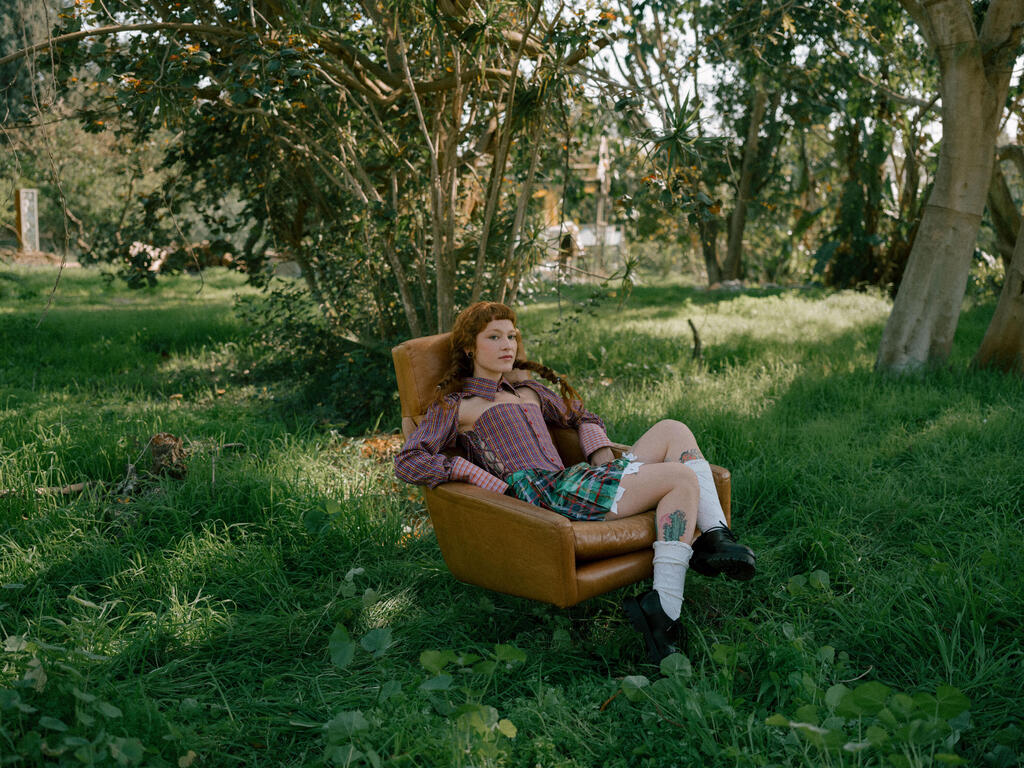
A personal interpretation of contemporary fashion: designs by Itiya Stavsky
(Photo: Ofek Avshalom and Rona Bar)

'At Zara, you might pay half my prices for an item, but honestly, it may not stay with you for long': designs by Shir Shtarker for Assemble
(Photo: Shalev Ariel)
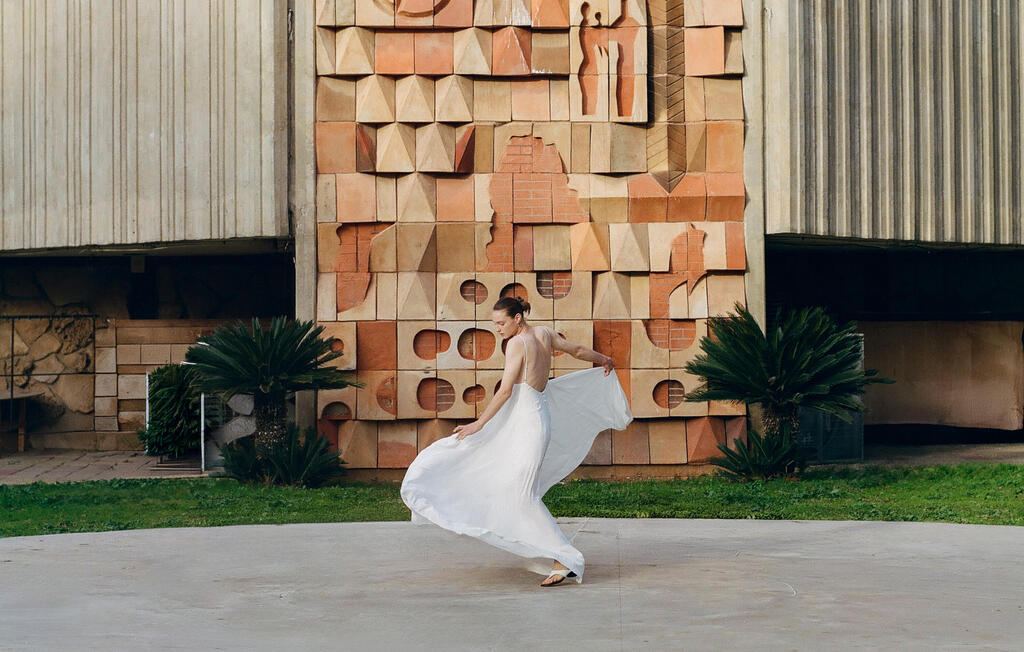
'To create harmony from contrasts within each dress': designs by Niv Keren for Idiom
(Photo: Daniel Jackont)
The seven designers featured here include names already known in Israel’s fashion scene and others just emerging after design school, together capturing a contemporary aesthetic shaped by the moment.
Beyond talent and ambition, they bring developed styles, growing international recognition and a clear desire to succeed abroad, knowing that the local market alone is rarely enough to sustain a fashion brand.
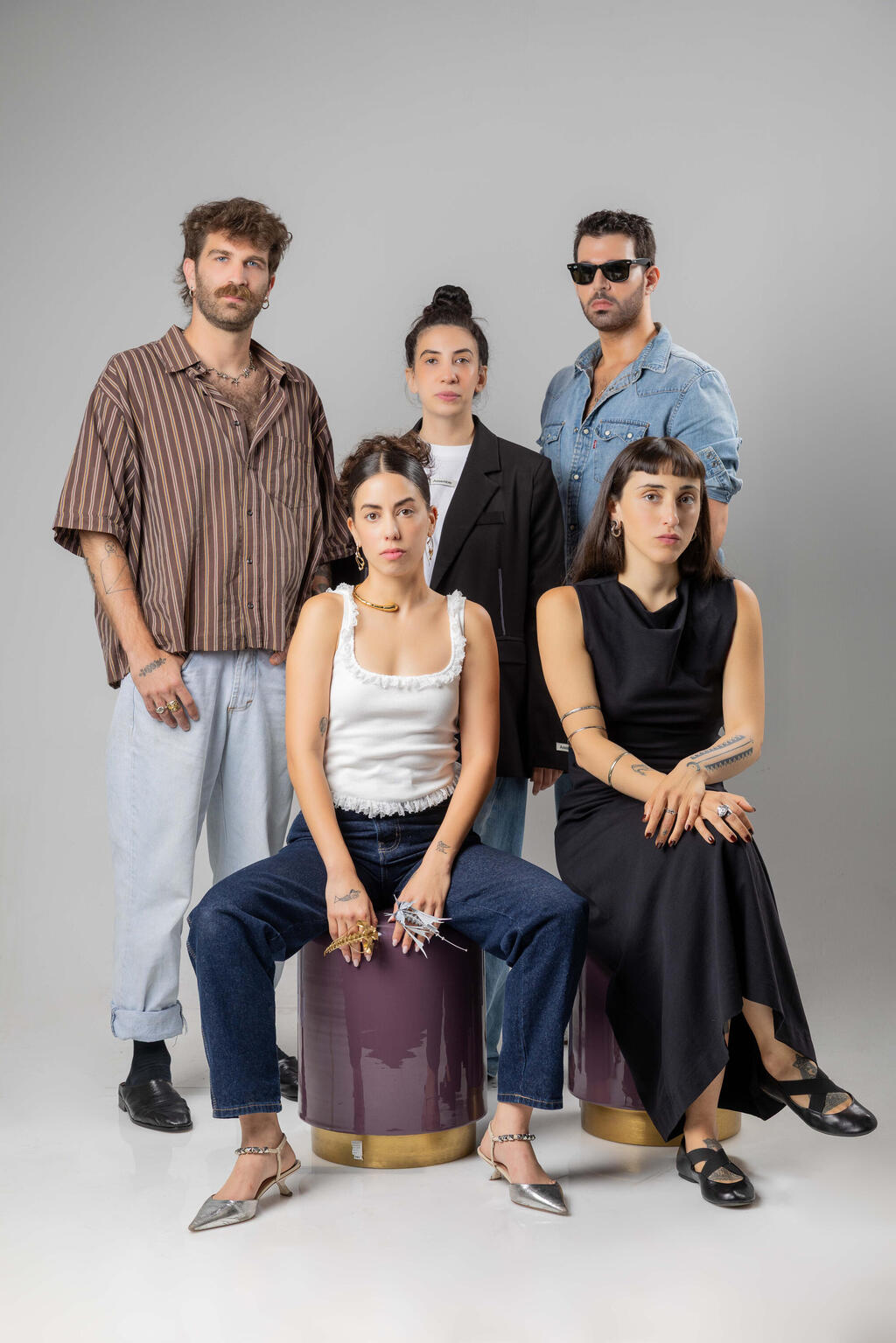
From right, clockwise: designers Niv Keren, Yuval Lasri, Inbar Avneri, Nitzan Mileguir and Shir Shtarker
(Photo: Tal Shahar)
The seven designers and brands selected move between traditional jewelry-making and social media inspiration, and between a personal look at the body and identity and a desire to create a fantasy disconnected from Israeli reality. Some work out of a small studio in a residential apartment, while others already dress celebrities, show at fashion weeks or sell overseas.
At a time when the fashion world seems to be measured by how quickly it reacts to trends and how viral it can become, almost all of them share a sense of urgency to create fashion that is not merely a consumer product, but one that carries a fashion statement and a personal point of view.
Tal Maslavi: ‘I flirt with cynicism and humor’
About: Designer Tal Maslavi, 29, is one of the most talked-about graduates of Shenkar’s fashion department, which he completed in 2022. His final project, “Autonomous Sensory Meridian Response,” drew praise and was exhibited in Israel and abroad.
Since then, Maslavi has won several awards for his work on the margins of the mainstream. He was selected to participate in the 8th Mifal HaPais (Israel's National Lottery Association) fashion incubator, as well as in the ITS international designers’ competition, and scored a special jury mention at the prestigious Hyères fashion competition in France, held annually before leading figures in the global industry. He is now nominated in the young designer category of the prestigious Edmond de Rothschild Award for Fashion Design.
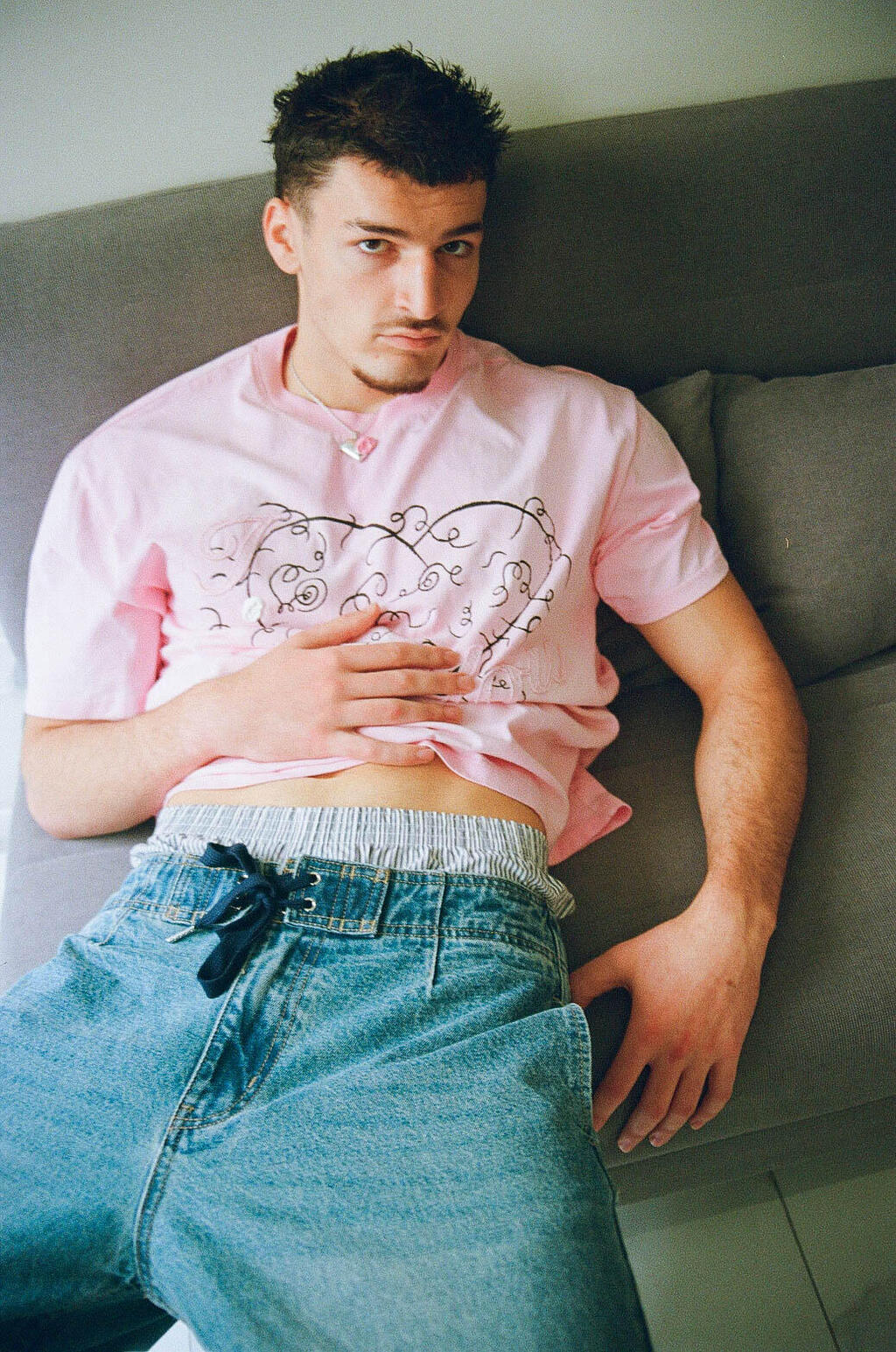
'Contemporary aesthetics': designs by Tal Maslavi
(Photo: Alan Brethaud Lagadec)
Brand: Maslavi founded his namesake brand in 2024 as an accessories and ready-to-wear label for men and women seeking a radical language. “These are not necessarily products that fit the conventional definition of ‘beautiful,’ but an underground brand that swims against the current,” he explains. “I play with cynicism and humor while questioning what contemporary aesthetics can be."
In the future, he hopes to build an entire lifestyle brand. “The vision is to build a design toolbox and apply it to anything that interests me, from fashion and furniture to dog food. Ideally, my customer would wear my clothes, sit on a sofa I designed and so on.”
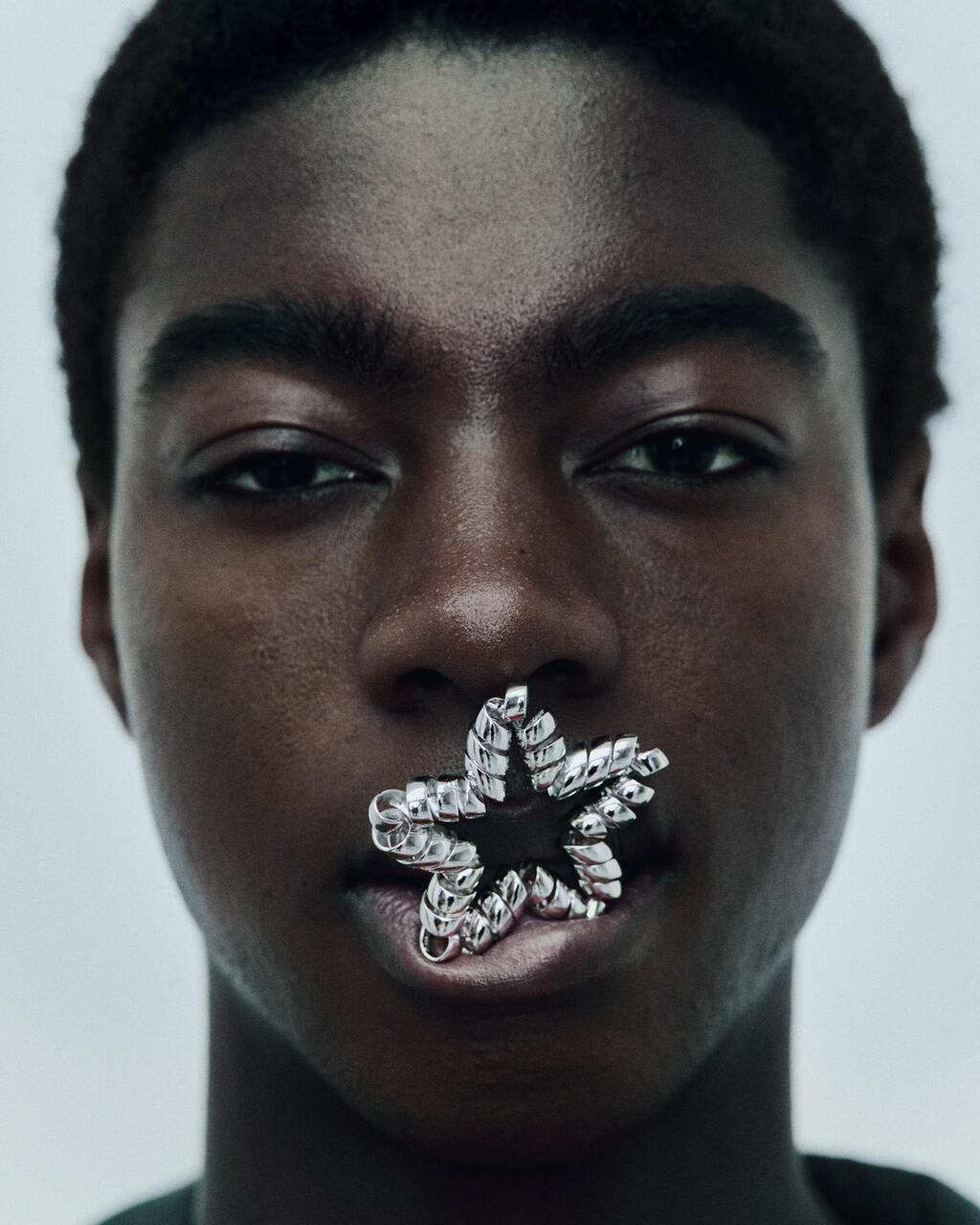
'People want to photograph themselves with items that draw attention': design by Tal Maslavi
(Photo: Giuseppe Vaccaro)
Aesthetics: Maslavi’s designs offer an original, conceptual view of the relationship between body and object, combining meticulous execution with an eclectic visual language he compares to endless scrolling on TikTok, where dozens of cultures and human encounters can pass by in a single minute.
His cake bag, for example, is made in Japan from fine Italian leather and offers a classic look with a twist. The same is true of his Bazooka jewelry collection, which combines humor and roughness.
Naturally, his designs spark conversation on social media and in real life, not necessarily in that order. “Yesterday I was riding the metro in Milan wearing a shirt covered in pieces of chewing gum, which looks like a regular shirt but also creates conversation in public space,” he says. “One woman across from me stared, another gossiped about me with her partner. That is directly connected to social media, because consumers constantly want to photograph themselves with items that draw attention, and my aesthetic corresponds with that.”
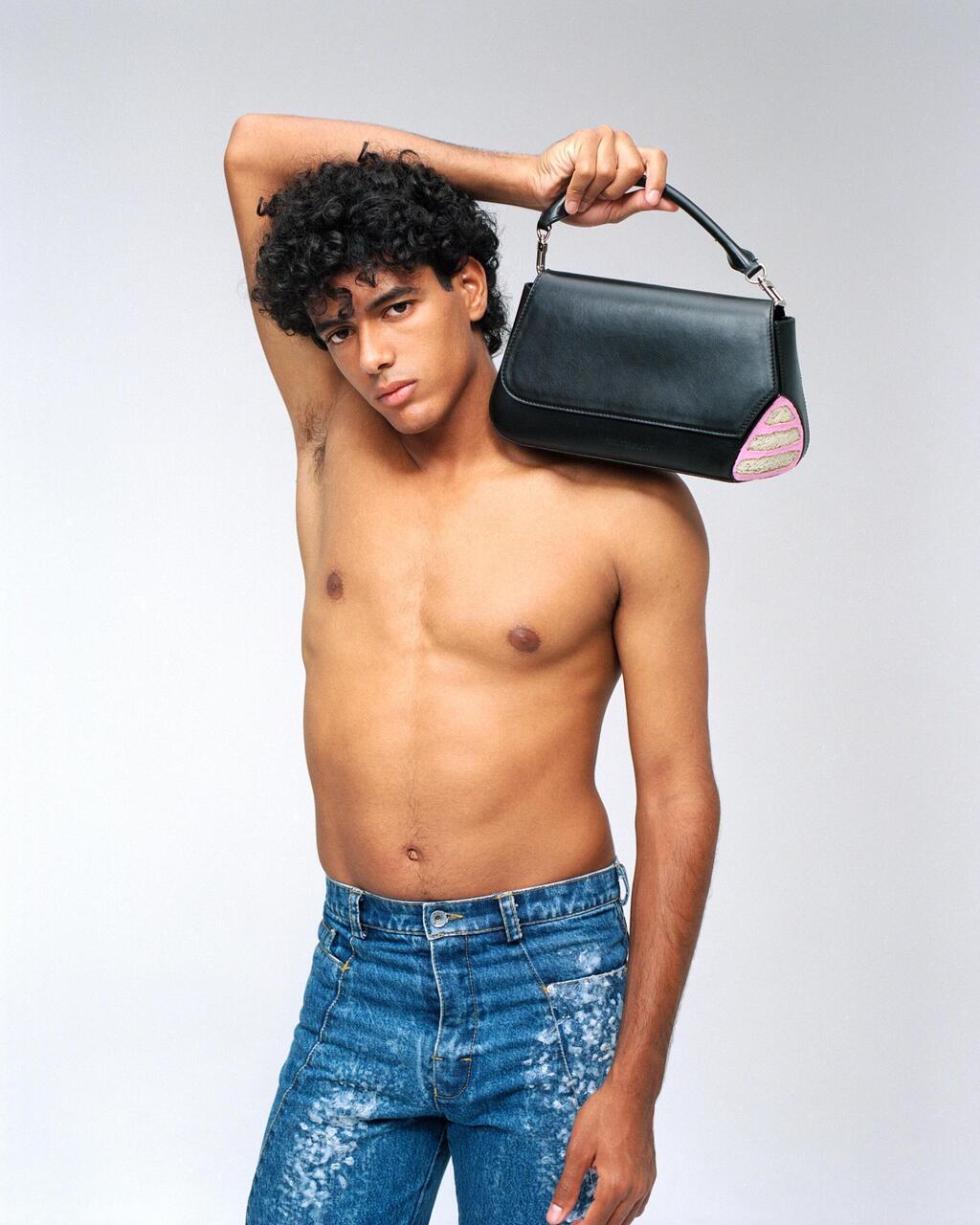
'Customers who love the silly, the special and the playful': designs by Tal Maslavi
(Photo: Asaf Einy)
Clientele: Most of his clients are aged 25 to 40 and come from the United States and Asia, especially Taiwan. “They love the silly, the special and the playful,” he says. “The dream is to have customers from Middle Eastern countries such as Saudi Arabia and the Emirates, who love art and special pieces.”
In five years: “These days I’m working on broader clothing collections alongside an accessories line, which will allow me to add depth and tell a broader story than I have until now. I hope to enter important international points of sale such as Dover Street Market Ginza in Tokyo or End in Milan, which I recently visited and which blew my mind. I told myself: There’s no way I’m not selling here. The aspiration is to be there.”
Itiya Stavsky: ‘I got a sewing machine for my bat mitzvah’
About: Designer and artist Itiya Stavsky, 31, returned to Israel a year ago after a decade in London, where she studied art and art history at Goldsmiths College. Fashion had been part of her life since childhood, but in the past five years she turned it into a business.
“I got a sewing machine as a bat mitzvah gift, and I’ve been sewing and designing ever since, a lot of it through trial and error,” she says. “Later, I took a few short courses and started sewing clothes for myself. It was a hobby that developed into a business.”

A hobby that developed into a business. Designer Itiya Stavsky
(Photo: May Lee)
Brand: She founded her namesake brand in 2021, but only made it official a year ago with the help of a financial investor. The brand bridges design and art, offering customers Stavsky’s personal interpretation of contemporary fashion.
Aesthetics: “I love many different things, and sometimes I force them together because I find it hard to choose,” says Stavsky, who combines old fabric stocks, new materials and ready-made items to create an entire harmonious aesthetic world.
Her designs mix humor, color and period references with the revived Y2K aesthetic, while also raising questions about good taste. The collection includes corsets made from several kinds of fabric, bags made of helium balloons and dresses made from fabrics she painted by hand.
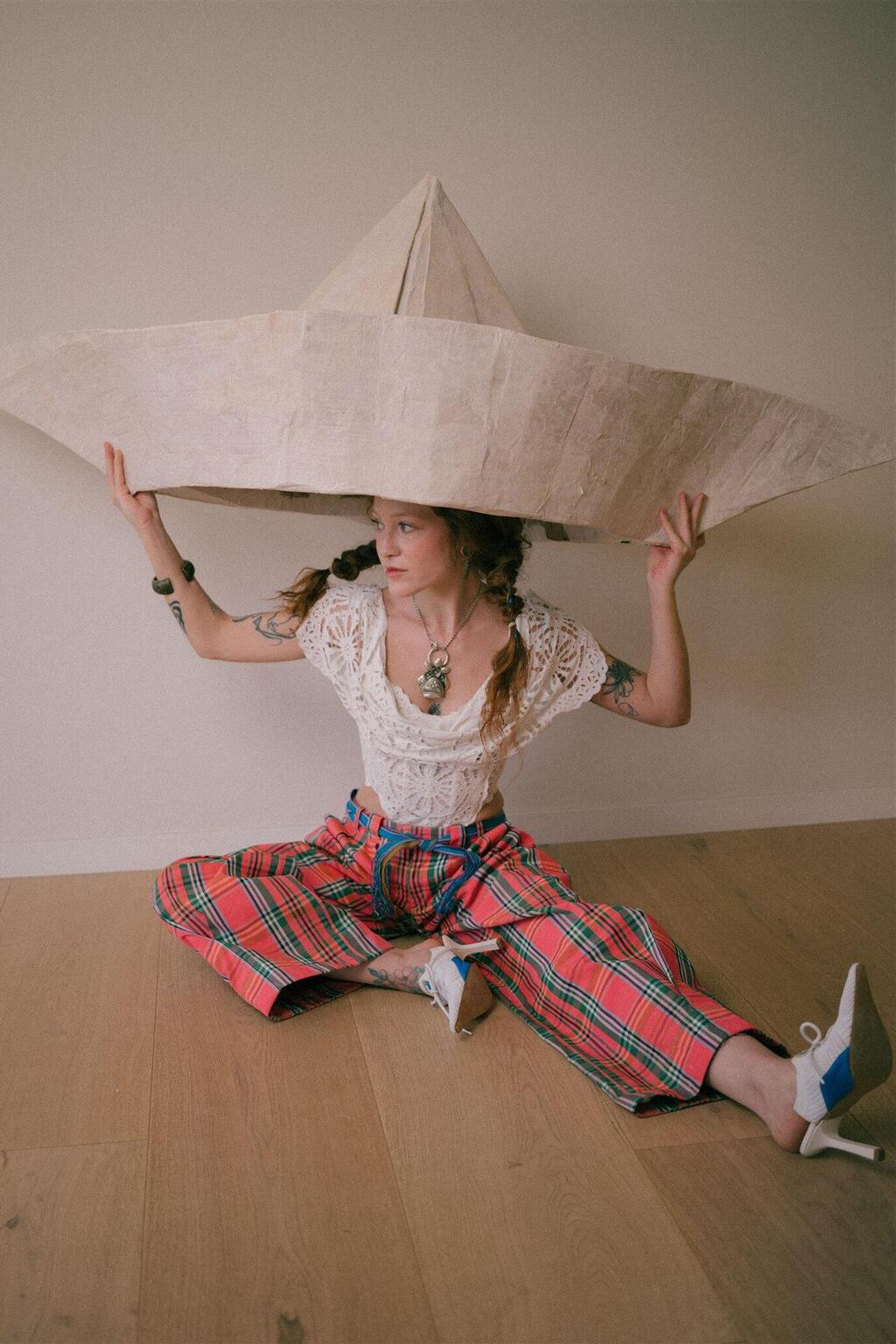
'Loves many things and sometimes forces them together': design by Itiya Stavsky
(Photo: Ofek Avshalom and Rona Bar)
Clientele: Most of her customers are currently in the United States and the UK, and she hopes to expand into Asia as well. In Israel, she sells from her studio in Jaffa’s Noga district, where she lives.
In five years: “The aspiration is for the brand to grow and become international, and to participate in fashion weeks as well.”
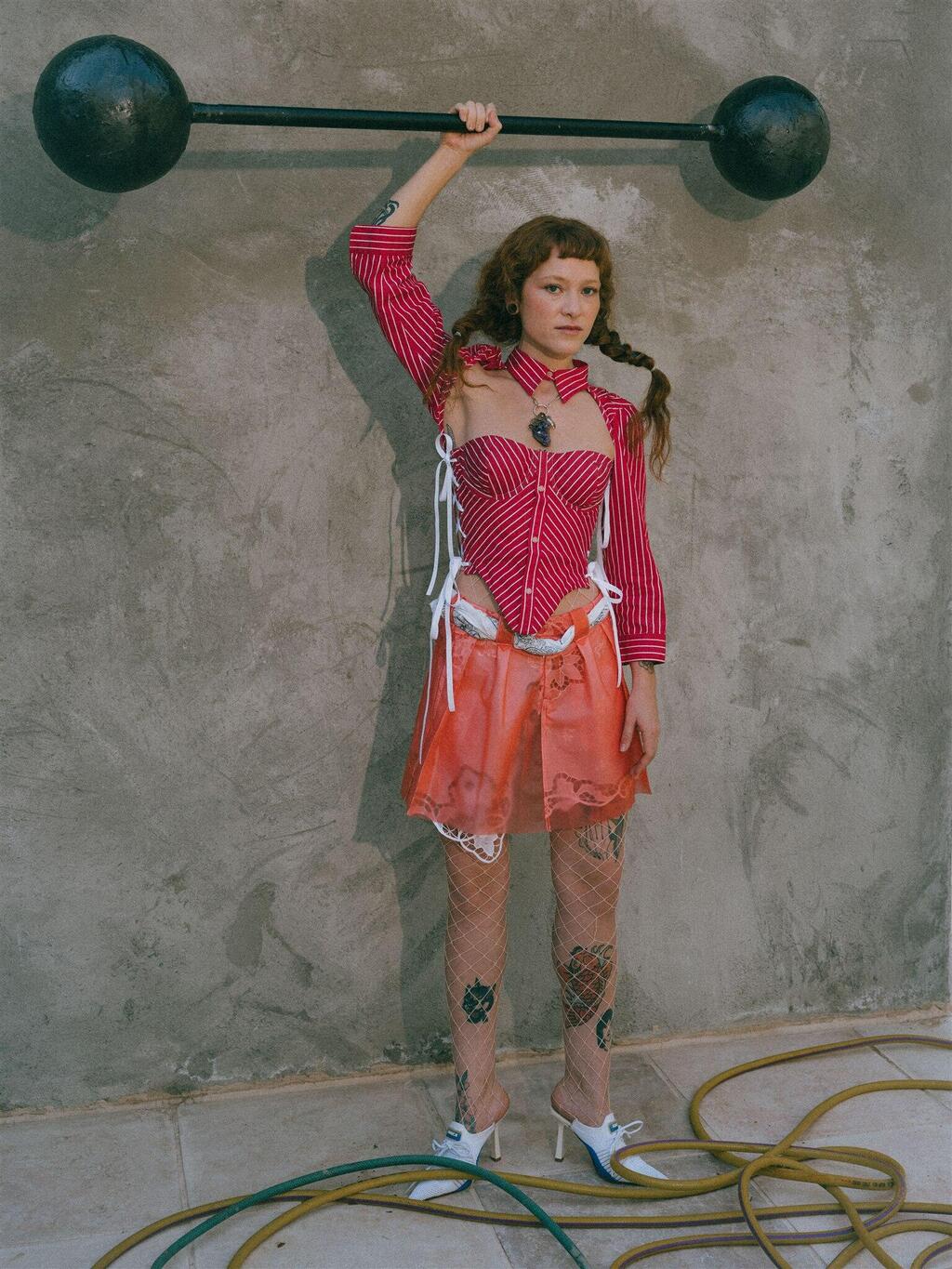
Humor, color and period references: design by Itiya Stavsky
(Photo: Ofek Avshalom and Rona Bar)
Yuval Lasri: ‘My clothes are timeless’
About: Shenkar graduate Yuval Lasri, 30, returned to her hometown of Haifa after completing her studies in the fashion department in 2022. After a short period working for designer Hed Mayner, she founded her namesake brand. Actress Cate Blanchett has already been photographed wearing one of her pieces.
Brand: “I create timeless clothes that accompany you over time, preserving memory and leaving an imprint,” she says. “The garments are made of natural materials such as leather, wool and silk, which allow me to create a sculptural look. I see a garment as a living, breathing thing because it is always changing, always in motion.”
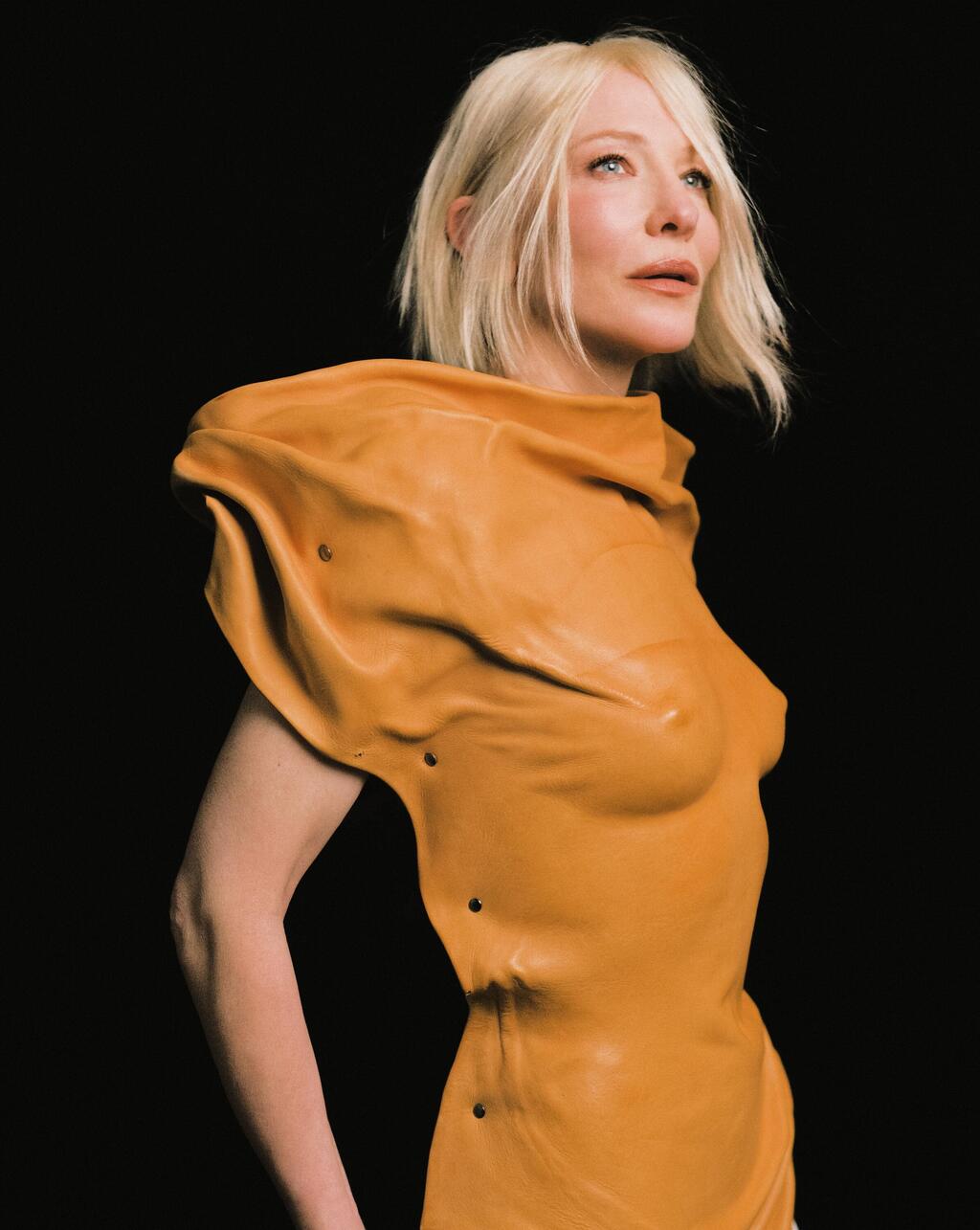
Cate Blanchett in a design by Yuval Lasri
(Photo: Zhong Lin; Styling: Ellen Mirck; published in CAP 74024 magazine)
Aesthetics: Lasri says her aesthetic comes from the material itself, usually leather pieces that she sculpts using a wet molding technique. “It’s a constant tension between clothes in an everyday language and the sculptural designs I love very much,” she explains. “Working with sculpted leather is very intuitive. You can never predict the final result 100%.”
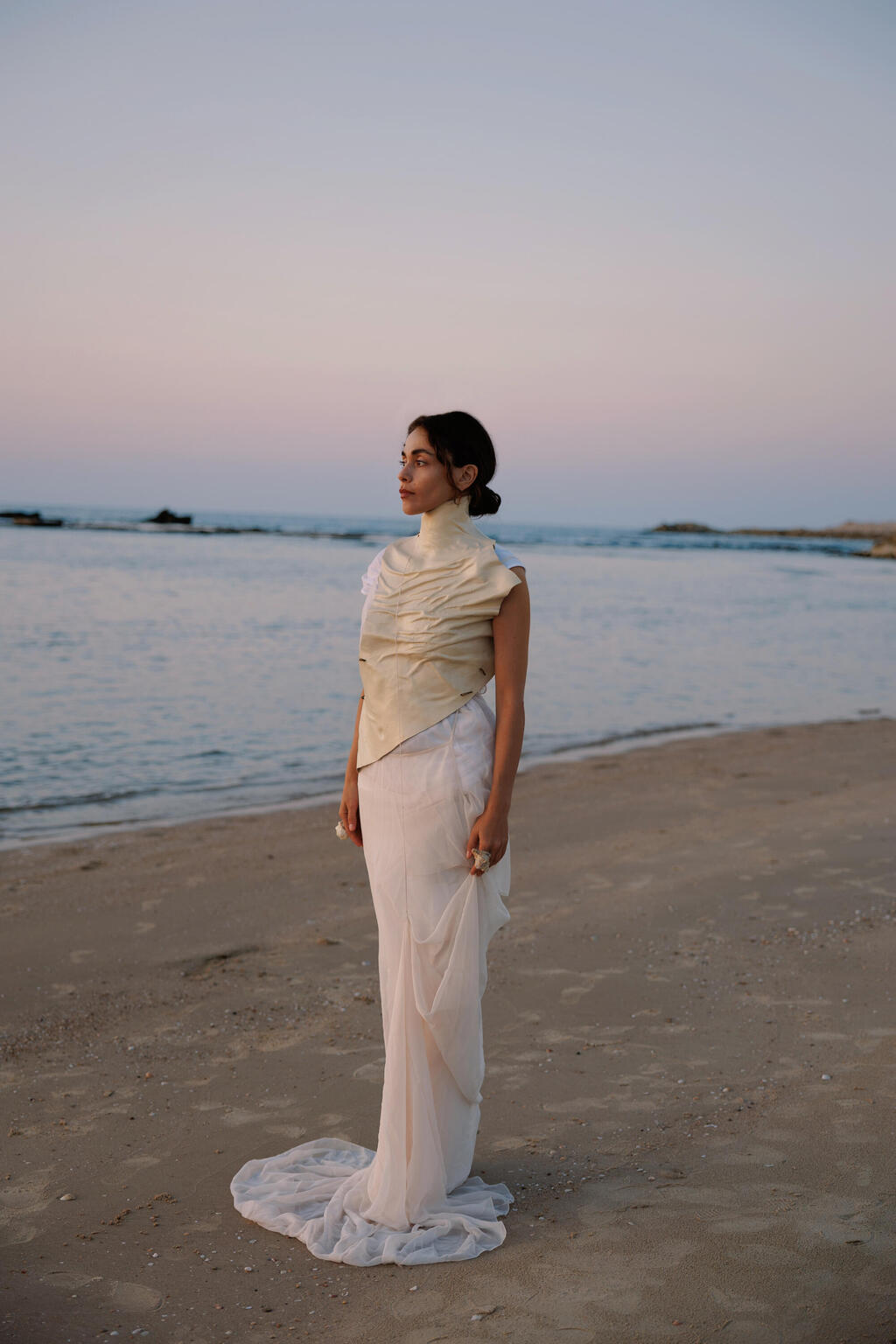
Riff Cohen in a design by Yuval Lasri
(Photo: Rotem Lebel; styling: Tal Ziv; published in La’Isha magazine)
Clientele: Her clients currently find her by word of mouth, usually seeking custom-made pieces. Two years ago, Blanchett wore one of her designs when she was photographed for CAP 74024 magazine in a leather piece Lasri created.
The magazine’s stylist had first discovered Lasri’s work a year earlier, after one of her designs was photographed by Elizaveta Porodina. “Cate Blanchett represents the designs and the essence of the brand,” Lasri says.
In five years: “I would like to open a place that brings together my entire world of content, and presents rotating collections of my designs alongside items I collect.”
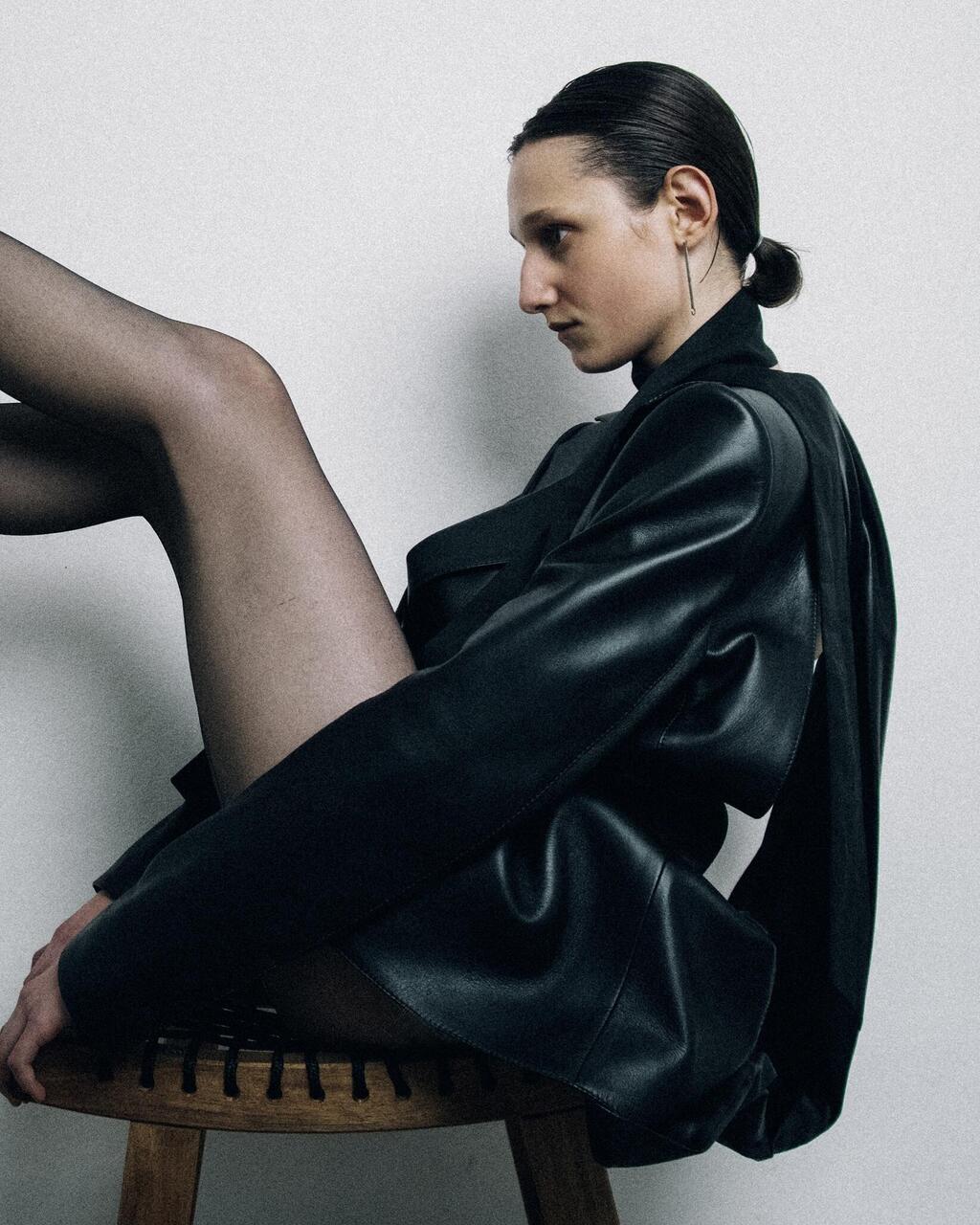
'Constant tension between everyday language and sculptural designs': Sofi Zakhroshko in a design by Yuval Lasri
(Photo: Ivan Berkovich)
Nitzan Mileguir: ‘I create with my hands’
About: Nitzan Mileguir, 32, completed his studies in Bezalel’s jewelry and fashion department last summer, and has already managed to develop an intriguing and distinctive design language. His poetic final project, “Spirit Dog,” dealt with heartbreak, both personal and collective, and the meeting point between personal experience and the reality of trauma and war. “All of our hearts are still bleeding,” he says. “Unfortunately, this heartbreak is not over yet.”
Mileguir recently won the jury prize in a design film competition held during Jewelry Week in Munich, Germany, and his designs appeared in designer Klil Dekel’s show at Tel Aviv Fashion Week. He is currently presenting his work in an exhibition and residency in Athens, organized by SMCK magazine.
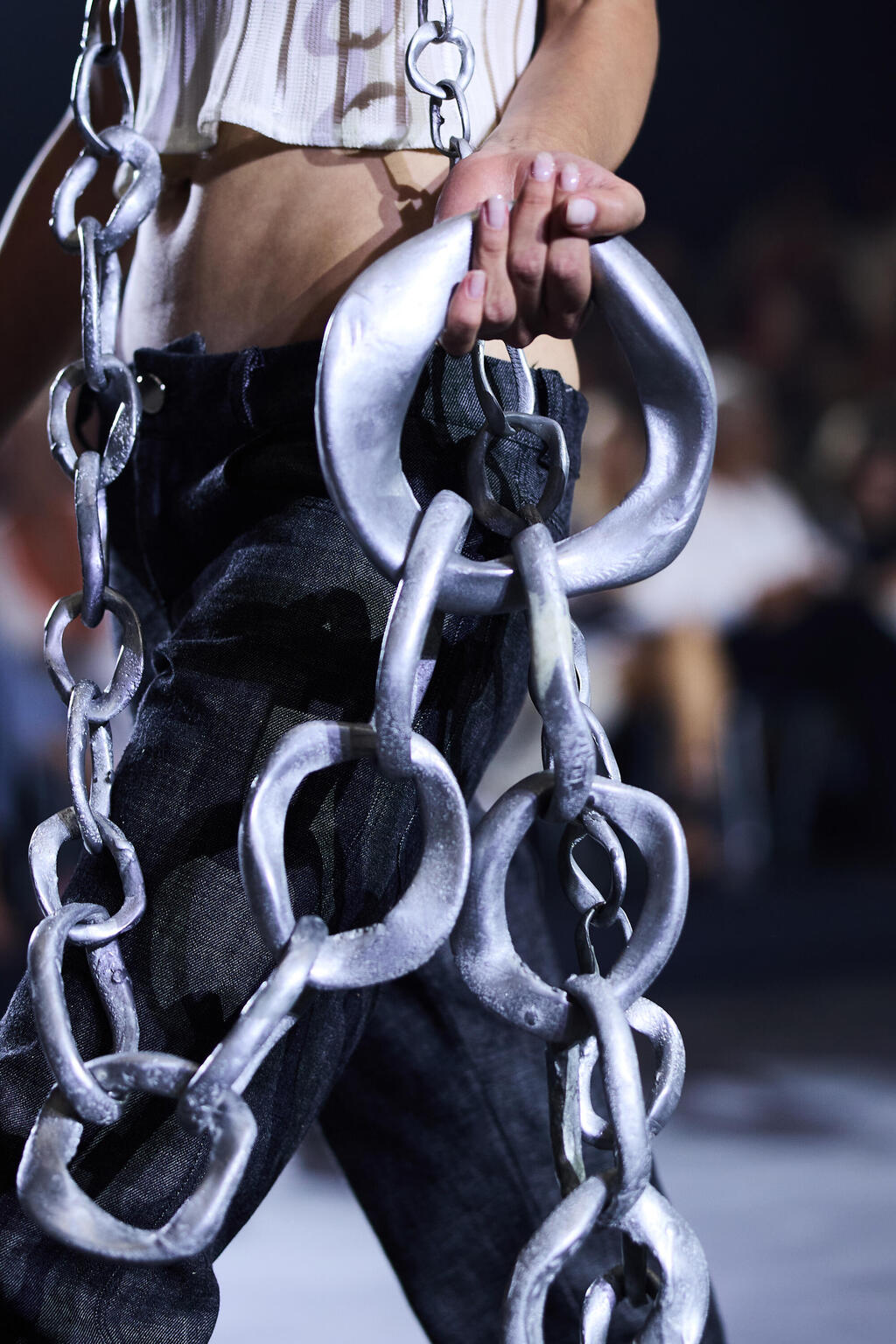
Jewelry by Nitzan Mileguir in Kalil Dekel’s show at Tel Aviv Fashion Week
(Photo: Michal Sharon)
Brand: He founded his namesake brand during the summer break between his first and second years of study. He sold at design fairs and independently to friends and customers he met. The designs developed into two mini-collections, and he is now working on his first main collection, which will be sold at the Totsar shop in the HaMiffal cultural center in Jerusalem and through his Instagram account.
Aesthetics: Mileguir’s jewelry offers a broken, rough and intuitive aesthetic, which he calls “organized chaos,” challenging the way we wear fashion jewelry. Still, in his raw pieces, such as heart-link earrings or abstract spirit dogs that look like fluid figures, one can sense beauty, softness and poetry.
“My way of thinking as a designer is lateral,” he explains. “I create with my hands, and then my head connects things, and everything together becomes one coherent language.”
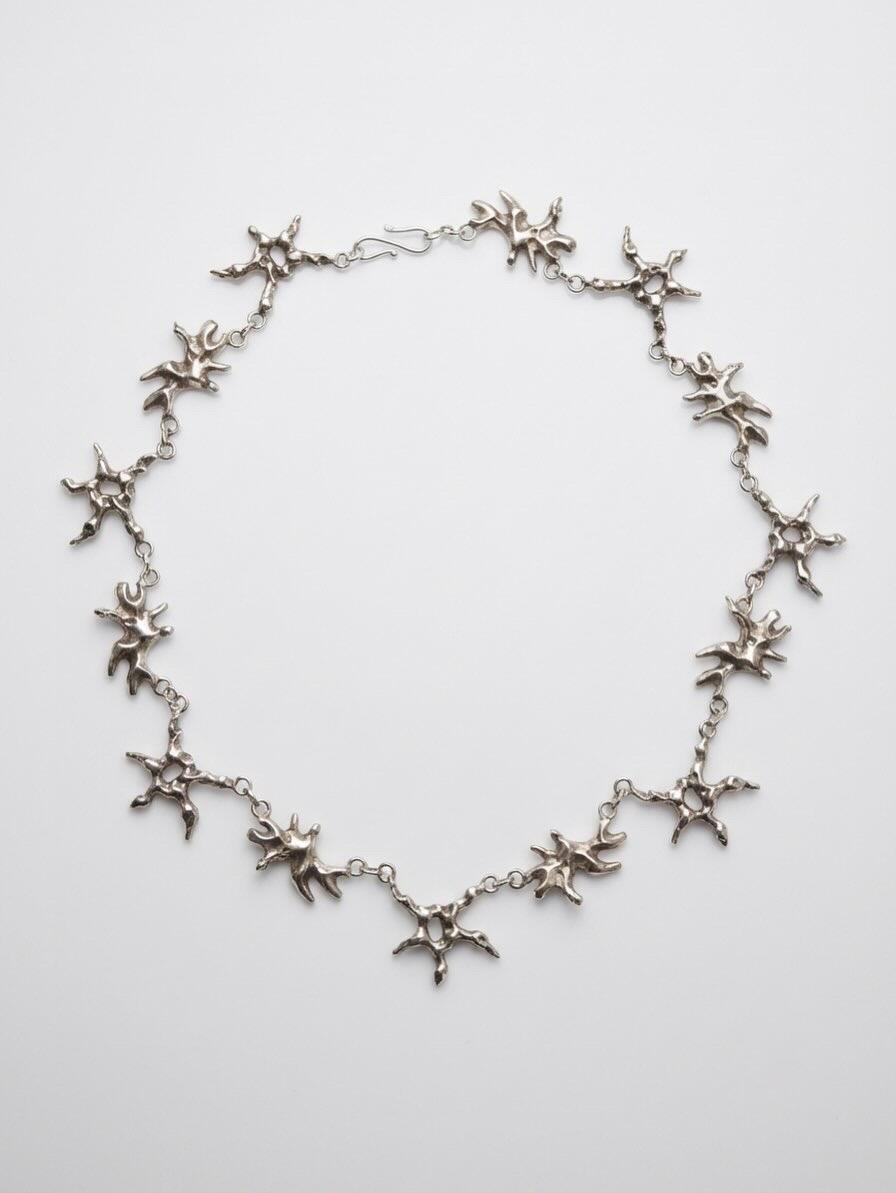
'I create with my hands, and then my head connects the pieces': jewelry by Nitzan Mileguir
(Photo: Guy Rashkovan)
Clientele: Most of his customers are women and men aged 25 to 35.
In five years: “The goal is to take the brand beyond Israel, expand its visual language and rethink how jewelry brands work alongside fashion houses.”
Inbar Avneri: ‘I hope to be like Dior’
About: Inbar Avneri, 32, is a designer, artist and tattoo artist, and a graduate of Shenkar’s jewelry design department. In October 2023, 10 days after the massacre, she was invited to present her final project at a competition for young designers in Milan, after it won the Klimt O2 Audience Award.
She won the competition’s best contemporary jewelry design prize, a victory that led to the establishment of her brand. She recently collaborated with designers Yanky & Nataf at fashion week, and is now nominated in the young designer category of the prestigious Edmond de Rothschild Award for Fashion Design.

'For women who buy jewelry for themselves': designs by Inbar Avneri
(Photo: Goren Witkind)
Brand: Avneri’s fashion jewelry is made of gold-plated silver and offers a commercial, accessible language for the broader public. She also creates custom-made jewelry in pure gold set with diamonds, sold in design galleries around the world and on her website.
Aesthetics: Rings and necklaces that look like hybrid crosses between living creatures lead Avneri’s aesthetic, which she creates from sheets of metal that she bends and shapes by hand. “This aesthetic was born already at Shenkar, when I started searching for meaning in the world and for my own God,” she says. The research led her to folk tales about deities and monsters, which she combined with personal stories.
“In my designs, I break the conventional rules of what jewelry should look like,” she adds. “For example, the rings are very large and prominent on the hand, but it is important to me that they be functional and comfortable.”
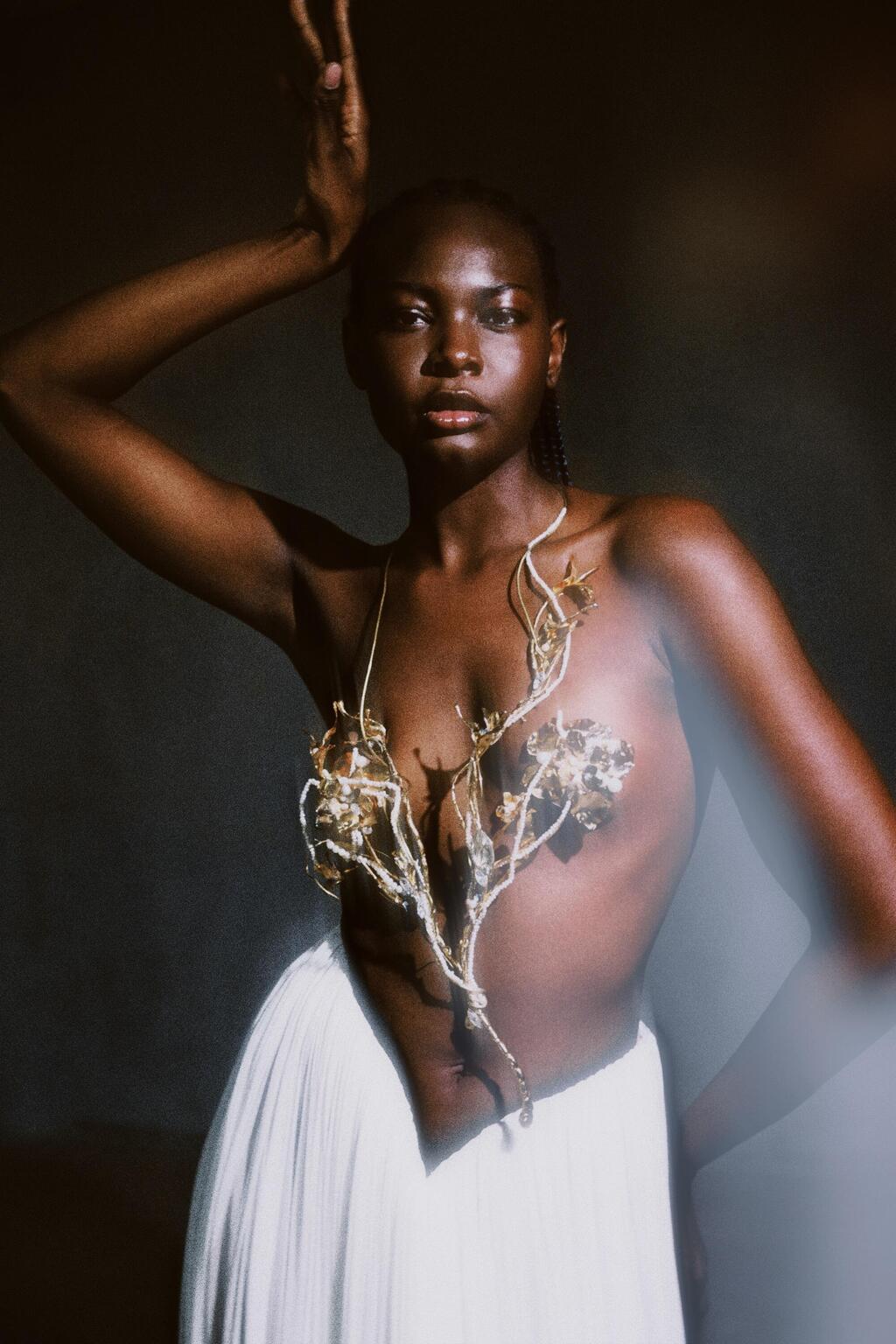
'I break the conventional rules of what jewelry should look like': designs by Inbar Avneri
(Photo: Rotem Lebel)
Clientele: Her customers are “women who buy jewelry for themselves and are not afraid of designs with presence.” Avneri also notes that the online shopping experience still makes things difficult for the Israeli audience. “In Europe, people are more open to it,” she says. “Israel also has people with money who buy jewelry, but European customers tend to spend more freely, because they are not worried they may soon have to build a safe room.”
In five years: “I hope to become like Dior, a global luxury brand.”

'The rings are very large, but it is important to me that they be comfortable': designs by Inbar Avneri
(Photo: Goren Witkind)
Shir Shtarker: ‘I’m aiming for an audience that appreciates design’
About: Fashion designer Shir Shtarker, 33, completed her studies in Shenkar’s fashion department in 2019 and immediately began working as head designer at the Comme Il Faut fashion house for six years. At the same time, in late 2022, she laid the groundwork for the fashion brand Assemble, born out of a personal need.
Brand: True to its name, Assemble builds a wardrobe that moves between sporty and tailored, made from quality fabrics and aimed at both women and men. “The thought was how to assemble modern and innovative outfits that can be worn from morning to evening, in classic cuts with details that make all the difference,” she explains.
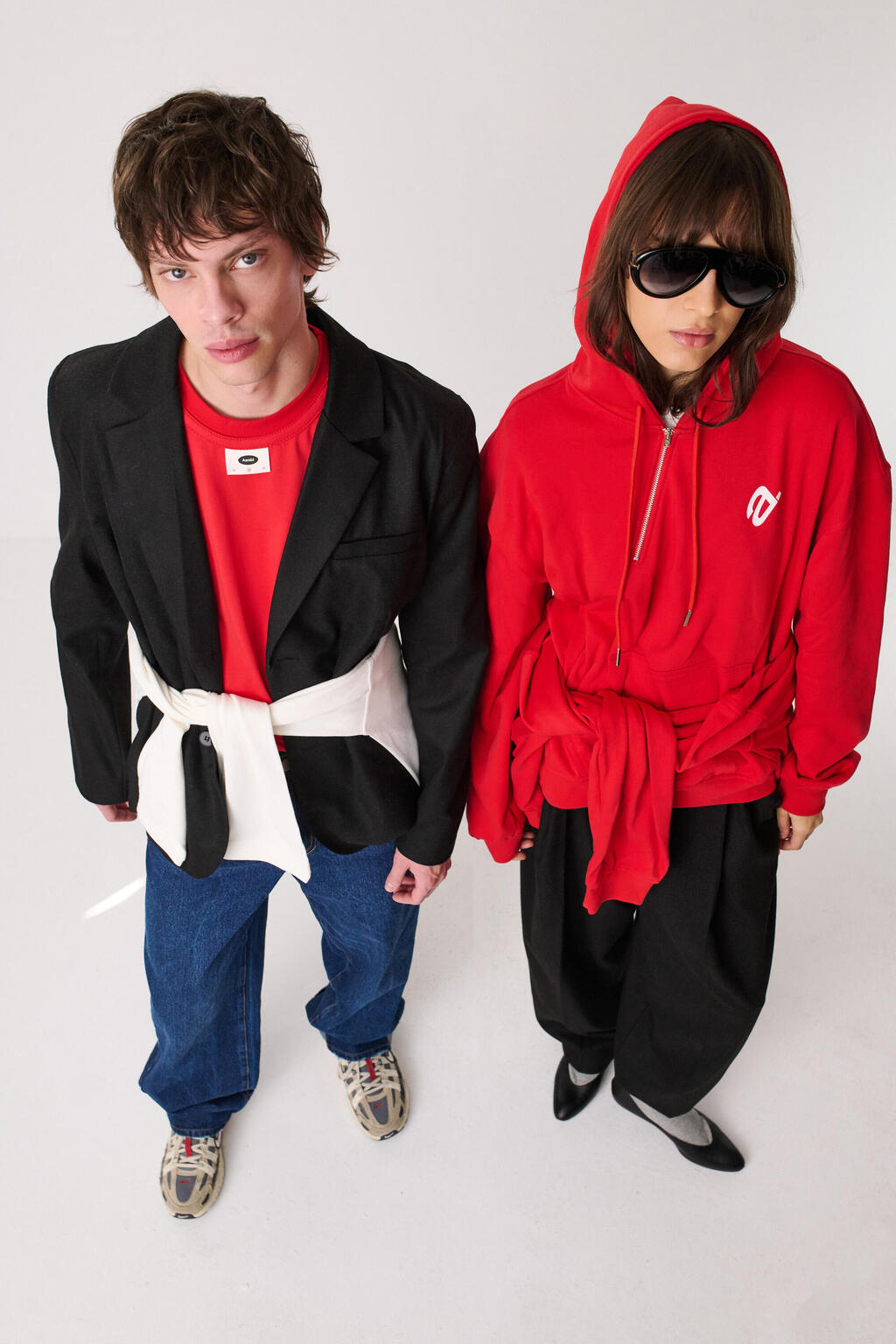
'To assemble modern, innovative outfits': designs by Shir Shtarker for Assemble
(Photo: Shalev Ariel)
Aesthetics: Assemble offers practical, designed clothing in sizes 34 to 44. The brand includes long pants in black and blue, blue-and-white striped shirts with the brand logo peeking out from the side, a selection of plain-colored T-shirts and relaxed-cut jackets adapted to the local climate and style.
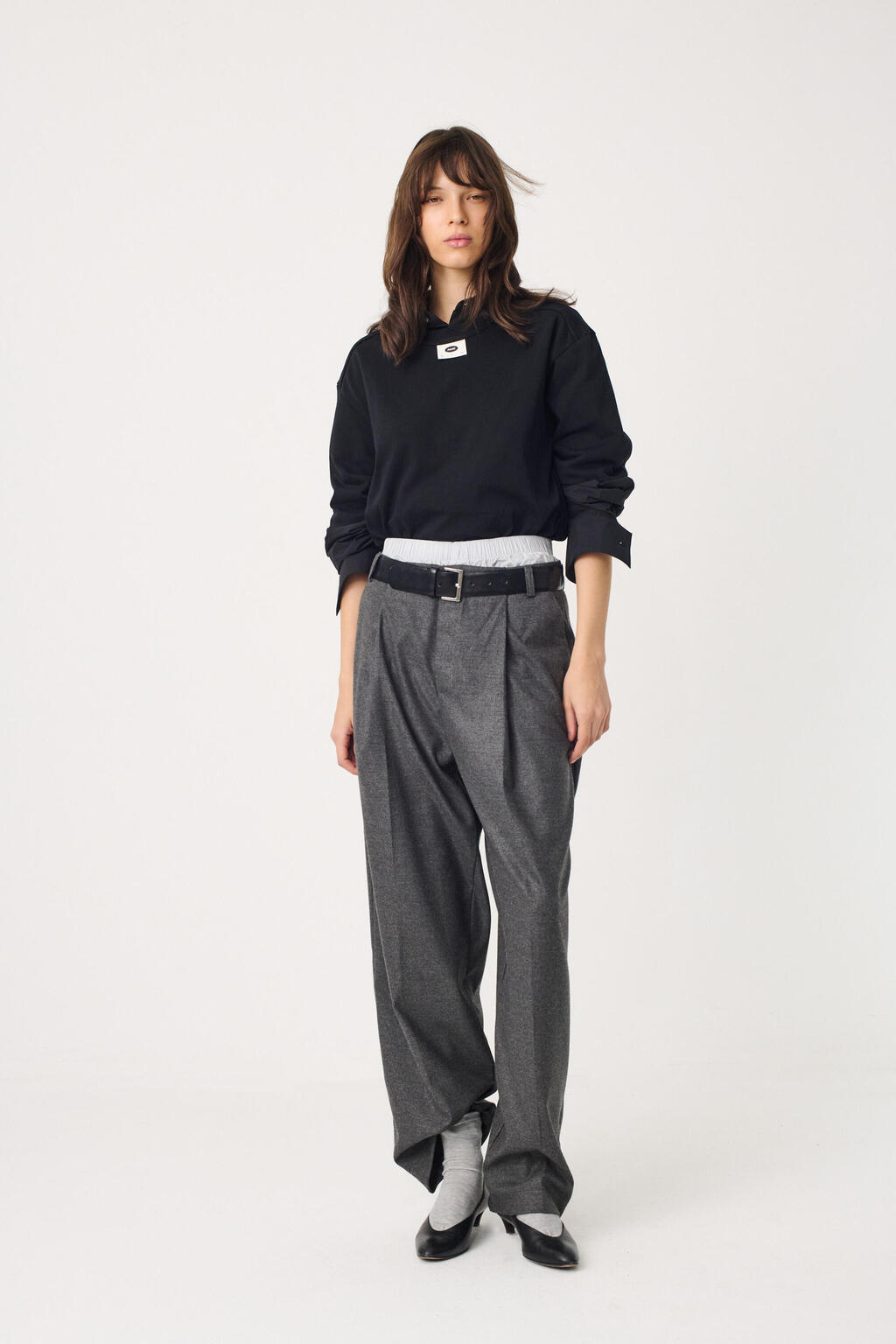
A size range adapted to 34-44: designs by Shir Shtarker for Assemble
(Photo: Shalev Ariel)
Clientele: The brand is sold online and in two Tel Aviv boutiques, Tema and Boutique 5. According to Shtarker, designing clothes for everyday wear comes with its own challenges. “I'm aiming for an audience that appreciates design, limited quantities and attention to small details, and yes, is also willing to invest money in it,” she says. “At Zara you might pay half my prices for an item, but honestly, it’s not certain it will stay with you for long.”
In five years: “I would like to further develop the brand’s design language and present it in international showrooms in Europe and Asia.”
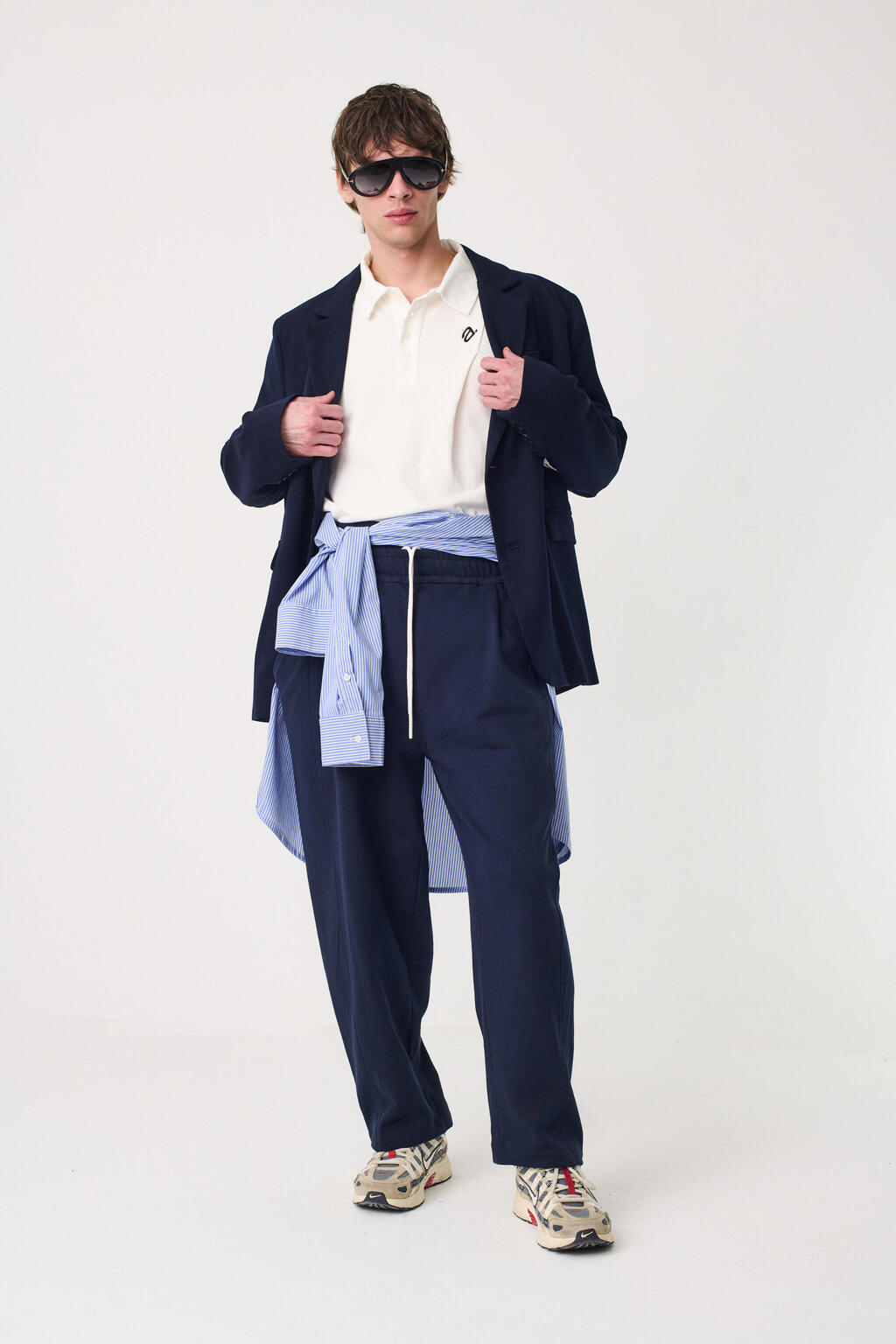
Designs by Shir Shtarker for Assemble
(Photo: Shalev Ariel)
Niv Keren: ‘There is something very cinematic about clothes’
About: Since completing his studies in Shenkar’s fashion department, Niv Keren, 33, has worked for designer Raf Simons in Antwerp, participated in the 2019 Mifal HaPais fashion incubator and consulted for fashion brands. Now he is launching Idiom, a brand sold online with its sights set beyond Israel.
Brand: Over the past 18 months, the brand has taken shape, targeting young women looking for relaxed evening dresses, alongside a line of white dresses suited to brides who do not want to spend tens of thousands of shekels on a gown.
“I tried to create a harmony of opposites within each dress. The dresses are sensual and intelligent, not too glittery nor too naive,” Keren explains. “They provide an answer for a wide range of women aged 27 and up.”
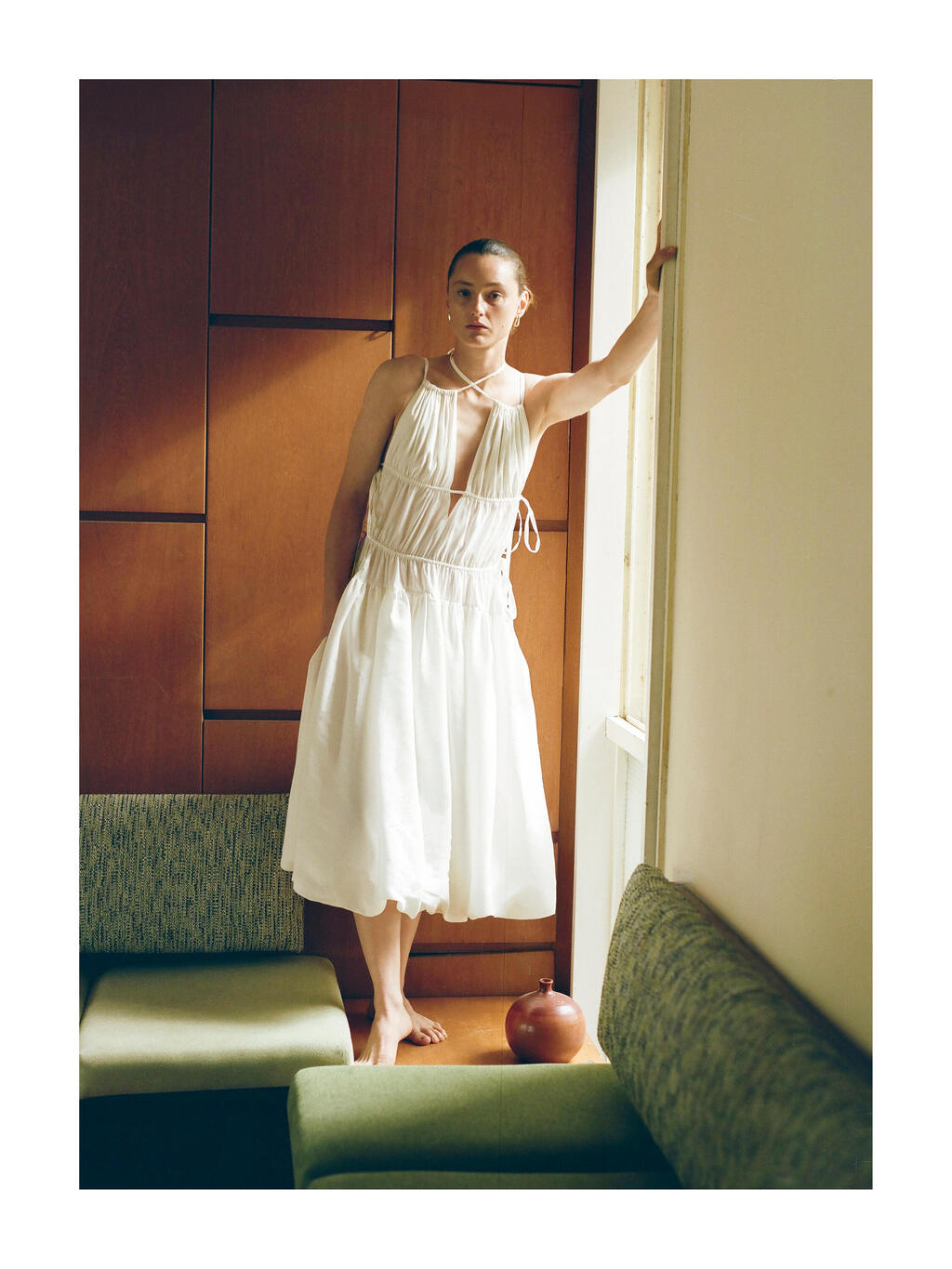
'Sensual and intelligent dresses, neither too glittery nor too naive': design by Niv Keren for Idiom
(Photo: Daniel Jackont)
Aesthetics: With influences from designers such as Geoffrey Beene, Helmut Lang and Roy Halston, Idiom offers a connection between aesthetic worlds: from elegant to bohemian, from 1970s glam to architectural lines.
“There is something very cinematic about the clothes,” the designer adds. “Like the Lore dress, which is fully closed up to the neckline but has a deep slit. When she walks, it’s making a moment.”
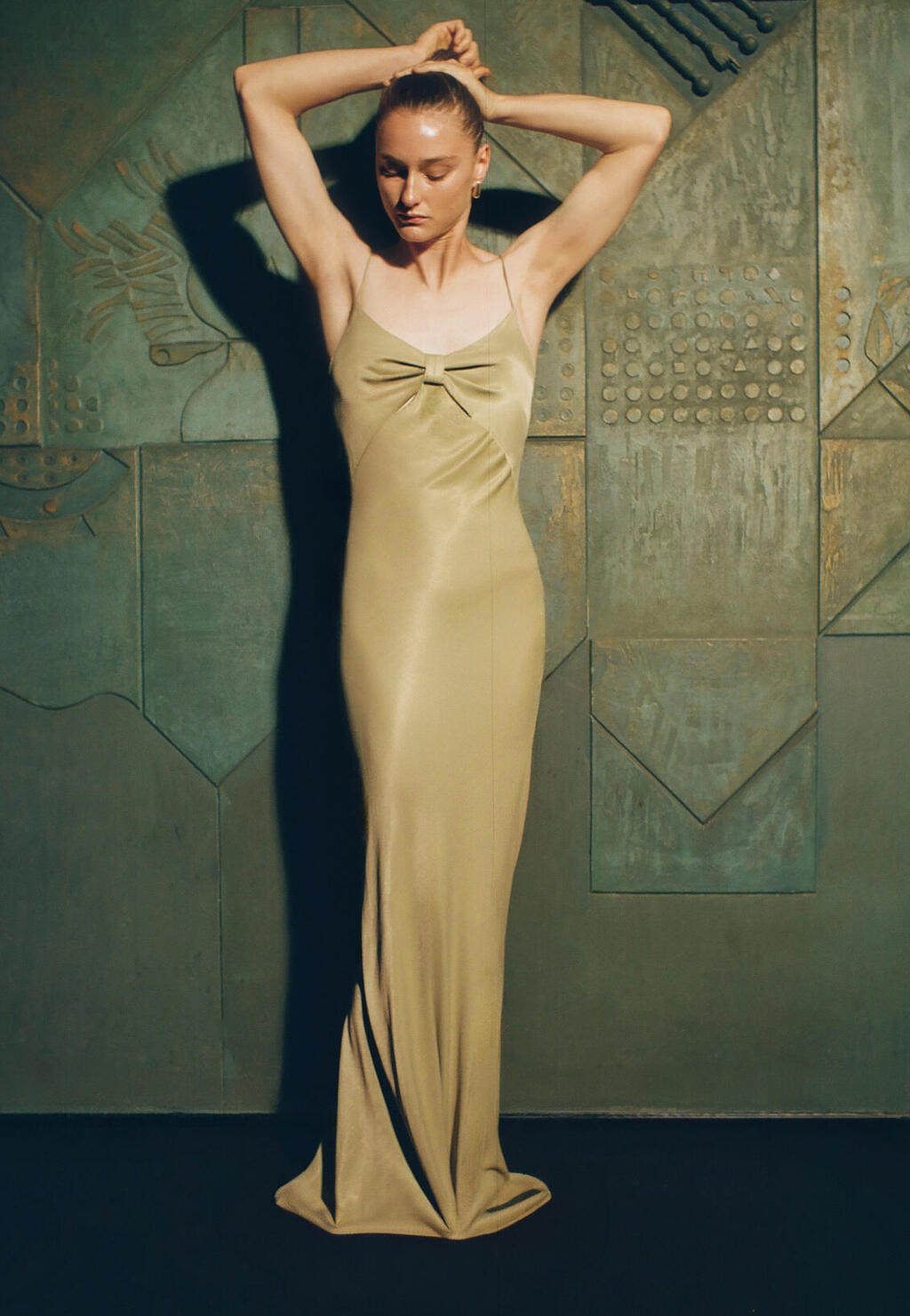
'We want to expand in Israel while also turning to the American market': design by Niv Keren for Idiom
(Photo: Daniel Jackont)
Niv Keren’s collection for Idiom in motion
(Video: Daniel Jackont)


Clientele: Idiom fills a gap in Israel for light evening dresses for young customers aged 25 to 35 from central Israel, who do not want dresses that are too tight, too short or too body-hugging. But it also targets older women looking for flattering evening dresses. “I really, really, really love women,” Keren says. “And as they mature, they have more interesting things to say to the world.”
In five years: “We want to expand in Israel while also entering the American market. We are currently working on sales in Miami and Los Angeles and building relationships with boutiques that fit our design language.”
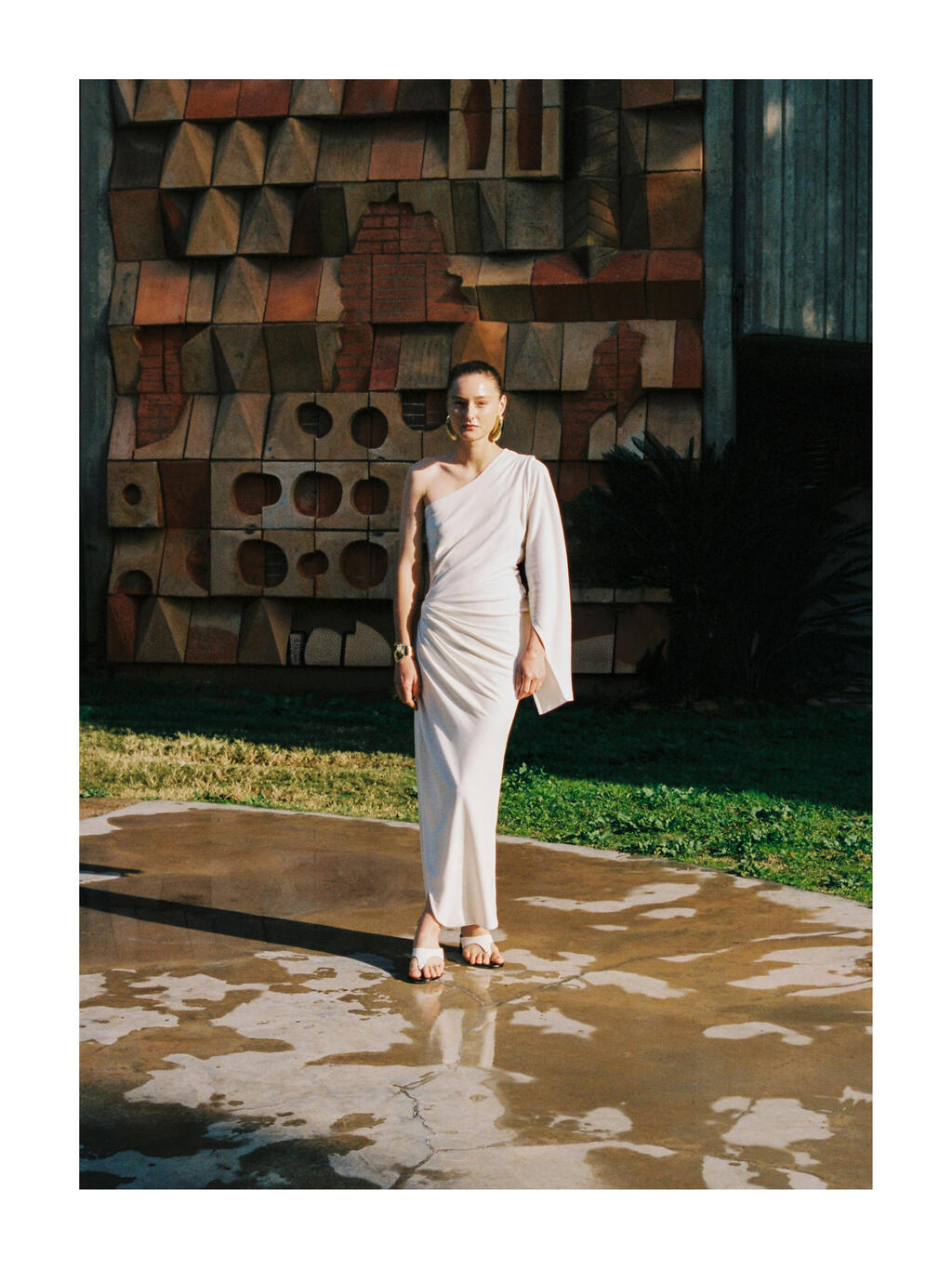
Idiom fills a gap in Israel for light evening dresses
(Photo: Daniel Jackont)