

When her first son, Lavi, was born, Daniela Sterman, 30, from Jerusalem, was surprised to discover how much gear can pile up around one tiny baby, and how quickly it becomes unnecessary. “I wanted to pass the equipment on to mothers who need it,” says Sterman, now a mother of three: Lavi, 5 and a half, Gaia, 4, and 2-month-old Rotem.
At the time, there was no “Moms don’t hoard” group in her neighborhood, so she started one herself together with another new mother. The group quickly became very active. “For me, this initiative is a virtuous circle of giving, sustainability and human connection,” Sterman says. “Beyond the financial savings, it creates a bond between mothers through the community, and it’s an important way to protect the environment. What I don’t need can bring real joy to another family.”
Gallery
Parents in Israel spend an average of about 3,500 shekels a year on children’s clothing
(Photo: Shutterstock, Gorodenkoff)
Sterman is one of 140,000 women in Israel and in Israeli communities abroad who now take part in “Moms don’t hoard,” a network of hundreds of WhatsApp and Facebook groups built on a simple idea: instead of buying new, give and receive. The need for a project like this is clear. Parents in Israel spend an average of about 3,500 shekels a year on children’s clothes, many of which are worn only a few times.

Daniela Sterman: 'Beyond the financial savings, it’s a connection between mothers'
(Photo: Private album)
Beyond the economic burden, the fashion industry is the world’s second most polluting sector after the oil industry, responsible for about 10% of global greenhouse gas emissions. Estimates say that even if we stopped producing new clothes for the next 50 years, there would still be enough clothing for everyone in the world.
Savings of 82 million shekels a year
The initiative is supported by the “Hatashtit” nonprofit, which has worked since 2019 to strengthen civil society in Israel and to serve as a bridge between nonprofits and grassroots initiatives and philanthropic foundations, businesses and government. The organization’s “incubator for social change” has already supported more than 30 initiatives in a range of fields from education and youth to health and welfare. Since Oct. 7, the nonprofit has accompanied dozens of projects that provided life-saving services and continued to operate during the emergency period.
“Moms don’t hoard” is one of them. Following the success of its online activity, four physical stores opened in Jerusalem, and “take-and-give” fairs are held in cooperation with local authorities around the country. According to estimates, members of the community save a collective 82 million shekels a year and exchange about 3 million items among themselves.
Dovrat Shapira of Netanya, a mother of a 5-year-old girl, came across the initiative by chance about four years ago. “It’s the best initiative I’ve ever encountered in my life,” she says. “It’s green, ecological, and it saves a lot of money. Items move from hand to hand and get new life.”
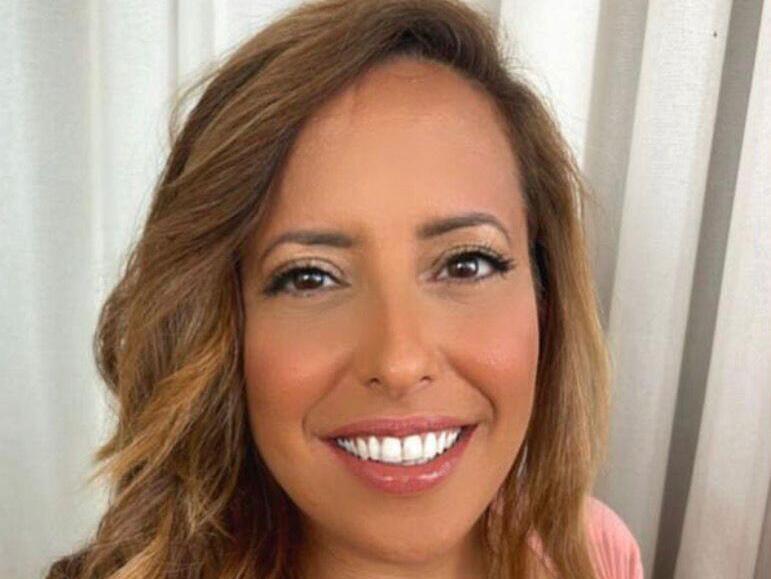
Dovrat Shapira
(Photo: Private album)
“Every week I give away about 20 items and pick up at least one item that fits my needs,” Shapira says. “I’ve taken a countertop dishwasher, a robot vacuum, a dining room table, two TVs, a speaker for a party, a laptop bag, and clothes for my daughter, a whole closet full. It’s an annual saving of at least 50%.”
For her, the initiative changed more than her shopping habits. “Since I discovered the group and changed how I do things, I’ve been able to save and put my National Insurance allowance into savings for the kids,” she says. “In recent years I’ve also learned not to hoard, not objects, not feelings and not guilt either. Being a mom who doesn’t hoard is the biggest gift I’ve given myself.”
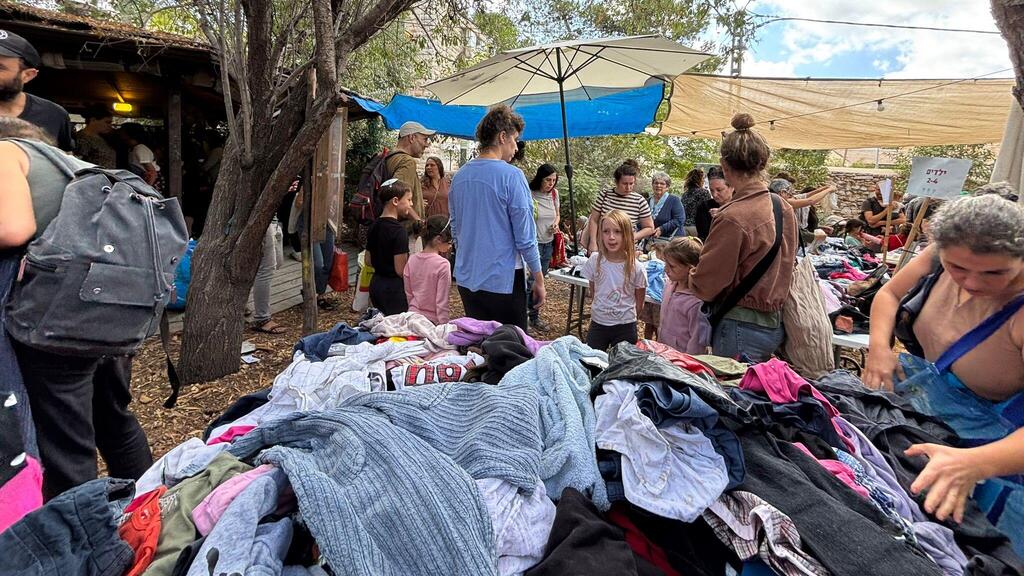
A 'Moms don’t hoard' swap fair at the community garden at the Natural History Museum in Jerusalem
(Photo: Moms don't hoard)
Eli Friedman, 41, from Mevaseret Zion, a mother of three boys in shared custody, joined the community five years ago. “Even before my oldest was born, I tried to avoid buying clothes and relied mainly on friends and family. I would get bags of clothes by size, we hardly bought anything. But I had to work at it, run around to secondhand shops and make an effort to find things. Since ‘Moms don’t hoard,’ everything has become much more accessible.”
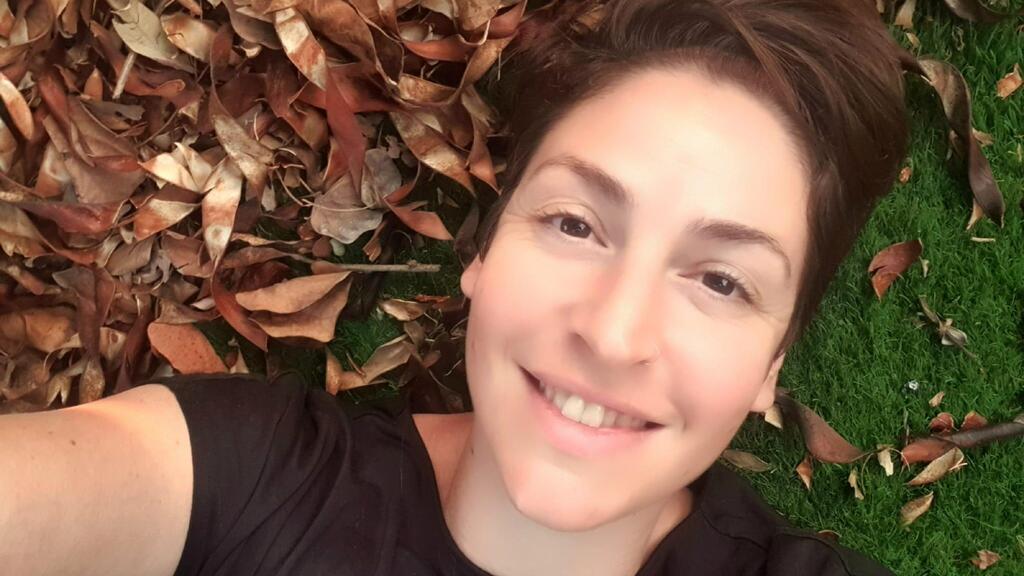
Eli Friedman
(Photo: Private album)
Today Friedman almost never buys clothes for her children, except for specific items like socks, underwear and festive outfits. “It helped me change my perspective on new and secondhand in an era of extreme abundance that can be excessive,” she says. “Quality items stay with us and move between the three kids, and then onward. Good coats, for example, went through all three boys, and then to the neighbor. The savings for three children are a triangle, it’s simple math.”
“Received with love, passed on with love”
Lee Oppenheimer, 37, from Givat Shmuel, a mother of a 3-year-old boy, joined the initiative about six months before her son was born. “It’s significant savings,” she says. “Instead of buying, I receive, instead of hunting for where to pass things on, I post and give them away.
“I know women across the whole community to the point that it goes beyond WhatsApp and into real life, through consultations, mutual help and social meetups.” Oppenheimer estimates she has saved more than 10,000 shekels so far. “It started with a crib, moved to a bed, a toddler bed, mattresses, sheets, and later all his clothes, toys, balance bikes, scooters, stroller, and more. I even got numbered balloons for his birthdays from the group. Whenever I think of something I need, all I have to do is keep my eyes open or say I’m looking, and it shows up.”
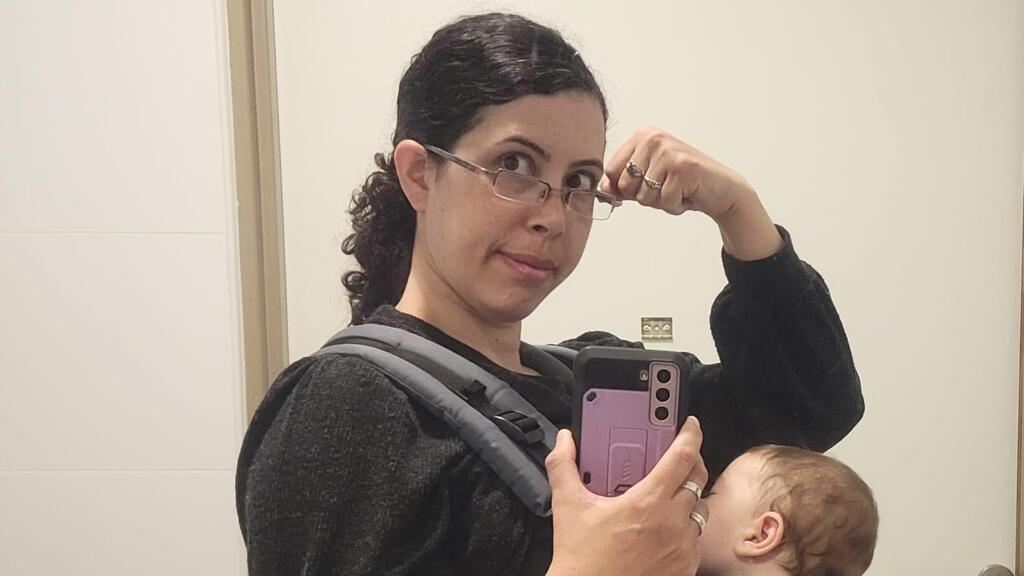
Lee Oppenheimer
(Photo: Private album)
Her message to mothers who hesitate to join: “Don’t hesitate to ask. It doesn’t make you needy or lesser. It makes you responsible for your fate and invites abundance into your life.
“When you use an item, take care of it. You never know who it will be a perfect fit for when you’re done. And when you’re finished with something, don’t think there’s no point offering it because ‘who would want it.’ You’ll be surprised to see the demand for all the abundance the universe has to offer. Receive with love, pass on with love.”
Lee Oppenheimer: 'Let go of the need for ‘new.’ Once you realize a secondhand item is usually in great condition and comes from another mom’s good intentions, it changes the whole picture'
Sterman estimates her family saves about 30% to 40% of their annual costs for children’s gear. “When you have three kids, the difference is huge. I save on buying new gear for the baby, and I also let go of the older kids’ equipment.
“There’s nothing more fun than passing on useful gear to another family, strengthening the secondhand circle and significantly reducing wasteful consumption.”
Her tip for new members: “Let go and relax your grip on ‘new.’ Once you understand secondhand is usually in excellent condition and comes from another mom’s good intentions, it changes the entire picture. Be active in the community. Ask and request. This group makes dreams come true, there is nothing you can’t pass on today.”
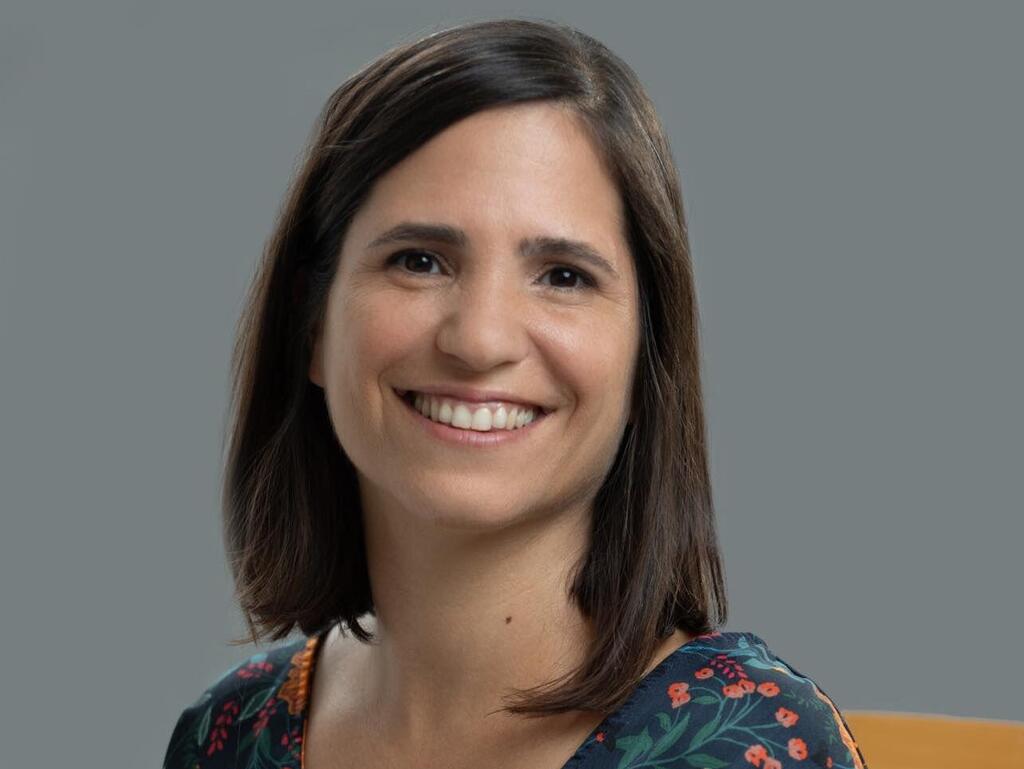
Tamar Maybaum, founder of 'Moms don’t hoard' A sense of overload that became a window of opportunity
(Photo: David Saad)
These days, “Moms don’t hoard” includes 296 communities across Israel, from Eilat to Kiryat Shmona, and 12 more communities worldwide, run by 326 volunteers. “This is far beyond handing over an item,” says Tamar Maybaum, founder of the initiative. “It is building strong communities, women’s resilience, and a new story in which women lead social, environmental and economic change.
“During emergencies, this network becomes an enormous civic force. It helps women, families, new mothers, evacuees and reservists, and within hours produces a mobilization movement unlike anything we’ve seen.”
What made you start the initiative?
“I started it out of a feeling of overload that became a window of opportunity. I wanted to break the pressure on women to buy more and more, and create a women’s space based on sharing, solidarity and reducing consumption.
“I never imagined it would become a movement of 140,000 women around the world that keeps growing, but I knew one thing. When mothers have a place, they are especially good at creating a new and better world.”
First published: 06:35, 11.25.25