

Dr. Efrat Angel Katzur was a graduate student at the University of Haifa, working on a research proposal about biological and stepmotherhood, when her closest friend called with devastating news. “I was diagnosed with breast cancer,” she said. “I’ll probably need a mastectomy.”
What surprised Angel Katzur was not the diagnosis alone, but what frightened her friend most. She said she could somehow process the idea of surgery, but the thought of losing her hair during treatment terrified her.
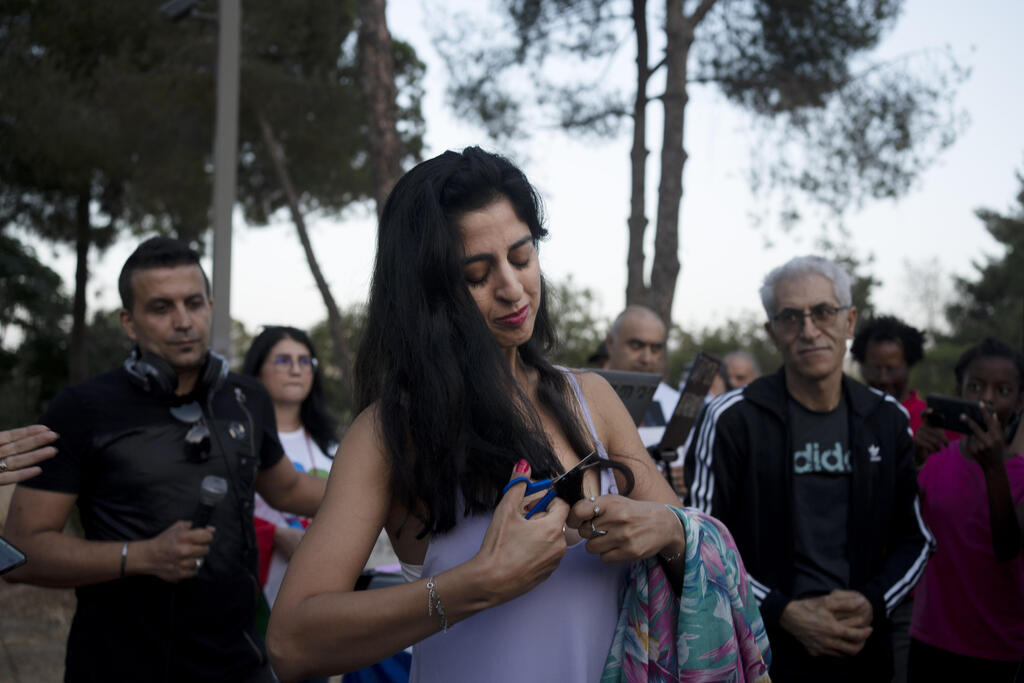
“The idea of walking around bald makes me shrink,” her friend said. “I’m so scared. I can’t stop thinking about it. I don’t know myself without hair. I imagine the looks of pity from people, and it’s very hard for me.”
That conversation sent Angel Katzur on an unexpected intellectual journey. For the first time, she began to examine why women invest so much in their hair, and why it is often perceived as erotic, sometimes even more than sexual organs themselves.

The hair is often perceived as erotic, sometimes even more than sexual organs themselves
(Photo: Shutterstock)
The questions consumed her. She abandoned her original research topic and instead devoted her doctoral work to the cultural meaning of women’s hair. That research later became her book, “Untangling the Knot: A Feminist Look at Women’s Head Hair,” published this year.
In the book, Angel Katzur traces the symbolism of women’s hair through mythology and culture, from figures such as Eve, Lilith, Medusa and Venus to modern icons like Marilyn Monroe. She also explores the male gaze on blond hair, the sexualization of red hair, involuntary hair loss due to illness, and head coverings in Judaism and Islam.
“One of the central insights from my research is that women’s hair is not just aesthetic,” she said. “It bears cultural, political and symbolic meaning. Hair sits at the intersection of power struggles: between genders, between religion and secularism, and between the individual and society.
“Hair practices, whether covering, revealing, cutting or styling, are not just responses to social norms,” she said. “They are ways women express identity, religious belief or political stance.”

Efrat Angel Katzur. Her friend’s cancer diagnosis led her to research that changed her life
(Photo: Re’em Marmor)
Sometimes, she noted, the same act can carry opposite meanings. “A head covering can be seen as oppression, but also as autonomy, faith or resistance to Western beauty ideals,” she said. “In that sense, women’s hair operates as a form of cultural language, through which they engage with society on questions of the body, sexuality, identity and freedom."
What is it about women’s hair that provokes such strong reactions and when has it become a sexual symbol?
“Women’s head hair is one of the most powerful cultural symbols tied to the female body,” Angel Katzur said. “Anthropologically and historically, it has signified beauty, youth, fertility and social status. Therefore, over time, it also became charged with sexual meaning.”
Despite there being no biological difference between men’s and women’s hair, culture has assigned women’s hair qualities of sensuality and seduction, turning it into a defining marker of femininity.
"Throughout history, women have groomed, styled and altered their hair in countless ways, using it as a form of expression that reflects identity, cultural belonging, and ideas of beauty and sexuality."
In her book, Angel Katzur argues that the erotic image of women’s hair is rooted not only in social customs but also in ancient myths that continue to shape Western consciousness. Through mythology and art, figures such as Medusa, Daphne and Lilith present hair as a site of power, desire and danger. Medusa’s snake hair, Daphne’s flowing curls that arouse Apollo, and Lilith’s wild hair all reflect a deep cultural association between hair and disruptive erotic force.
Women’s hair as a force to be monitored and controlled
Drawing on anthropologist Claude Lévi-Strauss, Angel Katzur argues that myths are not relics of the past but frameworks that still shape how people understand the world. “These myths don’t just tell stories,” she said. “They assign symbolic meaning to women’s hair. It is presented both as a source of attraction and of danger.”
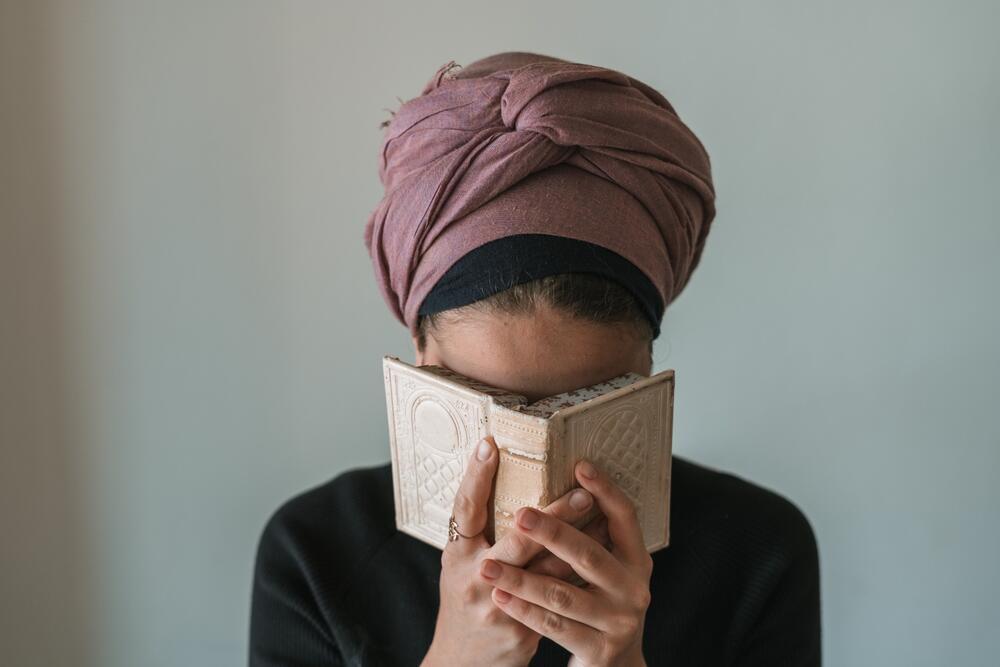
Head covering in Judaism. Women’s hair as a force to be monitored and controlled
(Photo: Shutterstock)
Hair is often linked to the archetype of the serpent, an ancient symbol of temptation, power and desire, reflected in images of curly, unruly hair. This has shaped a dual cultural perception of women’s hair: on one hand, a symbol of beauty and sensuality; on the other, a force seen as needing to be monitored and controlled.
“I found these myths are not just literary stories, but part of a broader ideological system that has long explained and justified social mechanisms for policing the female body, from modesty norms to hair-covering practices. Once society assigns women’s hair erotic meaning, it becomes subject to control and regulation.”
Across history, especially in monotheistic religions, covering women’s hair has been tied to norms of modesty and sexual regulation. The idea, she said, is to limit its erotic potential and confine female sexuality to the private sphere.
Angel Katzur also draws on philosopher Michel Foucault, who viewed the human body as a site of power and social discipline. “In that sense, even something that seems natural or aesthetic, like hair, becomes a tool through which society regulates the female body,” she said.
Beyond social control, hair plays a deeply personal role in identity. Hair loss from chemotherapy, autoimmune diseases or infections is often experienced not just as a physical change but as a form of grief. “When women describe being forced to wear a hijab, they often use the same language,” she said. “A sense of loss, of disappearing, of becoming invisible.”
That is why cutting one’s hair in protest, as Iranian women did in 2022, carries such symbolic weight. “Psychologically, giving up something others try to control is an act of reclaiming power,” she said. “It’s a way of saying, ‘You will not control my hair, I will cut it myself.’”
“This is where the two dimensions meet: hair as a political symbol and hair as an intimate, physical and emotional experience. The title of my book, ‘Untangling the Knot,’ captures that dual meaning, the knot that must be undone, alongside the one you choose to tie yourself.”
How did the obligation to cover women’s hair begin? Or why did men seek to control women's hair by concealing it?
“The answer runs much deeper than it may seem, with roots that long predate any religious discourse. The attempt to control women’s hair is not a religious invention, but stems from power dynamics that existed before any sacred text, written law or religious institution. In many early human societies, even before organized theology emerged, women’s hair was already subject to rules, rituals and restrictions.
"Over time, these practices became embedded in broader systems regulating female sexuality in patriarchal societies. When women’s hair is seen as a source of temptation, societies develop mechanisms to regulate its appearance, whether through covering, shaving or restricting how it is shown in public.
"This created a distinction between the public and private spheres. In public, women were expected to adhere to modesty norms; in private, hair could be revealed to a partner. This practice reflects the view that a woman’s sexuality belongs within the family and intimate relationship, rather than the broader social sphere.”
You mentioned the hijab, and it’s especially relevant as we speak during the Iran-Israel war, at a time when there is hope in both countries that the conflict could lead to regime change and the liberation of Iranian women from the rule of the Islamic Revolutionary Guards. What can you tell us about the hijab struggle, and where does it stand today?
"Hijab in Arabic means 'cover' or 'barrier'. It is worn by observant Muslim women to cover the hair, ears and neck, while leaving the face visible, typically in the presence of men outside the immediate family.
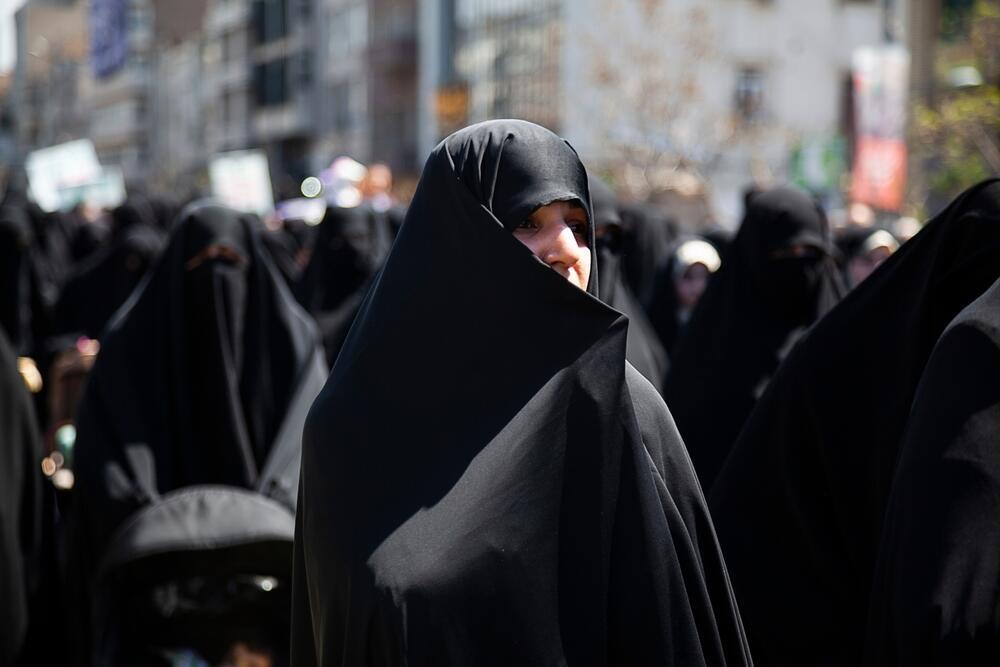
Women in Iran. They are required to wear the hijab as part of the social order
(Photo: shutterstock)
“This is a social and political struggle led by women in Iran against the legal requirement to cover their hair in public. This obligation has been enshrined in law since the establishment of the Islamic Republic after the Iranian Revolution, when women were required to wear the hijab as part of the new social and religious order.”
“This is not a new protest,” Angel Katzur said. “Women were already demonstrating against compulsory head coverings in Tehran in the early 1980s. In recent decades, however, it has taken on increasingly visible public forms, from social media campaigns to symbolic acts of protest such as removing the hijab in public or waving it as a flag of defiance.
A dramatic turning point came in 2022, following the death of Mahsa Amini, who was detained by Iran’s morality police for allegedly not wearing her hijab properly. Her death sparked a widespread wave of protests led by young women, many of whom cut their hair in public or burned their head coverings as acts of resistance.
“Their hair became a symbolic weapon,” Angel Katzur said. “This is seen as a feminist struggle because it goes to the heart of the question: who controls women’s bodies and how they appear in public?”
“The hijab requirement is not just a religious practice, but a political mechanism that regulates how women’s bodies appear in public and sets the boundaries of their freedom. The Iranian protest movement seeks to challenge that system of control. When women remove the hijab or cut their hair in front of a camera, they are making a symbolic act that challenges the state’s authority to define their bodies. In that sense, the hijab struggle is not just about a piece of clothing, but raises deeper questions of freedom, identity and gender control.”
What can Israeli women learn from Iranian women?
“The protest by women in Iran shows how questions of the body and clothing are also questions of freedom. When the state or society dictates how women should appear in public, whether by forcing them to cover their hair or pressuring them to uncover it, the female body becomes a site of political struggle. The central lesson is not necessarily to adopt a specific position on head coverings, but to recognize the importance of personal choice.”
A democratic society, she argued, should allow women to decide for themselves how to appear in public, whether that means covering their hair for religious, cultural or personal reasons, or not.
“In the end,” she said, “the struggle over hair is not just about appearance. It’s about the right of women to define their own identity and their own bodies.”