

In the age of cleaning influencers and elaborate skincare routines, it is easy to assume that cleaner is always better. But when it comes to both our skin and our homes, that is not necessarily true.
Dr. Efrat Bar-Ilan, a dermatologist and senior pediatric dermatologist in Clalit Health Services’ Dan-Petah Tikva district, says the goal should not be to live in a sterile environment. “Over-cleaning the skin can damage its protective barrier and cause dryness and irritation, while there are objects we touch every day and sometimes forget to clean,” she said.
“Proper hygiene does not necessarily mean cleaning more but rather knowing what really needs to be cleaned, how often and when it is actually better to do less.” So where can you ease up, and what deserves more attention?
What we may be cleaning too much
Can you shower less?
A long, hot shower may feel like the best way to get truly clean, especially in winter. But more time and hotter water are not necessarily better for your skin.
“Long showers in very hot water and soaps containing fragrances can damage the skin’s natural protective barrier,” Dr. Bar-Ilan said. “The result can be dryness, itching and sometimes a worsening of atopic dermatitis.”
She recommends shorter showers with lukewarm water, particularly for children and people with dry or sensitive skin. Those with atopic dermatitis should use fragrance-free soap or a cleansing oil designed for sensitive skin. “And there is no need to scrub the body with a loofah, certainly not during every shower,” she added.
Is washing your hair every day a problem?
Advice about daily shampooing varies widely, and some people avoid washing their hair every day, fearing that it will dry it out.
But there is no single schedule that suits everyone. “There is no rule saying you cannot wash your hair every day,” Dr. Bar-Ilan said. “The right frequency depends on the scalp and hair type, oil production, sweating and physical activity.”
An oily scalp can be washed frequently, even daily, with an appropriate shampoo. For people with a dry scalp, however, frequent washing may make the problem worse. “The best measure is how your scalp and hair respond,” she said.

How often you should shampoo depends on your hair type
(Photo: Shutterstock/Volodymyr TVERDOKHLIB)
When does facial cleansing become too much?
It is easy to assume that washing your face more often, adding another exfoliant or using more active ingredients will produce cleaner, healthier skin. In reality, an aggressive skincare routine can do the opposite.
“Facial skin should not feel dry or irritated after cleansing,” Dr. Bar-Ilan said. “Aggressive cleansing, frequent exfoliation and combining several active ingredients can damage the skin barrier, causing redness, burning and dryness, and can even make breakouts worse.”
For most people, she said, gentle cleansing once or twice a day is enough. “If your skin is red, burning or peeling after cleansing, your skincare routine may be too aggressive.”
Can you wash your hands too much?
Since the COVID pandemic, many people have become accustomed to frequent handwashing and sanitizing. But there is a point at which good hygiene can become hard on the skin. “Handwashing is very important, but frequent washing, hot water and excessive use of disinfectants can cause dryness, cracks and even hand eczema,” Dr. Bar-Ilan explained.
In most cases, ordinary soap and water are sufficient. People who wash their hands many times a day, as well as those with dry skin or atopic dermatitis, should use moisturizer regularly, particularly after washing and before bed.
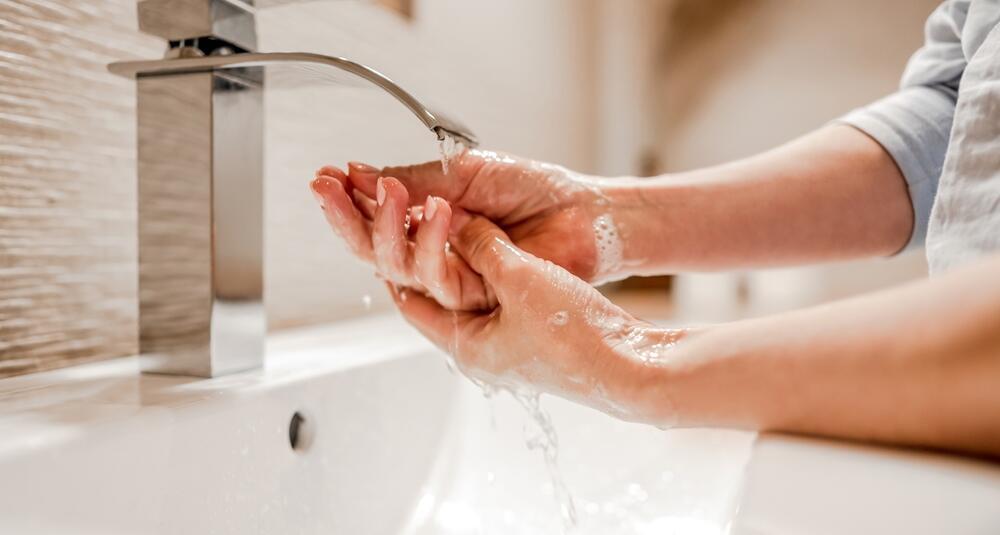
There is such a thing as too much
(Photo: Shutterstock/T.Vyca)
Do clothes need to be washed after every wear?
Throwing every item of clothing into the laundry basket after a single use may seem hygienic, but not everything needs to be washed each time it is worn. In some cases, unnecessary washing increases exposure to detergents and fragrances.
“Underwear, socks and clothing that has absorbed sweat should be washed after every use,” Dr. Bar-Ilan said. “But pants, sweaters and outerwear can usually be worn more than once if they remain clean.” Frequent washing is not necessarily better for the skin, she added, and residues from laundry detergent and fragrance products can cause irritation, particularly for people with sensitive skin.
Can household cleaners harm your skin?
When cleaning the house, it is easy to focus on what the product is doing to the surface and forget what it may be doing to your hands. Using more cleaner, or a stronger cleaner, does not necessarily make a home cleaner.
“Cleaning products, especially bleach and degreasers, can cause irritation, dryness, cracks and contact dermatitis,” Dr. Bar-Ilan said. “The risk increases with frequent use and direct skin contact.”
She recommends wearing gloves while cleaning and never mixing cleaning products. “More product or a stronger smell does not necessarily mean better cleaning,” she said.
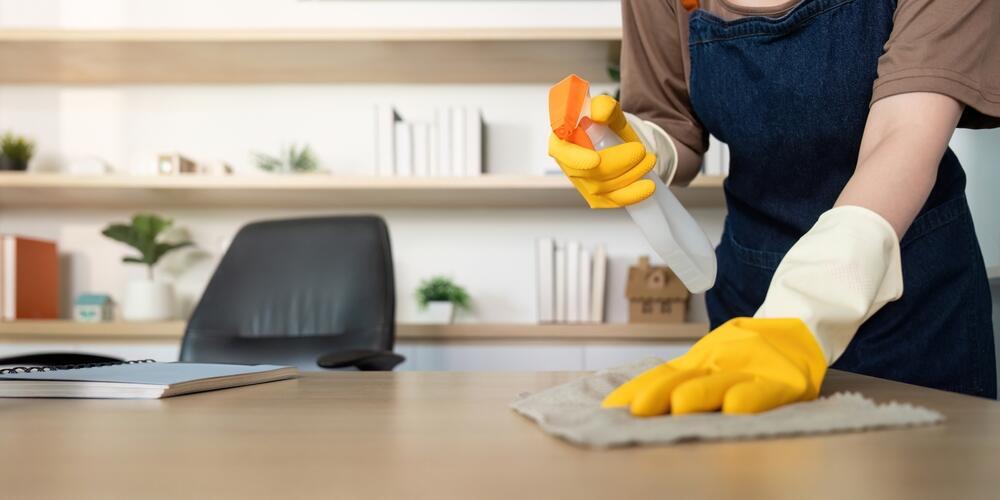
Wearing gloves is recommended
(Photo: Shutterstock/Natee Meepian)
What we may not be cleaning enough
How dirty does your phone actually get?
Your phone goes almost everywhere with you: from your hand to your bag, onto a table and back to your hand and face. Yet unlike our hands, phones are easy to forget when it comes to cleaning.
“We touch our phones dozens or hundreds of times a day, place them on different surfaces and then hold them against our faces,” Dr. Bar-Ilan said. “They can accumulate oil, dirt and bacteria from our hands and surroundings.” There is no need to disinfect a phone constantly, she said, but it should be cleaned regularly.
Earbuds: The small item we forget to clean
We put them in our ears, take them out, place them in a bag or on a desk and then use them again. Because earbuds are small and personal, it is easy to forget that they need cleaning too.
“Earbuds come into direct contact with the skin and sometimes sit inside the ear canal, so oil, sweat and earwax can accumulate on them. They should be cleaned regularly according to the manufacturer’s instructions and should not be shared. Keeping them clean and dry is especially important for people prone to irritation or inflammation around the ears,” Dr. Bar-Ilan explained.

Earbuds: you may even hear better
(Photo: Shutterstock/Zamrznuti tonovi)
It only contains water, so why wash the bottle?
Reusable water bottles are another everyday item people often forget to clean. If the bottle looks clean and contains only water, many simply refill it. But that is a mistake, Bar-Ilan explains. “Even if we fill it only with water, the mouth and lips repeatedly come into contact with the opening, and moisture can allow microorganisms to accumulate.”
Reusable bottles should be washed daily with soap and water and be dried thoroughly. Particular attention should be paid to the mouthpiece, lid, straw and rubber seals, where moisture can remain trapped.
How often should you clean makeup brushes?
People may carefully choose their makeup products while paying far less attention to the tools used to apply them. “Makeup brushes and sponges accumulate oil, skin cells and makeup residue,” Dr. Bar-Ilan said.
Brushes used regularly should be cleaned routinely, with once a week a good rule for most of them. She also recommends occasionally cleaning makeup bags, checking product expiration dates and avoiding sharing makeup. “Sharing lipstick, for example, can transmit herpes, so I recommend avoiding it,” she said.
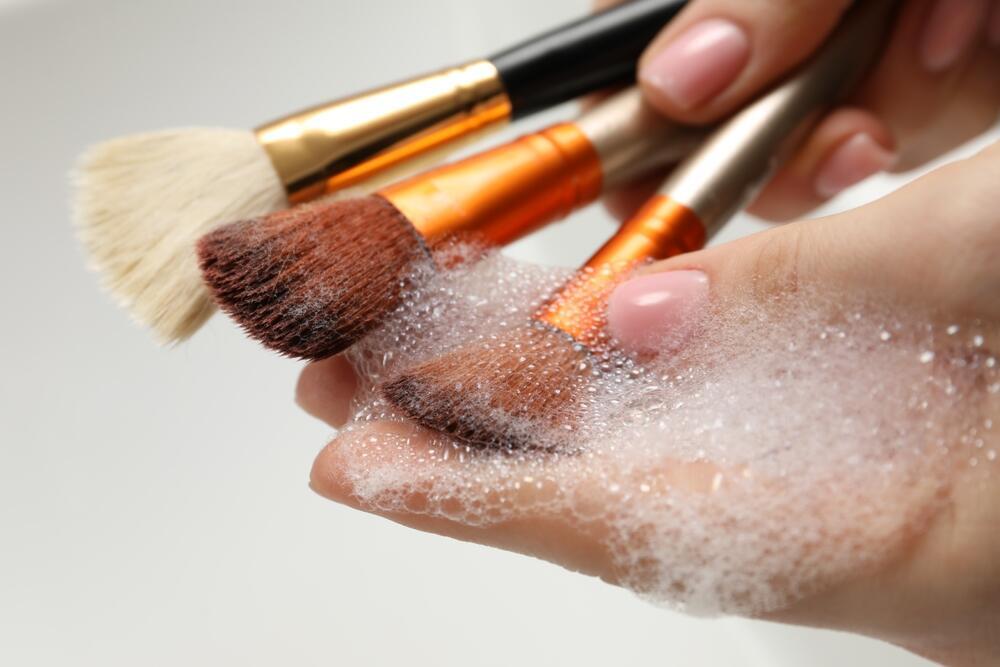
You should clean brushes too
(Photo: Shutterstock/New Africa)
How often should you change your sheets?
Sheets and pillowcases may not look dirty, making it easy to postpone changing them for a few more days. Unlike clothing, however, we spend hours in contact with them every night. “Sheets should generally be changed about once a week.
“People with facial acne should pay particular attention to changing their pillowcases frequently because they are in direct contact with facial skin and can accumulate oils along with residue from hair and skincare products. Pillows themselves should also be cleaned occasionally according to the manufacturer’s instructions and allowed to dry completely,” Dr. Bar-Ilan explained.
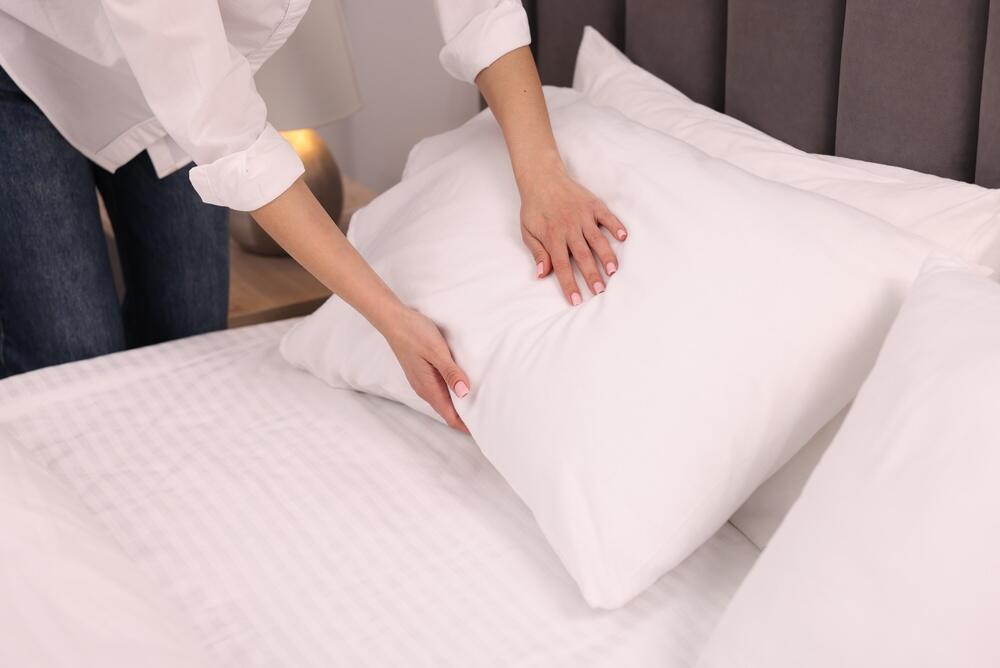
Better to change them once a week
(Photo: Shutterstock/New Africa)
What about kitchen towels and dish sponges?
That kitchen towel may have seen better days, but many of us keep using it anyway. Dr. Bar-Ilan recommends changing it frequently, and the same applies to dish sponges.
“Kitchen towels and sponges come into contact with water, food residue and different surfaces, so they can quickly accumulate bacteria and contaminants. Kitchen towels should be replaced every few days, or sooner if they become wet or dirty. The same towel should not be used for hands, dishes and surfaces.
“Dish sponges should be squeezed out, allowed to dry thoroughly and replaced regularly, roughly once a week rather than waiting until they begin to smell or fall apart. In both cases, allowing them to dry fully between uses is important.”
Your washing machine needs cleaning too
We depend on the washing machine to make our clothes clean and fresh, so it is easy to forget that the machine itself requires maintenance.
“The constant moisture and detergent residue can eventually cause dirt and mold to accumulate, particularly around the rubber seals and detergent drawer,” Bar-Ilan said.
She recommends cleaning the machine about once a month, including the seals and detergent drawer, and leaving the door open after a wash so the interior can air out and dry.

Washing machine needs cleaning too
(Photo: Shutterstock / KinoMasterskaya)
Keyboard, mouse and remote: The things we touch all day
Keyboards, computer mice and remote controls are among the objects our hands touch most often, yet they rarely make it onto the household cleaning list.
“These items can accumulate oil, food residue and dirt from our hands,” Bar-Ilan said. “They should be cleaned from time to time, especially if the equipment is shared. But there is no need to disinfect every surface constantly. Reasonable cleaning and good hand hygiene are more than enough.”