


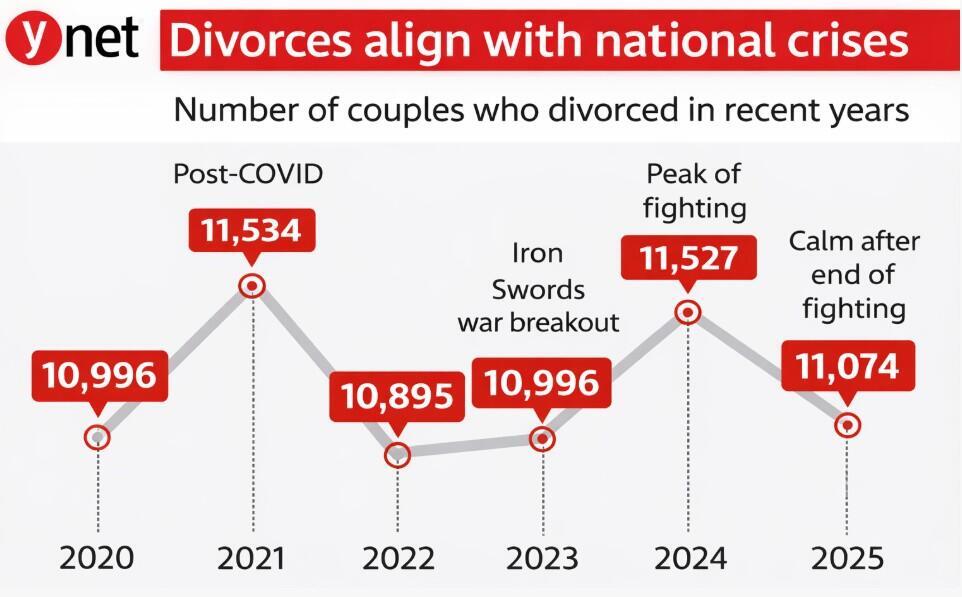
A new report by Israel’s rabbinical courts points to a steady rise in divorce during periods of national crisis, followed by a decline once the crisis subsides. According to the data, 10,996 couples divorced in 2020.
In 2021, toward the end of the COVID period, the number of divorces reached a peak of 11,534 couples. This was followed by a decline, with about 10,800 couples divorcing in 2022 and 2023. The trend intensified again in 2024, when 11,527 couples divorced, an increase of 6.7% from the previous year. In 2025, 11,074 couples divorced. The decline in 2025 coincided with a moderation in fighting, after intense combat throughout 2024.
'Waves' of inquiries
Officials at the rabbinical courts say the data shows a direct impact of national crises on family life. A recurring pattern emerges of a freeze during crises, marked by postponed decisions, followed by an increase afterward. This helps explain the spike in divorce figures in the later stages of the war and the COVID period.
The data also points to a particular strain among families of reserve soldiers, which may explain the rise seen in 2024. The study found that 30% of partners of reserve soldiers reported thoughts of separation in 2024, an increase of 6.7% from the previous year. Researchers described a sense of a "released spring" toward the end of national crises, when families feel it is time to make long-delayed decisions.
Following the presentation of the findings, the rabbinical courts recommended establishing a dedicated support framework, including fast-track mediation mechanisms, for families of reserve soldiers who experienced severe burnout. They also urged recognition that national crises create delayed "waves" of divorce requests. "The system must reinforce staffing in the periods after crises", the report said.
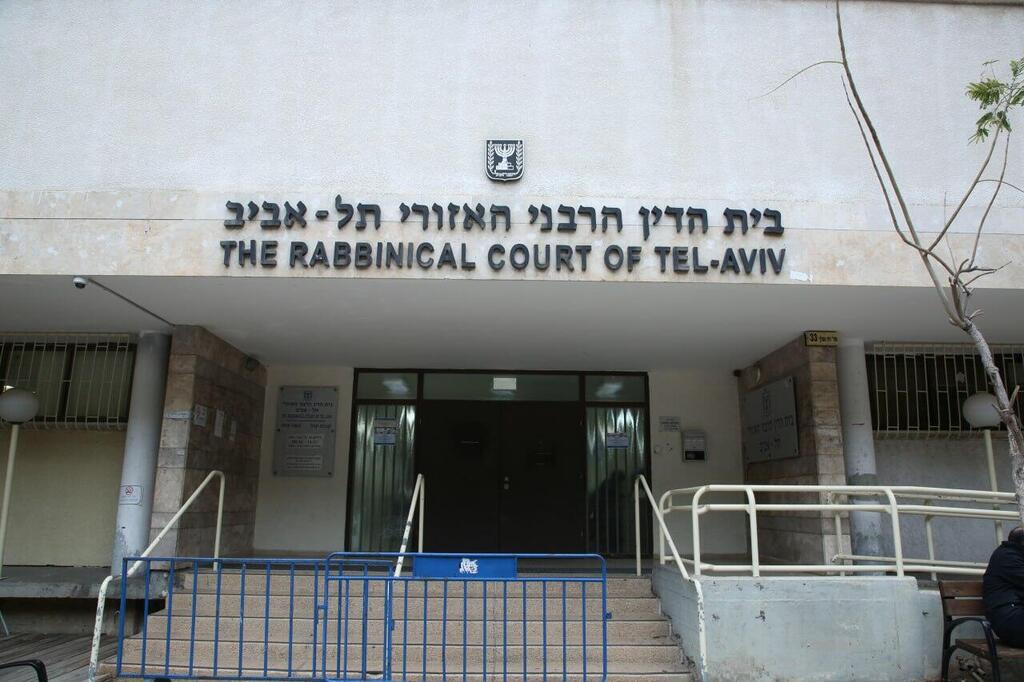
The Rabbinical court in Tel Aviv
(Photo: Ryan Preuss)
Dvora Eiferman, a senior deputy managing director in the rabbinical courts administration, analyzed the data. "As someone who has spent her career in public service, I understand that our social mission exists in every role and in every government ministry in which we serve. As part of my role as deputy managing director, I examined how the crises of the past five years, from the COVID period to the erosion caused by prolonged reserve duty, affected the family unit and divorce trends in Israel", she told ynet.
"The family unit serves as a barometer of the national situation. Among the study’s key conclusions was the need to strengthen resilience among reserve soldiers, including rapid mediation mechanisms for families that experienced extreme strain." She added that authorities must prepare for the "day after", including reinforcing response teams specifically in the post-crisis period.
After the most intense phase of the war ended, Rabbi Eli Ben-Dahan, director of the rabbinical courts, instructed the system to handle cases with maximum sensitivity in light of the emergency conditions Israel has faced in recent years.
Marital relationship affected
Data published over the past year by the Central Bureau of Statistics on the impact of reserve service during the "Iron Swords" war found that about half of married partners of reserve soldiers reported that the service harmed their relationship. Among partners of soldiers who served up to 50 days, 36% reported harm to their relationship, compared with 57% among partners of those who served between 200 and 350 days.
(Photo: StockLab, shutterstock)
The effect on children was also significant. Fifty-two percent of partners reported a deterioration in their children’s mental well-being following reserve service. Among families in which the soldier served 200 to 250 days, 63% reported a negative change in their children’s emotional state.
As for seeking help, 35% of partners turned to mental health support following their spouse’s reserve service, while 75% relied on help from family members.