

The four major international fashion weeks, which concluded in Paris earlier this month, reinforced the pantsuit's position as one of the season's standout trends.
While designers unveiled summer interpretations of a look that began gathering momentum about a year ago, celebrities in the front rows competed to put their own stamp on the tailored ensemble.
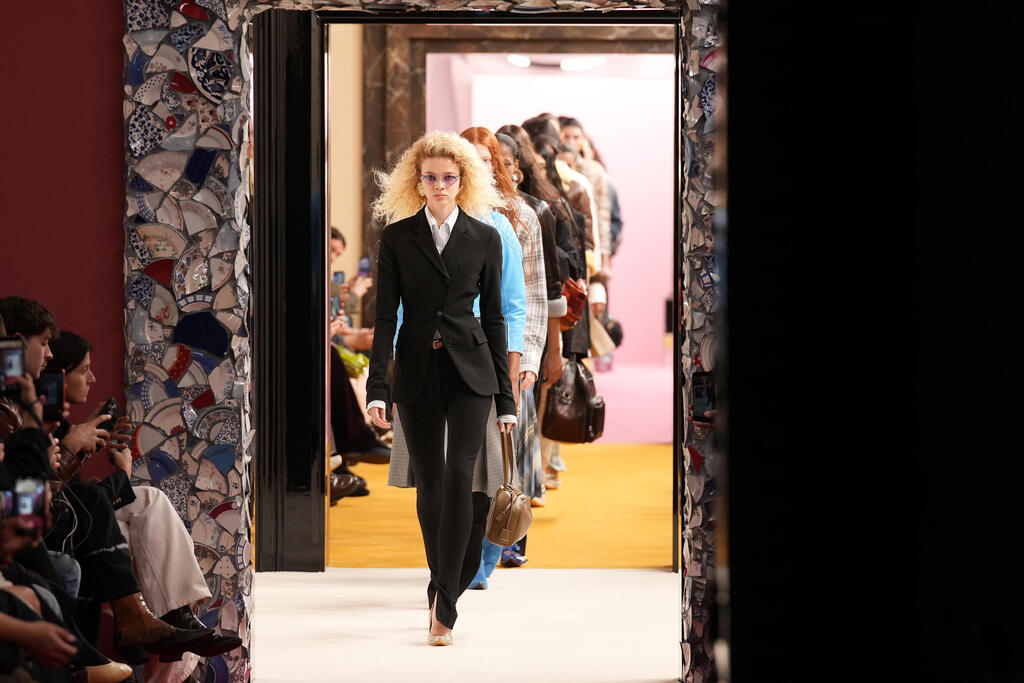
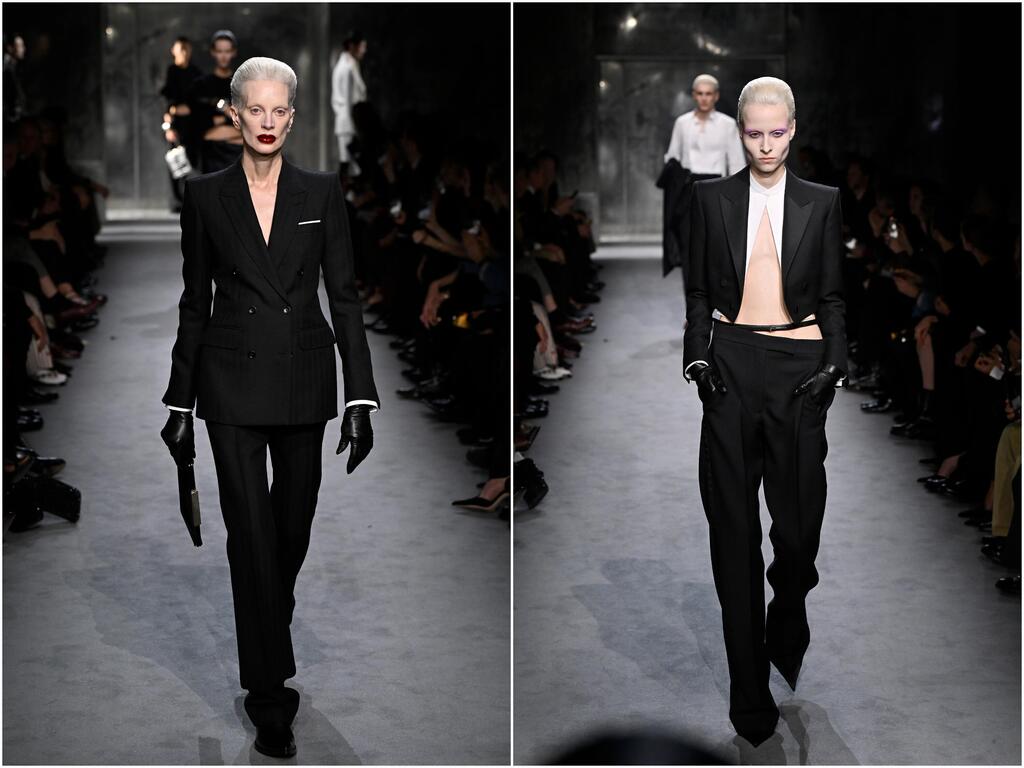
Tom Ford Fall/Winter 2025–26 runway show
(Photo: Kristy Sparow/Getty Images for TOM FORD)
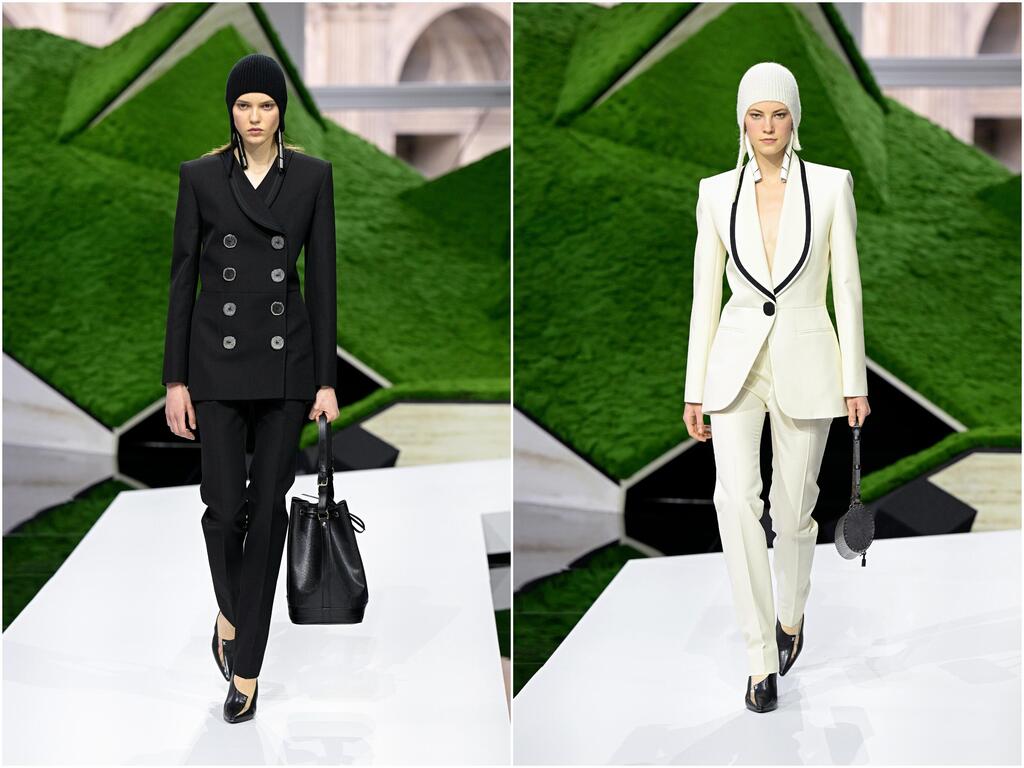
Louis Vuitton Fall/Winter 2026–27 runway show
(Photo: Kristy Sparow/Getty Images)
At Gucci's show in Milan, Naomi Watts arrived in an electrifying fuchsia satin suit, while Claudia Schiffer opted for a relaxed white pantsuit at Chloé's presentation in Paris. Both appearances reflected the renewed prominence of tailoring in women's wardrobes, even as designers offered different interpretations of the trend.
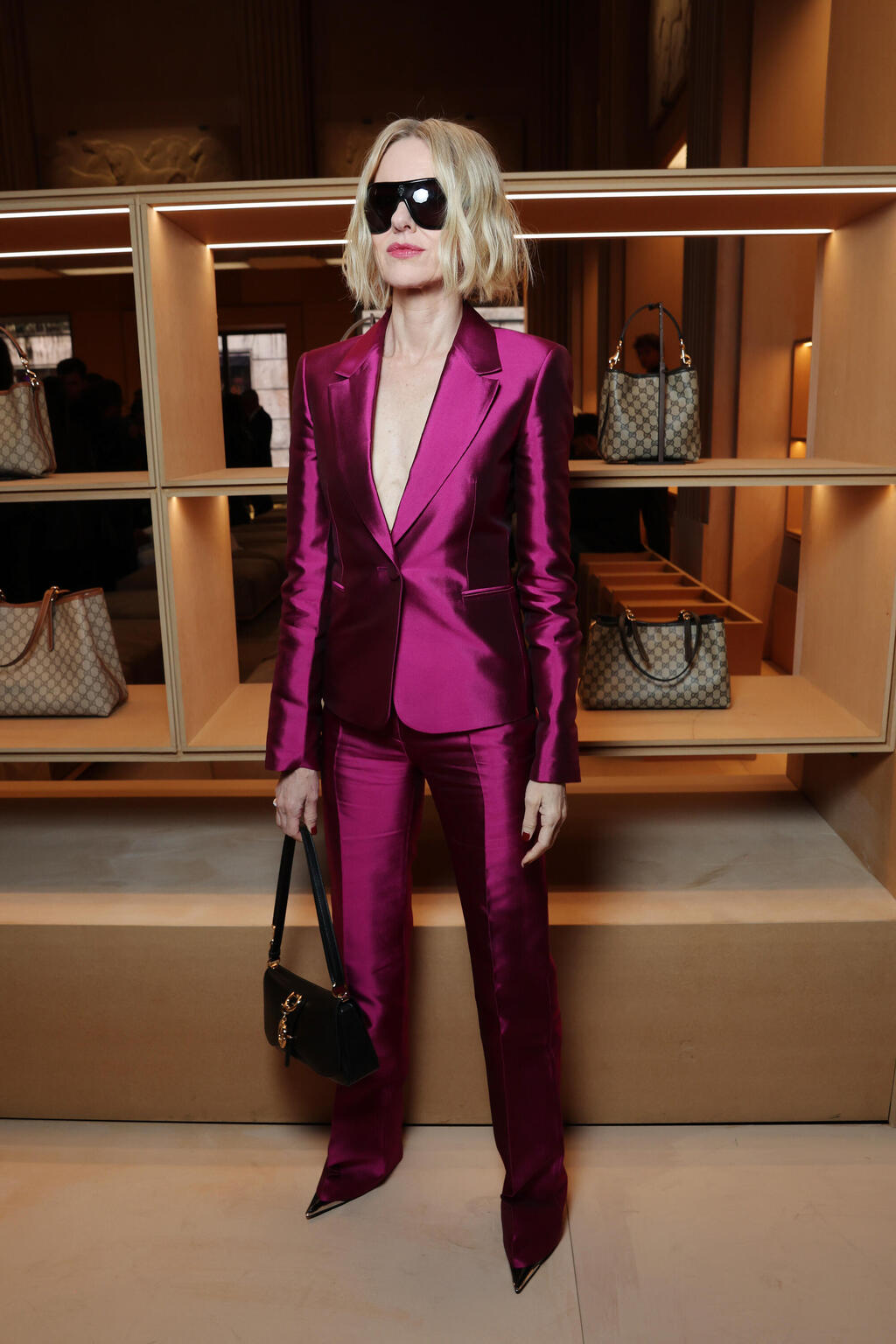
Naomi Watts at the Gucci Spring/Summer 2027 fashion show
(Photo: Victor Boyko/Getty Images for Gucci)
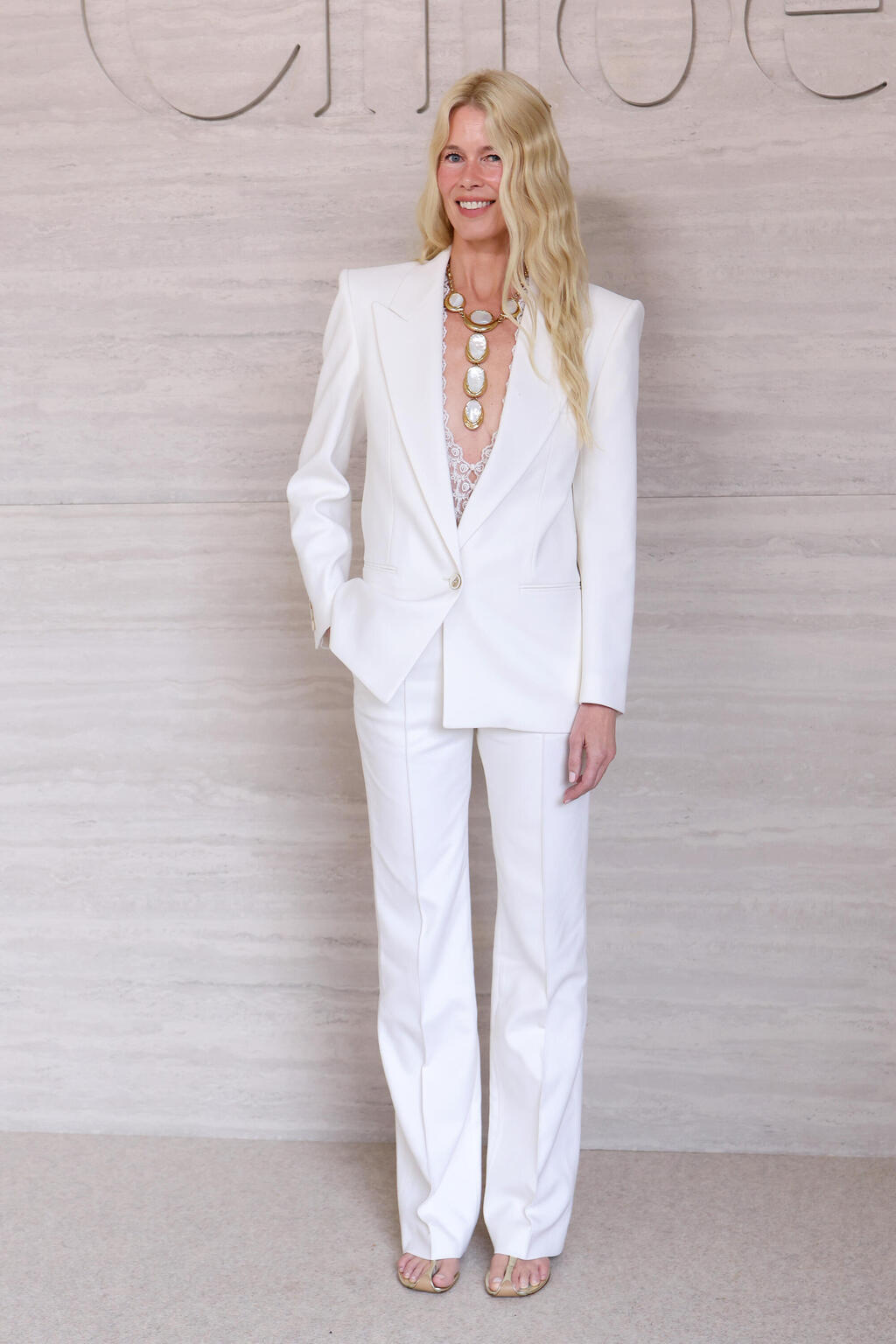
Claudia Schiffer at the Chloé Spring/Summer 2027 fashion show
(Photo: Aurore Marechal/Getty Images)
The broader direction, however, is unmistakable. Oversized blazers and wide-leg trousers that dominated recent seasons are giving way to structured shoulders, cinched waists, and increasingly narrow trousers. It is part of fashion's wider return to close-fitting silhouettes, also reflected in the comeback of skinny jeans.
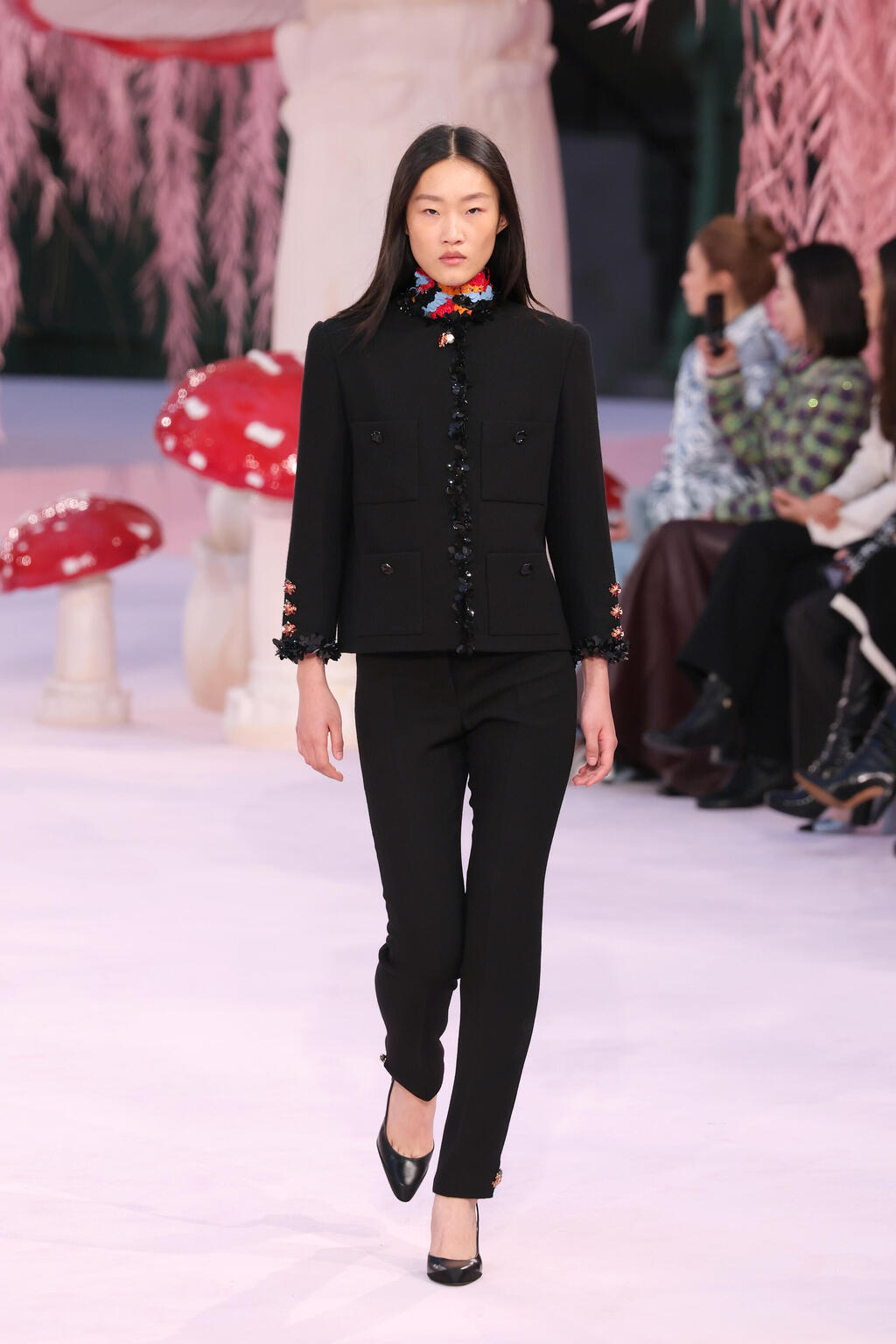
Chanel Spring/Summer 2026 Haute Couture show
(Photo: Vittorio Zunino Celotto/Getty Images)
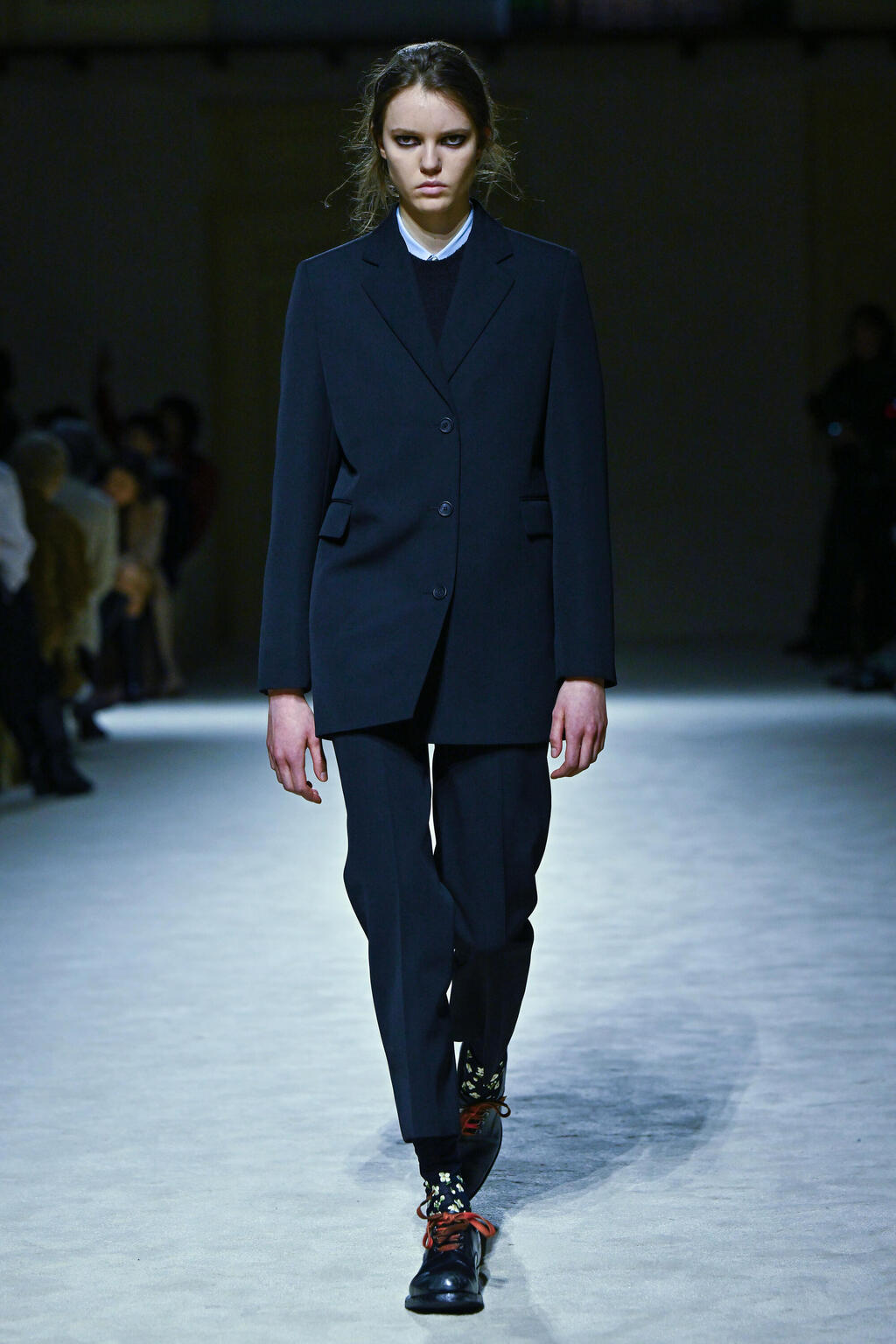
Prada Fall/Winter 2026–27 runway show
(Photo: Marco M. Mantovani/Getty Images)
The revival of the slim-fitting suit marks another turn in fashion's perpetual cycle, but it also invites a fresh look at one of the most symbolically charged garments in women's fashion history: Le Smoking, the women's tuxedo Yves Saint Laurent introduced in 1966.
At a time when tuxedos were almost exclusively associated with men, Saint Laurent offered women an alternative to the traditional evening dress. More than a new silhouette, the design appropriated the dress code of those who held power, challenging established assumptions about femininity, authority and appropriate attire.
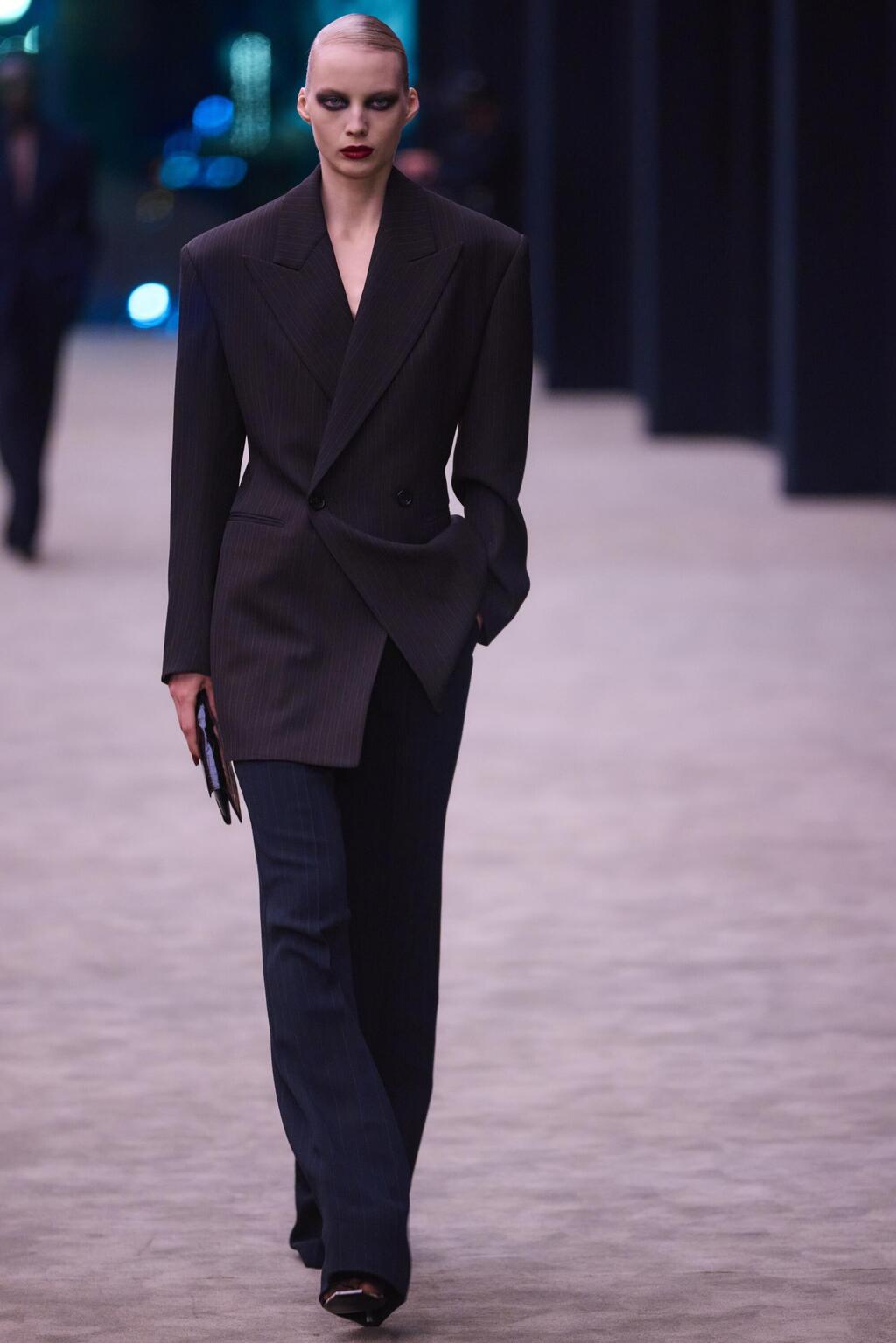
Saint Laurent Fall/Winter 2026–27 runway show
(Photo: Benjamin Cremel/Getty Images)
Saint Laurent subsequently developed a series of modern women's pantsuits that became staples of the contemporary wardrobe. He cited the student protests that swept Paris in 1968 as an inspiration, drawing on the demands for equality and personal freedom that characterized the demonstrations. Those upheavals find a contemporary echo in the student protests now taking place in France and other European countries.
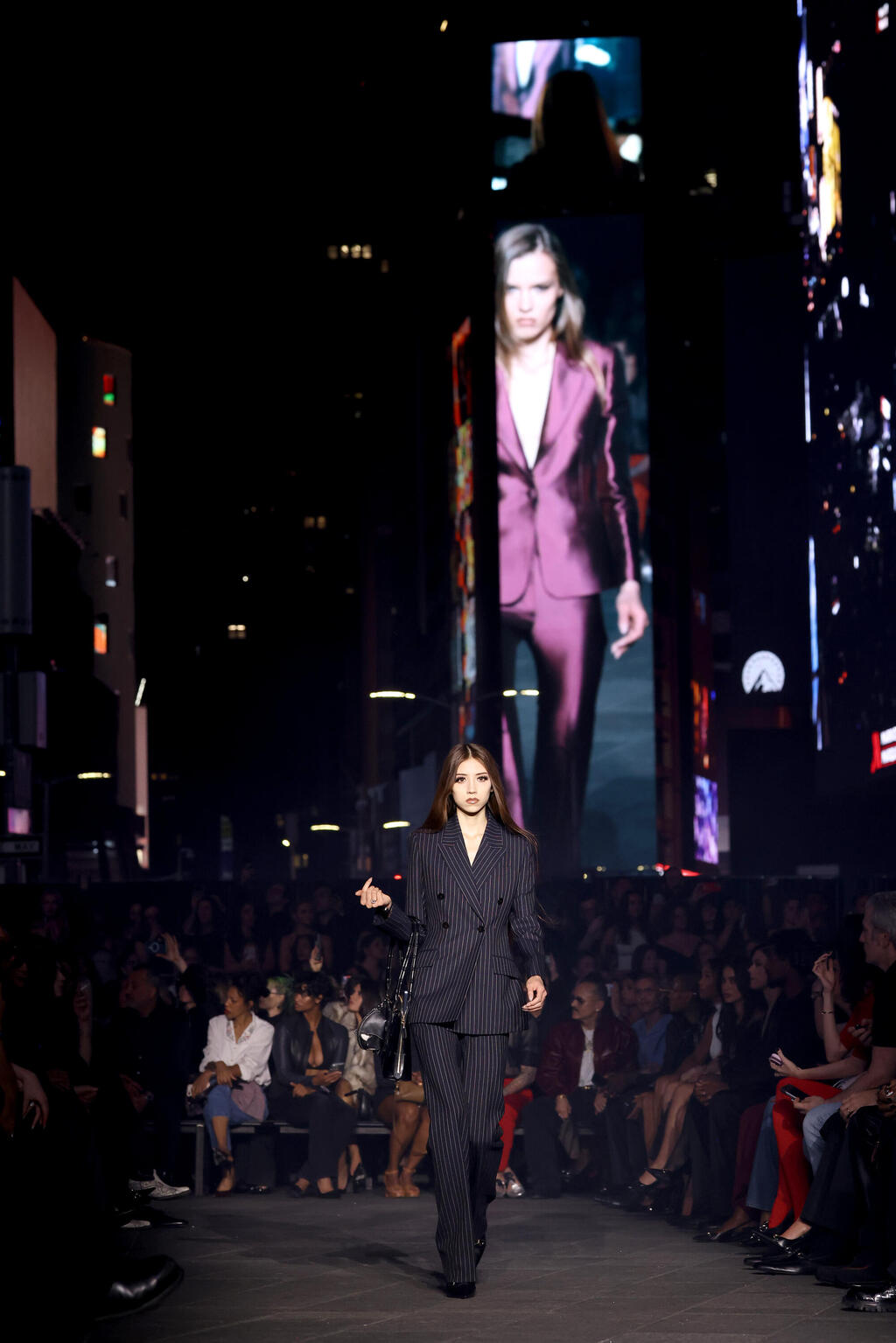
Gucci Core 2026 fashion show
(Photo: JP Yim/Getty Images for Gucci)
Particularly attuned to social movements and shifts in cultural attitudes, Saint Laurent translated the rebellious spirit of the late 1960s into tailored clothing that challenged traditional gender distinctions. His pantsuits did not simply borrow from menswear. They questioned why certain garments, and the authority they represented, had been reserved for men in the first place.
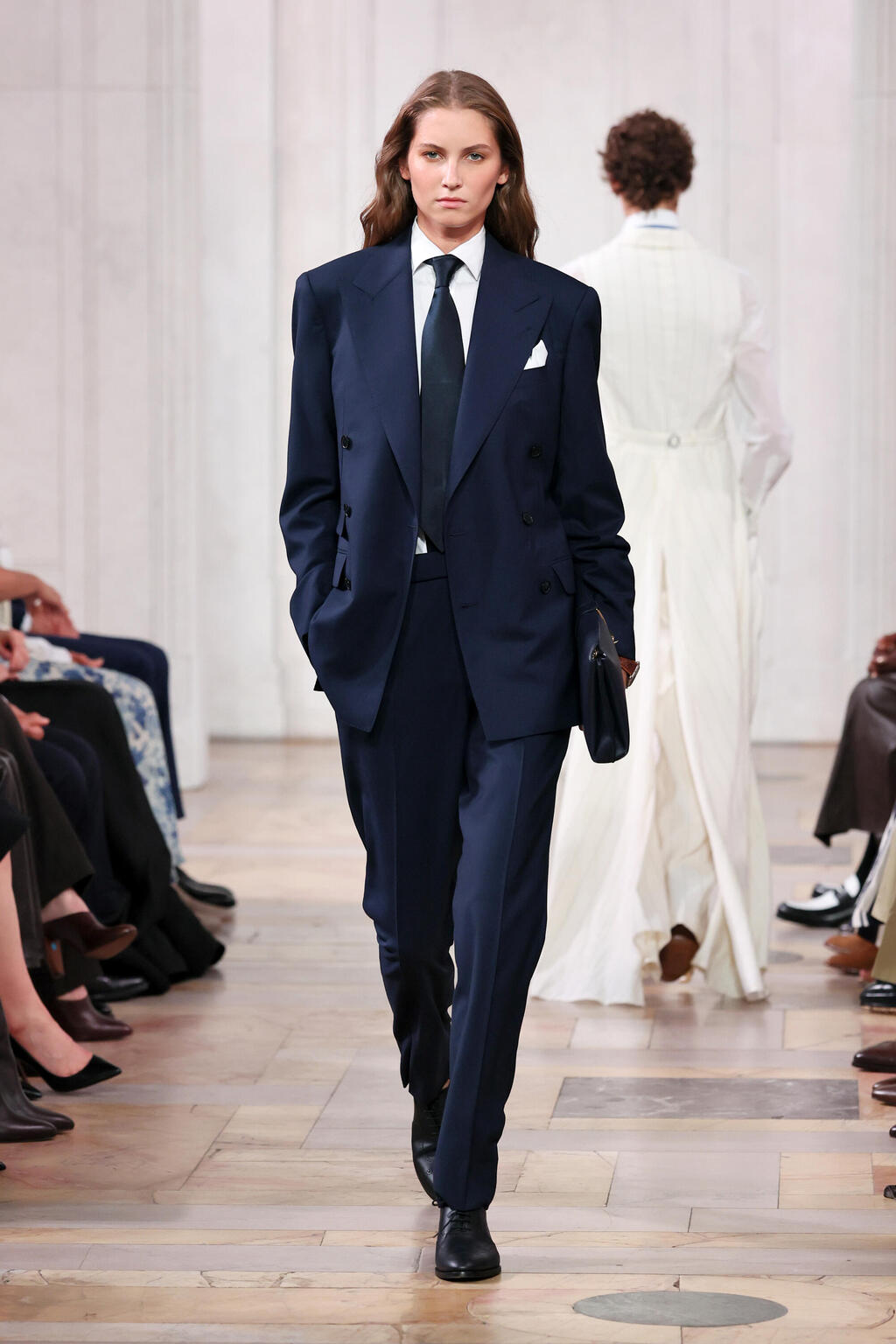
Ralph Lauren Spring/Summer 2027 runway show
(Photo: Dia Dipasupil/Getty Images)
Six decades later, the runways are once again filled with interpretations of the women's tuxedo, although there is little reason to assume today's collections anticipated the current wave of protests.
At Tom Ford, designer Haider Ackermann presented a series of exceptionally slim, fitted tuxedos. Alongside classic black, pastel pink and lemon yellow offered softer, more relaxed alternatives to traditional formalwear.
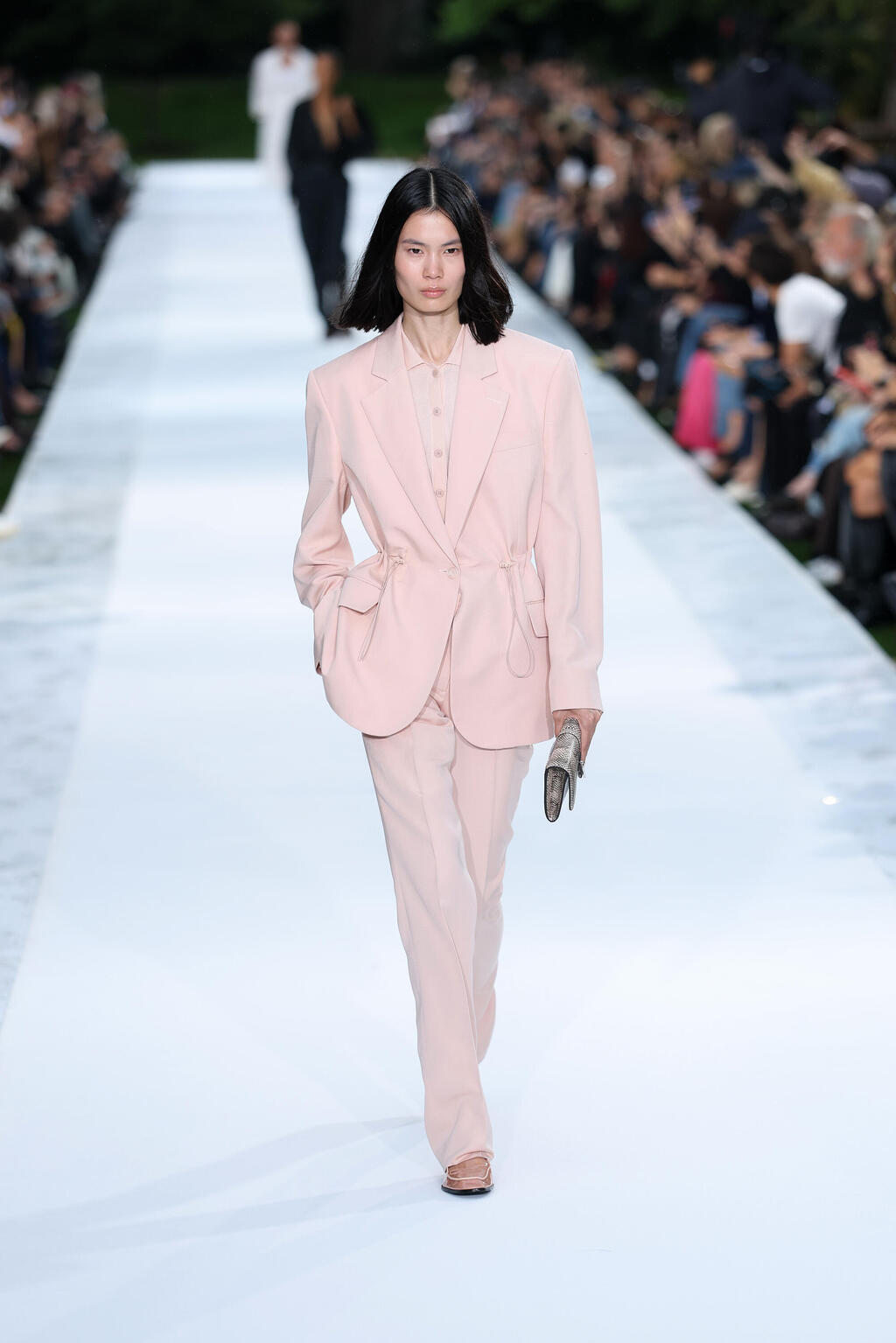
Stella McCartney Spring/Summer 2027 runway show
(Photo: Aurore Marechal/Getty Images)
Prada and Chanel presented elegant black pantsuits suited to working women, or at least to those seeking to project a professional image. At Swedish fashion house Acne Studios, meanwhile, the narrow silhouette was taken to an almost exaggerated extreme, with trousers so tight they appeared to have been practically painted onto the models' legs.
Unlike the loose, fluid suits of recent seasons, these designs communicate something altogether different: authority, precision and an unmistakable sense of power.
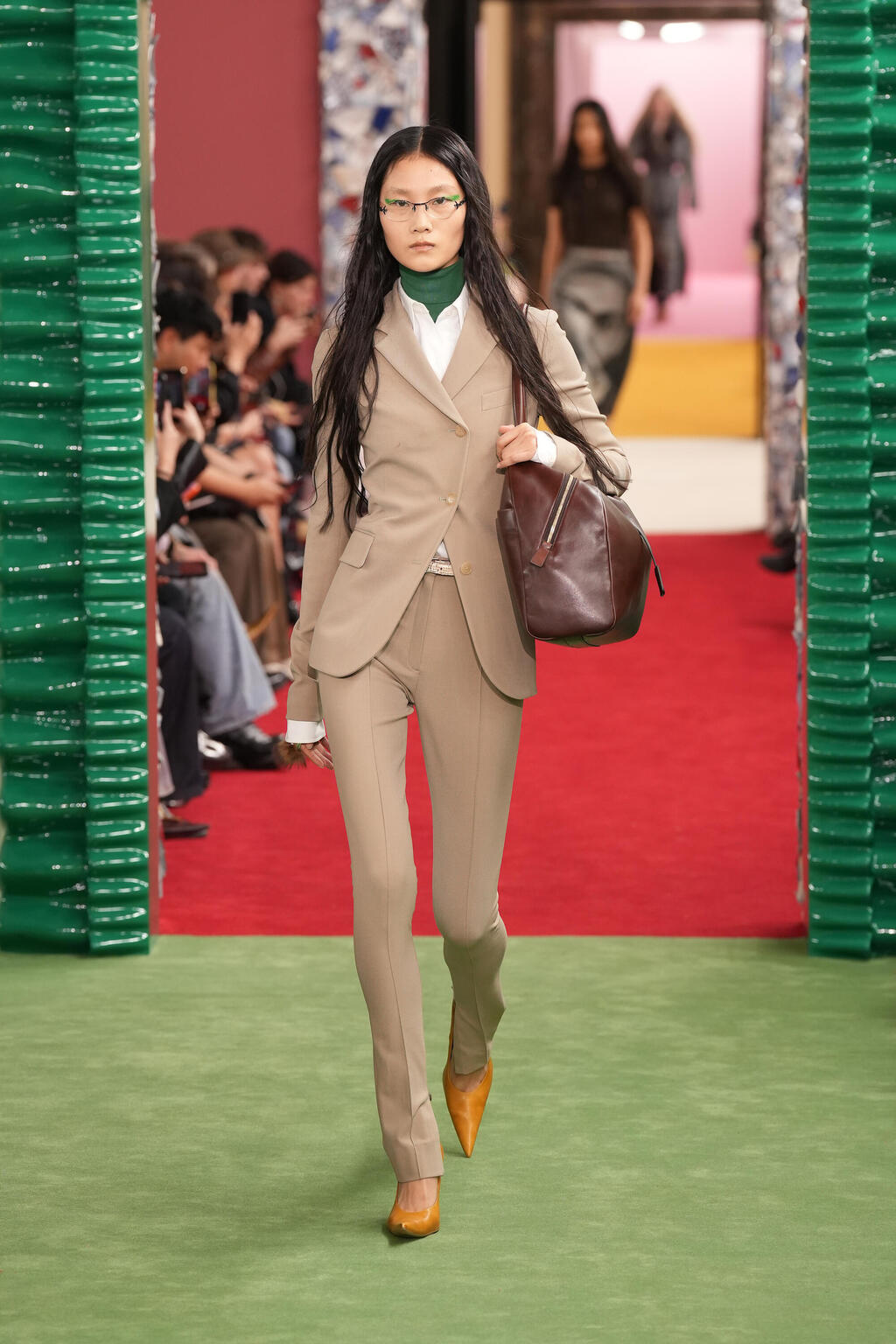
Acne Studios Fall/Winter 2026–27 runway show
(Photo: Francois Durand/Getty Images)
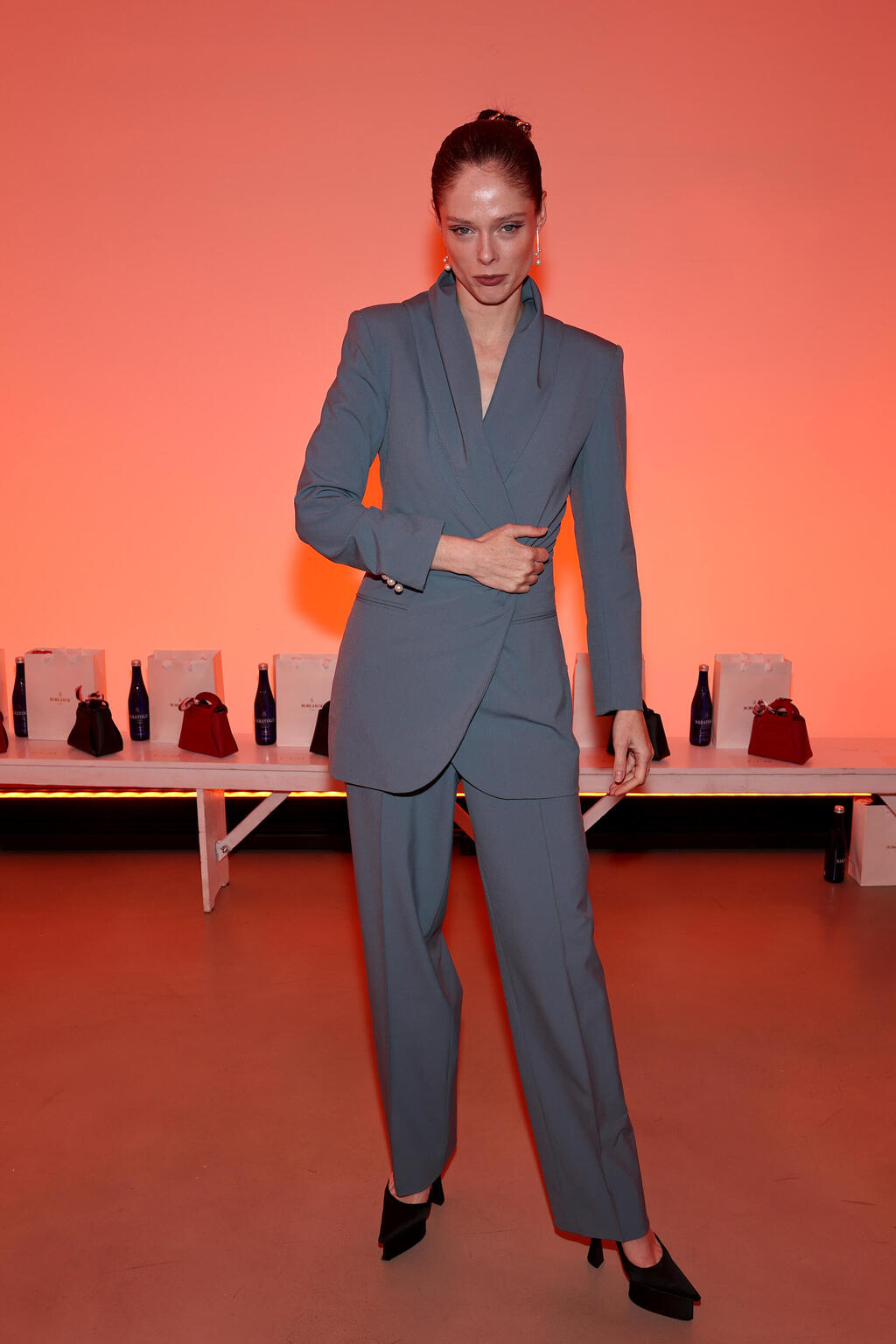
Coco Rocha at the Prabal Gurung Spring/Summer 2027 fashion show
(Photo: Jamie McCarthy/Getty Images)
The prominence of tailored suits in fashion raises an immediate question: Is wearing one necessarily a feminist statement? On one hand, the suit remains a symbol of female independence and a challenge to traditional distinctions between men's and women's clothing. On the other, the shift toward slimmer cuts raises an equally important question: Are women once again expected to conform to an ideal of thinness?
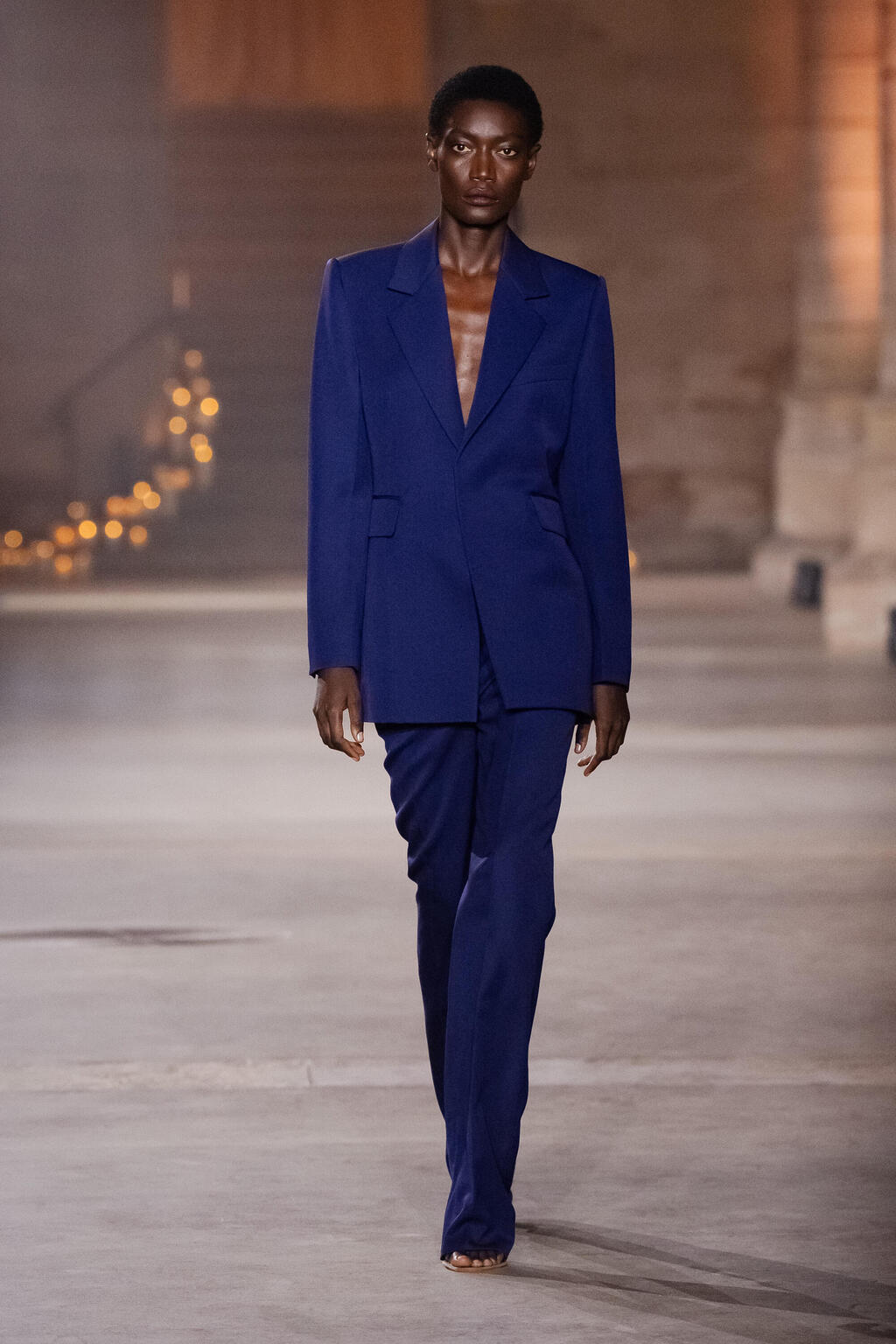
Victoria Beckham Spring/Summer 2027 runway show
(Photo: Francois Durand/Getty Images)
Oversized tailoring allowed women to obscure or reshape the outlines of their bodies, experimenting with proportions and challenging conventional gender expectations. The return of the skinny suit, by contrast, brings the ideal of a slender, narrowly proportioned body back into focus.
And with it comes one of fashion's most enduring contradictions: To look strong, authoritative and liberated, are women still expected to submit to rigid standards of beauty?