

Why are a few lines with personality in your dating profile worth more than a thousand dry traits? A new study from Reichman University offers a surprising perspective on how people form connections on dating apps. The findings suggest that the way we present ourselves in a profile may determine not only whether we attract attention, but also whether we create a genuine human connection with compatible partners.
The study, led by Prof. Gurit Birnbaum of the Baruch Ivcher School of Psychology, along with doctoral student Kobi Joltek and undergraduate students, analyzed 594 participants ages 20 to 40, with an average age of 25. It examined how different self-presentation styles in dating apps influence romantic perceptions.

Across three experiments, participants were shown profiles containing identical information presented in different formats. In one version, the profile listed facts in a brief, matter-of-fact way. In another, the same details were woven into a personal narrative.
The results were clear. Profiles written as stories sparked more empathy toward the person behind them, which translated into greater romantic interest compared with profiles that read like a checklist.
The same pattern held for images. A sequence of photos that told a “day in the life” story created a more positive impression than a set of unrelated pictures. The strongest effect came from combining narrative text with story-driven images.
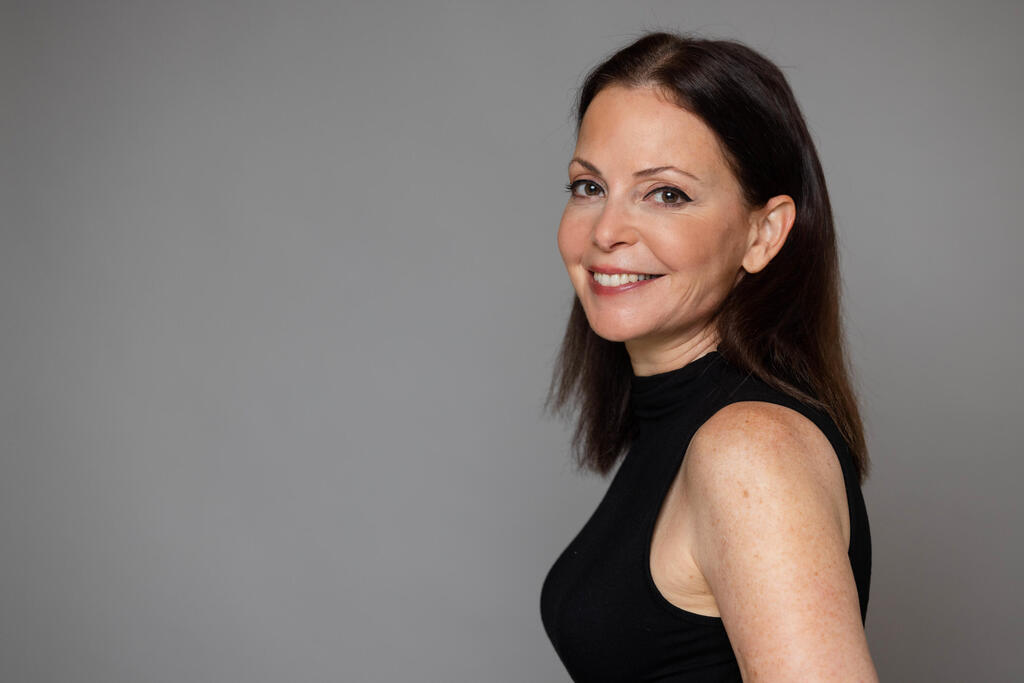
Prof. Gurit Birnbaum
(Photo: Gilad Kavalerchik )
“We conducted three studies in which single participants viewed dating profiles presenting a potential partner,” Birnbaum said. “They reported how much empathy they felt toward the person and how interested they were romantically.”
“In the first study, the narrative and non-narrative profiles contained the same basic information. The difference was not what was revealed, but how it was presented,” she said. “In the second study, we focused on visual self-presentation, since photos have a powerful impact on first impressions in online dating. Participants viewed profiles with five images that varied in how much they formed a coherent story.”
In the narrative condition, the photos showed the person across a typical day, from morning to evening, including activities like exercising, studying, cooking and socializing. “This created a fuller picture of their life, interests and relationships,” she said. In the non-narrative condition, the same person appeared in neutral, disconnected settings.
“The third study examined whether combining text and images, as they typically appear on dating apps, creates the strongest impact on impressions of potential partners. Participants viewed one of four profiles, featuring either a narrative or non-narrative written description, along with five photos that were either linked by a cohesive story or not.”
The findings point to how stories work on the human mind. Unlike lists of traits, which encourage a more analytical and detached evaluation, a personal narrative invites readers into someone’s world, triggering identification and emotional engagement.
The study also highlights a paradox. Many people try to present themselves efficiently and concisely, but that approach can backfire, making it harder to stand out or form meaningful connections. In a screen-driven dating environment, it is not the data itself that creates attraction, but how it is woven into a story.
Could you give an example of a non-narrative profile versus a narrative one?
“Sure. A non-narrative profile might read: ‘Uri, from the arts world. I learned to play guitar at a young age. After my military service and working as a bartender, I traveled to South America with friends from the army. Before returning, I enrolled in a bachelor’s degree in economics. Today I’m an economics student, and I also work in the high-tech industry. In my free time, I run and travel with friends and family. At the end of the day, I enjoy a glass of wine and playing guitar. I’d love to meet.’”
“By contrast, a narrative version might say: ‘Hi, I’m Uri. I’ve been drawn to art for as long as I can remember. My grandfather believed music connects people, and at 7 he gave me a guitar that’s been part of me ever since. After my military service and long nights bartending, I traveled through South America with friends. The landscapes, the food and the conversations changed how I see what matters in life.
“‘Toward the end of the trip, I had to choose between staying in the arts or taking a new path. Today I’m studying economics and working in tech, but the guitar is still with me. If I’m not studying or working, you’ll find me hiking, running or playing music, often with a glass of wine at the end of the day. If you’re smiling as you read this, I’d love to meet.’”
“By the way,” Prof. Birnbaum adds, “although we didn’t test this directly in the study, I believe that bringing adjectives to life can also help in this context. For example, instead of describing yourself in a dry way as ‘a good cook,’ write a short piece that illustrates it in a personal, unique, vivid and dynamic way, making you stand out in a sea of flat, repetitive descriptions.
“For instance: ‘I’ll drive an hour and a half north just to try a hummus place I heard about, then come home and try to recreate the recipe until 2 a.m.’ Or Instead of saying you’re a 'morning person', try: 'My favorite time of day is 6 a.m., when the city is still half asleep and I have time to myself.” And instead of “animal lover,” write: “I’m the type who’ll go to a party, ignore everyone and end up in the corner having a deep conversation with the host’s cat about politics'.”

(Photo: Shutterstock)
Did you identify gender differences in the profiles?
“The pattern was similar for men and women. Both felt more empathy and attraction toward a partner with a narrative profile.”
What do you think about more singles using ChatGPT to write their bios? Is that a positive or negative trend?
“When people present themselves on dating apps, they often feel a tension between wanting to stand out and impress, and wanting to stay authentic,” Birnbaum said. “In my view, the question is not whether you use AI, but how you use it. It can help, especially for people who find self-presentation difficult. If it simply refines or edits something you wrote, that’s less problematic.”
“The bigger issue arises when AI writes the entire text for you. The result is often generic and lacks personality, and raises the question: where are you in it? You can end up with chats flirting with each other instead of two people trying to see if they are a good match. What happens when they meet and discover that the witty person they were messaging is far less articulate? Much like overly edited photos, a disconnect between how someone presents themselves and who they are in reality can lead to disappointment and erode trust.”
Ultimately, Birnbaum said, the goal of a dating profile is to spark interest and find compatible partners, but not at the cost of creating a false impression that may backfire later.