


Yom Kippur is traditionally a time for asking forgiveness and sincerely apologizing to those we have hurt. But the real challenge is not simply saying “I’m sorry.” A meaningful apology requires taking responsibility for the hurt, understanding what we did, standing behind the apology and trying not to repeat the behavior. For some people, that is far more difficult than it sounds.
So what allows someone to apologize honestly and wholeheartedly, and what prevents others from getting there? “The act of saying sorry itself isn’t the most significant thing,” says Lee Reuveni, a certified sex therapist and educator and a couples therapist trained in Emotionally Focused Therapy, or EFT. “The apology is only the tip of the process. Forgiveness is an emotional process.”

That process, she says, requires more than regret. A person has to be willing to look directly at what they did.
“Saying, ‘I’m sorry, I regret it, I didn’t mean to,’ is easy,” Reuveni says. “A genuine apology begins precisely at the point where someone stops and asks themselves: What in me contributed to this rupture? What in me created this hurt?”
Why do some people find it so difficult to apologize?
“Very often people do things without intending to, or because they feel they have no other choice. Sometimes pain builds up inside them and they cannot put it into words. Then, instead of talking about the frustration, loneliness, despair or shame, they act those feelings out.
“It could be a woman who is ashamed to ask for help for a relative struggling with addiction. Because of that shame, she hides from her partner what she really did with the money. It could be someone who loses his job and doesn’t tell anyone because the shame of being fired is too great. It could be a partner who feels rejected in a relationship without intimacy and, rather than exposing that wound and asking for help, turns outside the relationship in a destructive way.
“From the outside, you see the lie, the secret and the breach of trust. But on the inside, there is a person who could not tolerate their own vulnerability. That is what makes an apology complicated. Because to genuinely ask for forgiveness, a person has to agree not only to admit what they actually did, but also to touch the places inside themselves that came before the act.”

Lee Reuveni
(Photo: Maya Havkin)
So when there is pain we are not dealing with, it builds up?
“Exactly. When pain inside the relationship is not spoken about, eventually it sends shockwaves in every direction. Healing the wound doesn’t mean the pain disappears. It is like a scar: It is no longer an open wound, but it remains part of the body.
“What truly breaks when there is no apology creates what we call an attachment injury. It happens when the basic feeling that the relationship is a safe place becomes fractured.
“We want our romantic relationship to be a safe harbor. If I ask you, ‘Are you there for me? Do you see me? Are you available to me?’ I want the answer to be yes.”
Does difficulty apologizing come from ego?
“I don’t think people necessarily believe they are too good to admit they made a mistake. Very often it is fear. There is a fear that if they apologize, nobody will see their pain.
“And some people find it extremely difficult to perceive themselves as someone who hurts others.”
But all of us hurt other people sometimes
“Right. All of us can hurt someone we love. It is one of the most human things in the world.”
Can apologizing be learned?
“If I grew up in a home where nobody talked about emotions, where nobody ever apologized to me, where I never saw or experienced an apology or forgiveness and where I was constantly made to feel that I was the problem, then nobody taught me how to apologize either.”
How do you teach it?
“If, for example, a mother is irritable and snaps at her child and then apologizes, that is meaningful. It is one of the most important things we can teach children: that they deserve an apology when somebody hurts them. That is also how they learn that they have to take responsibility for their own actions.”
When can apologizing become almost impossible for a person?
“Sometimes because of trauma. My grandfather was a Holocaust survivor. When he was a child, he was hungry and stole an apple. His father was punished because of it and killed.
“That left him carrying terrible guilt throughout his life. Whenever anything happened, he would immediately say, ‘It’s not my fault.’
“In his case, I think asking for forgiveness was almost impossible because it effectively meant saying: ‘I am responsible for something terrible.’ Obviously, it wasn’t really his fault, but his psyche could not bear that.”
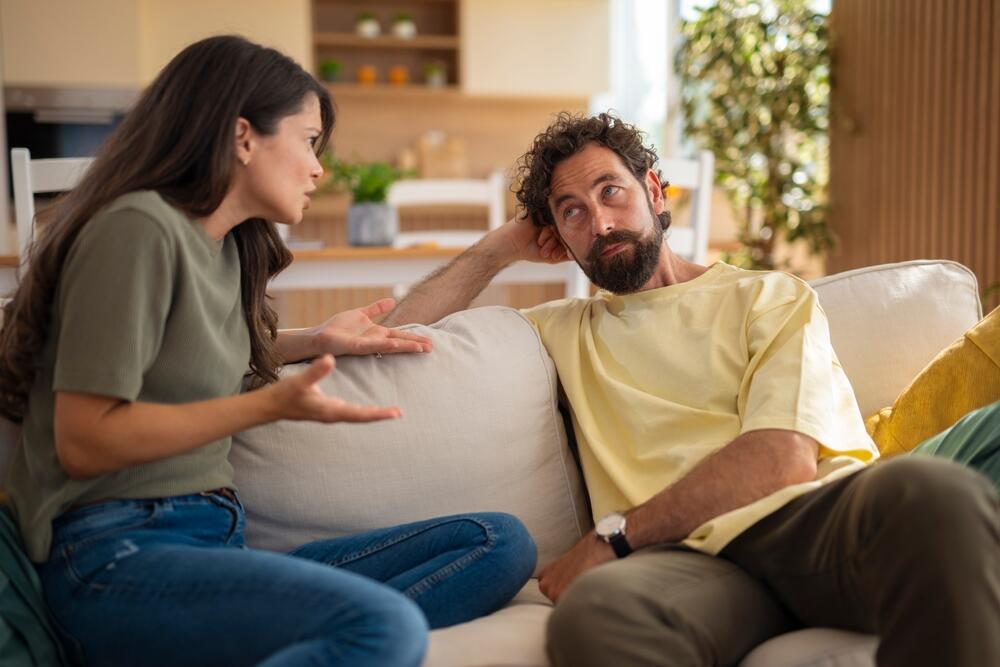
(Photo: Shutterstock)
How should you approach someone who simply cannot apologize?
“Therapy is the most important thing. Individual therapy, couples therapy.”
And apart from therapy? Should you insist that your partner apologize?
“I wouldn’t come from a corrective position that says, ‘You hurt me and you’re wrong.’ It is better to say: ‘I know something happened to you. I know that right now you’re not available to see my pain, but I know you love me, and I know that when I’m hurting, it matters to you. When you are able to talk to me about what happened there, I want to know.’
“There is a story in Native American tradition that says every person has a song that has accompanied them since they were in their mother’s womb. And when they become lost, hurt someone or stray from their path, the members of the tribe gather to remind them of that song, to remind them who they really are.
“The hardest experience for people when they mess up is that they forget there are good parts of them too. That they are still worthy of love.”