

Is showering with your kids or moving around the house partially naked legitimate? In many households, the instinctive answer is yes. It is seen as natural, routine and devoid of sexual intent: a tired parent at the end of the day, a young child who cannot manage alone, let us get it done and move on. Yet such a situation can turn overnight from a domestic routine into a red flag that obligates examination and intervention by welfare authorities.
A few days ago, a ruling was handed down by the Jerusalem Family Court in a case that unfolded against the backdrop of a custody dispute. The ex-wife claimed she caught the father, 66, sleeping with their 5-year-old daughter while she was partially unclothed. The father said the behavior stemmed from the child’s toilet training process. Following the claim, a police complaint was filed and welfare officials, including a youth law social worker, became involved.
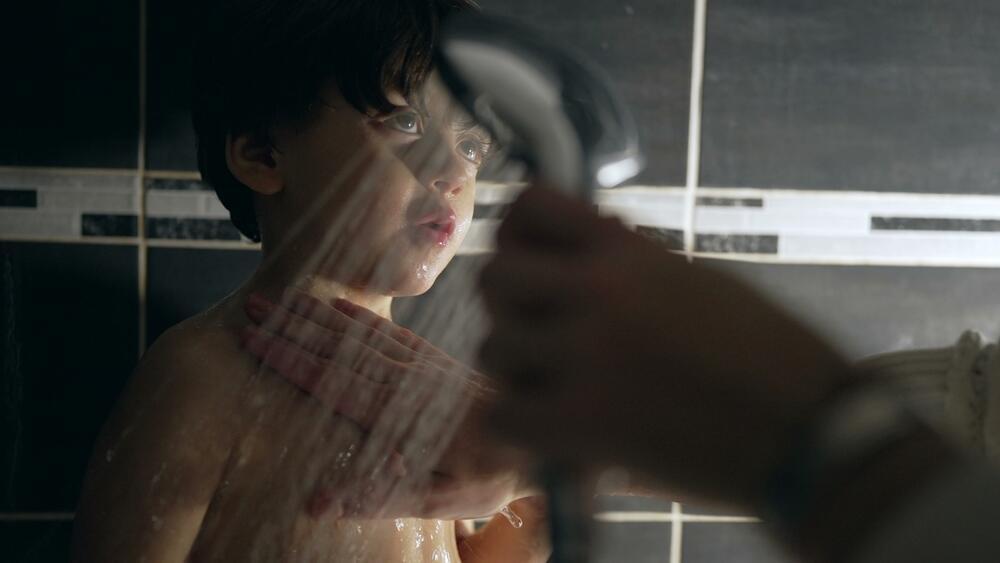
The court ultimately ruled that the father should not be required to undergo a sexual risk assessment. Still, the very discussion illustrates how nudity and showering with minors, within the context of a parental conflict, cease to be a matter of household custom and become questions of boundaries, child protection and parental fitness.
Israel’s Welfare Ministry has no official guideline stating ‘up to age X it is permitted to shower together,’ nor do Education Ministry procedures define norms regarding nudity at home. Instead, they focus on mandatory reporting, identifying children at risk and addressing sexual abuse.
This vacuum is effectively filled by professional guidance literature from bodies such as ‘Reliable Information about Sex,’ the Haruv Institute (to help children suffering from abuse and neglect), and assistance centers, which set out rules of thumb on privacy, intimacy and boundaries within the family.
For example, the ‘Nudity at Home and Shared Showers’ page on ‘Reliable Information About Sex’ states there is no single rule that fits everyone and that a wide normative range depends on family context.
Alongside this range, two principles are emphasized: teaching children bodily boundaries and privacy, and avoiding situations that could create sexual tension or blur boundaries within the family.
Within this framework, age recommendations are offered as professional guidance rather than regulations, including a ‘conservative approach’ that places around age 6 as a transition point for reducing or ending nudity between parent and child, especially when they are of different genders.

Greater leniency when it is the same gender: A mother and daughter shower together
(Photo: shutterstock)
Still, age alone is not a green light. Even at age 5, once an incident is reported or recorded as part of a custody dispute, it is no longer examined according to ‘what is acceptable in our home,’ but according to one question: were boundaries maintained and was the child protected?
At that point, the system is less interested in normative ranges and more likely to initiate an inquiry involving welfare services, a youth law social worker and sometimes assessments and recommendations.
In family court, it is not uncommon for one parent to file a complaint or seek a protection order against the other to restrict or prevent contact with the minors, on the assumption of sexual misconduct. Such an allegation is a last-resort weapon. No judge will assume responsibility without all required checks being conducted.
Even if the court ultimately does not adopt the recommendations, once the incident is entered into the case file it is no longer a private family story but a legal claim that triggers every warning light: investigation, documentation, welfare officials and experts.
Recently, the Welfare Ministry regulated a mechanism for risk assessment committees for abusive parents, sexual or otherwise, intended to streamline reviews and reduce costs. Until now, such proceedings lasted on average about a year, and it remains unclear whether the new mechanism will shorten the time needed to clarify the situation.
In the interim, as the process drags on and suspicion lingers, fertile ground is created for abuse of the system. Some complaints turn out to be false, while the complaining parent who acted in bad faith 'enjoys' a built-in advantage of separation, delayed visits and financial and emotional pressure on the accused parent. This is an untenable reality, yet one we continue to witness.

An innocent shower can turn into a legal nightmare: A father and son in the shower
(Photo: shutterstock)
In fact, a parental dispute is not required for a shared shower to become a legal nightmare. Sometimes all it takes is a sentence a child blurts out at kindergarten. If a 6-year-old tells a teacher, ‘Dad showers with me,’ it does not automatically become an offense and does not require immediate reporting. It does, however, activate a caution mechanism. The teacher documents the child’s words verbatim, without interrogating or asking leading questions, consults with a counselor or psychologist, and together they assess whether the description, age, context and any accompanying signs of distress create reasonable grounds to believe a sexual offense occurred or that the child is at real risk.
Only if such suspicion is formed does the duty to report to a youth law social worker or the police arise, after which the inquiry moves to welfare services and child advocacy centers. The question of whether there are ‘reasonable grounds for suspicion’ is not decided by a single sentence but by the overall picture: is this purely functional bathing, or is there a description of contact with genital areas, physical ‘games,’ requests for secrecy, fear, behavioral changes or other signs suggesting harm. Only then does the reporting obligation come into force.
In a reality where the system is on high alert and sensitivity to minors' harm is extremely high, one simple point must be understood: shared showers or partial nudity with children, even when done innocently, can be interpreted differently and ignite a chain of examinations and proceedings. From that moment on, what was routine can turn into a waking nightmare.