

Five hours passed from the moment Orit Navon was put under anesthesia until she came out of the operating room, covered in bandages and bruises but with a flat stomach and lifted breasts. Since then, she has been telling everyone, “I’m thrilled with myself and with the result,” though she is careful not to become a missionary for plastic surgery.
“When women approach me, I tell them, ‘This is very personal. Only you know if it is right for you. Not even your husband or your mother knows,’” she says. “Anyone who has had her abdomen opened, whether in a C-section or another surgery, knows the pouch around the scar; It doesn’t care how much you invest in fitness and nutrition. It is baggage that only surgery can take off you. But I will never say, ‘Do what I did.’”
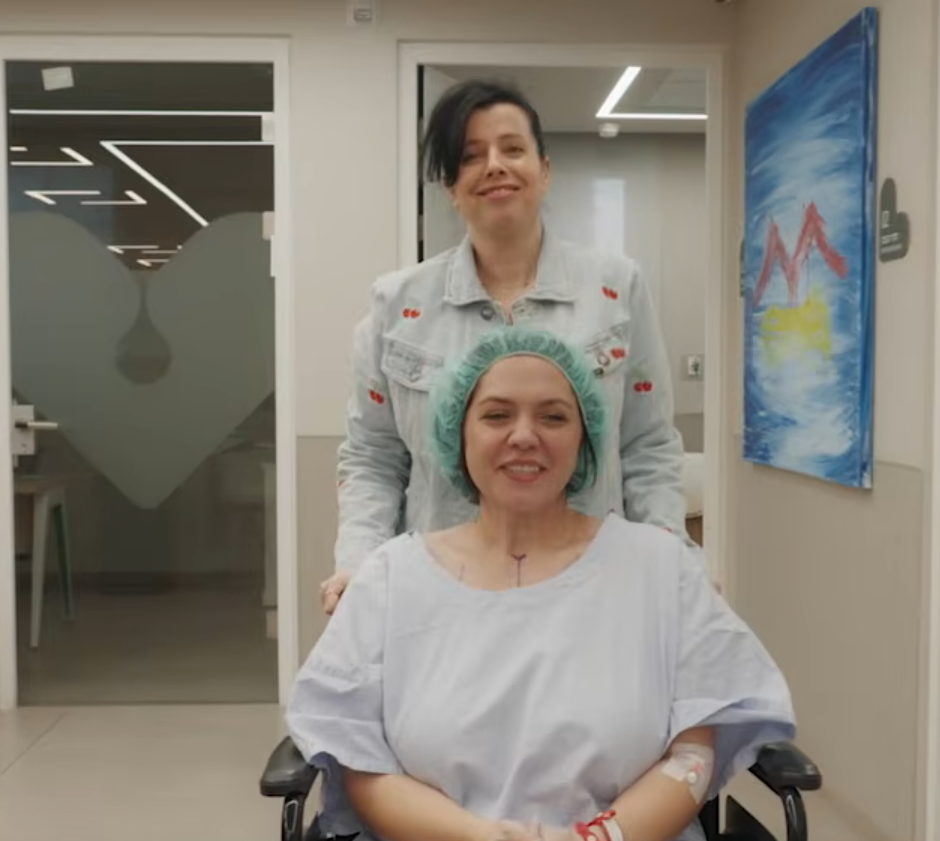
The procedure Navon underwent is known as a “mommy makeover,” mainly because it is marketed as an attempt to restore the body women had before pregnancies and births left their marks.
“It is a terrible term,” Navon says. “It suggests that the moment you become a mother, you have to fix the damage of pregnancy and childbirth. It is insulting. But that is the term that caught on around the world.”
The surgery consists of several procedures performed in one long session, usually including breast reshaping, whether reduction, augmentation or lift, a tummy tuck and sometimes liposuction from the buttocks or thighs. Recovery time depends on the number of procedures a woman chooses to undergo, and ranges from two weeks to a month.
“It is a difficult recovery. I told one of the women I accompanied, ‘You have to remember very, very clearly why you wanted a flat stomach, otherwise you won’t be able to cope with the suffering.’ I don’t want to scare anyone, but I went into the operating room a healthy woman in peak shape and came out nursing-dependent.
"I was shocked when the nurse had to put my socks on for me, especially because I am someone who finds it very hard to ask for help. I couldn’t open the refrigerator because of the vacuum seal and the effort it required. I have no history of C-sections, so I didn’t know how painful it is to cough, laugh or straighten up. For a month, I was bent almost down to my knees.”
Since recovering and returning to herself, Navon created Mishtaptzot (women undergoing makeover) with director Yasmin Kini, a documentary series recently launched on Kan Digital, Israel Broadcasting Corporation, to break some of the stigmas and reflect the emotional journey involved in the process and its results.
“I also had a bit of a stigma about plastic surgery,” she admits. “Fifteen years ago, I would have told you, ‘I will never have plastic surgery,’ because it was perceived as superficial and shallow, an unnecessary risk. And that is what I remind myself now, with the comments.
"I can’t be offended by someone who writes, ‘I’m disappointed in you’, because she has not watched a single episode and is not at all interested in body image. On the other hand, a man wrote to me that his wife was in psychological therapy for years, and in the end, what helped her feel good about herself was a breast lift.”
Was a flat stomach worth going into surgery under full anesthesia?
“Absolutely. Only someone who has been there knows that it is a deep emotional process. One of the participants in the series describes how the pouch on her stomach interfered with intimacy with her husband, which took place only in the dark.
"Do you know what happiness it is to step out of the shower and stand in front of the mirror without looking away just to avoid seeing that bulge? When my eyes can move freely over my whole body, it is much more than an external change. It reaches something deep inside. Finally, you can look at yourself in the mirror and truly smile.”
Recently, Navon celebrated her 49th birthday. “In the series, age is not discussed. It is only in the subtext, because the reason I went for surgery was not age, and not even the fact that I had gone through two pregnancies. I had regular births, and after each one my stomach returned to itself and I was completely fine.”
The significant change came 10 years ago, when she had to undergo two surgeries in one month. “The first was emergency surgery for ovarian torsion, and the second was to remove a cyst. Afterward, I was left with a pouch I had never had before, and naturally, age did not make it any better.”
Navon grew up in Ramat Gan. When she reached high school, her parents sent her to an ulpana, a religious girls’ school in Bnei Brak. “Precisely because I came from a freer environment, I immediately felt how wrong that school was for me. The complete separation between boys and girls, the rigidity, the rules that could not be challenged, measuring skirt length at the entrance, all the stifling aspects that involve religious institutions.
"I protested and rebelled. Of course, most of the teachers disliked me for it, but by then I was already writing for the weekly youth magazine Ma’ariv LaNoar, so I didn’t really care what they thought.
After completing national service as a counselor for immigrant youth at Kfar HaRoeh and earning a bachelor’s degree in sociology from Bar-Ilan University, 25-year-old Orit Volkovich married Elad Navon, a high-tech professional, and gladly took his surname. Today, she is the mother of Guy, 21, a soldier, and Mika, 16 and a half.
About a decade ago, after working for several newspapers and websites, Navon moved to the Israeli Public Broadcasting Corporation. “For years, I filmed digital documentaries that introduced me to hundreds of people dealing with deeply personal and often extraordinary experiences. I did that until I went for surgery, and when I came back to work after a hard month of recovery, with a compression garment under my clothes, everyone said, ‘Wow, you lost weight.’ Only a few people knew I was taking time off for surgery. I told my bosses, ‘I’m going for a medical procedure, but everything is fine.’”
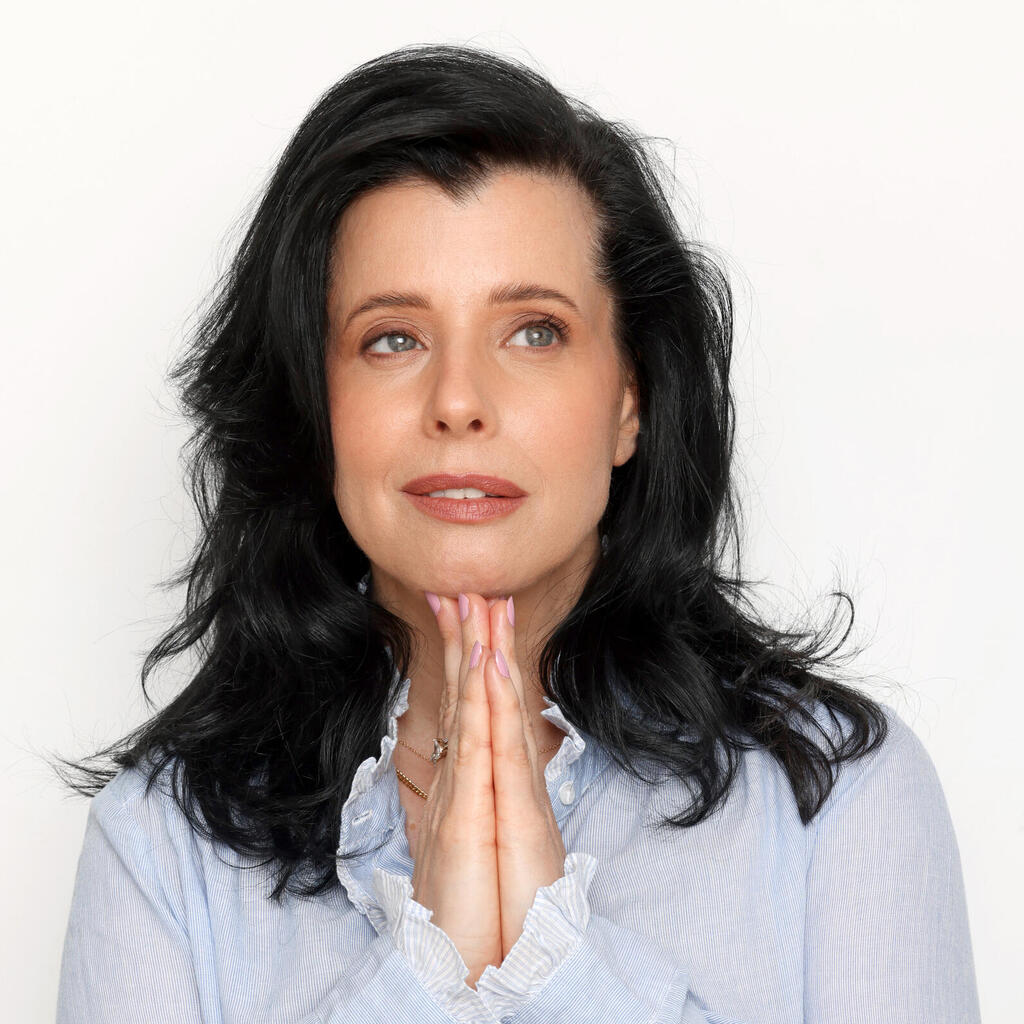
Orit Navon
(Photo: Yanai Yechiel)
Why didn’t you tell people?
“For the same reason most women don’t tell: shame. The fear of being judged as a superficial, shallow, empty woman.”
Were you not worried about being judged?
“I am in favor of fixing what bothers you, but only after the mommy makeover was behind me did I realize that I was surrounded by women who were ashamed to tell. Smart, opinionated women who, to project strength, will say, “I do Pilates,” “I watch what I eat,” “I’m working on toning,” but would never say, “I got help from surgery.”
Let’s break through that wall of shame together. In Mishtaptzot, I met women I would gladly sit down with for coffee even without the series. We are normal.
Did you always know you wanted to turn it into a series?
“When I went into surgery, I was thinking, 'Why should anyone know something so private about me?” But then I realized the surgery and the broader question of the changes we want to make in our lives would not leave my mind. In the end, I understood that if my head and my heart were still there, and if I had gone through something so emotional and unsettling, why not meet other women who had been through it too?
During filming, Navon also asked herself why she was insisting on such intimate documentation. “I stand naked in front of the mirror and say things from the heart that are hard for me to get out of my mouth.
"For example, I said that at some point I began to understand that I was dressing to blur things, and over time the blurring kind of became a state of being, and I felt a little blurred in the world. I wanted to close the gap between what my body looked like under my clothes and the image I presented to the world.
"But when I revisited the night before the surgery, standing in front of the mirror and saying, 'I’m sorry, belly, that I’m cutting you, but you simply don’t feel like mine,' I felt a sense of relief.
Navon describes to the psychologist in the series the moment her surgeon fired her. “I chose to have surgery with a doctor whose name I will not mention. He examined me and said, ‘Save all your questions for the pre-op meeting.’ I was disappointed, but I told myself, ‘It’s not so terrible that he is such a cold and unfriendly person, as long as he is a professional.’ "Then I arrived for the meeting, a week and a half before the big day, and he was impatient, kept looking at his watch, and I was full of questions and fears and wanted him to calm me a little.
“I left the meeting and told myself, ‘I don’t want to see him again,’ but I already had a surgery date and did not think about canceling. The next day, his secretary called and said he did not want to operate on me. She said, ‘The doctor thinks you are not ready for surgery.’ It was deeply humiliating.
“After I wiped away the tears, I called Dr. Itai Skornick. I knew he was a plastic surgery specialist, but to me he was simply the doctor who did my Botox. I called him just to vent, and he invited me in for a consultation. Within a minute of sitting with him, I understood how a doctor-patient conversation is supposed to feel. When he asked, “What do you want?” I was stunned. The previous doctor had never asked me that.
Have you come across cases with worse outcomes?
“I came across a case online that, in my view, was an extreme example of medical negligence. A woman came out of mommy makeover surgery with two belly buttons. She had her original belly button, and above it was a scar that did not heal properly, as doctors put it. Because of poor stitching, it closed like a second belly button. A lawsuit is pending over the case. I wanted to interview her, but she refused.
Several women who underwent cosmetic procedures speak openly and courageously in the series, including Zohar Svilotsky, who survived sexual abuse and wants to give herself a body free of trauma, and Orit Hasson Balas, who is coping with bulimia. Alongside them is a woman interviewed anonymously.
“She had liposuction at around 50, hoping to find a new job, feel more polished and rebuild her self-confidence. Doctors suctioned fat from the wrong areas, punctured one of her organs and rushed her into life-saving surgery, where she had to be opened up. To this day, she takes antidepressants because of the trauma. Some women describe their surgery as a disaster because they are unhappy with the result, but in her case, it was a disaster in the most extreme sense.
And she refused to be interviewed on camera?
“She is ashamed. She doesn’t want people to know what caused her condition. There is a lot of guilt around this, because it is a surgery you chose for yourself.”
It is not a cheap surgery.
“Some women say no price would stop them. I am not someone who would take out loans for plastic surgery, and certainly not someone who would mortgage her home, but I don’t judge anyone. I deeply understand the desire to fix something or to reclaim something you feel was taken from you.
“I had the surgery at Clalit Aesthetics, not through the public health basket, but it cost me about a third of the price: 33,000 shekels ($11,300) instead of 90,000 shekels ($31,000). The price depends on the scope of the procedure. In online groups, people tend to disparage doctors who operate through the health funds to steer women toward private surgeons, but I don’t think there is any reason for that. The same doctors who operate privately also work at public healthcare services.
Let me guess, most of the reactions are not supportive.
“There are women who only hear the term plastic surgery and immediately dress you in their agenda, which has nothing to do with you. Quite a few women asked me whether it was worth paying so much just to wear a bikini. It made me laugh. I don’t even own a bikini, and not for religious reasons. I don’t know how to swim, I don’t tan and I burn almost immediately. But some women are supportive. That is why I invite everyone to at least watch the series and think about what it raises.
Will there also be a “daddy makeover”?
“In Mishtaptzot, I wanted to devote an episode to men with intense Botox routines, but I didn’t think I could get top-profile men to sit in front of the camera. Maybe it will still happen."